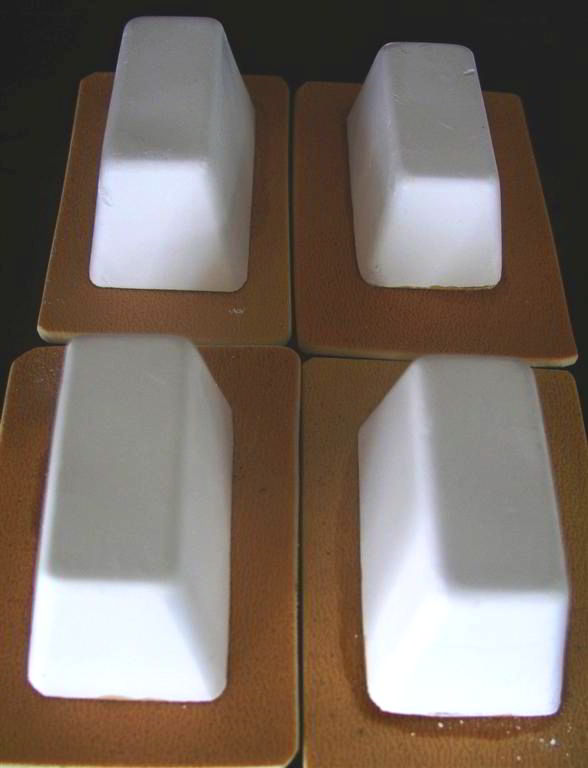
A test on Sea-lab no 28 claims

mizimmer90

Active Member
View Badges
Joined
Sep 22, 2022
Messages
426
Reaction score
316
Location
St. Louis
What state or country do you live in
Missouri
Rating - 0%
0   0   0
I have recently seen a large number of posts discussing the merits of sealab no. 28 and, having never heard of this product before, decided to investigate what it is all about. To my horror, the product claims that by dropping a block into water, it will naturally regulate the amount of trace elements released into your tank, only releasing an ion if it is depleted in the water; I call shenanigans as this isn't possible lol.

71zgxF+m08L._AC_SL1500_.jpg


From the amazon product page: “Sea lab no. 28 replenisher block always works, and cannot be overdosed. This is not a slow-dissolve or time-release product. It dissolves only to replace depleted elements.” Again, there's no way they can accomplish this! I'm willing to wager that *at best*, this is a slow-dissolve time release block. However, given the manufacturers impossible claim, I worry that other things are also wrong in this product…

I don't want to support this product but I have decided to design an experiment to test the claim that, “This is not a slow-dissolve or time-release product. It dissolves only to replace depleted elements." My hope is that others can be aware of the deception.

Here's the setup:
I will place 1 cube in 1L of freshly prepared IO saltwater. To ensure that the water has concentrations of trace elements greater than NSW, I will also add 10g of AFR powder; this will add approximately 2,690 mg Ca, 120 mg Mg, 50 mg Sr, and 2 mg I. To put it lightly, this is significantly higher than NSW

If the sealab claims hold true, the cube should NEVER dissolve. Even if it takes a few weeks/months to dissolve (as might be the case) the sealab claims will be definitively false. For clarity, I am not commenting on the utility of time-release formulations, but am hoping to shed light on these false claims of autoregulation to help other reefers not make a poor decision by using these as a method that “cannot be overdosed”.

Ideally, I would have a heater and circulation pump for the water (which would almost certainly speed things up) but I'm light on space, outlets, and the extra equipment haha. In lieu of this, I will also dissolve a block in 1L RODI water as a reference to compare speed of dissolution. This has the added benefit that I can measure some params afterwards.

Here's my prediction: both cubes will dissolve lol

I've impulse purchased some formula 28 on Amazon and it's set to arrive next week. Since I've already given money for this product, I'm motivated to actually see this experiment to completion.

I'm open to feedback if anyone has comments on the experimental setup! Ideally, I wanted to use seawater since the product claims it's buffered to seawater, but I live about as far from the ocean in any direction as you can get lol. I figure the elevated elements would suffice but want to make sure others can't argue that precipitation is causing the dissolution.

So place your bets! Will the cube dissolve or not?

 

Attachments

  • 4200488F-D628-4126-BD54-B3FDF9001A24.jpeg
    4200488F-D628-4126-BD54-B3FDF9001A24.jpeg
    131.3 KB · Views: 47
And??? You never gave the results of the experiment. I’m guessing you were wrong since you didn’t follow up on a long post about an experiment.
 
And??? You never gave the results of the experiment. I’m guessing you were wrong since you didn’t follow up on a long post about an experiment.

Tbh I've been so swamped with work and home life, I haven't had much time for the forums lol. I haven't started the experiment yet, but the sealab claims are so obviously false that I'm not going to be that surprised when I prove then wrong haha.

Thanks for the poke though, I'll prep the experiment this week and take lots of pictures :)
 
No product can do what this product claims.

It's just a bunch of stuff that slowly dissolves whether your aquarium needs it or not.
 
Tbh I've been so swamped with work and home life, I haven't had much time for the forums lol. I haven't started the experiment yet, but the sealab claims are so obviously false that I'm not going to be that surprised when I prove then wrong haha.

Thanks for the poke though, I'll prep the experiment this week and take lots of pictures :)
too busy to drop a cube in some water. So I guess you are no better then sea lab 28 your claims are false for your investigation. Appears you are all talk or full of excuses. You made a whole post bashing something for false claims and you did the exact same thing. I find that hilarious
 
too busy to drop a cube in some water. So I guess you are no better then sea lab 28 your claims are false for your investigation. Appears you are all talk or full of excuses. You made a whole post bashing something for false claims and you did the exact same thing. I find that hilarious
Can we expect a list of things you have tried?
 
I'm surprised I've never heard of this product if it's been around for twenty years. Is anyone using the and believes it works as claimed? Someone must be buying it if it's being sold for so long.
 
I'm surprised I've never heard of this product if it's been around for twenty years. Is anyone using the and believes it works as claimed? Someone must be buying it if it's being sold for so long.
The topic pops up occasionally. Randy normally slams it into the ground. Perhaps the stock is donkeys years old, or a new person thing.
 
@Randy Holmes-Farley

Serious question about this product.

Ok we all know it’s gonna dissolve.

Is it safe to assume the rate it dissolves is fairly consistent? Does anyone know how much calcium it releases per day? Week? Month? Or per cube ?

Could this be used as a time release calcium dosing product ?

Example: completely made up for example purposes

- Tank consumes xx ppm calcium per week
- the cube dissolves and releases yy ppm calcium per week

XX / YY = number of cubes to put in sump

Then you only have to dose Alkalinity and replace cubes.
 
@Randy Holmes-Farley

Serious question about this product.

Ok we all know it’s gonna dissolve.

Is it safe to assume the rate it dissolves is fairly consistent? Does anyone know how much calcium it releases per day? Week? Month? Or per cube ?

Could this be used as a time release calcium dosing product ?

Example: completely made up for example purposes

- Tank consumes xx ppm calcium per week
- the cube dissolves and releases yy ppm calcium per week

XX / YY = number of cubes to put in sump

Then you only have to dose Alkalinity and replace cubes.

Just repeating the obvious, it cannot possibly do what it claims. Even an aquarist doing ICP daily and using dozens of individual supplements would have a very hard time doing what this chunk of glop claims.

OK, so addressing the questions...

Dissolution of any solid material in water will depend on a variety of factors, not just time. Most important is flow rate. Here that principle is used to test flow rate in reef aquaria by Dana Riddle.


An additional complication to the question relates to the surface area, which also figures in. Even if you had a single place in your aquarium where the flow was always the same, then when half of it dissolved there is half as much material for further dissolution. The rate of release of material will change over time as the clod shrinks, reducing available surface area for more dissolution. Consequently, you do not expect to get a constant rate.
 
Last edited:
too busy to drop a cube in some water. So I guess you are no better then sea lab 28 your claims are false for your investigation. Appears you are all talk or full of excuses. You made a whole post bashing something for false claims and you did the exact same thing. I find that hilarious

The Sealab 28 claims are clearly false. Do you believe they are true?

Seriously, read the crazy claims it makes.

Formula 28 senses the concentration of 28 individual elements, including calcium, strontium, and all trace elements, then automatically adjusts each one to the same concentration found in the sea. The blocks or nuggets dissolve only to replace depleted elements in solution.


Do you think it can do that?

 
The topic pops up occasionally. Randy normally slams it into the ground.

Any time I don't, I missed the post. lol
 
I'm surprised I've never heard of this product if it's been around for twenty years. Is anyone using the and believes it works as claimed? Someone must be buying it if it's being sold for so long.

The someone must be buying it is certainly true. The idea that means it works as it claims is, unfortunately, not true.
 
too busy to drop a cube in some water. So I guess you are no better then sea lab 28 your claims are false for your investigation. Appears you are all talk or full of excuses. You made a whole post bashing something for false claims and you did the exact same thing. I find that hilarious

The person you are responding to has not been on reef2reef in a while and is unlikely to see your post.
 
Just repeating the obvious, it cannot possibly do what it claims. Even an aquarist doing ICP daily and using dozens of individual supplements would have a very hard time doing what this chunk of glop claims.

OK, so addressing the questions...

Dissolution of any solid material in water will depend on a variety of factors, not just time. Most important is flow rate. Here that principle is used to test flow rate in reef aquaria by Dana Riddle.


An additional complication to the question relates tot he surface area, which also figures in. Even if you had a single place in your aquarium where the flow was always the same, then when half of it dissolved there is half as much material for further dissolution. The rate of release of material will change over time as the clod shrinks, reducing available surface area for more dissolution. Consequently, you do not expect to get a constant rate.
Thanks for the article link. I will give it a read

I did consider that the size affects the release rate but was unsure of variables:

Larger cube = more surface area = more releases
Vs
Smaller cube = less surface area = less released; but possibly dissolves at a faster rate

But. With the rate of calcium consumption being so much less than alkalinity, and then acceptable calcium range having some flex room, if the cube takes an average of xx weeks to dissolve, could it be a sustainable and valid way to Maintain calcium? Wouldn’t matter if one week was 20ppm and next week was 10pm…as long as we are putting the right amount back, that we are consuming each month, and if the cube puts out a set amount from start To finish it seems like a reasonable and easy method to use
 
Thanks for the article link. I will give it a read

I did consider that the size affects the release rate but was unsure of variables:

Larger cube = more surface area = more releases
Vs
Smaller cube = less surface area = less released; but possibly dissolves at a faster rate

But. With the rate of calcium consumption being so much less than alkalinity, and then acceptable calcium range having some flex room, if the cube takes an average of xx weeks to dissolve, could it be a sustainable and valid way to Maintain calcium? Wouldn’t matter if one week was 20ppm and next week was 10pm…as long as we are putting the right amount back, that we are consuming each month, and if the cube puts out zoom from start
To finish it seems like a reasonable and easy method to use

It also claims to release "buffer" and to stabilize pH so I'm not sure what exactly it does for alkalinity, but if it does add alk, that could swing around much faster than calcium.

They claim:

" Stabilizes acid-alkaline balance (pH)"

"Formula 28 also controls many causes of depressed or drifting pH. The formula contains four alumino-silicate "weathered" buffers, well known to seawater chemists, but exclusive to Sea-Lab in the saltwater aquarium industry."


Which to me sounds terrible, but so be it. lol
 
It also claims to release "buffer" and to stabilize pH so I'm not sure what exactly it does for alkalinity, but if it does add alk, that could swing around much faster than calcium.

They claim:

" Stabilizes acid-alkaline balance (pH)"

"Formula 28 also controls many causes of depressed or drifting pH. The formula contains four alumino-silicate "weathered" buffers, well known to seawater chemists, but exclusive to Sea-Lab in the saltwater aquarium industry."


Which to me sounds terrible, but so be it. lol
I would just assume it doesn’t do that at all lol

Do you know of an alternate pure calcium cube that could work as I described ? Maybe from another industry?
 
I would just assume it doesn’t do that at all lol

Do you know of an alternate pure calcium cube that could work as I described ? Maybe from another industry?

Calcium always has to come with another ion associated with it. Calcium chloride would be instantly soluble. Calcium sulfate is slower, as noted by Dana. Anything else will cause an imbalance or be an alk additive (as in calcium formate, which dissolves fast, but something like a fatty acid salt of calcium would not ).

I have no idea what Sealab 28 uses, but major ion imbalance is a possible concern if it does not add alkalinity.
 

IF YOU HAD TO TAKE A REEFING EXAM, WOULD YOU PASS?

  • Yes!

    Votes: 32 45.7%
  • Not yet, but I have one that I want to buy in mind!

    Votes: 9 12.9%
  • No.

    Votes: 26 37.1%
  • Other (please explain).

    Votes: 3 4.3%
Back
Top