Hey @Timfish ,
Good to see you today. Here are those Aquabiomics tests I mentioned. I thought it was interesting there was a shift in bacterial populations after dosing bottled bacteria. But, I am not sure how much information I really gained from the tests since I am not familiar with the different microbes. The vibrio population seemed reduced in the second test.
Test before 5 weeks of alternately weekly dosing Dr. Tim's Eco-balance and Waste away:
Pdf link: Aquabiomics Test 06/08/23
I hadn't added any bottled bacteria to this tank for 4.5 years after initial setup. Visually the tank was cleaner after the bacteria addition, and the ORP went up by about 25% in 24 hours and has remained there. There were problems with STN in Acropora, that have cleared up, but I made other changes at the same time. So, not very scientific. Let me know if you have any insight.
-I also wanted to note that I do not carbon dose this tank.
-I also run 120 watts of UV on the tank but the bulbs are past effective date since no fish have been added recently. There were no Pelagibacteraceae in either test which I remember Eli saying is almost always the case with UV on tanks. Pelagibacteraceae is the most common bacteria on the reefs and found in reef tanks that don't utilize UV sterilizers. But absent on systems that have UV sterilizers. Again, not sure what to do with that info.
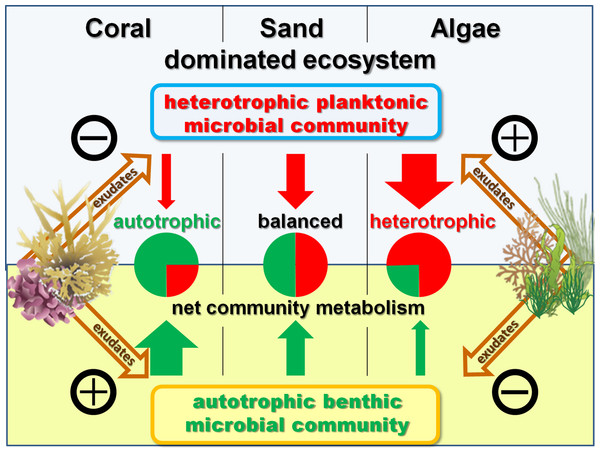
Here's lists of benefical, and detrimental microbial stuff taken from these papers. Something I feel important to consider is coral DOC promotes autotrophic microbial processes (1)(2) which tend to promote oxygen levels so increases in OPR with changes to microbial populations is generally a good thing to see. But as pointed out below, there can be too much f a good thing even with beneficial microbial stuff.
These microbial order/families were enriched with algae cover on reefs.
Cytophagaceae
Flavobacteriaceae
Planctomycetaceae
Burkholderiaceae
Pasteurellaceae
Synechococcus
Prochlorococcus
Brucellaceae
Vibrionaceae
Enterobacteriaceae
These microbial orders/families were enriched with coral cover on reefs.
Shewanellaceae
Bacillaceae
Caulobacteriaceae
Sphingomonadaceae
Hyphomonadaceae
Bradyrhizobiaceae
Acetobacteriaceae
Phyllobacteriaceae
Clostridiaceae
Rhodospirillaceae
SAR11
Rhizobiaceae
Rhodobacteriaceae
These phyla were more elevated in ambiant and control samples
Chloroflexi_SAR202
Deltaproteobacteria_SAR324
Deferribacteres_SAR406
Actinobacteria_Rhodospirillacea
Alphaproteobacteria_Rhodospirillaceae
Alphaproteobacteria_SAR116
Alphaproteobacteria_SAR11
Cynobacteria_Synechococcus
Gammaproteobacteria_Oleiphilaceae
Betaproteobacteria_Methylophilaceae
Planctomycetes_Plantomycetaceae
These phyla were elevated in coral exudates (sugars) (Note: Kline, et al, 2006 showed increased levels of coral DOC above normal caused problems with corals so seeing increases in these goups isn't necessarily a good thing)
Plantomycetes_OM190
Deltaproteobacteria_Bacteriovoraceae
Alphaproteobacteria_Erythrobacteraceae
Alphaproteobacteria_Kordiimaonadaceae
Alphaproteobacteria_Hyphomonadaceae
Alphaproteobacteria_Sneathiellaceae
These phyla were elevated in algal exudates (sugars)
Alphaproteobacteria_Rhodobacteraceae
Flavobacteria_Flavobacteriaceae
Flavobacteria_Crymorphaceae
Gammaproteobacteria_OMG
Gammaproteobacteria_Alteromonadaceae
Gammaproteobacteria_Oceanospirillaceae
Gammaproteobacteria_Pseudoalteromonadaceae
Gammaproteobacteria__Virbrionaceae
Thank you for the reading material. I will check it out and let you know if I have any opinions. I am curious about the theory of carbon dosing fueling detrimental bacteria. I have seen corals mostly respond positively to carbon dosing. In fact, I recently started adding vinegar to kalkwasser on my personal tank, and coral health was visibly improved. The tissues of the coral were thickened and extended, and color deepened ( but not excessively). I wonder if the nutritional benefit the corals get from the sugars and bacteria consumption outweigh the potential harm by undesirable bacteria? Just a thought
Well, how do you you know the changes you are seeing are beneficial, are helpful in maintianing a sustainable reef ecosystem for the lives of the corals and fish? How are you determining the changes you've seen are beneficial changes in the individual coral microbiomes? One striking note looking at coral production of fluorescing proteins is it's primarily and for some corals, only to deal with less then desirable conditions. The research showing degradation of corals as increases in labile DOC doesn't happen overnight and chronic stressers may be more haemful than acute stressers. Additionally there are species specific and likely genotype specific responses so while some corals may appear to do just fine it's highly unlikely that will hold true for every coral. And we shouldn't forget sponges are also a key player and as it's been shown at least some sponges process labile DOC from corals differently than from algae, a significant concern with researchers is feedback loops that reduce the vaibility of a system to support corals. (How many times over the years have you heard of or seen systems where everything is "right" but the aquarist can't keep corals alive?)
Well, how do you you know the changes you are seeing are beneficial, are helpful in maintianing a sustainable reef ecosystem for the lives of the corals and fish? How are you determining the changes you've seen are beneficial changes in the individual coral microbiomes? One striking note looking at coral production of fluorescing proteins is it's primarily and for some corals, only to deal with less then desirable conditions. The research showing degradation of corals as increases in labile DOC doesn't happen overnight and chronic stressers may be more haemful than acute stressers. Additionally there are species specific and likely genotype specific responses so while some corals may appear to do just fine it's highly unlikely that will hold true for every coral. And we shouldn't forget sponges are also a key player and as it's been shown at least some sponges process labile DOC from corals differently than from algae, a significant concern with researchers is feedback loops that reduce the vaibility of a system to support corals. (How many times over the years have you heard of or seen systems where everything is "right" but the aquarist can't keep corals alive?)
First off, I have no doubt it is species specific and doesn't hold true for every coral. Our aquariums are species specific and arent suitable for every coral. There is a reason we see the same group of corals grown and propagated in the hobby. They adapt well to our closed systems.
-I have carbon dosed via TLF Bio-pellets in some systems for over 15 years. I have some fish and corals in those systems that are at least that old. I haven't seen any long term negative effects with that method. I see a higher population of sponges, fan worms, amphipods, brittle stars and other micro fauna in systems that I carbon dose. The vinegar and Kalkwasser is new for me. I don't have any long term observations to relay. I imagine, like most things that carbon dosing can be overdone. I haven't tested the limits. I assume this is where bacteria take over the system, become destructive and out compete other life.
-As far as determining the health of the coral, I have a interesting note. I have always had some STN pop up in Acropora in my tank prior to carbon dosing. It happens mostly when a coral is shaded by itself or other corals. Since adding 45ml of vinegar per gallon of Kalkwasser for the last 6 months, the STN has vanished. Like I said, the tissue thickened on the skeleton and the polyps extended. They are obviously eating. As I understand, they eat the bacteria and are able to absorb acetate directly. I am starting to think that much of the STN we experience in the hobby is coral not having the energy or building blocks to fight off opprotunistic members of it's holobiont. Degraded coral immune systems? I will let you know if I come across any long term issues.
I read the second article. The first is behind a pay wall. Very interesting concept. What I gather is that sugar exudates of algae and coral are different and grow different bacteria. The bacteria that grow from algae exudates can suppress coral growth and possibly be pathogenic. This is consistent with my observations that tanks with existing algae tend to grow more algae and coral health suffers. Once soft algae is outcompeted or consumed, coral and coralline algae grow much faster. I didn't understand the mechanism behind this.
I understand your concern that we don't understand what bacteria we are growing with what carbon dosing. There is an interesting caveat in my mind though. Carbon dosing in aquariums tends to outcompete and diminish soft algae growth. The authors were making a point that the bacteria consuming the DOC the algae produce were problematic for corals. Maybe this is one of those situations where a closed system is different than the ocean? If I carbon dose and eliminate most hair algae from a system, this seems better for coral health based on what I read. I know that is not the only way to reduce algae, but it is effective. Thoughts?
Don’t mind me, just following this thought provoking conversation. Another example of precisely the kind of thread that pushes our hobby forward. Thanks for having this discussion publicly
Don’t mind me, just following this thought provoking conversation. Another example of precisely the kind of thread that pushes our hobby forward. Thanks for having this discussion publicly
I appreciate you saying that. Tim and I have had these conversations for a few years now, and he always has something thought provoking to say. I thought others might find it interesting, so I made a thread.
Don’t mind me, just following this thought provoking conversation. Another example of precisely the kind of thread that pushes our hobby forward. Thanks for having this discussion publicly
"Coral Reefs in the Microbial Seas" This video compliments Rohwer's book of the same title (Paper back is ~$20, Kindle is ~$10), both deal with the conflicting roles of the different types of DOC in reef ecosystems. While there is overlap bewteen his book and the video both have information not covered by the other and together give a broader view of the complex relationships found in reef ecosystems
Changing Seas - Mysterious Microbes
Microbial view of Coral Decline
Nitrogen cycling in hte coral holobiont
BActeria and Sponges
Maintenance of Coral Reef Health (refferences at the end)
Optical Feedback Loop in Colorful Coral Bleaching
DNA Sequencing and the Reef Tank Microbiome
Richard Ross What's up with phosphate"
For reference here's a couple links to research on what happens when human microbiomes are disrupted
Two globetrotting microbiologists race to stop the destruction of our microbiome – the tiny “bugs” in our bodies that keep us healthy, while a diverse group of patients experiment with innovative microbe treatments to save their lives.
www.theinvisibleextinction.com
(you can skip to 21:52 to see a list of chronic and acute conditions)
And the issues with farming practices that disrupt soil microbiomes. You can also do a search with the term "Regenerative Farming" for a lot more info.
And here's some more links on DOC
Indirect effects of algae on coral: algae‐mediated, microbe‐induced coral mortality
Benthic primary producers in tropical reef ecosystems can alter biogeochemical cycling and microbial processes in the surrounding seawater. In order to quantify these influences, we measured rates of photosynthesis, respiration, and dissolved organic carbon (DOC) exudate release by the dominant...
peerj.com
Role of elevated organic carbon levels and microbial activity in coral mortality
Effects of Coral Reef Benthic Primary Producers on Dissolved Organic Carbon and Microbial Activity
Algae releases significantly more DOC into the water than coral.
Benthic primary producers in marine ecosystems may significantly alter biogeochemical cycling and microbial processes in their surrounding environment. To examine these interactions, we studied dissolved organic matter release by dominant benthic taxa and subsequent microbial remineralization in...
journals.plos.org
Visualization of oxygen distribution patterns caused by coral and algae
Planar optodes were used to visualize oxygen distribution patterns associated with a coral reef associated green algae (Chaetomorpha sp.) and a hermatypic coral (Favia sp.) separately, as standalone organisms, and placed in close proximity mimicking coral-algal interactions. Oxygen patterns were...
peerj.com
Biological oxygen demand optode analysis of coral reef-associated microbial communities exposed to algal exudates
Algae-derived dissolved organic matter has been hypothesized to induce mortality of reef building corals. One proposed killing mechanism is a zone of hypoxia created by rapidly growing microbes. To investigate this hypothesis, biological oxygen ...
www.ncbi.nlm.nih.gov
Microbial ecology: Algae feed a shift on coral reefs
Human pressures on coral reefs are giving macroalgae a competitive advantage over reef-building corals. These algae support larger, and potentially pathogenic, microbial populations that are metabolically primed for less-efficient, yet faster, carbohydrate remineralization, perpetuating a...
www.nature.com
Coral and macroalgal exudates vary in neutral sugar composition and differentially enrich reef bacterioplankton lineages.
Increasing algal cover on tropical reefs worldwide may be maintained through feedbacks whereby algae outcompete coral by altering microbial activity. We hypothesized that algae and coral release compositionally distinct exudates that differentially alter bacterioplankton growth and community...
www.ncbi.nlm.nih.gov
Sugar enrichment provides evidence for a role of nitrogen fixation in coral bleaching
Elevated ammonium delays the impairment of the coral-dinoflagellate symbiosis during labile carbon pollution
(here's an argument for maintaining heavy fish loads if you're carbon dosing)
Labile dissolved organic carbon (DOC) is a major pollutant in coastal marine environments affected by anthropogenic impacts, and may significantly con…
www.sciencedirect.com
Excess labile carbon promotes the expression of virulence factors in coral reef bacterioplankton
Coastal pollution and algal cover are increasing on many coral reefs, resulting in higher dissolved organic carbon (DOC) concentrations. High DOC concentrations strongly affect microbial activity in reef waters and select for copiotrophic, often potentially virulent microbial populations. High...
www.nature.com
Unseen players shape benthic competition on coral reefs.
Recent work has shown that hydrophilic and hydrophobic organic matter (OM) from algae disrupts the function of the coral holobiont and promotes the invasion of opportunistic pathogens, leading to coral morbidity and mortality. Here we refer to these dynamics as the (3)DAM [dissolved organic...
www.ncbi.nlm.nih.gov
Allelochemicals Produced by Brown Macroalgae of the Lobophora Genus Are Active against Coral Larvae and Associated Bacteria, Supporting Pathogenic Shifts to Vibrio Dominance.
Diverse microbial communities associate with coral tissues and mucus, providing important protective and nutritional services, but once disturbed, the microbial equilibrium may shift from a beneficial state to one that is detrimental or pathogenic. Macroalgae (e.g., seaweeds) can physically and...
www.ncbi.nlm.nih.gov
Macroalgae decrease growth and alter microbial community structure of the reef-building coral, Porites astreoides.
With the continued and unprecedented decline of coral reefs worldwide, evaluating the factors that contribute to coral demise is of critical importance. As coral cover declines, macroalgae are becoming more common on tropical reefs. Interactions between these macroalgae and corals may alter the...
www.ncbi.nlm.nih.gov
Macroalgal extracts induce bacterial assemblage shifts and sublethal tissue stress in Caribbean corals.
Benthic macroalgae can be abundant on present-day coral reefs, especially where rates of herbivory are low and/or dissolved nutrients are high. This study investigated the impact of macroalgal extracts on both coral-associated bacterial assemblages and sublethal stress response of corals. Crude...
www.ncbi.nlm.nih.gov
Biophysical and physiological processes causing oxygen loss from coral reefs.
Analysis of 60 sites in three ocean basins suggests that overgrowth of fleshy algae on coral reefs supports higher microbial abundances dominated by copiotrophic, potentially pathogenic bacteria via the provision of dissolved inorganic carbon.
www.nature.com
Coral Reef Microorganisms in a Changing Climate, Fig 3
Element cycling on tropical coral reefs.
This is Jasper de Geoij's ground breaking research on reef sponge finding some species process labile DOC 1000X faster than bacterioplankton. (The introduction is in Dutch but the content is in English.)
Marine sponges are ubiquitous colonizers of shallow, clear-water environments in the oceans (1, 2). Sponges have emerged as significant mediators of biogeochemical fluxes in coastal zones by virtue of respiring organic matter and facilitating both the consumption and release of nutrients (3, 4)...
www.pnas.org
Phosphorus sequestration in the form of polyphosphate by microbial symbionts in marine sponges
Coral reefs are highly productive ecosystems that raise a conundrum called “Darwin’s paradox”: How can high production flourish in low-nutrient conditions? We show here that in three abundant Caribbean sponges, the granules that have been commonly observed in sponge tissue for decades are...
www.pnas.org
Differential recycling of coral and algal dissolved organic matter via the sponge loop.
Sponges treat DOC from algae differently than DOC from corals
Coral reefs are economically important ecosystems that have suffered unprecedented losses of corals in the recent past. Why have Caribbean reefs in particu
academic.oup.com
Surviving in a Marine Desert The Sponge Loop Retains Resources Within Coral Reefs
Dissolved organic carbon and nitrogen are quickly processed by sponges and released back into the reef food web in hours as carbon and nitrogen rich detritus.
PDF | On Jun 23, 2015, Jasper M de Goeij and others published 2013 deGoeij Science Sponge loop | Find, read and cite all the research you need on ResearchGate
www.researchgate.net
Natural Diet of Coral-Excavating Sponges Consists Mainly of Dissolved Organic Carbon (DOC)
Coral-excavating sponges are the most important bioeroders on Caribbean reefs and increase in abundance throughout the region. This increase is commonly attributed to a concomitant increase in food availability due to eutrophication and pollution. ...
www.ncbi.nlm.nih.gov
The Role of Marine Sponges in Carbon and Nitrogen Cycles of COral Reefs and Nearshore Environments.
-I also wanted to note that I do not carbon dose this tank.
-I also run 120 watts of UV on the tank but the bulbs are past effective date since no fish have been added recently. There were no Pelagibacteraceae in either test which I remember Eli saying is almost always the case with UV on tanks. Pelagibacteraceae is the most common bacteria on the reefs and found in reef tanks that don't utilize UV sterilizers. But absent on systems that have UV sterilizers. Again, not sure what to do with that info.
Not sure myself but it doesn't stand out as a group typically found in healthy coral microbomes. At some point research will have more definitive lists of what's beneficial, what's irrelevant, what's opportunistic and what's not good at all so we'll just have ot keep digging.
"Coral Reefs in the Microbial Seas" This video compliments Rohwer's book of the same title (Paper back is ~$20, Kindle is ~$10), both deal with the conflicting roles of the different types of DOC in reef ecosystems. While there is overlap bewteen his book and the video both have information not covered by the other and together give a broader view of the complex relationships found in reef ecosystems
Changing Seas - Mysterious Microbes
Microbial view of Coral Decline
Nitrogen cycling in hte coral holobiont
BActeria and Sponges
Maintenance of Coral Reef Health (refferences at the end)
Optical Feedback Loop in Colorful Coral Bleaching
DNA Sequencing and the Reef Tank Microbiome
Richard Ross What's up with phosphate"
For reference here's a couple links to research on what happens when human microbiomes are disrupted
Two globetrotting microbiologists race to stop the destruction of our microbiome – the tiny “bugs” in our bodies that keep us healthy, while a diverse group of patients experiment with innovative microbe treatments to save their lives.
www.theinvisibleextinction.com
(you can skip to 21:52 to see a list of chronic and acute conditions)
And the issues with farming practices that disrupt soil microbiomes. You can also do a search with the term "Regenerative Farming" for a lot more info.
And here's some more links on DOC
Indirect effects of algae on coral: algae‐mediated, microbe‐induced coral mortality
Benthic primary producers in tropical reef ecosystems can alter biogeochemical cycling and microbial processes in the surrounding seawater. In order to quantify these influences, we measured rates of photosynthesis, respiration, and dissolved organic carbon (DOC) exudate release by the dominant...
peerj.com
Role of elevated organic carbon levels and microbial activity in coral mortality
Effects of Coral Reef Benthic Primary Producers on Dissolved Organic Carbon and Microbial Activity
Algae releases significantly more DOC into the water than coral.
Benthic primary producers in marine ecosystems may significantly alter biogeochemical cycling and microbial processes in their surrounding environment. To examine these interactions, we studied dissolved organic matter release by dominant benthic taxa and subsequent microbial remineralization in...
journals.plos.org
Visualization of oxygen distribution patterns caused by coral and algae
Planar optodes were used to visualize oxygen distribution patterns associated with a coral reef associated green algae (Chaetomorpha sp.) and a hermatypic coral (Favia sp.) separately, as standalone organisms, and placed in close proximity mimicking coral-algal interactions. Oxygen patterns were...
peerj.com
Biological oxygen demand optode analysis of coral reef-associated microbial communities exposed to algal exudates
Algae-derived dissolved organic matter has been hypothesized to induce mortality of reef building corals. One proposed killing mechanism is a zone of hypoxia created by rapidly growing microbes. To investigate this hypothesis, biological oxygen ...
www.ncbi.nlm.nih.gov
Microbial ecology: Algae feed a shift on coral reefs
Human pressures on coral reefs are giving macroalgae a competitive advantage over reef-building corals. These algae support larger, and potentially pathogenic, microbial populations that are metabolically primed for less-efficient, yet faster, carbohydrate remineralization, perpetuating a...
www.nature.com
Coral and macroalgal exudates vary in neutral sugar composition and differentially enrich reef bacterioplankton lineages.
Increasing algal cover on tropical reefs worldwide may be maintained through feedbacks whereby algae outcompete coral by altering microbial activity. We hypothesized that algae and coral release compositionally distinct exudates that differentially alter bacterioplankton growth and community...
www.ncbi.nlm.nih.gov
Sugar enrichment provides evidence for a role of nitrogen fixation in coral bleaching
Elevated ammonium delays the impairment of the coral-dinoflagellate symbiosis during labile carbon pollution
(here's an argument for maintaining heavy fish loads if you're carbon dosing)
Labile dissolved organic carbon (DOC) is a major pollutant in coastal marine environments affected by anthropogenic impacts, and may significantly con…
www.sciencedirect.com
Excess labile carbon promotes the expression of virulence factors in coral reef bacterioplankton
Coastal pollution and algal cover are increasing on many coral reefs, resulting in higher dissolved organic carbon (DOC) concentrations. High DOC concentrations strongly affect microbial activity in reef waters and select for copiotrophic, often potentially virulent microbial populations. High...
www.nature.com
Unseen players shape benthic competition on coral reefs.
Recent work has shown that hydrophilic and hydrophobic organic matter (OM) from algae disrupts the function of the coral holobiont and promotes the invasion of opportunistic pathogens, leading to coral morbidity and mortality. Here we refer to these dynamics as the (3)DAM [dissolved organic...
www.ncbi.nlm.nih.gov
Allelochemicals Produced by Brown Macroalgae of the Lobophora Genus Are Active against Coral Larvae and Associated Bacteria, Supporting Pathogenic Shifts to Vibrio Dominance.
Diverse microbial communities associate with coral tissues and mucus, providing important protective and nutritional services, but once disturbed, the microbial equilibrium may shift from a beneficial state to one that is detrimental or pathogenic. Macroalgae (e.g., seaweeds) can physically and...
www.ncbi.nlm.nih.gov
Macroalgae decrease growth and alter microbial community structure of the reef-building coral, Porites astreoides.
With the continued and unprecedented decline of coral reefs worldwide, evaluating the factors that contribute to coral demise is of critical importance. As coral cover declines, macroalgae are becoming more common on tropical reefs. Interactions between these macroalgae and corals may alter the...
www.ncbi.nlm.nih.gov
Macroalgal extracts induce bacterial assemblage shifts and sublethal tissue stress in Caribbean corals.
Benthic macroalgae can be abundant on present-day coral reefs, especially where rates of herbivory are low and/or dissolved nutrients are high. This study investigated the impact of macroalgal extracts on both coral-associated bacterial assemblages and sublethal stress response of corals. Crude...
www.ncbi.nlm.nih.gov
Biophysical and physiological processes causing oxygen loss from coral reefs.
Analysis of 60 sites in three ocean basins suggests that overgrowth of fleshy algae on coral reefs supports higher microbial abundances dominated by copiotrophic, potentially pathogenic bacteria via the provision of dissolved inorganic carbon.
www.nature.com
Coral Reef Microorganisms in a Changing Climate, Fig 3
Element cycling on tropical coral reefs.
This is Jasper de Geoij's ground breaking research on reef sponge finding some species process labile DOC 1000X faster than bacterioplankton. (The introduction is in Dutch but the content is in English.)
Marine sponges are ubiquitous colonizers of shallow, clear-water environments in the oceans (1, 2). Sponges have emerged as significant mediators of biogeochemical fluxes in coastal zones by virtue of respiring organic matter and facilitating both the consumption and release of nutrients (3, 4)...
www.pnas.org
Phosphorus sequestration in the form of polyphosphate by microbial symbionts in marine sponges
Coral reefs are highly productive ecosystems that raise a conundrum called “Darwin’s paradox”: How can high production flourish in low-nutrient conditions? We show here that in three abundant Caribbean sponges, the granules that have been commonly observed in sponge tissue for decades are...
www.pnas.org
Differential recycling of coral and algal dissolved organic matter via the sponge loop.
Sponges treat DOC from algae differently than DOC from corals
Coral reefs are economically important ecosystems that have suffered unprecedented losses of corals in the recent past. Why have Caribbean reefs in particu
academic.oup.com
Surviving in a Marine Desert The Sponge Loop Retains Resources Within Coral Reefs
Dissolved organic carbon and nitrogen are quickly processed by sponges and released back into the reef food web in hours as carbon and nitrogen rich detritus.
PDF | On Jun 23, 2015, Jasper M de Goeij and others published 2013 deGoeij Science Sponge loop | Find, read and cite all the research you need on ResearchGate
www.researchgate.net
Natural Diet of Coral-Excavating Sponges Consists Mainly of Dissolved Organic Carbon (DOC)
Coral-excavating sponges are the most important bioeroders on Caribbean reefs and increase in abundance throughout the region. This increase is commonly attributed to a concomitant increase in food availability due to eutrophication and pollution. ...
www.ncbi.nlm.nih.gov
The Role of Marine Sponges in Carbon and Nitrogen Cycles of COral Reefs and Nearshore Environments.
Cool! I was wondering what to do with my free time for the next 6 months. Just kidding. I appreciate you linking all of these. I always learn something from your links
I read the second article. The first is behind a pay wall. Very interesting concept. What I gather is that sugar exudates of algae and coral are different and grow different bacteria. The bacteria that grow from algae exudates can suppress coral growth and possibly be pathogenic. This is consistent with my observations that tanks with existing algae tend to grow more algae and coral health suffers. Once soft algae is outcompeted or consumed, coral and coralline algae grow much faster. I didn't understand the mechanism behind this.
I understand your concern that we don't understand what bacteria we are growing with what carbon dosing. There is an interesting caveat in my mind though. Carbon dosing in aquariums tends to outcompete and diminish soft algae growth. The authors were making a point that the bacteria consuming the DOC the algae produce were problematic for corals. Maybe this is one of those situations where a closed system is different than the ocean? If I carbon dose and eliminate most hair algae from a system, this seems better for coral health based on what I read. I know that is not the only way to reduce algae, but it is effective. Thoughts?
That algae DOC promotes pathogens is a very clear take away. However, increased microbial growth in of itself is a separate issue. Kline (2006) showed concentrating a coral's DOC and reapplying it caused problems for the coral. What excess labile DOC facilitates, whatever the source, is increased heterotrophic microbial processes over autotrophic processes. This is because the labile DOC allows the heterotrophic stuff to utilize the refractory DOC that is unavailable to autotrophic stuff (Haas, et al, 2016 sorrry! this is behind a paywall too).
One variable that does have to be taken into consideration is how fast the cryptic sponges are at removing labile DOC. At least some species are processing labile DOC 1000X faster than the bacterioplankton and dumping carbon and nitrogen rich detritus back into the food webs in a reef ecosystem. But as sponges have been suspectred of helping create feedback loops promoting algae, how sustainable this is is an open question.
Haas' work with oxygen levels in surface boundary layers or surface mucus layers I think helps at least partially explain some things (links are in my post to Beesnreefs). At very small scales sugars will promote a lot of microbial growth that will create anoxic conditions. So even if the water column has a good pH and or ORP indicating plenty of oxygen stuff can still be suffocating.
Regarding your observation of labile DOC reducing algae growth I would counter with my experinces of using just water changes and manual removal with toothrushes and streel straws to get rid of nuisance algae issues.
Cool! I was wondering what to do with my free time for the next 6 months. Just kidding. I appreciate you linking all of these. I always learn something from your links
Hey @Timfish ,
Good to see you today. Here are those Aquabiomics tests I mentioned. I thought it was interesting there was a shift in bacterial populations after dosing bottled bacteria. But, I am not sure how much information I really gained from the tests since I am not familiar with the different microbes. The vibrio population seemed reduced in the second test.
Test before 5 weeks of alternately weekly dosing Dr. Tim's Eco-balance and Waste away:
Pdf link: Aquabiomics Test 06/08/23
I hadn't added any bottled bacteria to this tank for 4.5 years after initial setup. Visually the tank was cleaner after the bacteria addition, and the ORP went up by about 25% in 24 hours and has remained there. There were problems with STN in Acropora, that have cleared up, but I made other changes at the same time. So, not very scientific. Let me know if you have any insight.
1. The graphs are relative abundance. There's no indication that I can see whether any of the initial populations of bacteria declined. Is there such data? Maybe you just added more bacteria on top of what was already there? That would give a very different interpretation than if the new bacteria displaced existing bacterial populations.
2. Since there is no information available on where any of these species of bacteria are growing in any tested aquarium, and there is little useful info on what is desirable to grow where (or at all), the whole thing seems to me like an interesting fact that has little practical utility.
1. The graphs are relative abundance. There's no indication that I can see whether any of the initial populations of bacteria declined. Is there such data? Maybe you just added more bacteria on top of what was already there? That would give a very different interpretation than if the new bacteria displaced existing bacterial populations.
2. Since there is no information available on where any of these species of bacteria are growing in any tested aquarium, and there is little useful info on what is desirable to grow where (or at all), the whole thing seems to me like an interesting fact that has little practical utility.
Randy,
Thank you for your input. I agree that it is more of a curiosity right now rather than practical useful data. I really have no way of interpreting the data so I posted it here. I do think ( hope) this nascent technology will have practical use in the future. I look at it as crowd sourced data that much smarter people than me might make discoveries with.
-I think you are correct that we don't know whether any bacteria populations declined or were displaced. Just that the relative abundance changed. I don't know if Aquabiomics has that data but just doesn't present it to the hobbyist. That would be a great question for Eli. I will ask if I get a chance.
-The location of the bacteria was a swab of the biofilm on the inside of the return spout, as well as a water sample. I know Timfish asked Eli if he had swabbed and tested coral mucus and he said he had done little of that. Maybe the method of sampling can be done differently depending on what we are trying to learn?
I think gathering data from thousands of aquariums will eventually provide some useful data. The fact he shared that aquariums with UV have no Pelagibacteraceae has great implications to me. If we can match up known useful or detrimental bacteria with conditions in which that they thrive or don't in a closed system, then we might actually have some actionable data. That is my hope for this technology at least.
Hey @Timfish ,
Good to see you today. Here are those Aquabiomics tests I mentioned. I thought it was interesting there was a shift in bacterial populations after dosing bottled bacteria. But, I am not sure how much information I really gained from the tests since I am not familiar with the different microbes. The vibrio population seemed reduced in the second test.
Test before 5 weeks of alternately weekly dosing Dr. Tim's Eco-balance and Waste away:
Pdf link: Aquabiomics Test 06/08/23
I hadn't added any bottled bacteria to this tank for 4.5 years after initial setup. Visually the tank was cleaner after the bacteria addition, and the ORP went up by about 25% in 24 hours and has remained there. There were problems with STN in Acropora, that have cleared up, but I made other changes at the same time. So, not very scientific. Let me know if you have any insight.
@telegraham - Have you seen this? I thought you might be interested based on your recent posts about bottled bacteria and AquaBiomics testing.
@IntrinsicReef - You mentioned alternating the weekly dosing of Eco-Balance and Waste-Away. How did you do the dosing? Did you just follow the directions on the bottles? One week of one, then the next week of the other? I'm just curious about how you went about it.