Are my Phosphate levels too high? 0.22

A_Poythress

Active Member
View Badges
Joined
Jul 6, 2017
Messages
111
Reaction score
66
Location
Georgia
What state or country do you live in
Georgia
Rating - 0%
0   0   0
Hey everyone,

I am new to the hobby and recently purchased a Hana Phosphate (Low Range) checker. I tested last night an got a reading of 0.22. I am having an issue with high nitrates at the moment as well. I am combatting the issue by performing water changes. I did 8G Tuesday and will be doing 5 tonight and potentially another 5 on Saturday. I'll list my current parameters below of my tank:

dKH: 9.1
PO4: 0.22
Mg: 1550
Ca: 440
NO3: 40
NO2: 0.10
Tank = Aquatop AIO 24G

The question here is this... Is the phosphate at a dangerous high? I have read that you want undetectable up to .1. Also, would you suggest some proper methods (if water changes are not very effective) to drop my phosphates?

I am considering getting a GFO / Carbon reactor, but I am not sure if that is the right choice or not.

 
Side note: My NO2 levels have never been above 0.00 and my Nitrates typically stay in the 10-20ppm range.
I feed reefroids once a week (I do not measure the amount I use. Maybe this is what I am doing to cause the increase in numbers) and am kind of heavy on the pellets and freeze-dried brine shrimp. Both are from Hikari.

Also, I use RedSea Pro test kits (Not expired) and I use their CoralPro Salt mix.
 
FWIW, water changes are a very poor way to reduce phosphate because much binds to the rock and sand and will come off after a change, so even a 100% change won't drop it all that much.

0.22 ppm is not that much of a concern. I recommend lower levels (about 0.02 ppm) for several reasons, but if you do not have a substantial algae problem, i wouldn't over-focus on lowering it.

This has more on phosphate and how to lower it:

Phosphate In The Reef Aquarium
https://www.reef2reef.com/blog/?p=3184
 
For fish only, it soft corals possibly, that would be fine. For sps and LPS that is too high and will stunt growth. I just dealt with leaching phosphate for the last fee months in ny own tank, which at one point was close to .4. I didnt notice growth again until it was below .2ppm. I went through a period where I was doing water changes basically every other day to reduce phosphates and it leached out enough after awhile
 
Thanks, for the help. I am still a little confused on how to really handle the issue. The article that was provided seemed to have a "you're screwed if you use this method and you're screwed if you use this method". I believe the article left me more stressed out than anything.:confused:

I will continue to perform water changes every week of 5G to see if I can get anywhere with that. I will monitor phosphates closely and if they rise too much I will take a different approach.

I currently have mostly softies with the exception of a neon polyp Monti and a Hollywood chalice.

I am also open to any other suggestions that someone may have to offer. I do not want to jump to throwing chemicals at my tank immediately just for the simple fact of me knowing patience is a major part of this hobby.
 
Thanks, for the help. I am still a little confused on how to really handle the issue. The article that was provided seemed to have a "you're screwed if you use this method and you're screwed if you use this method". I believe the article left me more stressed out than anything.:confused:

I will continue to perform water changes every week of 5G to see if I can get anywhere with that. I will monitor phosphates closely and if they rise too much I will take a different approach.

I currently have mostly softies with the exception of a neon polyp Monti and a Hollywood chalice.

I am also open to any other suggestions that someone may have to offer. I do not want to jump to throwing chemicals at my tank immediately just for the simple fact of me knowing patience is a major part of this hobby.

The Monti, Chalice, and Torch would be my only concerns with phosphate at that level. I would aim for under .1 using the Phosphate LR Checker. The reason being is even though the resolution is to every 0.01, the accuracy is 0.04.. This means if you have a reading of 0.1, it could be anywhere from 0.14 to 0.06.

If you head toward more SPS, you may consider the ULR Phosphorus checker for better accuracy at lower resolution.

HTH
 
You can use something like rowaphos in a mini reactor. Just a small amount goes a long way. Before going the reactor route you could even just try it in a small bag in a high flow area
 
One thing I did forget to mention. I am currently (and have been for over a year now) using Seachem SeaGel, which is supposed to remove phosphates. I typically change the media every month or so. I am assuming changing it more often could help too?

Sorry if all of these questions seem dumb. Again, I am new to all of this and really want to make sure I am doing things right.
 
Thanks, for the help. I am still a little confused on how to really handle the issue. The article that was provided seemed to have a "you're screwed if you use this method and you're screwed if you use this method". I believe the article left me more stressed out than anything.:confused:

I will continue to perform water changes every week of 5G to see if I can get anywhere with that. I will monitor phosphates closely and if they rise too much I will take a different approach.

I currently have mostly softies with the exception of a neon polyp Monti and a Hollywood chalice.

I am also open to any other suggestions that someone may have to offer. I do not want to jump to throwing chemicals at my tank immediately just for the simple fact of me knowing patience is a major part of this hobby.
That's typical. One problem....lots of solutions/opinions. ;) My PO4 is at 0.28 this is DOWN from 0.35 a few weeks ago. I have been slowly trying to bring it down, because (say it altogether) Nothing good happens fast in this hobby.
I have been using small 1/2 cup in bags of Phosguard in my sump (high flow area 120 total volume of water) for about two months and I just added a ball of Chaeto to my fuge to assist. other than the Cyano that continues to bloom on two rocks everything else is peachy. Corals are beautiful, full and growing. Fish are happy as can be. If it wasn't for the Cyano I wouldn't even be worried about the numbers, but for this alone I need to get it down.
Good Luck on whatever methods you try. :)
 
That's typical. One problem....lots of solutions/opinions. ;) My PO4 is at 0.28 this is DOWN from 0.35 a few weeks ago. I have been slowly trying to bring it down, because (say it altogether) Nothing good happens fast in this hobby.

I have been using small 1/2 cup in bags of Phosguard in my sump (high flow area 120 total volume of water) for about two months and I just added a ball of Chaeto to my fuge to assist. other than the Cyano that continues to bloom on two rocks everything else is peachy. Corals are beautiful, full and growing. Fish are happy as can be. If it wasn't for the Cyano I wouldn't even be worried about the numbers, but for this alone I need to get it down.
Good Luck on whatever methods you try. :)
Thank you! Did you see my last post about Seachem's SeaGel? Would it benefit me to change the media more frequently? The container suggests every month - two months but I am wondering if every 2-3 weeks would be needed at this point.
 
One thing I did forget to mention. I am currently (and have been for over a year now) using Seachem SeaGel, which is supposed to remove phosphates. I typically change the media every month or so. I am assuming changing it more often could help too?

Sorry if all of these questions seem dumb. Again, I am new to all of this and really want to make sure I am doing things right.
I think the ratio of phosphate remover to carbon in the sea gel is very small so not sure how much it can really absorb. I didn't see the greatest results with phosgaurd either so switched to rowaphos.
 
Thanks, for the help. I am still a little confused on how to really handle the issue. The article that was provided seemed to have a "you're screwed if you use this method and you're screwed if you use this method". I believe the article left me more stressed out than anything.:confused:
.

My article? That's the only one posted and I'm not sure I understand what you mean.

Lots of methods work very well??? I don't understand the screwing. :D
 
Thank you! Did you see my last post about Seachem's SeaGel? Would it benefit me to change the media more frequently? The container suggests every month - two months but I am wondering if every 2-3 weeks would be needed at this point.

If phosphate is elevated, a phosphate binder is depleted long before a month's time.

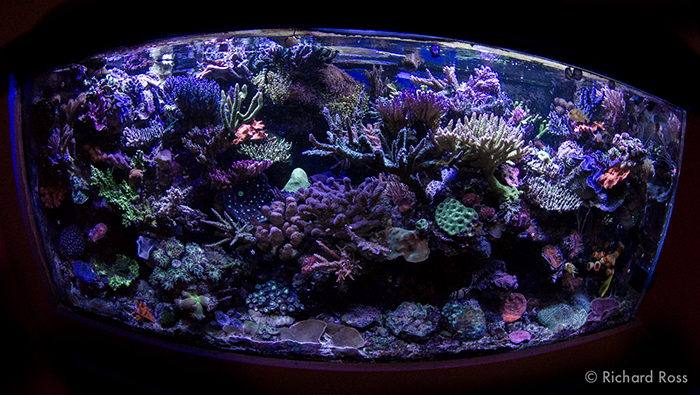
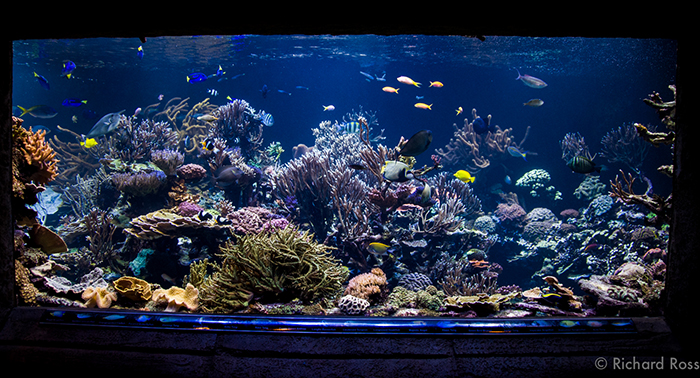
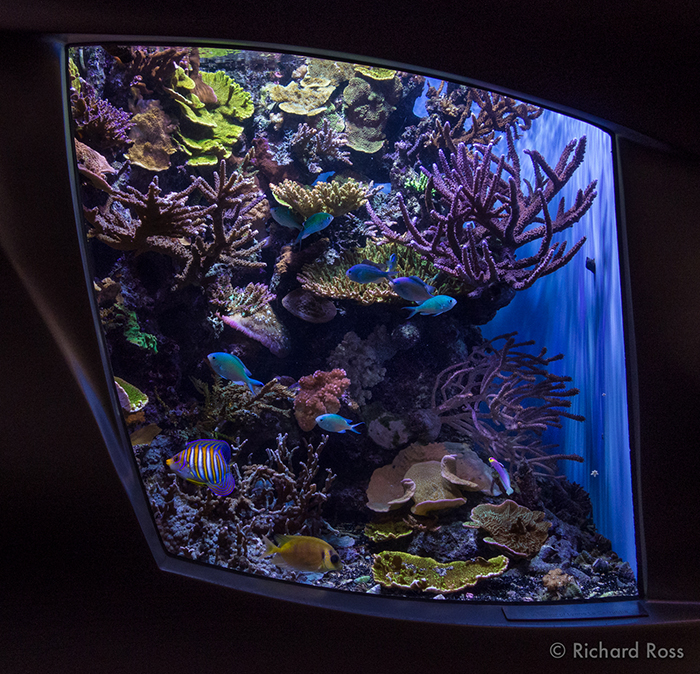
Since folks seem to keep worrying about this phosphate level (0.16 ppm), I should post these picture of SPS tanks with elevated phosphate. There are several more great examples in the article linked below:

https://reefs.com/magazine/skeptical-reefkeeping-ix-test-kits-chasing-numbers-and-phosphate/

Rich’s 150 gallon display, on a 300 gallon system, is running a phosphate level of 1.24 ppm, a level at 24.8 times higher than the often recommended .05 ppm. Photo by Richard Ross
ross01.jpg


Joe Yaillo’s 20,000 gallon reef tank at the Long Island Aquarium and Exhibition Center is arguably one of the most successful reef tanks in the world. Joe says “I am very happy if I can keep it {phosphate level} at .12 ppm. Photo by Richard Ross.

ross04.jpg


This reef tank at the Steinhart Aquarium runs a phosphate level of .1 ppm, twice the generally recommended level, but it doesn’t seem to be hurting. The corals are robust and strong.

ross05.jpg
 
My article? That's the only one posted and I'm not sure I understand what you mean.

Lots of methods work very well??? I don't understand the screwing. :D
Sorry if you took offense to the statement, that was not my intention. It's just that all solutions seemed to require another step to resolve an issue caused by a phosphate removal solution.

Also, if I may reference your "Summary of Phosphate Reduction Methods" every method has a negative side effect excluding the first one being a refugium. Which is not an option in my current setup.
#1 I do not have the ability to have a refugium.
#2 "reduces other nutrients and increases gas exchange."
#3 "Maintains calcium levels" I already have an issue with higher than desired calcium levels so I really do not want to risk this.
#4 "They can be expensive and may have other drawbacks"
#5 "makes it difficult not to drive the nutrient levels too low"

It seems that you have found a perfect balance for your system, which is great! I just personally do not want to venture to a 5 step chemical/natural process to reduce nitrates in a 24G setup, because, we all know that one mess up in such a small system can be a very big issue. Which is why I also made the stress comment. If it takes such a process to maintain proper levels then I will venture into that, but if that is the case it seems a bit overwhelming at this very moment.
 
Sorry if you took offense to the statement, that was not my intention. It's just that all solutions seemed to require another step to resolve an issue caused by a phosphate removal solution.

Also, if I may reference your "Summary of Phosphate Reduction Methods" every method has a negative side effect excluding the first one being a refugium. Which is not an option in my current setup.
#1 I do not have the ability to have a refugium.
#2 "reduces other nutrients and increases gas exchange."
#3 "Maintains calcium levels" I already have an issue with higher than desired calcium levels so I really do not want to risk this.
#4 "They can be expensive and may have other drawbacks"
#5 "makes it difficult not to drive the nutrient levels too low"

It seems that you have found a perfect balance for your system, which is great! I just personally do not want to venture to a 5 step chemical/natural process to reduce nitrates in a 24G setup, because, we all know that one mess up in such a small system can be a very big issue. Which is why I also made the stress comment. If it takes such a process to maintain proper levels then I will venture into that, but if that is the case it seems a bit overwhelming at this very moment.

I understand you are overwhelmed, but this is not that complicated or problematic to reduce phosphate. Some of the things you list as problems aren't (#2??) and most other problems can be dealt with if you just know or ask how to properly use them. I used EVERY one of those in that list at the same time and do not think there was a problem in doing so.

But if you want to lower phosphate, you need to take some action.

Some are very simple. Feed less. Skim more. Put a little well-rinsed phosguard in a media bag and hang it in your sump.
 
I understand you are overwhelmed, but this is not that complicated or problematic to reduce phosphate. Some of the things you list as problems aren't (#2??) and most other problems can be dealt with if you just know or ask how to properly use them. I used EVERY one of those in that list at the same time and do not think there was a problem in doing so.

But if you want to lower phosphate, you need to take some action.

Some are very simple. Feed less. Skim more. Put a little well-rinsed phosguard in a media bag and hang it in your sump.
You say I should not see #2 as a problem but yet your article clearly states, "Gas exchange is an issue that many aquarists don’t ordinarily recognize, but it is a primary driver of reef aquarium pH problems." ... So utilizing method #2 I would be looking at potential pH problems. Again, doing one thing causes another problem.

I understand you are using all together at the same time. That's my issue with it. I do not have the capability to utilize all of them at the same time, and according to your article that seems to be the best way to utilize them.
 
Thanks, everyone for the suggestions. I will start by changing out the Seagel media every 2 weeks and see how things are after a month or so. If nothing really changes I will look into other options like Phosguard or rowaphos.
 
You say I should not see #2 as a problem but yet your article clearly states, "Gas exchange is an issue that many aquarists don’t ordinarily recognize, but it is a primary driver of reef aquarium pH problems." ... So utilizing method #2 I would be looking at potential pH problems. Again, doing one thing causes another problem.
.

A skimmer REDUCES the problem of inadequate aeration, not cause it. Sorry, if you are misunderstanding some of these concepts.

inadequate gas exchange is the concern, not too much.

"Skimming is another good method, in my opinion. Not only does it export organic forms of phosphate, reducing the potential for them to break down into inorganic phosphate, but it reduces other nutrients and increases gas exchange."
 
See that is where the disconnect was for me. I read gas exchange being an issue so I thought it was something that needed to be perfectly in the middle.

So you're saying too much gas exchange (from a skimmer) is not a concern? I already am running a skimmer, it's not a very good skimmer, but I don't have a whole lot of options with my AIO tank. So the skimmer does not seem to be assisting in decreasing phosphates all that well. So I'll just adjust my Seagel schedule and go from there.

Thanks for being so invested in helping me figure this out! I appreciate the help!
 
Right, too much gas exchange is never a problem, unless the air you are aerating with is bad for some reason. :)

Skimmers are not all that powerful in reduce phosphate because phosphate itself is not skimmable. It is just organics and bacteria that contain phosphate that can be skimmed before they break down to release detectable phosphate.

The Seagel plan is a fine one, but a pure phosphate binder like Phosguard alone (one of two components in Seagel) may be more efficient/cheaper. The phosphate binder may deplete before the GAC in the product is used up (when phosphate is high). .
 

IF YOU HAD TO TAKE A REEFING EXAM, WOULD YOU PASS?

  • Yes!

    Votes: 32 45.7%
  • Not yet, but I have one that I want to buy in mind!

    Votes: 9 12.9%
  • No.

    Votes: 26 37.1%
  • Other (please explain).

    Votes: 3 4.3%
Back
Top