Navigation
Install the app
How to install the app on iOS
Follow along with the video below to see how to install our site as a web app on your home screen.
Note: This feature may not be available in some browsers.
More options
You are using an out of date browser. It may not display this or other websites correctly.
You should upgrade or use an alternative browser.
You should upgrade or use an alternative browser.
Bleeker Blue Devil Fish
- Thread starter Horn
- Start date
- Tagged users None



Bleekeri Damselfish... they're nice tough little fish. Typical damselfish character and a head turner.

No, not the damsel, it is Paraplesiops bleekeri. The name devil fish is such a misleading name, as this is an extremely peaceful fish. It can be shy at first, but relatively quickly recognizes it's owner and will come to greet you, very personable.
Behaviorly it is very similar to a marine betta, though the blue devil gets larger. It is extremely hardy and will survive poor water quality and some disease outbreaks. They are not picky eaters, though in the beginning you may not see them eat.
Despite their size the Paraplesiops bleekeri are not predatory. I have kept them with "bite sized" gobies without issue. However, I have seen other Paraplesiops species eat fish, so take that for what it is.
This is an underrated and infrequently encountered fish. I highly recommend them. Sturdy enough to be kept in a FOWLR, peaceful enough for a reef.
Behaviorly it is very similar to a marine betta, though the blue devil gets larger. It is extremely hardy and will survive poor water quality and some disease outbreaks. They are not picky eaters, though in the beginning you may not see them eat.
Despite their size the Paraplesiops bleekeri are not predatory. I have kept them with "bite sized" gobies without issue. However, I have seen other Paraplesiops species eat fish, so take that for what it is.
This is an underrated and infrequently encountered fish. I highly recommend them. Sturdy enough to be kept in a FOWLR, peaceful enough for a reef.

No, not the damsel, it is Paraplesiops bleekeri. The name devil fish is such a misleading name, as this is an extremely peaceful fish. It can be shy at first, but relatively quickly recognizes it's owner and will come to greet you, very personable.
Behaviorly it is very similar to a marine betta, though the blue devil gets larger. It is extremely hardy and will survive poor water quality and some disease outbreaks. They are not picky eaters, though in the beginning you may not see them eat.
Despite their size the Paraplesiops bleekeri are not predatory. I have kept them with "bite sized" gobies without issue. However, I have seen other Paraplesiops species eat fish, so take that for what it is.
This is an underrated and infrequently encountered fish. I highly recommend them. Sturdy enough to be kept in a FOWLR, peaceful enough for a reef.
Yes, that Pieter Bleeker was a busy guy!! Named a lot of fish after himself!!

revhtree
Owner Administrator
View Badges

Staff member
Super Moderator
Reef Squad
Partner Member 2024
Excellence Award
RGB
Photo of the Month
Article Contributor
R2R TV Featured
Hospitality Award
Article Administrator
Black Friday Sponsor
Industry Professional
My Tank Thread
My Aquarium Showcase
- Joined
- May 8, 2006
- Messages
- 49,234
- Reaction score
- 98,071
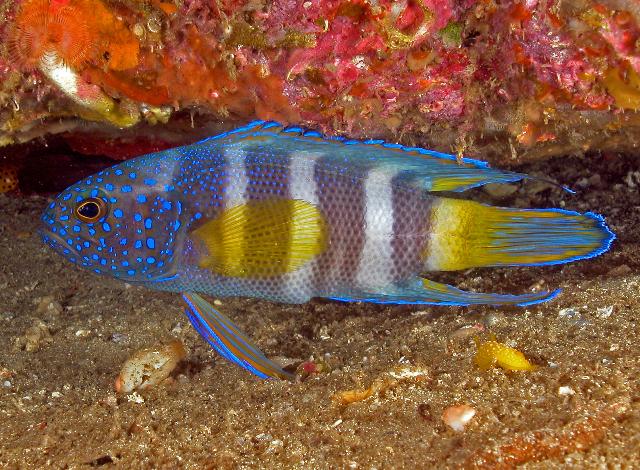
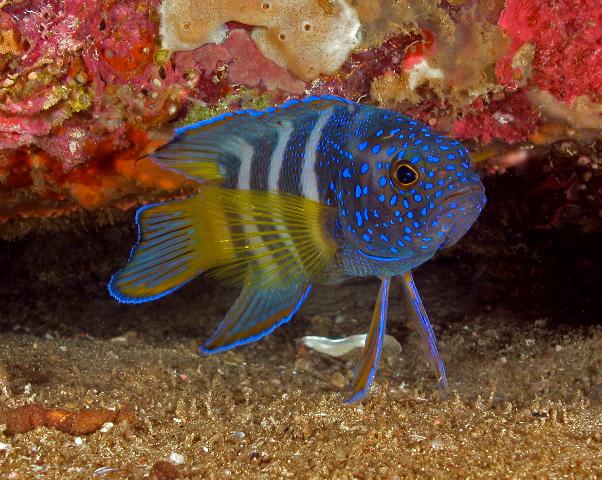
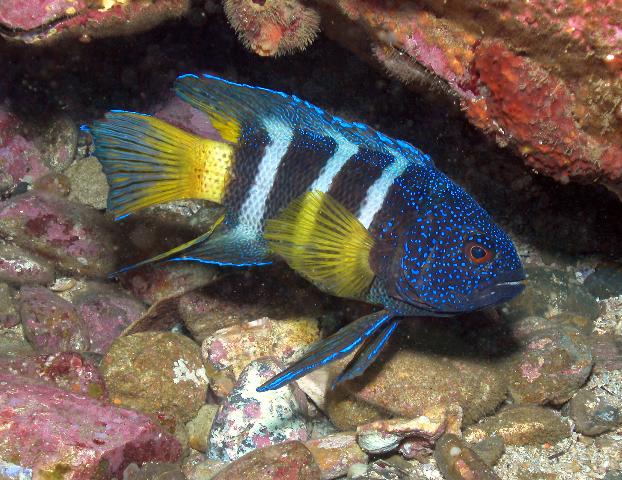
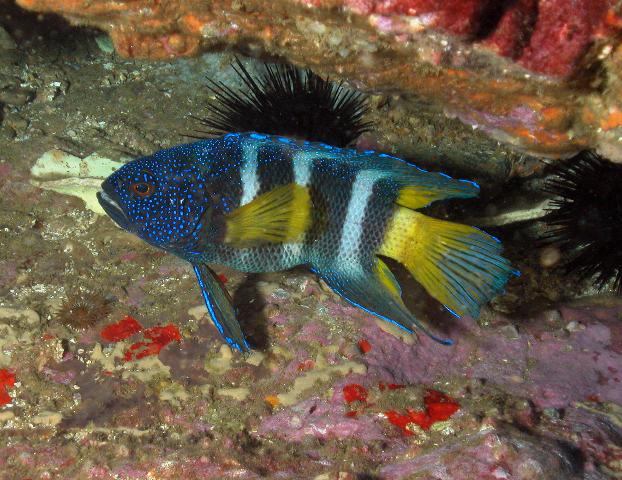
Is this the fish we're speaking of? 

revhtree
Owner Administrator
View Badges
Staff member
Super Moderator
Reef Squad
Partner Member 2024
Excellence Award
RGB
Photo of the Month
Article Contributor
R2R TV Featured
Hospitality Award
Article Administrator
Black Friday Sponsor
Industry Professional
My Tank Thread
My Aquarium Showcase
- Joined
- May 8, 2006
- Messages
- 49,234
- Reaction score
- 98,071
"The Blue Devil is considered to be one of the most colourful and attractive fish species found along the east coast of Australia."
The Eastern Blue Devil Fish (Paraplesiops bleekeri) is also known as the Bleeker's Blue Devil Fish and is one of the most beautiful fish species in Australia's waters. It is a shy, secretive fish that is found inside caves and under ledges in inshore reefs in NSW estuaries and offshore waters from three to thirty metres. It occurs on the east coast from southern Queensland to Montague Island, but is most common in NSW from Sydney southwards to Ulladulla. Around Sydney it occurs in the more saline parts of estuaries, along the rocky coastline and around offshore islands.
They are fecund breeders, however juveniles are rarely seen. They are often solitary and are most active during the night however little is known about their diet. The Eastern Blue Devil Fish is a protected fish species in New South Wales, and there are heavy penalties for taking, selling or possessing them. This species is popular with divers and photographers because of its striking iridescent blue and yellow markings.
The Eastern Blue Devil Fish is most easily recognised by its banded pattern of blue and white strips on the body, blue spotted head, blue dorsal and anal fins and yellow caudal (tail) fin and base and pectoral fins. The pelvic fins and posterior dorsal and anal fins are elongated. When the blue devil fish spreads these fins they overlap, making the fish appear larger.
It is thought that the male defends a territory in a cave or overhang in order to attract a mate and will drive other males away. This fish is known to mate in spring. The breeding season for the Eastern Blue Devil is between the months of October and March. The species lays its eggs in a group or nest that is glued to the roof of a cave until they hatch. Free swimming larvae, approximately 4mm long, hatch from the eggs and settle around reef areas when they have grown to about 10mm. It grows to 40cm in length. This species is also known to reside in the same cave for long periods of times. There are a couple of individuals that have been observed in the same cave for over three years in locations such as Jervis Bay and Fish Rock off South West Rocks.
The Eastern Blue Devil Fish is very closely related to the Southern Blue Devilfish (Paraplesiops meleagris) that is found in the cooler waters of southern Australia
source
Is this the fish we're speaking of?
Yes, that's it.
Declared a protected species, they're illegal to take from Aussie waters.
http://www.dpi.nsw.gov.au/__data/as...ern-blue-devil-fish-Primefact-165---final.pdf
I have a sneaking suspicion that we're talking about Paraplesiops Meleagris (Western Blue Devil) which I see in the industry relatively frequently. I hadn't seen the P. Bleekeri since the 1980's or 90's

Last edited:
Yeah, you're right it is likely P. meleagris.Yes, that's it.
Declared a protected species, they're illegal to take from Aussie waters.
http://www.dpi.nsw.gov.au/__data/as...ern-blue-devil-fish-Primefact-165---final.pdf
I have a sneaking suspicion that we're talking about Paraplesiops Meleagris (Western Blue Devil) which I see in the industry relatively frequently. I hadn't seen the P. Bleekeri since the 1980's or 90's

They are both beautiful fish whichever the OP is referring to 

No, not the damsel, it is Paraplesiops bleekeri. The name devil fish is such a misleading name, as this is an extremely peaceful fish. It can be shy at first, but relatively quickly recognizes it's owner and will come to greet you, very personable.
Behaviorly it is very similar to a marine betta, though the blue devil gets larger. It is extremely hardy and will survive poor water quality and some disease outbreaks. They are not picky eaters, though in the beginning you may not see them eat.
Despite their size the Paraplesiops bleekeri are not predatory. I have kept them with "bite sized" gobies without issue. However, I have seen other Paraplesiops species eat fish, so take that for what it is.
This is an underrated and infrequently encountered fish. I highly recommend them. Sturdy enough to be kept in a FOWLR, peaceful enough for a reef.
Are they able to survive long term in the typical reef tanks temperature? Say 78°F.
I've had P. meleagris live 5+ years in tropical temps.
I've had P. meleagris live 5+ years in tropical temps.
Awesome sounds like it would be worth it then. I've always loved this fish now I'll just have wait till one turn up. I've only ever seen one in person for sale.