

Navigation
Install the app
How to install the app on iOS
Follow along with the video below to see how to install our site as a web app on your home screen.
Note: This feature may not be available in some browsers.
More options
You are using an out of date browser. It may not display this or other websites correctly.
You should upgrade or use an alternative browser.
You should upgrade or use an alternative browser.
Breeding hermit crabs
- Thread starter Reef0holic
- Start date
- Tagged users None



Paul B
10K Club member
View Badges
Excellence Award
Reef Tank 365
Reef Of The Month
Article Contributor
Rock Pool Reef Keepers
Hermit crabs spawn in tanks all the time, but raising the fry in a home tank I feel would be impossible. They need to hang out with plankton at the surface for a few molts before they sink down as crabs.
It will be very difficult to provide the appropriate food at that time. But good luck, I wish you success.
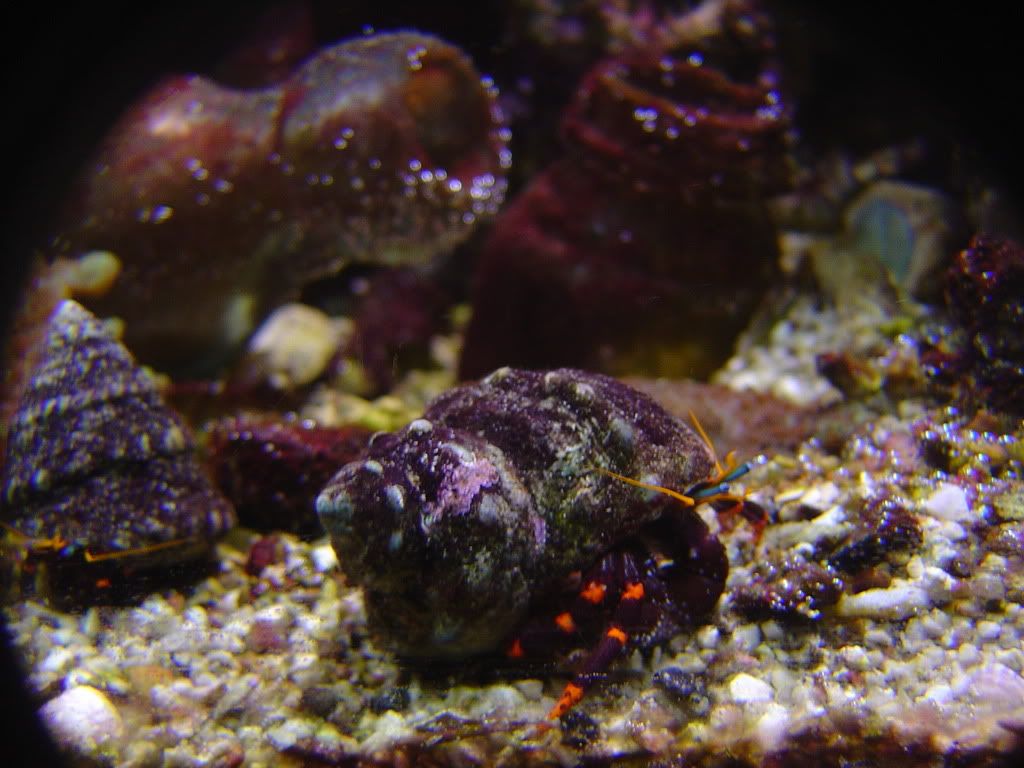
These guys lived and spawned in my tank for about 10 years and my tank is very old. I haven't seen any baby crabs yet.

It will be very difficult to provide the appropriate food at that time. But good luck, I wish you success.
These guys lived and spawned in my tank for about 10 years and my tank is very old. I haven't seen any baby crabs yet.

- Joined
- Nov 30, 2020
- Messages
- 932
- Reaction score
- 1,070
- Location
- United States
- What state or country do you live in
- Louisiana
The hardest part IMO would be to find suitable shells for them once they do settle. Probably need to breed your own snails first.


Once you've got the crabs spawning, I'd assume the shells would be the hardest part (as mentioned above). Hermit crabs of a variety of different genera and species have actually been reared with some frequency in laboratory settings, but to my knowledge they rarely get the crabs to actually settle past the megalopa or glaucothoe stages (likely due to the lack of shells). Rearing them to that point, however, typically only takes Artemia nauplii (Baby Brine Shrimp) - though some people have added things like Tisochrysis galbana and Brachionus plicatilis (L-Strain Rotifers). I don't know if adding things helps or not with survival rates, but I honestly wouldn't worry about it until you've managed to either rear one species successfully, or confirm that there's a food related bottleneck preventing the transition from larvae to crab.
So, the two real issues I'd see that you would need to work around are the planktonic/pelagic larvae (as Paul B mentioned) and the shells.
For the planktonic/pelagic larvae, you'd likely need a larval rearing tank/grow out tank that's planktonic larvae friendly, and the labs generally stock ~100 larvae per liter. There's been quite a bit of work done with planktonic larvae in recent decades, so the information on how to do this is out there, but, generally speaking, the simpler the setup, the better (no skimmer, biological rather than mechanical filtration or limited/larvae safe mechanical filtration, a water change routine that doesn't pull the larvae from the setup, etc.).
For the shells, you could either try to breed your own snails for the shells, or you could make your own (3D-print or hand make). The first requires the right kind of snails while the second requires you to shape the inside of the shell in a way that is preferred by the hermits (the inside is the most important part - they don't seem to care much about the outside - and you'd need to imitate their preferred snail shell interior to the best of your abilities). Both methods would require you figuring out the proper size of shell for the hermits - if there's a specific species you'd like to breed, you could estimate size based on the average larval hermit size for that species at the time they go to molt to leave the megalopa/glaucothoe stage and enter the first crab stage.
For the specifics of the feeding and rearing tank stocking, it seems most labs stock ~100 hermit larvae per liter, and the only report I found that listed the amount of BBS fed used ~5,000 nauplii per liter (so roughly 50 nauplii per hermit).
This would be a fun project, but - fair warning - figuring out the shells will likely be a time consuming and difficult process. If you decide to give it a shot, keep us updated on how it goes - good luck!
So, the two real issues I'd see that you would need to work around are the planktonic/pelagic larvae (as Paul B mentioned) and the shells.
For the planktonic/pelagic larvae, you'd likely need a larval rearing tank/grow out tank that's planktonic larvae friendly, and the labs generally stock ~100 larvae per liter. There's been quite a bit of work done with planktonic larvae in recent decades, so the information on how to do this is out there, but, generally speaking, the simpler the setup, the better (no skimmer, biological rather than mechanical filtration or limited/larvae safe mechanical filtration, a water change routine that doesn't pull the larvae from the setup, etc.).
For the shells, you could either try to breed your own snails for the shells, or you could make your own (3D-print or hand make). The first requires the right kind of snails while the second requires you to shape the inside of the shell in a way that is preferred by the hermits (the inside is the most important part - they don't seem to care much about the outside - and you'd need to imitate their preferred snail shell interior to the best of your abilities). Both methods would require you figuring out the proper size of shell for the hermits - if there's a specific species you'd like to breed, you could estimate size based on the average larval hermit size for that species at the time they go to molt to leave the megalopa/glaucothoe stage and enter the first crab stage.
For the specifics of the feeding and rearing tank stocking, it seems most labs stock ~100 hermit larvae per liter, and the only report I found that listed the amount of BBS fed used ~5,000 nauplii per liter (so roughly 50 nauplii per hermit).
This would be a fun project, but - fair warning - figuring out the shells will likely be a time consuming and difficult process. If you decide to give it a shot, keep us updated on how it goes - good luck!
OP
OP

- Joined
- Oct 23, 2022
- Messages
- 21
- Reaction score
- 4
- Location
- Hull
- What state or country do you live in
- United Kingdom
I have collected shells from the ocean about 2mm to 15mmThe hardest part IMO would be to find suitable shells for them once they do settle. Probably need to breed your own snails first.

I'm not entirely sure, but you may need to get even smaller than that - some megalopa stage hermit crabs have a carapace length of 0.8 to 1.0 mm (and some may be even smaller than that). So, you may need shells in the 1.0-2.0 mm range as well. Definitely off to a good start with that 2-15mm range though.I have collected shells from the ocean about 2mm to 15mm

- Joined
- Oct 4, 2022
- Messages
- 2,221
- Reaction score
- 2,074
- Location
- Outer Space
- What state or country do you live in
- Connecticut
Can they not survive at all without shells (even in a tank)? Are they seeking baby snails at that stage for shells and stealing it from them or just finding randoms? Curious...following
- Joined
- Aug 28, 2018
- Messages
- 1,273
- Reaction score
- 555
- What state or country do you live in
- New York
I would think that most fish keepers have some extra smaller shells even if it's in a tank somewhere. I've had so many snails over the last few years that I have tons of shells in my tank.


But the shells you'd need for the earliest settled stages would have to be just a few mm in length, tops, which are much more likely to just sink into the sand than be in a collection.
In any case, I've had hermits spawn in my tank a few times, the larvae are fairly strong/jerky swimmers and when viewed under magnification, they clearly curl their tail under their body pretty frequently. They are maybe 2/3 the length of a lysmata shrimp larvae, so fairly small but bigger than most adult copepods.
I added a batch of them caught to an already running lysmata shrimp tank filled with copepods and phyto (several species of each, some copepods definitely too big for them) to see if they took and they all ended up gone around day 5-6. Not 100% on which species hermit they were from, but I've got a few in the tank who seem to.
My larval density was definitely lower than described above, so that probably wasn't the limiting factor, but including adult copepods likely made feeding more difficult for them - an advantage of artemia is that since you're hatching them and feeding them quickly, you get pretty similar sizes/development from your food organisms. While I typically seive copepods for size (and this has a similar effect), since the vessel already had been started on a different run, there were substantially older/larger copepods already in the mix.
In any case, I've had hermits spawn in my tank a few times, the larvae are fairly strong/jerky swimmers and when viewed under magnification, they clearly curl their tail under their body pretty frequently. They are maybe 2/3 the length of a lysmata shrimp larvae, so fairly small but bigger than most adult copepods.
I added a batch of them caught to an already running lysmata shrimp tank filled with copepods and phyto (several species of each, some copepods definitely too big for them) to see if they took and they all ended up gone around day 5-6. Not 100% on which species hermit they were from, but I've got a few in the tank who seem to.
My larval density was definitely lower than described above, so that probably wasn't the limiting factor, but including adult copepods likely made feeding more difficult for them - an advantage of artemia is that since you're hatching them and feeding them quickly, you get pretty similar sizes/development from your food organisms. While I typically seive copepods for size (and this has a similar effect), since the vessel already had been started on a different run, there were substantially older/larger copepods already in the mix.
- Joined
- Aug 28, 2018
- Messages
- 1,273
- Reaction score
- 555
- What state or country do you live in
- New York
Barebottom tank maybe with... I think I remember hearing of a paper where this was done with glass shells... I may be mistaken or remembering a different invertBut the shells you'd need for the earliest settled stages would have to be just a few mm in length, tops, which are much more likely to just sink into the sand than be in a collection.
In any case, I've had hermits spawn in my tank a few times, the larvae are fairly strong/jerky swimmers and when viewed under magnification, they clearly curl their tail under their body pretty frequently. They are maybe 2/3 the length of a lysmata shrimp larvae, so fairly small but bigger than most adult copepods.
I added a batch of them caught to an already running lysmata shrimp tank filled with copepods and phyto (several species of each, some copepods definitely too big for them) to see if they took and they all ended up gone around day 5-6. Not 100% on which species hermit they were from, but I've got a few in the tank who seem to.
My larval density was definitely lower than described above, so that probably wasn't the limiting factor, but including adult copepods likely made feeding more difficult for them - an advantage of artemia is that since you're hatching them and feeding them quickly, you get pretty similar sizes/development from your food organisms. While I typically seive copepods for size (and this has a similar effect), since the vessel already had been started on a different run, there were substantially older/larger copepods already in the mix.
Hermits will accept glass shells - again, as long as the inside is right, they'll usually take it (though there have been studies showing that the hermits will be more likely to accept a shell if you coat it in calcium carbonate).Barebottom tank maybe with... I think I remember hearing of a paper where this was done with glass shells... I may be mistaken or remembering a different invert
As I understand it, marine hermits can technically survive without a shell (I've heard that land hermits need the shell to help with humidity regulation to prevent desiccation), but I imagine the stress of being without a shell would probably shorten their lifespan dramatically and would probably prevent settling (similar to how certain fish/invert species need specific substrates in order to settle out of the larval phase - without that specific substrate, the larvae just die off).Can they not survive at all without shells (even in a tank)? Are they seeking baby snails at that stage for shells and stealing it from them or just finding randoms? Curious...following
Its possible that the hermits are seeking out baby snails (whether or not hermits are capable of killing snails for their shells seems to vary by size and species, with larger species being much more capable than smaller ones - some smaller species are borderline incapable of actually killing a snail for its shell), but they most likely just look around for any shell that might work.

OP
OP
- Joined
- Oct 23, 2022
- Messages
- 21
- Reaction score
- 4
- Location
- Hull
- What state or country do you live in
- United Kingdom

The larvae will start a little shy of 2mm or so, and they probably won't be double the length when they settle, so I think a starting size shell would probably be about half that length/opening size, but it may not need to be quite that small.
I think the artemia nauplii suggestion is a good one for food because it's consistent and widely available, but it seems copepods are usually better nutritionally, so I would look into starting to culture some with small nauplii stages. It would also be worth culturing live phytoplankton to feed the live food - just have to find what's going to be eaten by the live food and then maybe try feeding the larvae some too - there may be hermit larvae that can eat it too.
If you're serious about trying this, though, don't just ask around for forum responses - very few have done it successfully, and while I have some experience with the larvae and raising other things, even most of my recommendations are educated guess starting points rather than a formula for doing it properly. If you want the best picture, you want to find scientific papers about raising them - even related species that aren't the one you decide on - and try to get some recommendations on setups and procedures that have yielded some success for people. At that point, you can gather your equipment, start your live food cultures, and start making attempts to collect, house, feed, and raise the larvae. Provided, of course, that you already have broodstock that are spawning.
I think the artemia nauplii suggestion is a good one for food because it's consistent and widely available, but it seems copepods are usually better nutritionally, so I would look into starting to culture some with small nauplii stages. It would also be worth culturing live phytoplankton to feed the live food - just have to find what's going to be eaten by the live food and then maybe try feeding the larvae some too - there may be hermit larvae that can eat it too.
If you're serious about trying this, though, don't just ask around for forum responses - very few have done it successfully, and while I have some experience with the larvae and raising other things, even most of my recommendations are educated guess starting points rather than a formula for doing it properly. If you want the best picture, you want to find scientific papers about raising them - even related species that aren't the one you decide on - and try to get some recommendations on setups and procedures that have yielded some success for people. At that point, you can gather your equipment, start your live food cultures, and start making attempts to collect, house, feed, and raise the larvae. Provided, of course, that you already have broodstock that are spawning.

- Joined
- Mar 22, 2023
- Messages
- 919
- Reaction score
- 722
- Location
- Northern California
- What state or country do you live in
- California
Wow I did not know hermit crabs lived that long in home aquariums! What kind of hermit crab is that?Hermit crabs spawn in tanks all the time, but raising the fry in a home tank I feel would be impossible. They need to hang out with plankton at the surface for a few molts before they sink down as crabs.
It will be very difficult to provide the appropriate food at that time. But good luck, I wish you success.
These guys lived and spawned in my tank for about 10 years and my tank is very old. I haven't seen any baby crabs yet.












