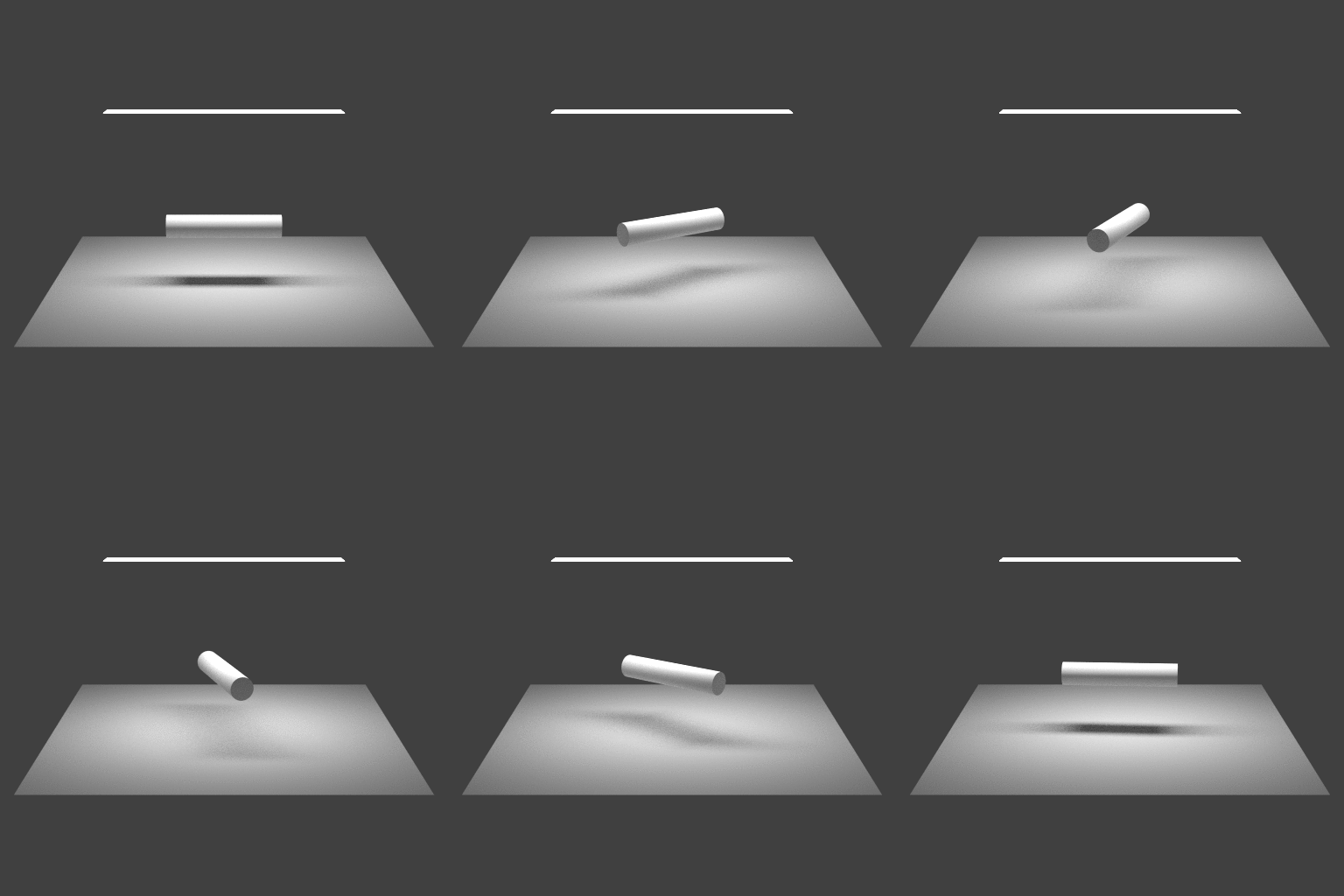
Found some diagrams that may clarify some things on shadows and coverage....and there's going to have to be a thread on this sooner or later now.
 Why don't fluorescent lights produce shadows?
 from Stack Exchange has these under a physics topic.
(Ignore the inferred premise....fluorescent's
do produce shadows....click the link and read on!)
This animation would approximate a spotlight shadow....and a lens change between wide and narrow.
This demo shows an extreme change and you can see shadows do not disappear. Most folks only make minor lens changes, such as from 80º to 120º.
The second animation would approximate something like T5 or an LED strip.
This pretty clearly shows the difference of an "area light".....and that there are still shadows, but really only along one plane.
The link has more good info and more graphics.