Coral exposure to air?

  • Thread starter Thread starter Floyd-
  • Start date Start date
  • Tagged users None

Floyd-

Well-Known Member
View Badges
Joined
Apr 28, 2021
Messages
957
Reaction score
750
Location
Fort Walton Beach, FL
What state or country do you live in
Florida
Rating - 0%
0   0   0
I have a lot of algae and general crud in my 45gallon tank. I was thinking of taking all the rock and corals out and cleaning the rocks in some fresh mix salt water and then place everything back in. My question is it going to hurt the corals to be exposed to air during the transfer into the buckets for rinsing and scrubbing of the rocks? Previous owner said that some of the corals I bought CANNOT be exposed to air and I just want to triple check before I do this.
If they can be exposed to air how long is acceptable?

123.jpg
 
For the most part you should be fine to do that as long as it's no longer than an hour and everything is kept moist. Don't let anything sit dry.

Only thing I'd really worry a lot about is if you have a tons of sponges growing there.
 
I have had all of my softies and LSP and a birds nest SPS out of the water for over 20 minutes. I do spray them down with tank water every so often and have never lost one.
 
Only thing I'd really worry a lot about is if you have a tons of sponges growing there.

Sponges will pretty much die instantly outside of water other corals are fine for extended periods outside of water as long as they stay moist.
Sorry for being naive. Which are the sponges? Im still trying to figure out what corals are in here and what they require. Previous owner didnt tell me much.
 
Sorry for being naive. Which are the sponges? Im still trying to figure out what corals are in here and what they require. Previous owner didnt tell me much.

Thats okay we all have to learn, its especially tricky if you jump in with a whole system! Most people don't keep them becuase they are hard to keep, some small ones might naturally pop up in your tank but wouldn't worry about them
I don't see any in your tank

If you can remove the corals from the rock you can always just take them off and set them in the sandbed to clean the rock.
 
Yeah you can do that as well , sponges generally will look like white stuff growing inside the dark parts of the rocks. Though it can be on top and many different shapes colors and textures.
 
Thats okay we all have to learn, its especially tricky if you jump in with a whole system! Most people don't keep them becuase they are hard to keep, some small ones might naturally pop up in your tank but wouldn't worry about them
I don't see any in your tank

If you can remove the corals from the rock you can always just take them off and set them in the sandbed to clean the rock.
This was bought as a whole setup system so its a bit to learn about all the different corals that I bought with the deal. I also have a 175 gallon tank but its just fish at the moment and so much easier to take care of. Corals are picky little buggers. Some of the coral on the rock I can remove (its just sitting on there) encrusting ones I cannot. I still have yet to find a epoxy and glue setup that works for me.
 
Yeah you can do that as well , sponges generally will look like white stuff growing inside the dark parts of the rocks. Though it can be on top and many different shapes colors and textures.
I dont have any of that in this tank but I do in the sump of my other tank. I was wondering what that was!
 
I used regular ol super glue , but the epoxy glue method works well for getting things to stick if there isn't much to jam them into or smooth surfaces.
 
This was bought as a whole setup system so its a bit to learn about all the different corals that I bought with the deal. I also have a 175 gallon tank but its just fish at the moment and so much easier to take care of. Corals are picky little buggers. Some of the coral on the rock I can remove (its just sitting on there) encrusting ones I cannot. I still have yet to find a epoxy and glue setup that works for me.
Here is some good glue at a better price than the hardware store. It is fairly thick for superglue. Clean off the rock area well with a stiff toothbrush before gluing it on. It may not stick to really uneven surfaces on the first try, but that glue will mold to the shape of the rock, making it fit better when you try again. This has worked for me so far.

 
Chipchip I gotta save it for the crescendo :)


Floyd, you are describing 7/10ths of what we call a rip clean, it’s ideal to do because it allows you to detail clean without having to alter your params, or restrict food, or add dosers that may bleach your reef.


you need to know something about the other 30%, the sand


leaving it unrinsed is bad, not good. Rinsing it to pure clean perfection then applying your plan is stabilizing, not destabilizing, we have access to some rather unique procedure to make your tank shine like a gem. This usually sounds totally crazy to the avg passerby

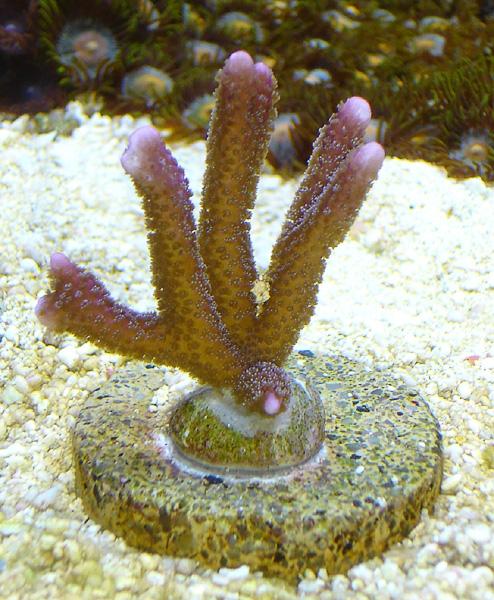
Every coral in your pic above can sit out in the air on a dinner plate for 30 mins easily, right now, with no prep


your rocks as well, it does not recycle. Chip has seen the vids of nearly those exact corals doing half an hour in the air and you could just as easily squirt water to avoid the fear, but that’s how long the system above could be drained if you wanted to prove a point. No mini cycle happens, nothing happens, reef life can by and large easily tolerate air despite the online rumors.


keeping waste in that sandbed isn’t ideal. It means algae grows back faster on the rocks once cleaned.


if you want total perfection after assembly do the 10/10 method and let’s plan a rip clean, it’s the shiniest and least work your reef will be for the next eight months till reefing compounds waste again and you’re at similar crossroads. But to do all that rock work and pour mixed water over cloud sand is bad, not good, dont follow the greater path of recommend heads up. It’s not that anything is wrong w the tank above, it’s that your whole sandbed is about to be exposed and cleaning filth is good, storing filth is bad. If you want to do the right way we can live time run a rip clean and your planned rock surgery here

the sole point of a rip clean is your tank has zero detritus in it

that’s the goal. Then you feed like a monster thereafter it’s a weightlifting clean and bulk phase for your corals. In current waste loads and algae starts you are responding to, any coral bulk feeding adds to waste and grows more plants.


but post rip clean is like going keto for ten months then bulking with super sets for your corals. Xplode mass. But you have to prep the surrounding tank to be ready to take on more mass, not hesitantly process that which is already packed in.
 
Last edited:
@shadow_k


for his tank here the rip is simply because if we are going rocks totally out of the tank getting dentistry, why put them back over filthy tongue and gums

it all gets cleaned at the 2021 dentists office, no half moves, work the reef as a complete unit all at once is where the sharp after pics come from

we must see your recent two month post rip update :)

Here’s the one you sent last month I can only assume it’s still gemlike

DE0895B1-1D21-453D-9444-C1C83F9D7FC2.jpeg

that sandbed would not cloud one iota if we shoved a stick in there and moved it wildly back and forth. It took a hundred rinses with tap water in a bucket to earn this


as if the average Joe would ever do a hundred lol at rinse number four every trained cell in the human body is screaming: Dr. Tim! Dr. Tim! I need the juice to survive


if shadow wants to squirt rods food directly into coral‘s open mouth at 5 am every day he can until they’re swole. The reef runs clean because he’s adding mass into clean spaces, not mass into algae spaces


****the sandbed in the Op’s tank up top isn’t in a dangerous shape. It will not kill the tank to skip rinsing, it simply will not sustain the clean rock condition as long as a rip cleaned bed will sustain it. The only thing in the ops sandbed is waste mud and six copepods that’s won’t survive the cleaning, but come back off the rocks in due time just the same. There is no biological benefit to keeping sandbed waste, it is the source of aging and senescence in the reef tank. It’s ok to skip rinsing now if the fear cannot be abated but one day it’ll need rinsing, practice today is best

a hundred rinses in tap

last rinse in RO water to evacuate tap

put back the cleanest sand you’ve ever beheld. Stack your detailed rocks back on top

fill with all new water matching temp and salinity to holding water for animals

put it all together instantly, cloudlessly, don’t add bottle bac nothing is going to die, = rip clean number 16,879

all your corals and rocks are air able right now for half an hour or more, 33 mins is my longest reef drain and that was just to make a cycling point. You can use a mister bottle of saltwater and the whole system could go half a day or longer sitting on the counter. All the corals shown in the Op’s tank above are in my pico reef that has endured hundreds of half hour emersions


*re ramp your lights in the new tank don’t start full power.
 
Last edited:
We have been trained they’re bad. Since the inception of reefing the maximum hands off was the preferred method

but nowadays we know that completely intercepting any unwanted condition, such as tank aging and tilt towards plant dominance, can be done by simple free of charge deep cleaning


today’s current training is about selling us retail dosers to mitigate claimed insults from cleaning, but they don’t tell us that deep cleaning opens formerly clogged pores all over the system, directly causes more surface area to be exposed vs the pre cleaned plug condition, even if that status is way in the early stages like the Op’s tank shows. Most would agree it’s at the top of the bell curve, ideal looking, why insult it


but that’s the miscue, by leaving zero waste in the system and handling the rocks in such a way as to keep their bacteria alive just fine (Floyds original plan is great for preserving rock bacteria) we simply extend the bell curve into a much flatter sustained curve. Dealing in systems halfway is the risk because waste stores stratify into different layers of oxidation, decay etc and to mix that all about is bad, not good risk. nanos simply make it easy to take total command, we are trained by large tankers who usually won’t.


and when I say usually, that does not apply to Jon M :) rip cleans a 120 reef four times in one thread. True rip cleaners go way, way, way beyond average attempts lol. There’s clear rinsing, and then there’s 100+ rinses in a Home Depot bucket you did.

there’s halfway cleaning a reef, and there’s:


Floyd, even though u just got post bombed, welcome to ageless reef keeping this is a cheat to zero biological lifespan limit. When moving homes or upgrading run the rip clean before assembly, it keeps all reefs alive during surgery, always. Reefs were designed to be ripped and flipped in the high energy zones, we cause that above.

You were already on its trail.

 
Last edited:
Wow yes the thread got bombed!
Yesterday I did a 25% change and sucked the algae off the rocks best I could. That stuff is REALLY on there. I was moving the rocks around a little tugging on the algae. I cannot get it all. I might in fact have to use a brass brush or something. Not even a toothbrush would touch it.
I also cleaned out all the empty shells.

I will take a picture tonight so you can see the "update" Then I can make a "rip clean" thread somewhere, maybe the build threads?

My BTAs have been tucked in for over a week along with some other corals. My alk was at 7.4 do I added a little last night to raise it up. Everyone seemed to like it staying above 8 dkH
 
He wasn't going to live long anyway unless he's getting direct food pellets. Sandbed life isn't what he's feeding on so a rinse won't hurt any. A rip clean done safely is the whole job done at once, this post above didn't have the sand cleaned out so it's a blended type setup. If you want safety planning before running the sandbed clean holler and we'll plan before the job starts
 
I think cleaning the sand will have the best impact on performance. When I bought this tank setup the PO told me not to rinse and just place it back in and let it go.
Granted ive read a crap ton since then and I was stupid for not rinsing it. It smelled a bit when I placed it in there and its always been murky. This 45 gallon has been setup for 5 months
My 175 gallon tank I rinsed the crap out of the sand and its been perfectly fine for months.
 

IF YOU HAD TO TAKE A REEFING EXAM, WOULD YOU PASS?

  • Yes!

    Votes: 32 45.7%
  • Not yet, but I have one that I want to buy in mind!

    Votes: 9 12.9%
  • No.

    Votes: 26 37.1%
  • Other (please explain).

    Votes: 3 4.3%
Back
Top