Coral RTN with algae underneath tissue?

eschulist

Active Member
View Badges
Joined
Apr 4, 2012
Messages
352
Reaction score
802
Location
Minneapolis
What state or country do you live in
Minnesota
Rating - 0%
0   0   0
I recently did a live stock transfer between 2 tank setups.

The transfer didn't seem to go the smoothest as I had a couple SPS perish on me within 2-4 days of the switch.

The tank transfer happened last Friday night.

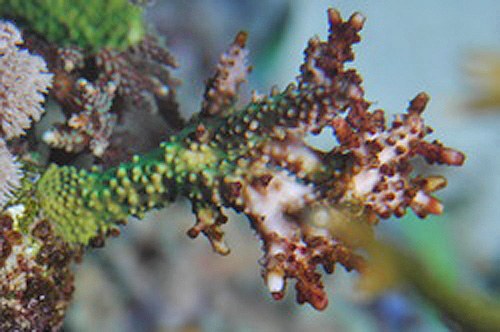
On the first night (Saturday) 24 hours later I lost a Red Dragon colony. It was your standard RTN. Within hours of starting the tissue was peeling off and showing bright white skeleton underneath. On the 3rd and 4th day other acros started dying as well. But they looked different. I had 2 torts. A Myiagi and Oregon tort what started showing signs of tissue loss on Monday. By Monday night/tues the corals were pretty much dead with little to no tissue left. I pulled them out and noticed almost the entire coral except for a small patch at the top had green skeleton. It was dark too like it had been growing a long time. However just days prior the entire coral was covered in blue healthy tissue. What would have caused this?

I can post pictures of the dead corals later tonight.

 
Dunno. It's a white coral under bright light. I'd kinda guess it's the same algae that develops on the glass.
 
It was the exact same salt mix with the new tank running for months prior to the transfer. The parameters may not have been the same in the but they should have been close.

The acros RTNing due to alk or nutrient imbalanced between the tanks is one thing but the way they look when dying was very strange. Like the underlying coral skeleton was already dead and has been for maybe months but living tissue was growing on top making it seem like the coral was perfectly healthy.
 
Much like a tree the underlying skeleton is 'dead', protected by the living outer layer.

Can you provide a pic? Sometimes exposed dead areas can turn green very fast.
 
Much like a tree the underlying skeleton is 'dead', protected by the living outer layer.

Can you provide a pic? Sometimes exposed dead areas can turn green very fast.
A tree is not dead on the inside.
Coral is bone and is also not dead
 
A tree is not dead on the inside.
Coral is bone and is also not dead
  1. Heartwood is the central, supporting pillar of the tree. Although dead, it will not decay or lose strength while the outer layers are intact. A composite of hollow, needlelike cellulose fibers bound together by a chemical glue called lignin, it is in many ways as strong as steel. A piece 12" long and 1" by 2" in cross section set vertically can support a weight of twenty tons!
https://www.arborday.org/trees/ringstreenatomy.cfm

This is why damaging a tree all the way around the trunk via careless mowing or string trimming can kill. This is also why damage to a tree can lead to interior rot, woodpecker homes, etc. :)

So this I am sure of, but I'm not so sure if calling a coral skeleton dead is accurate or not. Does anyone have a link to a good anatomy of a coral article that discusses this?
 
  1. Heartwood is the central, supporting pillar of the tree. Although dead, it will not decay or lose strength while the outer layers are intact. A composite of hollow, needlelike cellulose fibers bound together by a chemical glue called lignin, it is in many ways as strong as steel. A piece 12" long and 1" by 2" in cross section set vertically can support a weight of twenty tons!
https://www.arborday.org/trees/ringstreenatomy.cfm

This is why damaging a tree all the way around the trunk via careless mowing or string trimming can kill. This is also why damage to a tree can lead to interior rot, woodpecker homes, etc. :)

So this I am sure of, but I'm not so sure if calling a coral skeleton dead is accurate or not. Does anyone have a link to a good anatomy of a coral article that discusses this?
It's pretty much he same kinda. But the scale is much smaller.
 
So then it might be possible that water conditions can lead to contaminants reaching the skeleton but yet the coral can go on living ... or not. Definitely maybe. :)
 
Sorry for the slow delay in posting pictures. I had them taken with my DSLR and for whatever reason my computer wasn't reading files off my camera. So iPhone picture it is.

First the transfer shot. The main 2 corals to look at are in the middle and lower right. Red Dragon and Oregon Tort.

tRV8UiE.jpg


Now like I said the corals each RTNed within 2-3 days after the transfer. Each one died within 24 once tissue started to recede. The Red Dragon has what I would call normal RTN. Living tissue peeled away and exposed a healthy white skeleton. The Oregon, and another teal Acro or tort had a stranger death, and the whole point of this thread. Once their tissue started to recede it was hard to tell as the missing tissue was exposing dark green algae covered skeleton. Once the whole coral died and removed it was easier to see. The Oregon in the middle was maybe 80% dead with living tissue covering the entire coral. The only true living part might have been at the tip. These corals were not left in the tank for days or weeks. This was hours after they were receding.

4AGvhyR.jpg


I understand that the transfer and unbalanced water probably initiated the RTN but the main question and reason for this thread is the 2 corals on the left. What would have caused this? They seemed perfectly healthy and alive when they were covered with living tissue.
 
I just had a small frag RTN and it looked very much like the two on the left in the pic above. Does anyone know more about why the skeleton turns green like this? Can it cause the RTN?
 
Last edited:


I have this exact thing happen to me. From the article, it seems that red slime remover and chemiclean could kill the algae.

It is supposed to be a safe in tank cleaner but I am still a little hesitant. Have any of u used it for this issue?
 

IF YOU HAD TO TAKE A REEFING EXAM, WOULD YOU PASS?

  • Yes!

    Votes: 32 45.7%
  • Not yet, but I have one that I want to buy in mind!

    Votes: 9 12.9%
  • No.

    Votes: 26 37.1%
  • Other (please explain).

    Votes: 3 4.3%

New Posts

Back
Top