Corals are dying

  • Thread starter Thread starter Domi
  • Start date Start date
  • Tagged users None

Domi

Community Member
View Badges
Joined
Nov 22, 2018
Messages
42
Reaction score
83
Rating - 0%
0   0   0
Hi,

I have a 20 gallon cube that is running for nearly two years now see my build thread here: https://www.reef2reef.com/threads/cube-and-frag-sump-system.516756/#post-7334357
Until the coral death started everything was running smoothly on auto-pilot, corals were growing like crazy, I produced more frags than I could sell and the system seemed to be very robust.
Recently I have some issues with coral deaths. One after the other coral was dying. At first one acropora started to suddenly RTN, this was back in May (maybe because of a change in light intensity). I then checked the water params and all was good so I did some water changes and waited. Then more corals died, one after the other. I did an ICP test which ended up with some suggestions but no real red flags ( https://lab.atiaquaristik.com/publicAnalysis/82258 ) that would explain all the deaths. I then pretty much rescaped the whole aquarium since many of the corals were dead anyways and dialled back on the light intensity. This was mid of July. Corals were still not too happy. Beginning of August I went on a holiday and had a problem with the return pump which endet up in a temperature and salinity swing. I fixed it with the help of a neighbor and when I came home one week after everything was fine.
Beginning of September my Euphyllia started to die over weeks several heads died and there is only one left which looks like it will also be gone in the next days. Around the same time also my Micromoussa started to deflate and looks really bad by now (see attached picture). With both corals I tried less light and less flow, it didn't make a difference. A caulastrea, the only LPS left, looks healthy, so it did not affect all LPS. A couple of days after the LPS corals started to look bad I got some dinos, since the nutrient levels (PO4 and NO3 were high I installed a protein skimmer, removed part of the sand and did a 50% water change, this knocked back the dinos.
Should I still keep the micromussa (see attached picture) or will the dying coral maybe have a bad effect on the others?
Is there something I have overseen that explains all the losses?
Here an overview of measured values of the last couple of months (i did not include every time I measured as it would be too much):

 
I just took out the micromussa and it was smelling rotten, so I fragged the parts that still looked kind of okay and removed the rest. Can't imagine that a rotting coral is good for the tank, especially since it is a small tank.
 
ICP testing won’t show all potential contaminates. If nothing else changed before and during the die off, maybe a air borne contaminate caused it.
 
ICP testing won’t show all potential contaminates. If nothing else changed before and during the die off, maybe a air borne contaminate caused it.
That is something I was also wondering, but I didn't find anything that we didn't do before. It's hard to say if there could be something, however I regularly ran GAC. I hope that the the skimmer will pull out potential contaminants too...
 
My Girlfriend made some videos of the Dino under the scope


Is this Amphidinium?
 
If it were me, rather than looking for a single cause I would focus on getting back to baseline. Take out anything dead or dying, save what you can but don't put anything questionable back into the tank. Dip what you save.

In your original post it sounds like you made a quite a few changes in a short period of time. Work on getting back to a stable routine. Whatever you were doing before this happened - water changes, equipment - worked for 2 years. It sounds like you changed your light intensity, which caused some issues with your acropora, and things spiralled from there, resulting in more changes, then more problems, etc.

For the next few months at least, try not to redo any rock; decide where you want your lights and flow to be then leave them alone. Make whatever changes you want to in your "old" routine now but then stick with it for a while (months not days) and just monitor how things go. Don't start adding new corals or fish. Let everything settle.

Make sure your RODI system is working. Change filters and DI resin if they are exhausted. Check for chloramines, some cities add decontaminates to the water in the summer. Calibrate any equipment that gets calibrated, including your refractometer if you use one.
 
What changed?
I increased the light intensity. Maybe this has put all out of balance? I changed it back after some time (2-3 weeks?) but maybe the harm was already done?
 
If it were me, rather than looking for a single cause I would focus on getting back to baseline. Take out anything dead or dying, save what you can but don't put anything questionable back into the tank. Dip what you save.

In your original post it sounds like you made a quite a few changes in a short period of time. Work on getting back to a stable routine. Whatever you were doing before this happened - water changes, equipment - worked for 2 years. It sounds like you changed your light intensity, which caused some issues with your acropora, and things spiralled from there, resulting in more changes, then more problems, etc.

For the next few months at least, try not to redo any rock; decide where you want your lights and flow to be then leave them alone. Make whatever changes you want to in your "old" routine now but then stick with it for a while (months not days) and just monitor how things go. Don't start adding new corals or fish. Let everything settle.

Make sure your RODI system is working. Change filters and DI resin if they are exhausted. Check for chloramines, some cities add decontaminates to the water in the summer. Calibrate any equipment that gets calibrated, including your refractometer if you use one.

That sound very reasonable, maybe me trying to fix it just made it worse. I will do that.
The water should be fine, i get it from a laboratory, so it is constantly monitored for any pollutants.
 
I increased the light intensity. Maybe this has put all out of balance? I changed it back after some time (2-3 weeks?) but maybe the harm was already done?

Possibly, what did you go to and from what, what light?
 
Possibly, what did you go to and from what, what light?
I have a hydra 26HD and was running the Saxby signature program. I increased distance of the light to the water surface by about 4" to have better spread. To account for the loss in intensity due to the light hanging higher I increased the whole program by 10%.
 
I have a hydra 26HD and was running the Saxby signature program. I increased distance of the light to the water surface by about 4" to have better spread. To account for the loss in intensity due to the light hanging higher I increased the whole program by 10%.

IMO that could be the cause, even at 4 inches higher a ten percent increase is a big output jump, I could be wrong by the way, just a thought.
 
My two cents: Your corals become phosphate limited before March. (Depending on how much is produced and phospholipid reserves they had it might have been a slow process.) Read the links below on phosphate limitation by Southhampton Univerisity. Your PO4 level in March were below the threshold of .03 for corals in an aquarium identified by their research. And the spike in nitrates didn't help either as too much of it can cause bleaching and calcification issues. Then you've also got a spike in algae which can cause it's own set of problems. DIpping your corals may help but keep in mind dipping is also a source of stress for a coral and depending on how badly it disrupts a corals holobiont it might push it over the edge. What I would if this was my aquarium is start doing small weekly water changes siphoning out as much algae as is practicle with each water change but not more than 25%. If possible do a couple 25% or 50% water changes with water from a "healthy" system. Also, don't expect this problem to correct itself overnight. Research shows corals can take months to recover from stress events in the wild and that has been my experience in my aquariums over the decades.

An Experimental Mesocosm for Longterm Studies of Reef Corals

Phosphate Deficiency:
Nutrient enrichment can increase the susceptibility of reef corals to bleaching:

Ultrastructural Biomarkers in Symbiotic Algae Reflect the Availability of Dissolved Inorganic Nutrients and Particulate Food to the Reef Coral Holobiont:

Phosphate deficiency promotes coral bleaching and is reflected by the ultrastructure of symbiotic dinoflagellates

Effects of phosphate on growth and skeletal density in the scleractinian coral Acropora muricata: A controlled experimental approach

High phosphate uptake requirements of the scleractinian coral Stylophora pistillata


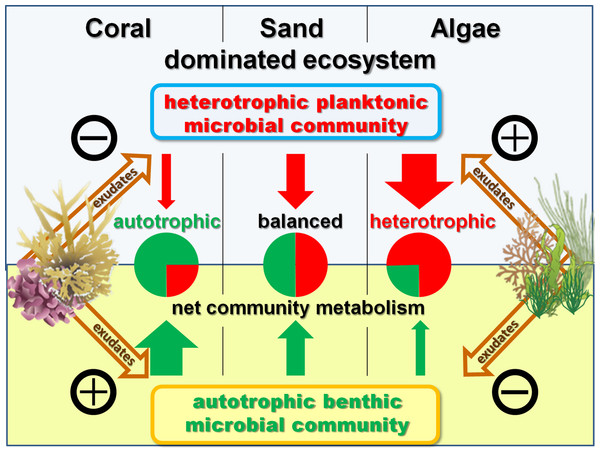
Indirect effects of algae on coral: algae‐mediated, microbe‐induced coral mortality
Coral seperated from algae with a .02 µm filter die. Treatment with aampicillan prevents death.

Influence of coral and algal exudates on microbially mediated reef metabolism.
Coral DOC improves oxygen (autotrophy), algae DOC reduces oxygen (heterotrophy).

Effects of Coral Reef Benthic Primary Producers on Dissolved Organic Carbon and Microbial Activity
Algae releases significantly more DOC (carbon dosing, sugars) into the water than coral.

Sugar enrichment provides evidence for a role of nitrogen fixation in coral bleaching

Effects of Nitrate.jpg
 
My two cents: Your corals become phosphate limited before March. (Depending on how much is produced and phospholipid reserves they had it might have been a slow process.) Read the links below on phosphate limitation by Southhampton Univerisity. Your PO4 level in March were below the threshold of .03 for corals in an aquarium identified by their research. And the spike in nitrates didn't help either as too much of it can cause bleaching and calcification issues. Then you've also got a spike in algae which can cause it's own set of problems. DIpping your corals may help but keep in mind dipping is also a source of stress for a coral and depending on how badly it disrupts a corals holobiont it might push it over the edge. What I would if this was my aquarium is start doing small weekly water changes siphoning out as much algae as is practicle with each water change but not more than 25%. If possible do a couple 25% or 50% water changes with water from a "healthy" system. Also, don't expect this problem to correct itself overnight. Research shows corals can take months to recover from stress events in the wild and that has been my experience in my aquariums over the decades.

An Experimental Mesocosm for Longterm Studies of Reef Corals

Phosphate Deficiency:
Nutrient enrichment can increase the susceptibility of reef corals to bleaching:

Ultrastructural Biomarkers in Symbiotic Algae Reflect the Availability of Dissolved Inorganic Nutrients and Particulate Food to the Reef Coral Holobiont:

Phosphate deficiency promotes coral bleaching and is reflected by the ultrastructure of symbiotic dinoflagellates

Effects of phosphate on growth and skeletal density in the scleractinian coral Acropora muricata: A controlled experimental approach

High phosphate uptake requirements of the scleractinian coral Stylophora pistillata


Indirect effects of algae on coral: algae‐mediated, microbe‐induced coral mortality
Coral seperated from algae with a .02 µm filter die. Treatment with aampicillan prevents death.

Influence of coral and algal exudates on microbially mediated reef metabolism.
Coral DOC improves oxygen (autotrophy), algae DOC reduces oxygen (heterotrophy).

Effects of Coral Reef Benthic Primary Producers on Dissolved Organic Carbon and Microbial Activity
Algae releases significantly more DOC (carbon dosing, sugars) into the water than coral.

Sugar enrichment provides evidence for a role of nitrogen fixation in coral bleaching

Effects of Nitrate.jpg
Thanks a lot for your input! My PO4 levels were actually always low until August this year. I always had to dose quite a lot of PO4 to keep it detectible (~0.02mg/l/day):
1600880660859.png

While NO3 was always jumping quite a bit without dosing much:
1600880786956.png


However, before the corals were growing and everything seemed to be quite robust. Maybe this was a misconception and the tank was more fragile than anticipated. Do you think that PO4 was the issue? I actually thought of too low phosphates before, but since I did not have issues at similar levels before I thought this cannot be the cause.
I unfortunately do not know any reefer, and the next beach is >600km away so I would have to use fresh made seawater. Would the frequent water changes improve stability, does that fit with @CindyKz 's advice to keep things stable or will the waterchanges just upset the system more?
 

IF YOU HAD TO TAKE A REEFING EXAM, WOULD YOU PASS?

  • Yes!

    Votes: 32 45.7%
  • Not yet, but I have one that I want to buy in mind!

    Votes: 9 12.9%
  • No.

    Votes: 26 37.1%
  • Other (please explain).

    Votes: 3 4.3%
Back
Top