Correct way to measure PAR?

FrugalReefer

Valuable Member
View Badges
Joined
Oct 2, 2021
Messages
1,552
Reaction score
11,128
Location
San Diego
What state or country do you live in
California
Rating - 0%
0   0   0
I have an Apogee 510 and for those also with a PAR meter what is your preferred way for getting a good PAR reading? Specifically, I know the reading will go all over the place due to the water surface agitation and what not and with that being said, is it best to take the lowest measurement, the highest measurement or an average?

 
First of all, set the pumps to feed mode and the water will smooth out for better readings. Make sure the sensor is pointing at the lights. Just a little move off the direct aim at the light will have a significant effect. Try working with it out in the sun and see how much it changes.

Taking an average seems like a good approach if you can't get a stable reading.
 
I have always taken PAR readings with everything running. I want the number the coral will be receiving which is with surface agitation.....at least that is what I am telling myself lol. I assume surface agitation reduces PAR (and just doesn't affect the reading of the meter?)
 
I have always taken PAR readings with everything running. I want the number the coral will be receiving which is with surface agitation.....at least that is what I am telling myself lol. I assume surface agitation reduces PAR (and just doesn't affect the reading of the meter?)
I agree with you 100%. The corals will be photosynthesizing with all powerheads and the return pump running 99.99% of the time.
 
I measure PAR with the powerheads off but my return pump running so I have the correct water level and least amount of surface waves. It‘s important for the sensor to point vertically regardless of where the lights are so you can get a sense of hot spots etc. I don’t really worry about potential changes due to surface waves since they’re random and not standing waves so I figure it evens out over time
 
About caustic lines....
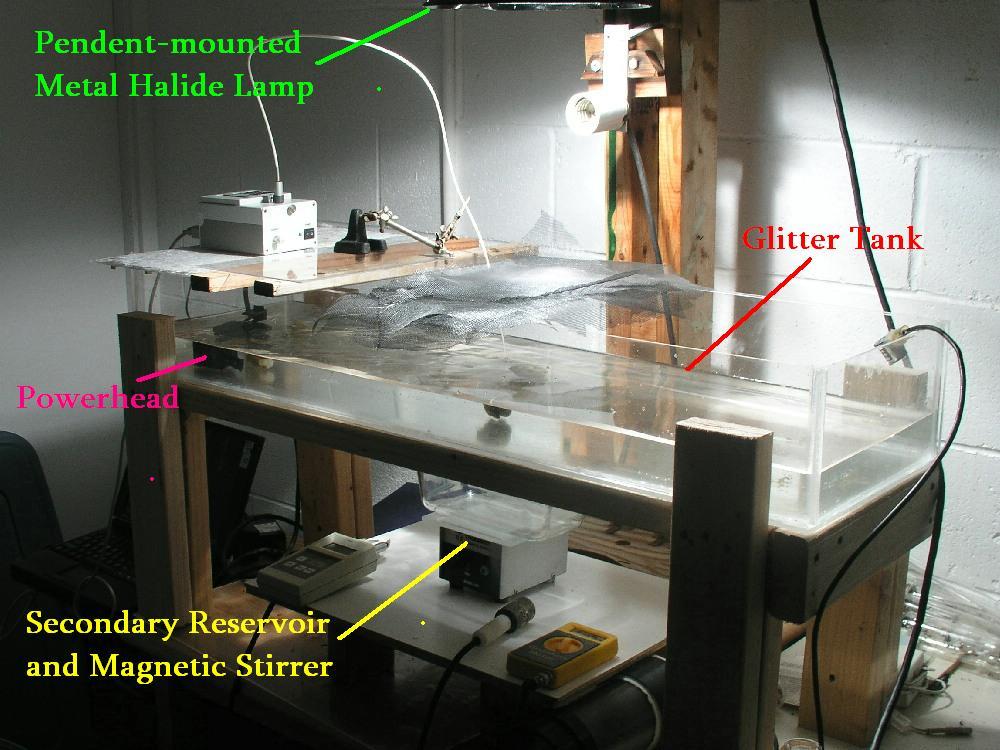
The average PAR value of glitter lines measured over short periods (a minute or two) always very closely equaled the PAR measured when a condition of ‘no glitter’ prevailed. In other words, the average intensity of the light field produced by glitter lines over a few seconds’ time cannot possibly exceed the average light intensity in a ‘no glitter’ condition under the same set of circumstances.
Figure3-212ce9bdcbf52ca604dda3dd27da70e0-300x220.jpg
 

IF YOU HAD TO TAKE A REEFING EXAM, WOULD YOU PASS?

  • Yes!

    Votes: 32 45.7%
  • Not yet, but I have one that I want to buy in mind!

    Votes: 9 12.9%
  • No.

    Votes: 26 37.1%
  • Other (please explain).

    Votes: 3 4.3%
Back
Top