Navigation
Install the app
How to install the app on iOS
Follow along with the video below to see how to install our site as a web app on your home screen.
Note: This feature may not be available in some browsers.
More options
You are using an out of date browser. It may not display this or other websites correctly.
You should upgrade or use an alternative browser.
You should upgrade or use an alternative browser.
Decisions to make.... wanna help?
- Thread starter melypr1985
- Start date
- Tagged users None




- Joined
- Dec 30, 2011
- Messages
- 574
- Reaction score
- 317
- Location
- Satellite Beach, Fl
- What state or country do you live in
- Florida
For the anthias and the leopard I would definitely have (as Flashy fins said) some roe on hand. Reef Nutrition is good. I am lucky enough to be sitting on 2 packs of Nutra Mar Ova if you can find that. That is what I get all finicky eaters started on. Once they get that going I add black worms that I tear into smaller pieces to get them started, once they eat the worms your done, it seems like once they taste em they are hooked. Start LRS at this point or with the black worms. This combo virtually never fail to get em eating.
OP
OP

melypr1985
totally addicted
View BadgesExcellence Award
Expert Contributor
Article Contributor
Moderator Emeritus
For the anthias and the leopard I would definitely have (as Flashy fins said) some roe on hand. Reef Nutrition is good. I am lucky enough to be sitting on 2 packs of Nutra Mar Ova if you can find that. That is what I get all finicky eaters started on. Once they get that going I add black worms that I tear into smaller pieces to get them started, once they eat the worms your done, it seems like once they taste em they are hooked. Start LRS at this point or with the black worms. This combo virtually never fail to get em eating.
I'll look for the nutra mar ova.. I haven't been able to source live black worms locally, but I know I can get blood worms. Maybe those will help?


- Joined
- Jan 2, 2014
- Messages
- 9,411
- Reaction score
- 25,069
- Location
- Conway, Arkansas
- What state or country do you live in
- Arkansas
I had one of those come in today too. It got cooked by the heat packs
Again? Man your luck is running COLD!
I'll look for the nutra mar ova.. I haven't been able to source live black worms locally, but I know I can get blood worms. Maybe those will help?
I got my M. Geoffroyi eating with frozen bloodworms. Once they associate you with food it's pretty easy to get them to eat other frozen foods.
OP
OP
melypr1985
totally addicted
View BadgesExcellence Award
Expert Contributor
Article Contributor
Moderator Emeritus
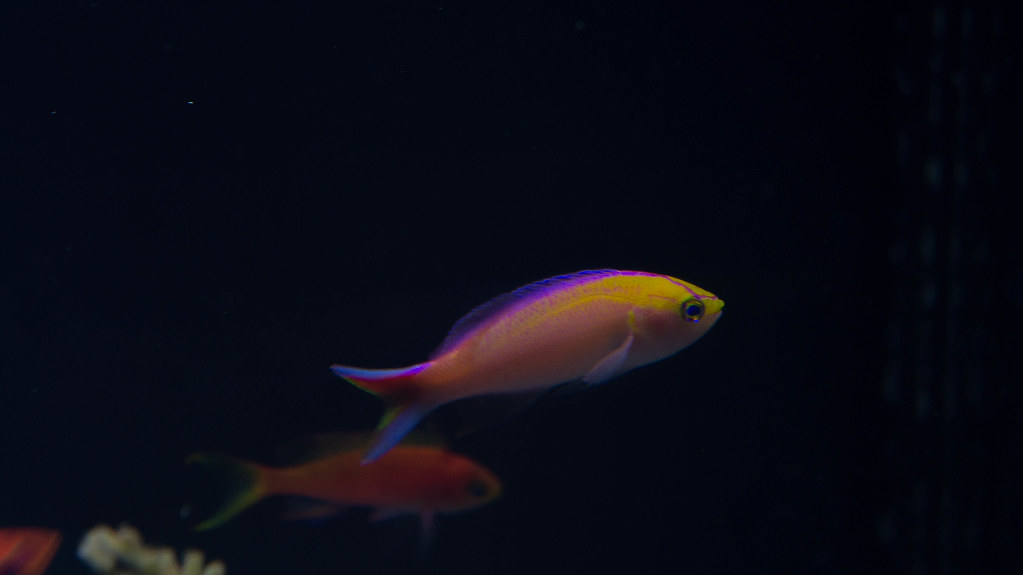
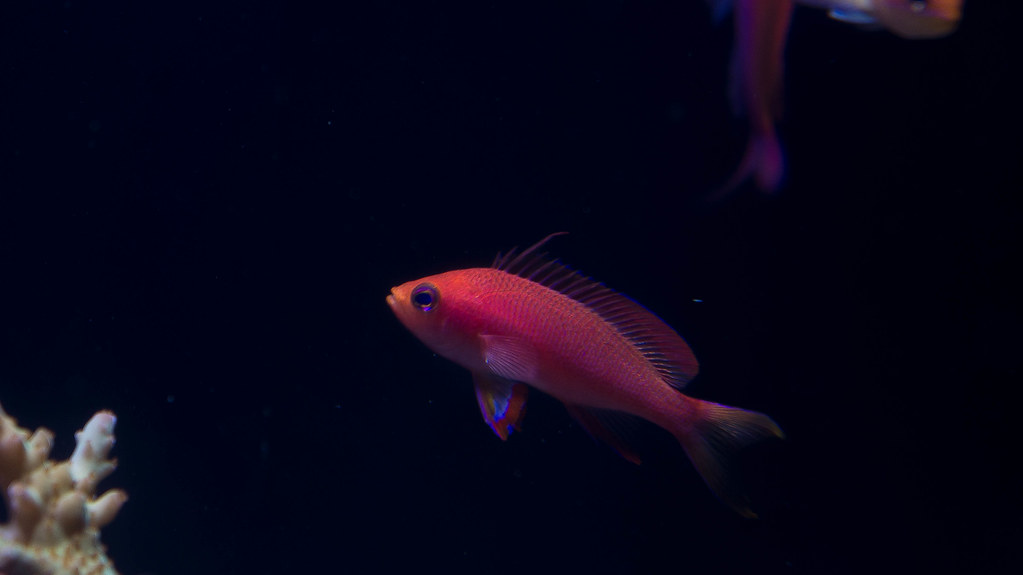
Get Sunset or Randall's Anthias instead of Dispar. Here are some images of them from my old tank:
Sunset(M)
Randall's(M)
They are certainly very pretty, but do you have any particular reason (besides looks and personal preference) as to why those are better? Are they easier to take care of?


I know right? Someone at LA is doing a sloppy job packing here lately. At least this time that was the only causality and the other two I got were healthy. Luckily they were in a separate box.Again? Man your luck is running COLD!
I got my M. Geoffroyi eating with frozen bloodworms. Once they associate you with food it's pretty easy to get them to eat other frozen foods.
My brother use to have some Randalls. Pretty good looking fish. I want to say he was getting away with only feeding them once a day too. Ib wish my tank was big enough for some anthias. I guess that will be a good reason to upgrade though (like we really need a reason to upgrade anyways)

- Joined
- May 27, 2013
- Messages
- 2,002
- Reaction score
- 747
- What state or country do you live in
- Texas
The temperament is the same as the Dispars. The feeding habit is the same. Looks are the only factor; those are better choice. Why not go for looks as the final deciding factor when it comes to choosing?They are certainly very pretty, but do you have any particular reason (besides looks and personal preference) as to why those are better? Are they easier to take care of?
OP
OP
melypr1985
totally addicted
View BadgesExcellence Award
Expert Contributor
Article Contributor
Moderator Emeritus
I think they are all beautiful, it's so hard to choose just one kind ya know? I liked the striking orange color of the dispar. I guess it's good to have a list of my favs just in case one isn't available or incase price becomes a factor. Thanks for the suggestions!

- Joined
- Nov 9, 2014
- Messages
- 22,424
- Reaction score
- 34,869
I'll look for the nutra mar ova.. I haven't been able to source live black worms locally, but I know I can get blood worms. Maybe those will help?
As far as I know, the supply disruption for Nutramar Ova is still in effect: http://www.qualitymarine.com/News/Company-News/Nutramar-Ova-Not-Available-At-This-Time-(10/07/14)
dang shame too. This was the only food I could ever get wild caught dragonets to eat in QT. Other than pods, that is.

IME sunsets (parvirostris) are a little more difficult than dispars, not crazily so, but noticeable, they are slightly more aggressive with one another, and they don't ship as well.They are certainly very pretty, but do you have any particular reason (besides looks and personal preference) as to why those are better? Are they easier to take care of?
Randall's/pulcherrimus/resplendent/ tierra (different names for 2 sister species of fish) are just as easy and peaceful as dispars.
The anthias you are considering are not picky, small mysis and reef plankton are readily accepted.
As long as you don't go for a choati leopard, and even with a choati, getting them to eat is rarely an issue. Piscene mysis and reef plankton always gets them to eat.
OP
OP
melypr1985
totally addicted
View BadgesExcellence Award
Expert Contributor
Article Contributor
Moderator Emeritus
As far as I know, the supply disruption for Nutramar Ova is still in effect: http://www.qualitymarine.com/News/Company-News/Nutramar-Ova-Not-Available-At-This-Time-(10/07/14)
**** shame too. This was the only food I could ever get wild caught dragonets to eat in QT. Other than pods, that is.
Oh wow. Guess I'll wait on the nutramar then
 thanks for the headsup!
OP
OP
melypr1985
totally addicted
View BadgesExcellence Award
Expert Contributor
Article Contributor
Moderator Emeritus
IME sunsets (parvirostris) are a little more difficult than dispars, not crazily so, but noticeable, they are slightly more aggressive with one another, and they don't ship as well.
Randall's/pulcherrimus/resplendent/ tierra (different names for 2 sister species of fish) are just as easy and peaceful as dispars.
The anthias you are considering are not picky, small mysis and reef plankton are readily accepted.
As long as you don't go for a choati leopard, and even with a choati, getting them to eat is rarely an issue. Piscene mysis and reef plankton always gets them to eat.
Thanks for insight! I think I'll stick with the dispars as my first choice. I do like the orange colors

4FordFamily
Tang, Angel, and Wrasse Nerd!
View BadgesStaff member
Super Moderator
Partner Member 2024
Excellence Award
Reef Tank 365
Expert Contributor
Article Contributor
Hospitality Award
INDMAS Member
My Tank Thread
- Joined
- Feb 26, 2015
- Messages
- 20,450
- Reaction score
- 47,597
- Location
- Carmel, Indiana
- What state or country do you live in
- Indiana
Don't hold back on leopards because they are listed as expert. Do your research and become an expert. They are finicky at first but when you get a good one acclimated to tank life they are amazing and very hardy fish. It is really the shipping stress that does these guys in.
I suggest to have a good size qt set up almost like a display for quarantining these guys. Great with a couple rounds of prazi right at the start and then nothing more for a while aside from observation. After 6 weeks or so if you still have it your golden. Address any other qt concerns at that point and go from there. That's the methods that worked best for me. Flukes imo ime is the main concern with them after shipping stress.
I agree, although a very stable tank will do them justice. If you have one survive the first month, you have a great chance. 6 weeks? I agree, golden.
Choates leopard are very very difficult. Mine lived about 6-8 months and then dropped dead over the course of a week it deteriorated very badly, whilst everyone else was fantastic.
Although I have struggled with female blue stars (I think it is just a coincidence), I have successfully gotten 4/6 male blue stars to survive. I own three right now. One transitioning male and two complete males. The fourth I sold. Anyway, blue star are supposed to be relatively hardy (for a leopard wrasse). I don't know if last year this time when I bought most of them if they had distribution or collection issues and that was the culprit? But oddly the males did fine.
Anyway, ornate were not too difficult. Potters people say are tough but my first potters made it. I am 1/1 for both ornate and potters. Black leopards I am 2/2. I sold both ultimately but they seem pretty hardy, although cryptic. The regular leopard wrasse (M. Melagris) I am 2/4 on, although they are also supposed to be relatively easy on the leopard wrasse "spectrum". My experience is not too extravagant, but I seem to have some limited success with these guys. I know it is not abnormal to lose 1/3 or even 1/2 of these within the first month (either due to DOA, disappearing indefinitely, or just randomly dying). Once established, I find leopard wrasses to be every bit as hardy as other wrasse. I would actually say that once established they are hardier and less fragile than most fairy wrasses. I had some success with my fairies but lost a few of them over the course of a year. My leopards are still thriving. Small sample size of observations, however.
OP
OP
melypr1985
totally addicted
View BadgesExcellence Award
Expert Contributor
Article Contributor
Moderator Emeritus
I agree, although a very stable tank will do them justice. If you have one survive the first month, you have a great chance. 6 weeks? I agree, golden.
Choates leopard are very very difficult. Mine lived about 6-8 months and then dropped dead over the course of a week it deteriorated very badly, whilst everyone else was fantastic.
Although I have struggled with female blue stars (I think it is just a coincidence), I have successfully gotten 4/6 male blue stars to survive. I own three right now. One transitioning male and two complete males. The fourth I sold. Anyway, blue star are supposed to be relatively hardy (for a leopard wrasse). I don't know if last year this time when I bought most of them if they had distribution or collection issues and that was the culprit? But oddly the males did fine.
Anyway, ornate were not too difficult. Potters people say are tough but my first potters made it. I am 1/1 for both ornate and potters. Black leopards I am 2/2. I sold both ultimately but they seem pretty hardy, although cryptic. The regular leopard wrasse (M. Melagris) I am 2/4 on, although they are also supposed to be relatively easy on the leopard wrasse "spectrum". My experience is not too extravagant, but I seem to have some limited success with these guys. I know it is not abnormal to lose 1/3 or even 1/2 of these within the first month (either due to DOA, disappearing indefinitely, or just randomly dying). Once established, I find leopard wrasses to be every bit as hardy as other wrasse. I would actually say that once established they are hardier and less fragile than most fairy wrasses. I had some success with my fairies but lost a few of them over the course of a year. My leopards are still thriving. Small sample size of observations, however.
Thank you so much for the insights! I'll keep these things in mind when making final decisions. The blue star has totally caught my eye so I'm fairly confident that's the direction I'll go with the wrasse.


Have you seen the new PE Calanus pod? It may work out well for you since it is smaller than mysis and other foods.
The new stand alone 4 ounce blister pack has just been released as well. Combined with LRS like you mentioned it should be a good starting point.
Good luck!

The new stand alone 4 ounce blister pack has just been released as well. Combined with LRS like you mentioned it should be a good starting point.
Good luck!
OP
OP
melypr1985
totally addicted
View BadgesExcellence Award
Expert Contributor
Article Contributor
Moderator Emeritus
Have you seen the new PE Calanus pod? It may work out well for you since it is smaller than mysis and other foods.
The new stand alone 4 ounce blister pack has just been released as well. Combined with LRS like you mentioned it should be a good starting point.
Good luck!
I have not seen this! Thanks! Nobody near me carries LRS foods so I'm trying to get the LFS I work at to try it out. If it sells well (which is should) then I can get them to carry more products... including this one! Yay!