Navigation
Install the app
How to install the app on iOS
Follow along with the video below to see how to install our site as a web app on your home screen.
Note: This feature may not be available in some browsers.
More options
You are using an out of date browser. It may not display this or other websites correctly.
You should upgrade or use an alternative browser.
You should upgrade or use an alternative browser.
Dino ID, please?
- Thread starter silverarrow
- Start date
- Tagged users None






Can you post video?

Sorry the video is not coming thru for me, maybe someone else can see it an make an ID
Here’s a good website for dinoflagellates
 algaeid.com
Identification
If you currently have pest algae in your aquarium and would like help identifying your pest, please consider mailing me a sample. I can provide an ID, and if your pest isn’t already pictured h…
algaeid.com


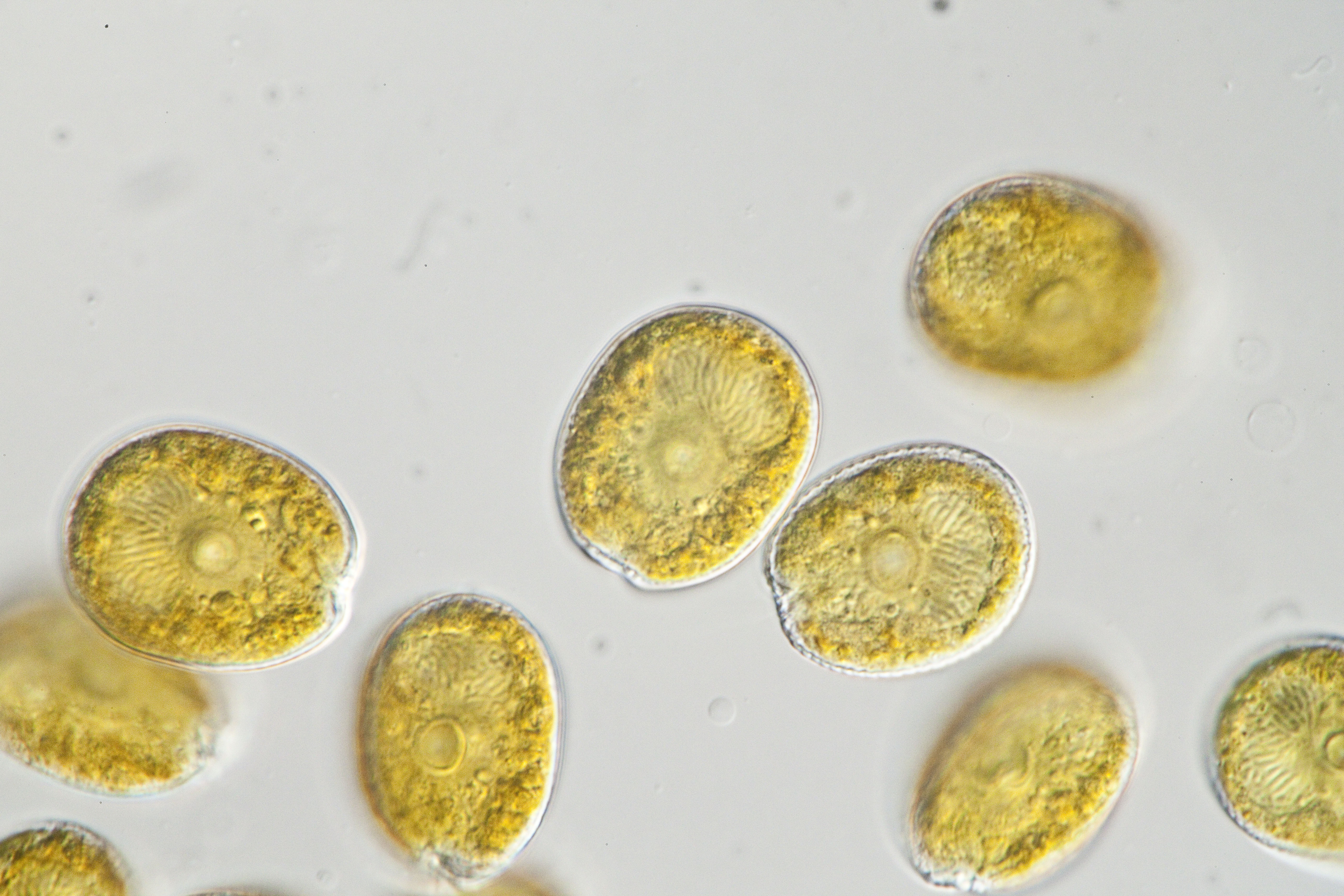
You have two different types. Amphidinium and ostreopsis. Ostreopsis is pretty toxic and very susceptible to properly sized and plumbed UV. Highly recommend running GAC to minimize the damage from them. Dosing silicates will help with the amphidinium. Keep NO3 and PO4 up (5-10 and 0.06-0.12 respectively).
Just looked at the first pictures again. Can you do another video...without the mite if possible?  You may have a third type as well.
You may have a third type as well.
This helps a lot! I have gone from Amphidinium sp. to Cyanobacteria, I will take the cyno way more easy to get rid ofHere’s a good website for dinoflagellates
Identification
If you currently have pest algae in your aquarium and would like help identifying your pest, please consider mailing me a sample. I can provide an ID, and if your pest isn’t already pictured h…


vetteguy53081
Well known Member and monster tank lover
View Badges
Partner Member 2024
Excellence Award
Reef Tank 365
RGB
Article Contributor
Tampa Bay Reef Keepers
West Palm Beach Reefer
Hospitality Award
Ocala Reef Club Member
305 Reef Club
Wisco Reefers
Midwest Reefer
Fish Medic
MAC of SW Florida
Rock Pool Reef Keepers
R2R Secret Santa 2023
My Tank Thread
My Aquarium Showcase
I see ostreo
First- Check phosphates and nitrates to assure theyre not elevated.
Here is full program:
Prepare by starting with a water change and blow this stuff loose with a turkey baster and siphon up loose particles.
Turn lights off (at least white and run blue at 10-15%) for 5 days and at night dose 1ml of hydrogen peroxide per 10 gallons for all 5 nights. If you dont have light dependent coral- turn all lights off.
During the day dose 1ml of liquid bacteria (such as bacter 7) per 10 gallons.
Clean filters daily and DO NOT FEED CORAL FOODS OR ADD NOPOX as it is food for dinos.
Day 5,, you can start with blue lights - ramping up and work your white lights up slowly
First- Check phosphates and nitrates to assure theyre not elevated.
Here is full program:
Prepare by starting with a water change and blow this stuff loose with a turkey baster and siphon up loose particles.
Turn lights off (at least white and run blue at 10-15%) for 5 days and at night dose 1ml of hydrogen peroxide per 10 gallons for all 5 nights. If you dont have light dependent coral- turn all lights off.
During the day dose 1ml of liquid bacteria (such as bacter 7) per 10 gallons.
Clean filters daily and DO NOT FEED CORAL FOODS OR ADD NOPOX as it is food for dinos.
Day 5,, you can start with blue lights - ramping up and work your white lights up slowly

- Joined
- Jun 5, 2020
- Messages
- 30
- Reaction score
- 19
I couldn't see the video. Did they make a circling movement around an anchoring point or do they move mostly straight ahead? Also, do they produce long strands and mucus in the tank (catching air bubbles)? Did you notice more dead snails or other CUC? if yes to all q's above, then more likely to be Ostreopsis. If not, it may be the more innocent amphidium.
I see ostreo
First- Check phosphates and nitrates to assure theyre not elevated.
Here is full program:
Prepare by starting with a water change and blow this stuff loose with a turkey baster and siphon up loose particles.
Turn lights off (at least white and run blue at 10-15%) for 5 days and at night dose 1ml of hydrogen peroxide per 10 gallons for all 5 nights. If you dont have light dependent coral- turn all lights off.
During the day dose 1ml of liquid bacteria (such as bacter 7) per 10 gallons.
Clean filters daily and DO NOT FEED CORAL FOODS OR ADD NOPOX as it is food for dinos.
Day 5,, you can start with blue lights - ramping up and work your white lights up slowly
Take a look at post #2 vette. He also has amphidinium. We want elevated NO3 and PO4 with dinos. They thrive in a low nutrient environments where other organisms are at a disadvantage. Black outs only real utility is putting ostreopsis in the water column for UV to kill it. Cultures of dinos have been kept in complete darkness for weeks without killing them.

vetteguy53081
Well known Member and monster tank lover
View Badges
Partner Member 2024
Excellence Award
Reef Tank 365
RGB
Article Contributor
Tampa Bay Reef Keepers
West Palm Beach Reefer
Hospitality Award
Ocala Reef Club Member
305 Reef Club
Wisco Reefers
Midwest Reefer
Fish Medic
MAC of SW Florida
Rock Pool Reef Keepers
R2R Secret Santa 2023
My Tank Thread
My Aquarium Showcase
I’ve had well over 100 reefers recover without uv unit including myself . Dinoflagellates are photosynthetic,and this will cause a large scale die-off, and when followed by a reduced lighting or blackout.
Dinos are very resilient because they can live without eating anything for a long time unlike any other life forms like algae. Nutrients are present in your tank which gives Dinos energy and also to fish and plant life.
The problem arises when conditions in the aquarium break the biological balance and some dinoflagellate species spread uncontrollably, smothering the rest of the aquarium inhabitants. If the dinoflagellate species in question has the ability to produce toxins (usual in ostreopsis, gambierdiscus and prorocentrum to name a few), then we can get ready for a disaster.
Dinos are very resilient because they can live without eating anything for a long time unlike any other life forms like algae. Nutrients are present in your tank which gives Dinos energy and also to fish and plant life.
The problem arises when conditions in the aquarium break the biological balance and some dinoflagellate species spread uncontrollably, smothering the rest of the aquarium inhabitants. If the dinoflagellate species in question has the ability to produce toxins (usual in ostreopsis, gambierdiscus and prorocentrum to name a few), then we can get ready for a disaster.
That's not surprising. UV is really only effective for ostreopsis and to a lesser extent coolia. It does nothing for amphidinium or prorocentrum. This persons amphidinium won't be helped by UV but the toxic ostreopsis he has definietly would be.
Dinos are nitrogen fixers...they don't need high nutrient levels to thrive. Nutrients don't fuel them. We can agree to disagree.
Dinos are nitrogen fixers...they don't need high nutrient levels to thrive. Nutrients don't fuel them. We can agree to disagree.

OP
OP

Take a look at post #2 vette. He also has amphidinium. We want elevated NO3 and PO4 with dinos. They thrive in a low nutrient environments where other organisms are at a disadvantage. Black outs only real utility is putting ostreopsis in the water column for UV to kill it. Cultures of dinos have been kept in complete darkness for weeks without killing them.
It does appear at this point, I have both ostreopsis and amphidinium. I've place an order for the Aqua Ultraviolet UV sterilizer to take care of the ostreopsis.
- Joined
- Jun 5, 2020
- Messages
- 30
- Reaction score
- 19
I agree, ostreopsis and small cell amphidinium?It does appear at this point, I have both ostreopsis and amphidinium. I've place an order for the Aqua Ultraviolet UV sterilizer to take care of the ostreopsis.


I agree...this past week I've spent many hours researching for my small outbreak. I did not expect to learn that there are more than just one type of common dino. And that the current thought is to approach each with different methods (especially those dinos that escape into the water column where UV/filtering would work vs those that escape into the sand bed where those methods are not as appropriate).That's not surprising. UV is really only effective for ostreopsis and to a lesser extent coolia. It does nothing for amphidinium or prorocentrum. This persons amphidinium won't be helped by UV but the toxic ostreopsis he has definietly would be.
Dinos are nitrogen fixers...they don't need high nutrient levels to thrive. Nutrients don't fuel them. We can agree to disagree.
One thing I did learn to try, up your nitrates (to 5-10 ppm) and phosphates (to .05 - .1ppm) to help other blooms to take over, even a new method trying to dose silicates to encourage a diatom bloom (easier to manage diatoms than dinos as they say).
sp. ostreopsis
sp. amphidinium
sp. prorocentrum
sp. coolia (wish this was coolio tankster's paradise)
This post was the most helpful. https://www.reef2reef.com/threads/dinoflagellate-identification-guide.671466/