Plumbing a 120 gal display and looking for ideas. Running dual 3/4" returns from a single jaebo DCT-12000. Have a 11/2" check valve at the output of the pump. After the check valve 11/2" PVC i need to split off to two 3/4" returns. Thinking a 1 1/2" tee would be the worst for head loss. Any ideas to minimize the head loss? How do I convert from 1 1/2" PVC to two 3/4" PVC lines for flow optimization? Thanks for the help.

Navigation
Install the app
How to install the app on iOS
Follow along with the video below to see how to install our site as a web app on your home screen.
Note: This feature may not be available in some browsers.
More options
You are using an out of date browser. It may not display this or other websites correctly.
You should upgrade or use an alternative browser.
You should upgrade or use an alternative browser.
Flow restrictions
- Thread starter Fuel1976
- Start date
- Tagged users None






Why do you have a check valve? They are a false sense of security and serve no purpose in 99.9% of all reef tanks if they are plumbed properly.

Why do you have a check valve? They are a false sense of security and serve no purpose in 99.9% of all reef tanks if they are plumbed properly.
Plumbing properly? In my current tank (90 with a single return) in the event of a power loss the return back feeds to the sump until a siphon break. So unless the return is high and not pointed down the amount of water can overcome the available space in the sump. Maybe I can earn something here. What am I doing wrong?

I wouldn't trust that y.
What wrong with the wye on marinedepot?

Here is another option. You would have to use the reducers shown above on the two that you want to reduce to ¾".
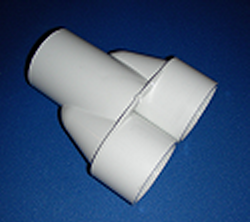
https://flexpvc.com/cart/agora.cgi?...anifold-Wyes&p_id=672-8040&xm=on&ppinc=detail
I also agree with the comment about the check valve. Don't rely on them to work as a safety feature. Your sump should be big enough to handle any back-flow from your tank and plumbing. If you already know your sump will overflow without the check valve, I would suggest rethinking your return and/or sump size.
https://flexpvc.com/cart/agora.cgi?...anifold-Wyes&p_id=672-8040&xm=on&ppinc=detail
I also agree with the comment about the check valve. Don't rely on them to work as a safety feature. Your sump should be big enough to handle any back-flow from your tank and plumbing. If you already know your sump will overflow without the check valve, I would suggest rethinking your return and/or sump size.

I have to agree on sump being able to handle drain back. If you're using a durso drain raise the drain height and make sure the siphon break hole is clean. You shouldn't get more than a couple of gallons of siphon water. Before you start the system fill the tank until it overflows into the sump. Fill the sump full of water. Start the return pump and mark the water level in the return chamber. As long as you don't add water above that mark, anytime the return pump is shut off the sump shouldn't overflow.
My sump can handle the overflow drain back. Are you saying that the output of a return line inside the tank should be located high so that when the overflow siphon breaks that the return lines also break siphon? For instance I've found that if a return line is pointed down or below the teeth in the overflow then the back drain through the return lines continue until they break siphon. Are you saying I need the output of each return line to be at a level similar to where the overflow breaks siphon?

Ok it's clear. In the past I've always tried to use returns lines to help direct flow (minimal but better than just straight into the tank). Guess I'm removing the check valve.

Glad you have that straightened out. Many of the return kits have a dual adjustable return nozzle. You can point one down as long as the other is near the surface to break siphon. Worse case you can drill a small hole on the underside of the return at the water line to break siphon. However you have to be aware it may get clogged by algae or snails.
Always place your return(s) just under the surface of the water so only a limited, very easily calculated amount of water flows back to the sump in a power outage. Also maintain enough freeboard or spare room in your sump to contain that backflow at all times, even when topped up. In my case with a 100G display and 30G sump and my Loc Line returns 3/4" below the surface, the maximum amount of backflow is 3.5 gallons worst case which is easily contained in the 30G sump. Since we all know water cannot jump uphill, once the return is exposed to atmosphere and the siphon breaks no more wate rthan that can possible flow to the sump. No drilled holes to clean and fail, no check valves to fail and cause unnecessary headloss and cannot be defeated. The air gap is the best and simplest form of backflow prevention known to man.