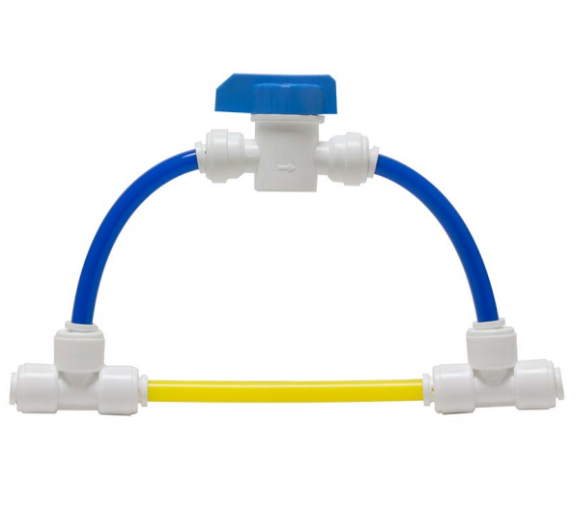
Flush Valve on RODI unit

Duncan Tse

Active Member
View Badges
Joined
Jan 29, 2019
Messages
350
Reaction score
178
Rating - 0%
0   0   0
Just installed a flush valve on my RODI unit but not sure if it's operating correctly

When I open the valve the waste water increases and pressure in the system drops from 40-20 but is it normal for clean water to still be trickling a little out the output?

To my understanding I always thought when the flush valve is opened then no water is coming out of the rodi line

 
I’m no expert. I just got my very first unit from AirWaterIce (it’s awesome).

On my RODI line, it has it’s own valve. I had turned off when I flushed the unit.

Does yours have one?
 
I Open the flush valve all the way for about 5 minutes before and after using my unit. While I’m making water I tune the valve until I get the most water pressure (about 72psi) and let it run from there. idk if that’s how you properly use it but leaving the valve open is way to much waste water and closed is no waste water at all
 
This is when I'm trying to flush the system I open the valve all the way but there's still some water coming out of the RODI line

This is the aquafx flush kit I installed

aa5da545cfee09060772bb491ef9b57d.png
 
This is when I'm trying to flush the system I open the valve all the way but there's still some water coming out of the RODI line

This is the aquafx flush kit I installed

aa5da545cfee09060772bb491ef9b57d.png
It’s still going to come out it will just be a heck of a lot slower and run through your membrane faster. Not to mention wasting a bunch of water. I have the BRS RODI system that comes with a flush valve already
 
It’s still going to come out it will just be a heck of a lot slower and run through your membrane faster. Not to mention wasting a bunch of water. I have the BRS RODI system that comes with a flush valve already

Oh okay I see so that is normal. What I wanted to do is to flush out the tds creep at the start of filling up my bucket
 
Hmmm
Oh okay I see so that is normal. What I wanted to do is to flush out the tds creep at the start of filling up my bucket
might not be the flush valve could be your di resin needs to be changed. Unless you don’t have a di resin section in that case it’s probably why you have tds creep
 
Oh okay I see so that is normal. What I wanted to do is to flush out the tds creep at the start of filling up my bucket

Flushing your membrane will not entirely get rid of the effects of TDS creep. To avoid TDS creep you will need a DI bypass valve, typically a T valve installed after the membrane but before the DI stage. When starting up the unit, open the flush valve for a minute or two then fully close it and turn the T valve to run into your waste line. In a perfect world you have a TDS meter after your membrane and you can monitor the TDS until it drops as low as it will go. Once you reach this point you then turn the valve to feed the DI stage and start producing water :)
 
Hmmm

might not be the flush valve could be your di resin needs to be changed. Unless you don’t have a di resin section in that case it’s probably why you have tds creep

TDS Creep is something that comes from your membrane at the beginning of water production and does not come from the DI stage.

I Open the flush valve all the way for about 5 minutes before and after using my unit. While I’m making water I tune the valve until I get the most water pressure (about 72psi) and let it run from there. idk if that’s how you properly use it but leaving the valve open is way to much waste water and closed is no waste water at all

Your flush valve should be 100% closed during production unless you do not have a flow restrictor. Your BRS unit should have come with a flow restrictor.
 
TDS Creep is something that comes from your membrane at the beginning of water production and does not come from the DI stage.


Your flush valve should be 100% closed during production unless you do not have a flow restrictor. Your BRS unit should have come with a flow restrictor.
I get the most water pressure with my valve slightly open as far as the tds my di resin needed to be changed and I was reading slight tds going out until it was changed. Still new to this so you’re probably right just going off my experience so far
 
The flush valve should loop your flow restrictor on the waste line.

The understand it is under normal use the flow is restricted so increasing pressure in the membrane for a better pass though the membrane by the restriction and the valve is closed.

When you open the valve because it bypasses the restriction it allows the water to flow over the membrane and directly to the drain line removing some if not most of the build up on the outer surface of the membrane so improving the the efficiency and life.

A small amount of water will still pass though the membrane so yes you get a drip or very slow flow out of the line.

Overall you still need to keep an eye on your tds levels as this is more of a indication as to when the membrane needs replacing.

Personally I run a duel membrane system my tds sits at 250ppm ish at the tap and 1ppm at the line but i expect a little as in scavenging extra out of the waste line before its go's to the drain and also variations in my tds meter
Plus my rod is pumped as over here we have a low water pressure of about 35psi at the mains so to get the best out of it I needed to increase the pressure inside the unit.

Edit:
Oh and you should never restrict the flow on the waste line with a valve as it can drastically reduce the memebraine life span due to un regulated control of the pressure ( so ive been told )
 
I
get the most water pressure with my valve slightly open as far as the tds my di resin needed to be changed and I was reading slight tds going out until it was changed. Still new to this so you’re probably right just going off my experience so far

That's rather unusual, you should be getting the highest amount of pressure with the valve 100% closed. I would still close it completely as you are probably wasting a large amount of water this way....

TDS coming out of your unit AFTER the DI stage is where you would indeed want to change your resin out. TDS creep however is a different phenomenon when while the unit is sitting with no water flow, solids will actually be pulled through the membrane and into the product water line. When you start the unit up, this initial bit of water contains MUCH higher TDS than what should normally be run into your DI stage. For example, I have around 270 TDS coming into my dual membrane setup and normally 0-1 TDS after the membranes in regular operation. But when I first start my unit the first minute or two of water out of my membranes is around 70 TDS. It then slowly drops after a few minutes to its regular rate of 0-1. This is TDS creep and it can definitely shorten the life of your resin if you make water frequently. To avoid this TDS prematurely exhausting your resin you install a bypass valve to bypass the DI stage during the initial few minutes of water production. This takes all that really high TDS water and directs it down the drain instead of through your DI resin
 
Flushing your membrane will not entirely get rid of the effects of TDS creep. To avoid TDS creep you will need a DI bypass valve, typically a T valve installed after the membrane but before the DI stage. When starting up the unit, open the flush valve for a minute or two then fully close it and turn the T valve to run into your waste line. In a perfect world you have a TDS meter after your membrane and you can monitor the TDS until it drops as low as it will go. Once you reach this point you then turn the valve to feed the DI stage and start producing water :)
The flush valve should loop your flow restrictor on the waste line.

The understand it is under normal use the flow is restricted so increasing pressure in the membrane for a better pass though the membrane by the restriction and the valve is closed.

When you open the valve because it bypasses the restriction it allows the water to flow over the membrane and directly to the drain line removing some if not most of the build up on the outer surface of the membrane so improving the the efficiency and life.

A small amount of water will still pass though the membrane so yes you get a drip or very slow flow out of the line.

Overall you still need to keep an eye on your tds levels as this is more of a indication as to when the membrane needs replacing.

Personally I run a duel membrane system my tds sits at 250ppm ish at the tap and 1ppm at the line but i expect a little as in scavenging extra out of the waste line before its go's to the drain and also variations in my tds meter
Plus my rod is pumped as over here we have a low water pressure of about 35psi at the mains so to get the best out of it I needed to increase the pressure inside the unit.

Edit:
Oh and you should never restrict the flow on the waste line with a valve as it can drastically reduce the memebraine life span due to un regulated control of the pressure ( so ive been told )


Okay and I always thought a flush valve was able to bypass the DI to get rid of the tds creep at the beginning.

How would you install a di bypass valve?
 
Okay and I always thought a flush valve was able to bypass the DI to get rid of the tds creep at the beginning.

How would you install a di bypass valve?
No, tds creep resides on the clean side of the membrane. The only way to evacuate the high tds water from the membrane is done on the clean side. Flush valve blasts your dirty side.

Cut a 3 way valve into your clean rO line before it enters into your DI resin canisters.

You can change positions of the valve so it flows out of a different port on the valve.
Once flushed for a couple minutes switch the valve back to its normal position.

This is also a great way to get drinking water from your unit as well :)

 
a flush valve will make pressure drop but when you go back in production mode, it will increase. take a flow rate of both your waste and product when doing flush and production and you will see a difference. Note the pressure gauge reading as well
 
No, tds creep resides on the clean side of the membrane. The only way to evacuate the high tds water from the membrane is done on the clean side. Flush valve blasts your dirty side.

Cut a 3 way valve into your clean rO line before it enters into your DI resin canisters.

You can change positions of the valve so it flows out of a different port on the valve.
Once flushed for a couple minutes switch the valve back to its normal position.

This is also a great way to get drinking water from your unit as well :)

I know this is an old thread but thought I’d ask anyway in case someone can provide feedback.
I have the 3-way valve installed per the above (to bypass DI stage during RO membrane flush). What is seeming odd to me is that when my BRS flush valve is open (in-line) the product water pours out faster than when the flush valve is closed/restricted …is this normal? I thought it would be the opposite.

My waste water is directly plumbed into house plumbing drain so I can’t see the output speed difference there…perhaps that’s where the difference im expecting is actually occurring.
Hope all this makes sense. just wanting to make sure this now normal. My TDS is zero anyhow..but the product water flow rates with flush valve on/off has me a bit stumped.
I even bought a second flush valve to make sure first one wasn’t faulty.
 
I know this is an old thread but thought I’d ask anyway in case someone can provide feedback.
I have the 3-way valve installed per the above (to bypass DI stage during RO membrane flush). What is seeming odd to me is that when my BRS flush valve is open (in-line) the product water pours out faster than when the flush valve is closed/restricted …is this normal? I thought it would be the opposite.

My waste water is directly plumbed into house plumbing drain so I can’t see the output speed difference there…perhaps that’s where the difference im expecting is actually occurring.
Hope all this makes sense. just wanting to make sure this now normal. My TDS is zero anyhow..but the product water flow rates with flush valve on/off has me a bit stumped.
I even bought a second flush valve to make sure first one wasn’t faulty.
If I'm understanding you correctly, you don't have a flush valve, you have it setup to get rid of TDS creep, which just means the system runs as normal, the good water just by-passes the DI while you have it turned on. This just allows the system to get rid of the TDS that has "creeped" thru the membrane and makes the product water very high in TDS when first turned on.

My two cents, flushing the membrane does nothing for our home systems other than waste water. There is no proof that it actually extends the life of the membrane by any significant amount. Even if you get maybe an extra month are two out of the membrane, you have been flushing it for 5 plus years.
 
I know this is an old thread but thought I’d ask anyway in case someone can provide feedback.
I have the 3-way valve installed per the above (to bypass DI stage during RO membrane flush). What is seeming odd to me is that when my BRS flush valve is open (in-line) the product water pours out faster than when the flush valve is closed/restricted …is this normal? I thought it would be the opposite.

My waste water is directly plumbed into house plumbing drain so I can’t see the output speed difference there…perhaps that’s where the difference im expecting is actually occurring.
Hope all this makes sense. just wanting to make sure this now normal. My TDS is zero anyhow..but the product water flow rates with flush valve on/off has me a bit stumped.
I even bought a second flush valve to make sure first one wasn’t faulty.

So you have a 3 way valve and a flush valve?
 

IF YOU HAD TO TAKE A REEFING EXAM, WOULD YOU PASS?

  • Yes!

    Votes: 32 45.7%
  • Not yet, but I have one that I want to buy in mind!

    Votes: 9 12.9%
  • No.

    Votes: 26 37.1%
  • Other (please explain).

    Votes: 3 4.3%
Back
Top