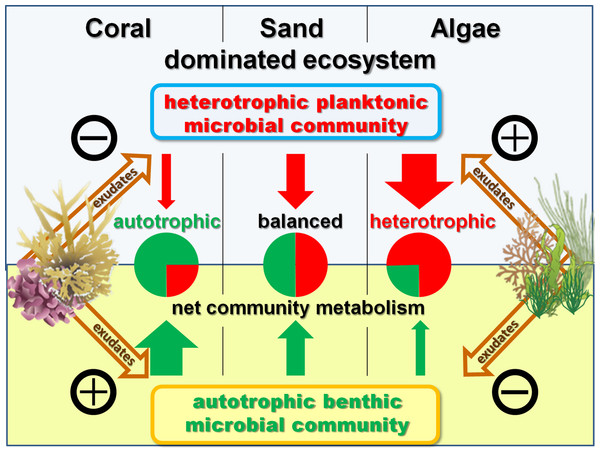
It's more than algae just being a nutrient sink. It varies significantly by species but algae is dumping hydrophilic and hydrophobic DOC into the water that promotes pathogenic shifts in coral holobionts/microbiomes. Skimmers and GAC won't remove the hydrophilic DOC (specifically the Dissolved Combined Neutral Sugars, DSCN). Sponges will process DOC (and the hydrophobic as well, 1000X faster than the bacterioplankton in ht ewater) but they process DOC from algae differently than from corals and with too much nuisance algae a negative feedback loop helps the algae but hurts the coral. Stripping the nutrients out of the water also makes it harder for corals to compete against the algae so corals are getting a hit on two fronts.
DOn't feel like you need to pull out all the rock. I'd actually try to disturb the system as little as possible. Remeber the sponges are helpful and the rock that doesn't have a lot of algae might only need a little brishing. If a rock sin't integral to the aquascaping and doesn't have any sponges on the back side and no corals of value on the lighted side and lots of hair algae I may just set it outside and let it dry out. In the first thread roughly a third of the rock was removed fromn the tank and scrubbed off in aquarium water and only a couple of the worst pieces were removed a 2nd and third time to be scrubbed in aquarium water. In the 2nd thread since it was so tall and seriously needed rescaping (the previous maintenence company just pilled the rock in) over half was removed and maybe about a fifth wasn't put back in.
To help understand the roles of corals and algae and microbial processes in reef systems I'd encourage you get the book and watch the accompanying video "Coral Reefs in the Microbial Seas" (Paper back is ~$20, Kindle is ~$10) Both deal with the conflicting roles of the different types of DOC in reef ecosystems. While there is overlap bewteen his book and the video both have information not covered by the other and together give a broader view of the complex relationships found in reef ecosystems
Here's some other videos you may find informative:
Changing Seas - Mysterious Microbes
Nitrogen cycling in hte coral holobiont
BActeria and Sponges
Maintenance of Coral Reef Health (refferences at the end)
Optical Feedback Loop in Colorful Coral Bleaching
Richard Ross What's up with phosphate"
And here's some additional links:
Phosphate Deficiency:
Nutrient enrichment can increase the susceptibility of reef corals to bleaching:
Increased dissolved inorganic nitrogen (DIN) concentrations in sea water have been linked to a reduction of the temperature threshold at which corals bleach, however, the mechanism underlying this change is not known. This phenomenon is now explained in terms of increased phosphatase activities...

www.nature.com
Ultrastructural Biomarkers in Symbiotic Algae Reflect the Availability of Dissolved Inorganic Nutrients and Particulate Food to the Reef Coral Holobiont:
Reef building corals associated with symbiotic algae (zooxanthellae) can access environmental nutrients from different sources, most significantly via the up...

www.frontiersin.org
Phosphate deficiency promotes coral bleaching and is reflected by the ultrastructure of symbiotic dinoflagellates
Enrichment of reef environments with dissolved inorganic nutrients is considered a major threat to the survival of corals living in symbiosis with din…

www.sciencedirect.com
Effects of phosphate on growth and skeletal density in the scleractinian coral Acropora muricata: A controlled experimental approach
Phosphate contamination can negatively affect corals, modifying growth rates, skeletal density, reproduction, mortality, and zooxanthellae. We determi…
www.sciencedirect.com
High phosphate uptake requirements of the scleractinian coral Stylophora pistillata
SUMMARYSeveral untested aspects of the regulation of inorganic nutrient uptake were examined using nutrient depletion experiments with the symbiotic coral Stylophora pistillata. The total inhibition of phosphate uptake in artificial seawater lacking sodium indicates the involvement of a...

jeb.biologists.org
Phosphorus metabolism of reef organisms with algal symbionts
2657円まるいち 博多辛子明太子(無着色) 「博多の華」 (ギフト用) 180g Z6572海産物イクラ,タラコ,魚卵 Qoo10] 「博 まるいち 博多辛子明太子(無着色) | therichross.com
therichross.com
Sponge symbionts and the marine P cycle
Marine sponges are ubiquitous colonizers of shallow, clear-water environments in the oceans (1, 2). Sponges have emerged as significant mediators of biogeochemical fluxes in coastal zones by virtue of respiring organic matter and facilitating both the consumption and release of nutrients (3, 4)...

www.pnas.org
Phosphorus sequestration in the form of polyphosphate by microbial symbionts in marine sponges
Coral reefs are highly productive ecosystems that raise a conundrum called “Darwin’s paradox”: How can high production flourish in low-nutrient conditions? We show here that in three abundant Caribbean sponges, the granules that have been commonly observed in sponge tissue for decades are...
www.pnas.org
Indirect effects of algae on coral: algae‐mediated, microbe‐induced coral mortality

onlinelibrary.wiley.com
Influence of coral and algal exudates on microbially mediated reef metabolism.
Coral DOC improves oxygen (autotrophy), algae DOC reduces oxygen (heterotrophy).
Benthic primary producers in tropical reef ecosystems can alter biogeochemical cycling and microbial processes in the surrounding seawater. In order to quantify these influences, we measured rates of photosynthesis, respiration, and dissolved organic carbon (DOC) exudate release by the dominant...

peerj.com
Role of elevated organic carbon levels and microbial activity in coral mortality
Effects of Coral Reef Benthic Primary Producers on Dissolved Organic Carbon and Microbial Activity
Algae releases significantly more DOC into the water than coral.
Benthic primary producers in marine ecosystems may significantly alter biogeochemical cycling and microbial processes in their surrounding environment. To examine these interactions, we studied dissolved organic matter release by dominant benthic taxa and subsequent microbial remineralization in...

journals.plos.org
Pathologies and mortality rates caused by organic carbon and nutrient stressors in three Caribbean coral species.
Starch and sugars (doc) caused coral death but not high nitrates, phosphates or ammonium.
Visualization of oxygen distribution patterns caused by coral and algae
Planar optodes were used to visualize oxygen distribution patterns associated with a coral reef associated green algae (Chaetomorpha sp.) and a hermatypic coral (Favia sp.) separately, as standalone organisms, and placed in close proximity mimicking coral-algal interactions. Oxygen patterns were...
peerj.com
Biological oxygen demand optode analysis of coral reef-associated microbial communities exposed to algal exudates
Exposure to exudates derived from turf algae stimulated higher oxygen drawdown by the coral-associated bacteria.
Microbial ecology: Algae feed a shift on coral reefs
Human pressures on coral reefs are giving macroalgae a competitive advantage over reef-building corals. These algae support larger, and potentially pathogenic, microbial populations that are metabolically primed for less-efficient, yet faster, carbohydrate remineralization, perpetuating a...
www.nature.com
Coral and macroalgal exudates vary in neutral sugar composition and differentially enrich reef bacterioplankton lineages.
Increasing algal cover on tropical reefs worldwide may be maintained through feedbacks whereby algae outcompete coral by altering microbial activity. We hypothesized that algae and coral release compositionally distinct exudates that differentially alter bacterioplankton growth and community...

www.ncbi.nlm.nih.gov
Sugar enrichment provides evidence for a role of nitrogen fixation in coral bleaching
onlinelibrary.wiley.com
Excess labile carbon promotes the expression of virulence factors in coral reef bacterioplankton
Coastal pollution and algal cover are increasing on many coral reefs, resulting in higher dissolved organic carbon (DOC) concentrations. High DOC concentrations strongly affect microbial activity in reef waters and select for copiotrophic, often potentially virulent microbial populations. High...
www.nature.com
Unseen players shape benthic competition on coral reefs.
Recent work has shown that hydrophilic and hydrophobic organic matter (OM) from algae disrupts the function of the coral holobiont and promotes the invasion of opportunistic pathogens, leading to coral morbidity and mortality. Here we refer to these dynamics as the (3)DAM [dissolved organic...
www.ncbi.nlm.nih.gov
Macroalgae decrease growth and alter microbial community structure of the reef-building coral, Porites astreoides.
With the continued and unprecedented decline of coral reefs worldwide, evaluating the factors that contribute to coral demise is of critical importance. As coral cover declines, macroalgae are becoming more common on tropical reefs. Interactions between these macroalgae and corals may alter the...
www.ncbi.nlm.nih.gov
Macroalgal extracts induce bacterial assemblage shifts and sublethal tissue stress in Caribbean corals.
Benthic macroalgae can be abundant on present-day coral reefs, especially where rates of herbivory are low and/or dissolved nutrients are high. This study investigated the impact of macroalgal extracts on both coral-associated bacterial assemblages and sublethal stress response of corals. Crude...
www.ncbi.nlm.nih.gov
Biophysical and physiological processes causing oxygen loss from coral reefs.
Global microbialization of coral reefs
Analysis of 60 sites in three ocean basins suggests that overgrowth of fleshy algae on coral reefs supports higher microbial abundances dominated by copiotrophic, potentially pathogenic bacteria via the provision of dissolved inorganic carbon.
www.nature.com
Ecosystem Microbiology of Coral Reefs: Linking Genomic, Metabolomic, and Biogeochemical Dynamics from Animal Symbioses to Reefscape Processes
Differential recycling of coral and algal dissolved organic matter via the sponge loop.
Sponges treat DOC from algae differently than DOC from corals

besjournals.onlinelibrary.wiley.com