

Navigation
Install the app
How to install the app on iOS
Follow along with the video below to see how to install our site as a web app on your home screen.
Note: This feature may not be available in some browsers.
More options
You are using an out of date browser. It may not display this or other websites correctly.
You should upgrade or use an alternative browser.
You should upgrade or use an alternative browser.
Home Depot pool muriatic acid
- Thread starter SeaDweller
- Start date
- Tagged users None




OP
OP

- Joined
- Jul 11, 2016
- Messages
- 3,435
- Reaction score
- 4,839
- Location
- .
- What state or country do you live in
- California
I use this. Very simple to use and a little goes a long way. Might be something for you to look into.
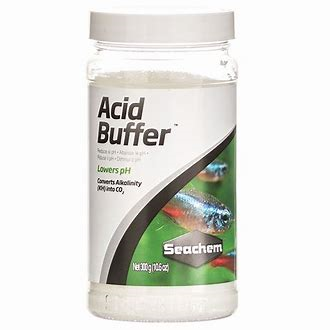
Actually just bought that.
I wouldn't mind using HCl if I knew it was just that. Then when I look up the price of reagent grade HCl, this costs the same. Might as well use something "safer" for our animals.
And to be honest, do we really know what they're diluting their muriatic acid with? I guess I'd rather not play a guessing game anymore, but good to know people have success with it.


- Joined
- Apr 10, 2017
- Messages
- 1,423
- Reaction score
- 1,269
- Location
- Minneapolis, MN
- What state or country do you live in
- Minnesota
well, since water works perfectly and it’s cheaper than any other alternative, I think it’s safe to assume that they’re diluting it with water.Actually just bought that.
I wouldn't mind using HCl if I knew it was just that. Then when I look up the price of reagent grade HCl, this costs the same. Might as well use something "safer" for our animals.
And to be honest, do we really know what they're diluting their muriatic acid with? I guess I'd rather not play a guessing game anymore, but good to know people have success with it.


You said this much more kindly than I could possibly have.well, since water works perfectly and it’s cheaper than any other alternative, I think it’s safe to assume that they’re diluting it with water.
OP
OP
- Joined
- Jul 11, 2016
- Messages
- 3,435
- Reaction score
- 4,839
- Location
- .
- What state or country do you live in
- California
You said this much more kindly than I could possibly have.
I'm sure it's just water, but what's in the water? Do we put just any water in to our tanks?

- Joined
- Apr 10, 2017
- Messages
- 1,423
- Reaction score
- 1,269
- Location
- Minneapolis, MN
- What state or country do you live in
- Minnesota
As a disclaimer, I have no experience or inside knowledge of industrial chemical production, so this is just an educated guess. but Hydrochloric Acid is produced by dissolving Hydrogen Chloride gas in water. For a bulk household-use solution like the Klean Strip mentioned above, my guess is that they simply take water from the municipal supply. The only caveat to that would be if other impurities (Ca, Mg, Chloramines, etc) were present in high enough concentrations to cause issues. For the reagent-grade mentioned above, they may well use RO or even DI water. I have. no idea if the swimming pool grade acid is any different from the cleaning stuff, but my guess is it probably isn't.I'm sure it's just water, but what's in the water? Do we put just any water in to our tanks?
So there are likely more impurities in the home-depot acid than the reagent grade. You probably aren't using enough in your tank for it to matter, though.

- Joined
- Sep 19, 2016
- Messages
- 4,110
- Reaction score
- 5,096
- Location
- Virginia
- What state or country do you live in
- Virginia
I've been using the Klean Strip (and one other I cant remember off the top of my head) for two years without issue. I've had four ICPs run with nothing showing up in them. With that said, it only takes 3-4ml in 5 gallons to do what I want.
OP
OP
- Joined
- Jul 11, 2016
- Messages
- 3,435
- Reaction score
- 4,839
- Location
- .
- What state or country do you live in
- California
As a disclaimer, I have no experience or inside knowledge of industrial chemical production, so this is just an educated guess. but Hydrochloric Acid is produced by dissolving Hydrogen Chloride gas in water. For a bulk household-use solution like the Klean Strip mentioned above, my guess is that they simply take water from the municipal supply. The only caveat to that would be if other impurities (Ca, Mg, Chloramines, etc) were present in high enough concentrations to cause issues. For the reagent-grade mentioned above, they may well use RO or even DI water. I have. no idea if the swimming pool grade acid is any different from the cleaning stuff, but my guess is it probably isn't.
So there are likely more impurities in the home-depot acid than the reagent grade. You probably aren't using enough in your tank for it to matter, though.
I agree, just like another poster above mentioned- we just don't know what impurities-if any-may be present in the solution. And you're right, it's only mls we are using, but who knows? I was really set on using it until some here gave me some doubts. :/
Btw... I hated Chem. Loved O Chem though!

If you want to get rid of the impurities, you can easily turn the nastiest, most horribly impure hardware store muriatic acid into extremely pure hydrochloric acid having a concentration of around 5M to 6M using the simple technique demonstrated here: .

rkpetersen
walked the sand with the crustaceans
View BadgesExcellence Award
Reef Squad Emeritus
Pacific Northwest Reefers
If you want to get rid of the impurities, you can easily turn the nastiest, most horribly impure hardware store muriatic acid into extremely pure hydrochloric acid having a concentration of around 5M to 6M using the simple technique demonstrated here: .
That's so simple and brilliant - if you have the time to wait.
- Joined
- Apr 16, 2019
- Messages
- 13
- Reaction score
- 6
- What state or country do you live in
- California
I want to give my recently acquired rocks an acid bath. since the rocks are very porous, how do we know if all the acid was rinsed off? What if there is some left over in the rock pores/cavities that will get into the tank?
I am new to salt water, just setting up my new tank.
Thanks.
I am new to salt water, just setting up my new tank.
Thanks.

rkpetersen
walked the sand with the crustaceans
View BadgesExcellence Award
Reef Squad Emeritus
Pacific Northwest Reefers
Just rinse them well, let them soak a bit, several times.
Also, muriatic acid is hydrochloric acid, so you'd only be adding chloride ion anyway, which there is already an abundance of in salt water.
However there could still be impurities you want to get rid of, so good rinsing is still a good idea.
Also, muriatic acid is hydrochloric acid, so you'd only be adding chloride ion anyway, which there is already an abundance of in salt water.
However there could still be impurities you want to get rid of, so good rinsing is still a good idea.
OP
OP
- Joined
- Jul 11, 2016
- Messages
- 3,435
- Reaction score
- 4,839
- Location
- .
- What state or country do you live in
- California
I want to give my recently acquired rocks an acid bath. since the rocks are very porous, how do we know if all the acid was rinsed off? What if there is some left over in the rock pores/cavities that will get into the tank?
I am new to salt water, just setting up my new tank.
Thanks.
I think you’d neutralize it with baking soda.
- Joined
- Apr 10, 2017
- Messages
- 1,423
- Reaction score
- 1,269
- Location
- Minneapolis, MN
- What state or country do you live in
- Minnesota
HCl + NaHCO3 = NaCl + H2O + CO2I think you’d neutralize it with baking soda.


I use this. Very simple to use and a little goes a long way. Might be something for you to look into.
Would love to know Randy’s thoughts on this product.
@Randy Holmes-Farley

Just a little update.... I'm not sure what he will think but I'm still using it and have been for a couple years now. It's easy to deal with, a little goes a long way and it's worked fantastic for me.
- Joined
- Apr 10, 2017
- Messages
- 1,423
- Reaction score
- 1,269
- Location
- Minneapolis, MN
- What state or country do you live in
- Minnesota
I always assumed it was sodium bisulfite (dry acid,) but the MSDS says it's a 'proprietary blend of salts.' Sounds like a secret recipe of '11 salts and acids.' I'm guessing sodium bisulfite is the main ingredient with a few other salts mixed in.


- Joined
- Nov 21, 2012
- Messages
- 1,350
- Reaction score
- 1,721
- Location
- Tampa
- What state or country do you live in
- Florida
That acid is powerful stuff and is by far the best thing I have used to clean pumps and any fixtures with corraline Algae buildup. Mix it about 4 parts water to one acid. Fizzles the coraline right off!
I’d like to get away from muriatic acid and use this because it’s probably much safer with less fumes.?
Sure would be nice to use a simpler product with enough punch to clean and drop dKH when needed.
I’m not a big fan of vinegar anymore. It has a lot of uses, but it’s so slow. Good for many other things though. Just not a fast Coralline cleaner
@Randy Holmes-Farley - thoughts??
Sure would be nice to use a simpler product with enough punch to clean and drop dKH when needed.
I’m not a big fan of vinegar anymore. It has a lot of uses, but it’s so slow. Good for many other things though. Just not a fast Coralline cleaner
@Randy Holmes-Farley - thoughts??











