By adding some - your tank might fluctuate some for short time.... After that it will mellow out and you can dose, add, take away, medicate (for any fish disease) ect.. ect... But just word of caution, be really careful and do some homework on any care of live rock at first. I not trying to scare you... But homework is part of this hobby! Not one persons opinion ever, I have learned that from years of reef keeping...! Again everyone is an expert, I am just sayin.. Read, read and ask questions there are A LOT of extremely knowledgeable people in this hobby.. both extremely smart and extremely talented. Get some Live Rock.. Do some homework on every supplier that you can.. Call them and ask questions.. They all want to sell you something everyone of them. You have to do some home work to find out what you want to receive for YOUR tank... Buy the best you can for the monies you have or save up some more..! Good luck again..
Yeah, with Phillip's advice. He claimed that I was only the second person that he had this issue with. My house smelled like death, all happened within 12 hours of opening the boxes...
Buy some Live Rock and a concrete drill bit and cut (with a hack saw it's so easy) or smash rock. Drill and insert fiberglass rod, from Wally World (snow flag poles orange rod with small flag at the top, used to mark driveways) a couple bucks a piece. Cut and glue a 4 to 6 inch piece (or less) into the two stacked pieces of rock work. Then drill another piece on top of that.. You can make any thing you want arches, bridges, caves, out cropping's, the sky is the limit.. I have set-up a lot of tanks myself. I sometimes wont glue it ALL together either I leave some 3 or 4 rocks that are not glued. Just so the rocks at the top of say the stack, can be removed very easily. This is way, way, more beneficial to the future of your tank and all of it's inhabitance..! That you pay good moines for..
Live Rock can really be out of water for sometime, of coarse the faster the better. But a long time..! You can even mist it with a spray bottle of tank water once in a while if need be. Good luck and you can make something way better! and way cheaper! as well... AND its LIVE ROCK.. and way cooler! Not dead coral either.. I really don't like that look regardless... lol
In addition to the cool hitchhikers, the benefit to using cultured rock (over dry) is that it's surface is already colonized by higher life forms. Which means nuisance organisms will have a much harder time getting established.
Adding a few pieces of live rock to an aquascape primarily made of dry rock will not get you the same benefits. If one can afford entirely live, it's absolutely the way to go.
Sorry to hear you had that happen. I saw that happen once back in '93 or '94 at an LFS I worked in. We typically ordered 500 - 1000 lbs at a time and one box caused one holding tank to go anaerobic. I've been getting live rock ever since then for my maintenance company setups and never had issues.
(FWIW there's lots of beneficial biology in sand including helping maintain alkalinity.)
I recently started up a 20 gallon tank Exclusively with Marco Dry Rock and bottled bacteria and CaribSea live sand. I know it will take much longer for my tank to mature doing it this way instead of ocean live rock which is filled with a wider variety of beneficial bacteria. The reason I chose my current path is because I don't want to deal with any pests or anything that would be a nightmare to deal with.
While watching a video on algae, I heard someone mentioning an alternative to getting chunks of live rock. They suggested live rock rubble which would be very small, reduce the risk of pests due to its size, and quickly seed the tank with beneficial bacteria.
I know I said a lit up to this point, but here is my question. How helpful would it be for me to get live rock rubble instead of going the course I'm going? Is the ocean bacteria significantly better to combat issues in a tank? Is the only difference the speed in which my dry rock would be coated in coralline algae? Is there more I'm not thinking about? Thanks in advance for any answers
Go for it. Some is better than none and let your own aesthetic decide the amount.
I was sold on live rock back in the early 90s and the research Iv'e seen only confirms how important it is. Like only about 2% of the microbial stuff on reefs can be cultured ( Coral Reefs in the Microbial Seas @ 6:30) and live rock or rubble is a great way (best way) to get cryptic sponges essential for a healthy ecosystem and recycling DOC (1)(2)(3). There can be pests but if you QT it, just like everything else should be QTed becasue of the risk of parasites, the risk is minimal. Since I frequently find small coral on the live rock I get I always QT with good lighting. And to put things into perspective, the biggest pest Ive run into and has caused more problems than anything else are BTAs, not majanos, aiptasia or mantis shrimp
Maybe you've already seen this thread but here's Aquabiomics experiment with live rock:
Studying the effects of live rock in a newly established aquarium shows that high-quality live rock promotes the rapid establishment of an effective biological filter and a microbial community similar to those found in mature reef tanks.
Could the lack of bio diversity be why I can't seem to grow SPS? Every time I try they get either RTN or STN and have brown algae of some sort growing on their tips...just a brown coloration so maybe diatoms.
I carbon dose with NP Bacto Balance. I also add MB7 and MBclean every week
My nutrients, pH, ALK, and major elements are fine and everything is stable. Flow and lighting are adequate as well. I am to the point of searching outside the normal box for a solution to my problem keeping SPS
Could the lack of bio diversity be why I can't seem to grow SPS? Every time I try they get either RTN or STN and have brown algae of some sort growing on their tips...just a brown coloration so maybe diatoms.
I carbon dose with NP Bacto Balance. I also add MB7 and MBclean every week
My nutrients, pH, ALK, and major elements are fine and everything is stable. Flow and lighting are adequate as well. I am to the point of searching outside the normal box for a solution to my problem keeping SPS
Stop carbon dosing, stop adding bottled bacteria and stuff that promotes microbial growth
(I have nothing against using bottled bacteria to set up a system but research clearly shows corals manipulate microbial processes and since we can not quantify what they are doing it seems best not to add additional stuff they in all probablility don't need and may actually get in their way.)
FYI, Carbon dosing is adding labile Dissolved Organic Carbon (DOC) to your aquarium. Only about 2% of the microbial stuff on reefs cn be cultured and put in a bottle. Cryptic sponges feed off DOC an may moderate the effects of DOC on corals or promote phase shifts to algae dominance.
Many experiments have been conducted by many researchers over the yearrs looking at DOCs roles in coral health. Some types of DOC, especially those from algae can promote pathogenic shifts in coral microbiomes. Additionally, DOC collected from a coral then reapplied to a coral can cause issues by promoting microbial growth. DOCs can aslo cause issues by removing a coral's control over the growth of zooxanthellae and helping zooxantheallae prolifferate thereby reducing the photosynthates avaialble for coral coral growth in effect starving a coral. Here's links to some of the research showing DOCs effects on corals (sorry for the data bomb).
Microbial view of Coral Decline
"Coral Reefs in the Microbial Seas" This video compliments Rohwer's book of the same title (Paper back is ~$20, Kindle is ~$10), both deal with the conflicting roles of the different types of DOC in reef ecosystems. While there is overlap bewteen his book and the video both have information not covered by the other and together give a broader view of the complex relationships found in reef ecosystems
Changing Seas - Mysterious Microbes
Nitrogen cycling in hte coral holobiont
BActeria and Sponges
Maintenance of Coral Reef Health (refferences at the end)
Optical Feedback Loop in Colorful Coral Bleaching
DNA Sequencing and the Reef Tank Microbiome
Richard Ross What's up with phosphate"
Sugar enrichment (aka carbon dosing) provides evidence for a role of nitrogen fixation in coral bleaching
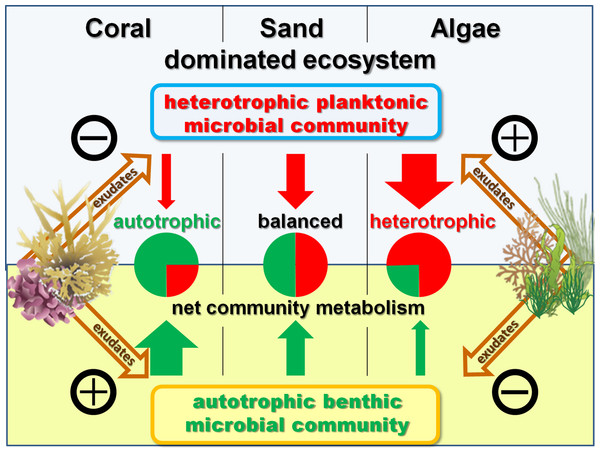
Benthic primary producers in tropical reef ecosystems can alter biogeochemical cycling and microbial processes in the surrounding seawater. In order to quantify these influences, we measured rates of photosynthesis, respiration, and dissolved organic carbon (DOC) exudate release by the dominant...
peerj.com
Role of elevated organic carbon levels and microbial activity in coral mortality
Effects of Coral Reef Benthic Primary Producers on Dissolved Organic Carbon and Microbial Activity
Algae releases significantly more DOC into the water than coral.
Benthic primary producers in marine ecosystems may significantly alter biogeochemical cycling and microbial processes in their surrounding environment. To examine these interactions, we studied dissolved organic matter release by dominant benthic taxa and subsequent microbial remineralization in...
journals.plos.org
Pathologies and mortality rates caused by organic carbon and nutrient stressors in three Caribbean coral species.
DOC caused coral death but not high nitrates, phosphates or ammonium.
Planar optodes were used to visualize oxygen distribution patterns associated with a coral reef associated green algae (Chaetomorpha sp.) and a hermatypic coral (Favia sp.) separately, as standalone organisms, and placed in close proximity mimicking coral-algal interactions. Oxygen patterns were...
peerj.com
Biological oxygen demand optode analysis of coral reef-associated microbial communities exposed to algal exudates
Exposure to exudates derived from turf algae stimulated higher oxygen drawdown by the coral-associated bacteria.
Algae-derived dissolved organic matter has been hypothesized to induce mortality of reef building corals. One proposed killing mechanism is a zone of hypoxia created by rapidly growing microbes. To investigate this hypothesis, biological oxygen ...
www.ncbi.nlm.nih.gov
Microbial ecology: Algae feed a shift on coral reefs
Human pressures on coral reefs are giving macroalgae a competitive advantage over reef-building corals. These algae support larger, and potentially pathogenic, microbial populations that are metabolically primed for less-efficient, yet faster, carbohydrate remineralization, perpetuating a...
www.nature.com
Coral and macroalgal exudates vary in neutral sugar composition and differentially enrich reef bacterioplankton lineages.
Increasing algal cover on tropical reefs worldwide may be maintained through feedbacks whereby algae outcompete coral by altering microbial activity. We hypothesized that algae and coral release compositionally distinct exudates that differentially alter bacterioplankton growth and community...
www.ncbi.nlm.nih.gov
Sugar enrichment provides evidence for a role of nitrogen fixation in coral bleaching
Elevated ammonium delays the impairment of the coral-dinoflagellate symbiosis during labile carbon pollution
(here's an argument for maintaining heavy fish loads if you're carbon dosing)
Labile dissolved organic carbon (DOC) is a major pollutant in coastal marine environments affected by anthropogenic impacts, and may significantly con…
www.sciencedirect.com
Excess labile carbon promotes the expression of virulence factors in coral reef bacterioplankton
Coastal pollution and algal cover are increasing on many coral reefs, resulting in higher dissolved organic carbon (DOC) concentrations. High DOC concentrations strongly affect microbial activity in reef waters and select for copiotrophic, often potentially virulent microbial populations. High...
www.nature.com
Unseen players shape benthic competition on coral reefs.
Recent work has shown that hydrophilic and hydrophobic organic matter (OM) from algae disrupts the function of the coral holobiont and promotes the invasion of opportunistic pathogens, leading to coral morbidity and mortality. Here we refer to these dynamics as the (3)DAM [dissolved organic...
www.ncbi.nlm.nih.gov
Allelochemicals Produced by Brown Macroalgae of the Lobophora Genus Are Active against Coral Larvae and Associated Bacteria, Supporting Pathogenic Shifts to Vibrio Dominance.
Diverse microbial communities associate with coral tissues and mucus, providing important protective and nutritional services, but once disturbed, the microbial equilibrium may shift from a beneficial state to one that is detrimental or pathogenic. Macroalgae (e.g., seaweeds) can physically and...
www.ncbi.nlm.nih.gov
Macroalgae decrease growth and alter microbial community structure of the reef-building coral, Porites astreoides.
With the continued and unprecedented decline of coral reefs worldwide, evaluating the factors that contribute to coral demise is of critical importance. As coral cover declines, macroalgae are becoming more common on tropical reefs. Interactions between these macroalgae and corals may alter the...
www.ncbi.nlm.nih.gov
Macroalgal extracts induce bacterial assemblage shifts and sublethal tissue stress in Caribbean corals.
Benthic macroalgae can be abundant on present-day coral reefs, especially where rates of herbivory are low and/or dissolved nutrients are high. This study investigated the impact of macroalgal extracts on both coral-associated bacterial assemblages and sublethal stress response of corals. Crude...
www.ncbi.nlm.nih.gov
Biophysical and physiological processes causing oxygen loss from coral reefs.
Analysis of 60 sites in three ocean basins suggests that overgrowth of fleshy algae on coral reefs supports higher microbial abundances dominated by copiotrophic, potentially pathogenic bacteria via the provision of dissolved inorganic carbon.
www.nature.com
Coral Reef Microorganisms in a Changing Climate, Fig 3
Department of Chemistry, The Pennsylvania State University, University Park, PA 16802. Ken and Kelly report on their work on Total Organic Carbon and how it relates to the reef aquarium.
Department of Chemistry, The Pennsylvania State University, University Park, PA 16802. Ken and Kelly continue to report on their work on Total Organic Carbon and how it relates to the reef aquarium.
reefs.com
Because sponges are essential players in the carbon, nitrogen and phosphorus cycle(s) on reefs here's some links to research done with them.
Element cycling on tropical coral reefs.
This is Jasper de Geoij's ground breaking research on reef sponge finding some species process labile DOC 1000X faster than bacterioplankton. (The introduction is in Dutch but the content is in English.)
Marine sponges are ubiquitous colonizers of shallow, clear-water environments in the oceans (1, 2). Sponges have emerged as significant mediators of biogeochemical fluxes in coastal zones by virtue of respiring organic matter and facilitating both the consumption and release of nutrients (3, 4)...
www.pnas.org
Phosphorus sequestration in the form of polyphosphate by microbial symbionts in marine sponges
Coral reefs are highly productive ecosystems that raise a conundrum called “Darwin’s paradox”: How can high production flourish in low-nutrient conditions? We show here that in three abundant Caribbean sponges, the granules that have been commonly observed in sponge tissue for decades are...
www.pnas.org
Differential recycling of coral and algal dissolved organic matter via the sponge loop.
Sponges treat DOC from algae differently than DOC from corals
Coral reefs are economically important ecosystems that have suffered unprecedented losses of corals in the recent past. Why have Caribbean reefs in particu
academic.oup.com
Surviving in a Marine Desert The Sponge Loop Retains Resources Within Coral Reefs
Dissolved organic carbon and nitrogen are quickly processed by sponges and released back into the reef food web in hours as carbon and nitrogen rich detritus.
PDF | On Jun 23, 2015, Jasper M de Goeij and others published 2013 deGoeij Science Sponge loop | Find, read and cite all the research you need on ResearchGate
www.researchgate.net
Natural Diet of Coral-Excavating Sponges Consists Mainly of Dissolved Organic Carbon (DOC)
Coral-excavating sponges are the most important bioeroders on Caribbean reefs and increase in abundance throughout the region. This increase is commonly attributed to a concomitant increase in food availability due to eutrophication and pollution. ...
www.ncbi.nlm.nih.gov
The Role of Marine Sponges in Carbon and Nitrogen Cycles of COral Reefs and Nearshore Environments.
Explore millions of resources from scholarly journals, books, newspapers, videos and more, on the ProQuest Platform.
search.proquest.com
And since we're discussing favorable and not so favorable bacteria here's a paper looking at how different corals and polyps are influencing the bacteria in the water column.
Aura-biomes are present in the water layer above coral reef benthic macro-organisms
As coral reef habitats decline worldwide, some reefs are transitioning from coral- to algal-dominated benthos with the exact cause for this shift remaining elusive. Increases in the abundance of microbes in the water column has been correlated with an increase in coral disease and reduction in...
You will be more successful with live rock than dry rock and bottled bacteria. Even just seeding with a bit of live rock will go a loooong way. It isn't just about the bacteria, it's all the micro and macro flora and fauna. Pods, worms, starfish, algae, sponges, coraline, etc. Yes you will eventually get a few on frag plugs but not like you will with even just a few pieces of actual live rock. What i did was got few pieces of the "livest" rock I could find from 2 different sources and then put it in my tNk with the dry rock...and left the lights off while feeding the tan. After a month or so I slooowly started ramping up the lights starting at 5% for a few hours a day. I've never had an ugly stage. You get these ugly stages because when you have a blank slaye, there's nothing for the algae to compete with, it can just run wild. And as far as pests go...so what? You might get a few but odds are nothing that isn't easily dealt with, especially when you don't have any corals in the rank yet. It's trivial to zap a few aiotasia or whatever. Stuff like true fireworks, Bobbitt worms, and the stuff you hear horror stories about is super rare. The rewards FAR outweigh the risks.
Not sure about diatoms in your system since you've been up and running since Nov (Dec?) last year. Could be some light dinos. Do you have a microscope? Can suck some of that brown stuff up and find out if it is dinos or diatoms quickly.
As far as the brown dusting on the tips of your acros, I'd again imagine dinos, but only one way to tell. Since you don't have bottomed out nutrients, they can be there but not overcompeting everything else like they do when you zero out. Are they bubbling any?
I don't see a problem with using bacteria in bottles -- I've used PNS Probio. But, the most important question is why. Are you having high nutrients you are trying to keep down? Your bioload isn't very big for that tank. Beautiful tank and congrats in the win! If nutrients are accumulating without the bac/carbon dosing, then my first move would be macroalgae (refugium or display macros). ATS if you need to be aggressive. Skimmer, of course. After that I would begin with other measures like bac dosing if it still isn't getting controlled.
One issue is that you don't have much coral yet. Another great sink for nutrients. At some point is just starts sustaining itself: more fish making more nutrients that get sucked up by the massive coral growth, etc. getting there is a slog, though.
To help things along, I like to increase biodiversity. About a billion microbrittle stars is a good sign. Some worms are great (spaghetti worms especially). Bristleworms aren't my favorite, but they are easily managed. Pineapple sponges growing in your sump and dark spots--great. All this stuff can come off of some ocean live rock. Even the smaller Tampa Bay Saltwater treasure chests can be a good infusion. I had a nano that looked like a GHA farm. Removed a couple of rocks and replaced with TBS rocks. Did NOTHING and watched the GHA go away over a few weeks. It came back when things started resettling, but I managed it and eventually got rid of all of it. This is also when my SPS began to grow. My acros aren't growing all that much, likely because my light and flow are set for LPS and montis (which are growing like mad) but they're not dying at least.
If I had your tank right now, I would:
1. Get a whole bunch of affordable LPS and SPS (and manageable softies) and get them growing fast--I would plan to frag/replace with super fancy acros later. Skipping pocciliapora because that's risky. Hardiest acros in places I want them long term. Premium spots saved for the target acros.
2. Add a bunch if Botrycladia, codium, maybe dragon's breath macroalgae to the display--looks like your tangs are gone, so not too much worry about them turning into salad.
3. TBS rocks
4. Dosing small amounts of AF Life Source. Previously I used Fiji Mud but that's hard to find nowadays. When mixing AF Life Source put the strongest magnet you can find next to the tupper because it has some magnetic stuff, and suck out the cloudy liquid with a baster to inject in the tank. I'm doing this every week or two. I think it's a decent diversity booster.
5. Wait and watch, check parameters and make small adjustments as needed
6. When corals growing and filling in, more fish. They are great fertilizers.
7. Tank starts to get in that "self-sustaining" mode, on with the grand acro plan.
That's just me. I know a few reefers that go straight acro dominant on day one and pull it off nicely. One I buy from uses trident method. If you made it this far, I hope you get that brown stuff under control and get those acros growing!
Not sure about diatoms in your system since you've been up and running since Nov (Dec?) last year. Could be some light dinos. Do you have a microscope? Can suck some of that brown stuff up and find out if it is dinos or diatoms quickly.
As far as the brown dusting on the tips of your acros, I'd again imagine dinos, but only one way to tell. Since you don't have bottomed out nutrients, they can be there but not overcompeting everything else like they do when you zero out. Are they bubbling any?
I don't see a problem with using bacteria in bottles -- I've used PNS Probio. But, the most important question is why. Are you having high nutrients you are trying to keep down? Your bioload isn't very big for that tank. Beautiful tank and congrats in the win! If nutrients are accumulating without the bac/carbon dosing, then my first move would be macroalgae (refugium or display macros). ATS if you need to be aggressive. Skimmer, of course. After that I would begin with other measures like bac dosing if it still isn't getting controlled.
One issue is that you don't have much coral yet. Another great sink for nutrients. At some point is just starts sustaining itself: more fish making more nutrients that get sucked up by the massive coral growth, etc. getting there is a slog, though.
To help things along, I like to increase biodiversity. About a billion microbrittle stars is a good sign. Some worms are great (spaghetti worms especially). Bristleworms aren't my favorite, but they are easily managed. Pineapple sponges growing in your sump and dark spots--great. All this stuff can come off of some ocean live rock. Even the smaller Tampa Bay Saltwater treasure chests can be a good infusion. I had a nano that looked like a GHA farm. Removed a couple of rocks and replaced with TBS rocks. Did NOTHING and watched the GHA go away over a few weeks. It came back when things started resettling, but I managed it and eventually got rid of all of it. This is also when my SPS began to grow. My acros aren't growing all that much, likely because my light and flow are set for LPS and montis (which are growing like mad) but they're not dying at least.
If I had your tank right now, I would:
1. Get a whole bunch of affordable LPS and SPS (and manageable softies) and get them growing fast--I would plan to frag/replace with super fancy acros later. Skipping pocciliapora because that's risky. Hardiest acros in places I want them long term. Premium spots saved for the target acros.
2. Add a bunch if Botrycladia, codium, maybe dragon's breath macroalgae to the display--looks like your tangs are gone, so not too much worry about them turning into salad.
3. TBS rocks
4. Dosing small amounts of AF Life Source. Previously I used Fiji Mud but that's hard to find nowadays. When mixing AF Life Source put the strongest magnet you can find next to the tupper because it has some magnetic stuff, and suck out the cloudy liquid with a baster to inject in the tank. I'm doing this every week or two. I think it's a decent diversity booster.
5. Wait and watch, check parameters and make small adjustments as needed
6. When corals growing and filling in, more fish. They are great fertilizers.
7. Tank starts to get in that "self-sustaining" mode, on with the grand acro plan.
That's just me. I know a few reefers that go straight acro dominant on day one and pull it off nicely. One I buy from uses trident method. If you made it this far, I hope you get that brown stuff under control and get those acros growing!
A friend has a microscope I think but like I said in another post, I wouldn’t know what I’m looking for. Maybe we can cross that bridge when I get my hands on a scope.
I can’t pull anything off the sand. It’s just a coloration on the sand. Also, no bubbling anywhere and I’ve looked very closely.
I do have a lemon peel Angel so I’m limited on what I can place in the tank. Other wish I’d have more acans. But each time I place any sps this happens. Even in my previous tank. I’m at a loss. I’m on well water and do have a RODI.
I don’t get it. Some people just throw sps in and they’re off to the races. I can’t even get one to live. Something has to be going on that’s not typical







 Sorry to hear you had that happen. I saw that happen once back in '93 or '94 at an LFS I worked in. We typically ordered 500 - 1000 lbs at a time and one box caused one holding tank to go anaerobic. I've been getting live rock ever since then for my maintenance company setups and never had issues.