How many 5mm 3volt LED’s for moon lights?

  • Thread starter Thread starter b4tn
  • Start date Start date
  • Tagged users None

b4tn

Valuable Member
View Badges
Joined
Jun 17, 2015
Messages
1,673
Reaction score
2,244
Location
Columbia MD
Rating - 0%
0   0   0
I have an extra 100 5mm, 3v, 20mA, 450nm blue LEDs from another project. Im thinking to make moonlights with them. How many should I use? Will running moon lights from say lights off to midnight for 4 hours or so do anything bad for corals or cause algae issues?

 
What size tank?
 
100 is about 60W total. Since you want moonlight one thing is how many is adequate for your enjoyment. One thing..

So say you take say 60 for a constant 12v array in a 3 series plus resistor by 20 parallel branches and hook a chap PWM manual dimmer to it (dimmer is about $3).
120 Ohm 1/4watt resistors.
Probably too many but that's what dimming is for.

https://www.advancedaquarist.com/2012/7/lighting
 
Last edited:
@dantimdad I think you have been playing with moonlights...any suggestions?
 
100 is about 60W total. Since you want moonlight one thing is how many is adequate for your enjoyment. One thing..

So say you take say 60 for a constant 12v array in a 3 series plus resistor by 20 parallel branches and hook a chap PWM manual dimmer to it (dimmer is about $3).
120 Ohm 1/4watt resistors.
Probably too many but that's what dimming is for.

https://www.advancedaquarist.com/2012/7/lighting

Excellent article thanks!!

Thanks everyone. I held up 3 LED's above my tank and it was very close to what I was looking for. I think I will probably run 8 total with 4 on each light fixture but dimable. That should spread the light enough around the tank and let me adjust intensity.
 
My rule of thumb for moonlights is one diode per 24" of tank length. So, on my 8 footer - 4 of them; otherwise just to bright and not natural looking at all.
 
Excellent article thanks!!

Thanks everyone. I held up 3 LED's above my tank and it was very close to what I was looking for. I think I will probably run 8 total with 4 on each light fixture but dimable. That should spread the light enough around the tank and let me adjust intensity.
Now that I'm sober (just kidding) glad you didn't take my advice.. ;)
 
My rule of thumb for moonlights is one diode per 24" of tank length. So, on my 8 footer - 4 of them; otherwise just to bright and not natural looking at all.

Yeah the blue LED's I have are bright AF. I was playing with one last night and with my dimmer I can get it pretty low. My thought is that if I have 8 total spread evenly across the top I can dim them to achieve the look thats desirable.
 
As @Katrina71 stated, I have made up a three part circuit that drives 1/2 watt LEDs at a constant current and allows them to be manually dimmed to almost nothing.

I like a very faint moonlight so it will work for me. Yes, multiple small ones spread out is much better IMO to look more natural.

You can check out my build thread for details.
 
I agree on using dimmer to get the intensity you want regardless of the amount or power of LED’s.. I run my blue & royal blues @ 1% overnight.
 
Yeah the blue LED's I have are bright AF. I was playing with one last night and with my dimmer I can get it pretty low. My thought is that if I have 8 total spread evenly across the top I can dim them to achieve the look thats desirable.

I use the apex 4 light string (3 watt diodes I think) over my 8' tank and it's about right. Apex adjusts intensity based on lunar cycles, so most of the time it's quite dim. At 100% it's bright, but not wildly so.
 
To be true the moon are not as blue as the sun but nearly. If You want real moonlight I beleive the best is to buy 2 10 000K white diodes and serie connect with 2 450 nm to achieve about the same color you have in full light. Mount them pairwise to cover as much as possible of the tank. The amount of light with 20 mA is way to high so you have to add a resistor in series with the diodes to 12 v.
The moon has a maximum of about 0,3 Lux. See here: https://en.wikipedia.org/wiki/Moonlight
Compare to the sun of about 100 000 lux. See here: https://en.wikipedia.org/wiki/Daylight
I guess you are using about 100w leds to achieve about 10 000 lux. Then you should use about 0,3 / 10 000 x 100 watts = 3 milliwatt. That means about 0.3 mA in the diodes.
A series connection with the diodes and a resistor of 4.7 k ohm to 12v will give about that current.
You will notice that you see absolutly nothing in the tank. Thats correct and anyone who has been diving in moonlight can confirm that.
But it is possible that the light can induce corals to spawn if you put it on and off at the correct time (shifting during the month). You can check on a moon calender when the moon is up.
Here is the moon phases: https://www.timeanddate.com/moon/phases/australia/cairns
I believe it is not only the light but also the gravity of the moon that plays a role here so it might be best to have the correct timing.
 
Last edited:
Your post is soo close..but

To be true the moon are not as blue as the sun but nearly.
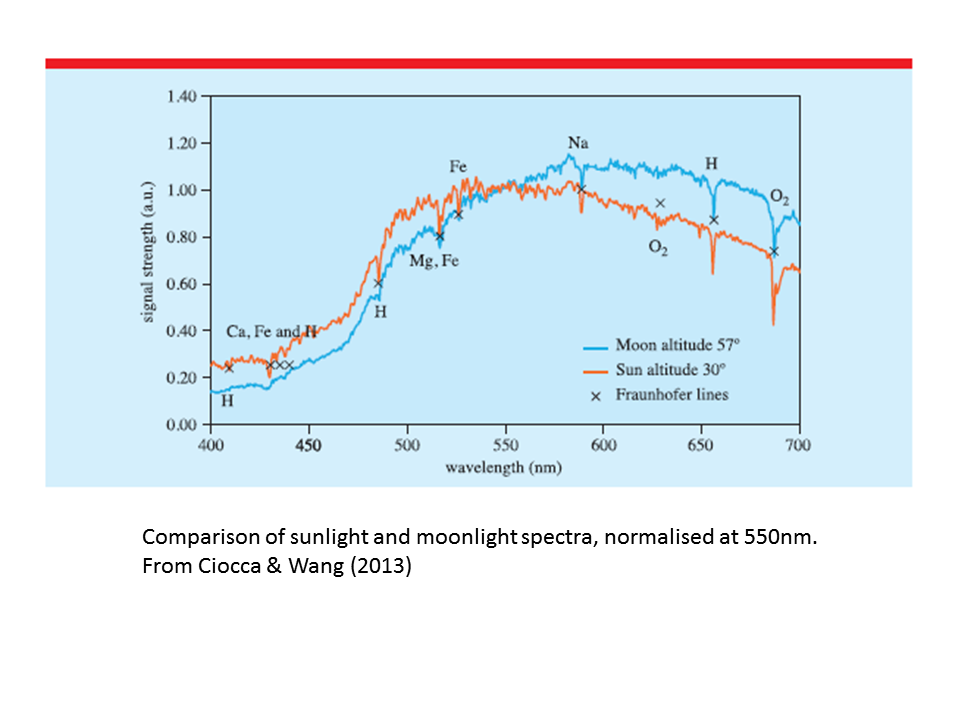
4,100–4,150 K....Moonlight

Now by instruments not by your tricked eyesight..or under water..
but moonlight is "yellow"..
https://physics.stackexchange.com/questions/244922/why-does-moonlight-have-a-lower-color-temperature

72dkh.png
 
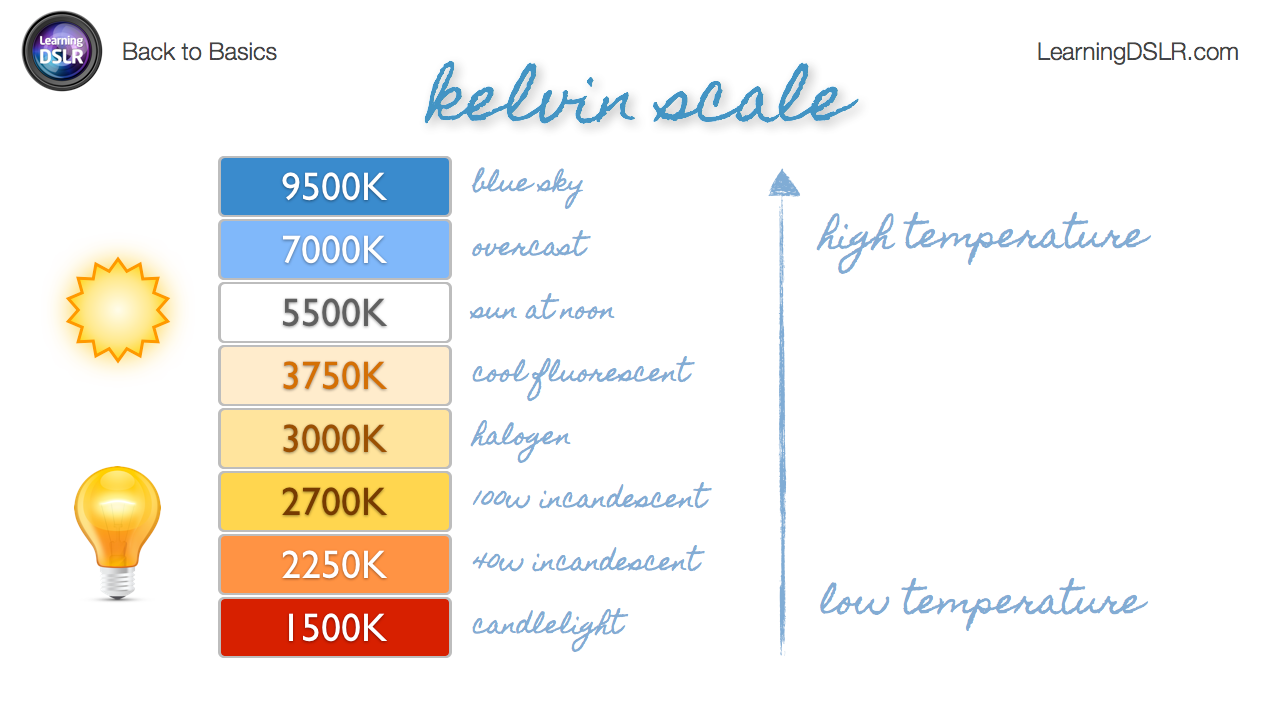
The color temperature of the sun (and moon) is very much dependent of the altitude. At the equator the sunlight can be 10 000 K.
The difference in Your graph is much dependent of the altitudes which are not at all typical for max day- or moonlight in the tropical area.
 
The color temperature of the sun (and moon) is very much dependent of the altitude. At the equator the sunlight can be 10 000 K.
The difference in Your graph is much dependent of the altitudes which are not at all typical for max day- or moonlight in the tropical area.
"sunlight" can't be 10,000k or we'd have a blueish sun.. ;)
SKY reflections cools the light but has nothing at all to do w/ the sun.. Or the "real color" of moonlight..
don't confuse the source w/ interactions of the source..
1*iF2-zyqb2o8e-3sLHlHdXA.png


Don't know of too many oceans in the alps...

The color of moonlight, particularly around full moon, appears bluish to the human eye compared to most artificial light sources due to the Purkinje effect.
The Purkinje effect (sometimes called the Purkinje shift) is the tendency for the peak luminance sensitivity of the human eye to shift toward the blue end of the color spectrum at low illumination levels as part of dark adaptation.[1][2][page needed] In layman's terms, reds will appear darker relative to other colors as light levels decrease. The effect is named after the Czech anatomist Jan Evangelista Purkyně.
 
Last edited:
The number of the color tempeature is from a photografic site that I saw many years ago. But if it is correct in the alps this picture might explain that the distance the light goes through the air is short at the equator just as at high latitude in the alps.
See the attached picture.
It is possible my number is wrong but anyway: At sea level the color temperature of the sunlight is highest at the equator.
A possible source of a fault could be that when you take a picture the light from the blue sky adds to the direct sunlight.

latitude_and_sunlight_large.jpg
 

IF YOU HAD TO TAKE A REEFING EXAM, WOULD YOU PASS?

  • Yes!

    Votes: 30 44.8%
  • Not yet, but I have one that I want to buy in mind!

    Votes: 9 13.4%
  • No.

    Votes: 25 37.3%
  • Other (please explain).

    Votes: 3 4.5%
Back
Top