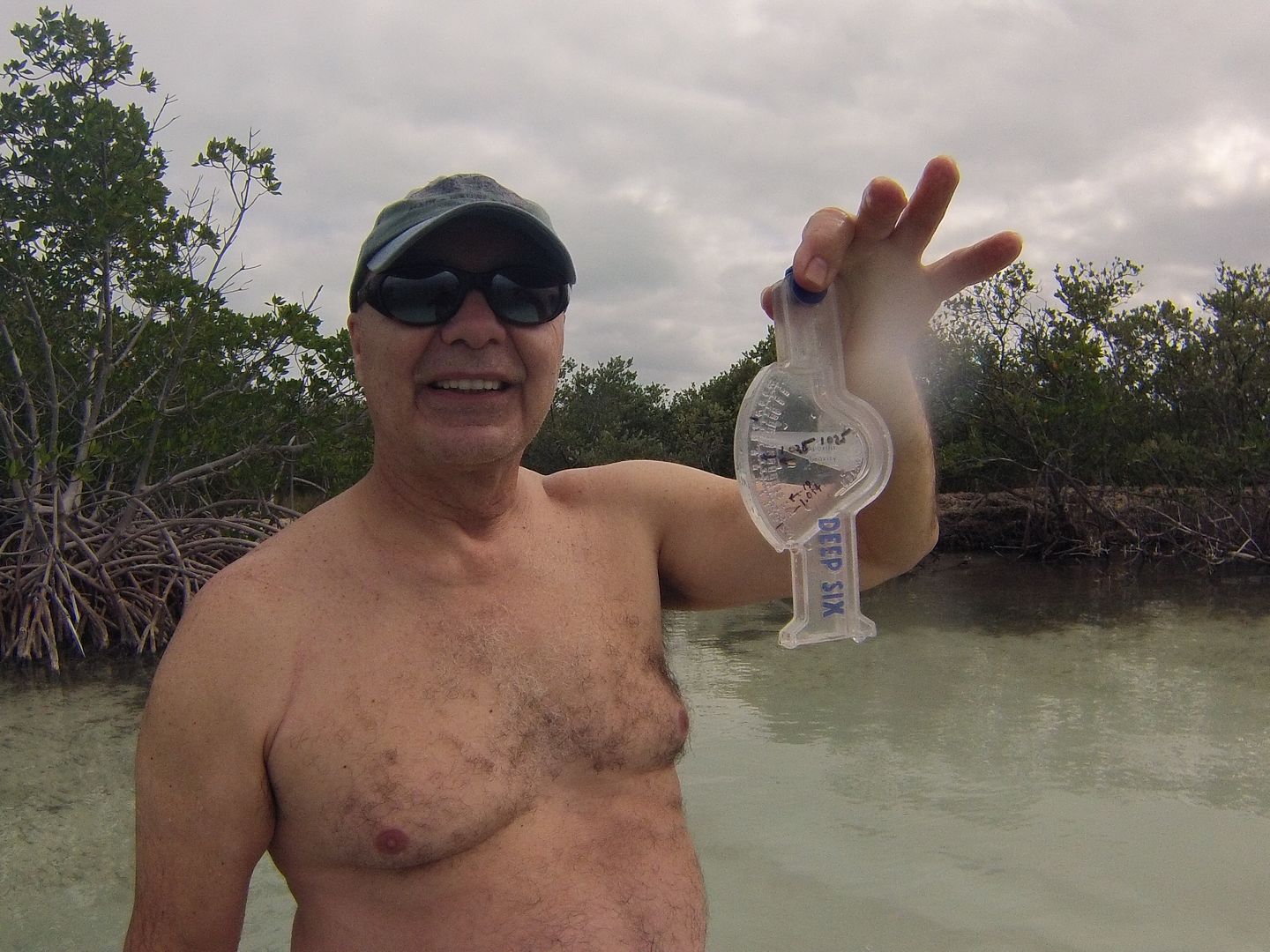
Hydrometer vs refactometer

And yes, still trying to wrap my head around (and showing to myself) that I really can't use the different calibration methods fluids. It is still counterintuitive to me ... (not doubting just being puzzled by it)

The diy standards are made from sodium chloride, not the full mix of ions in seawater. One can readily make a sodium chloride solution that matches the refractive index (or density or conductivity) of 35 ppt seawater, but one cannot match all of those at the same time with one solution unless it is a seawater solution.

 
I use this, never need to calibrate, and you could use it to calibrate any hydrometers or refractors. You may have to give you a exact reading.
 

Attachments

  • 6AB6961F-A924-4EE5-9BA9-4D19CCD9F27E.png
    6AB6961F-A924-4EE5-9BA9-4D19CCD9F27E.png
    149 KB · Views: 19
I use this, never need to calibrate, and you could use it to calibrate any hydrometers or refractors. You may have to give you a exact reading.

If accuracy is a concern, I’d check it at least once.
 
If accuracy is a concern, I’d check it at least once.

The following is a 2017 picture of two newer Tropic Marin Hydrometers along with my very old original Tropic M Hydrometer. One of the new ones matched the old one perfectly, the other was slightly off but still very close.
It's funny how in the old days 1.022 to 1.025 was the norm, where today we start at 1.025 to 1.027 as shown in the last picture
Floating Hydro.jpg


Hydrometer Markings.jpg
 
I take this swing arm hydrometer to the tropics where my fish were collected, jump in the sea with it and draw a line on it where the arm floats. No calibration fluid needed, just $10,000.00 to go to Tahiti. :beaming-face-with-smiling-eyes:


IF YOU HAD TO TAKE A REEFING EXAM, WOULD YOU PASS?

  • Yes!

    Votes: 32 45.7%
  • Not yet, but I have one that I want to buy in mind!

    Votes: 9 12.9%
  • No.

    Votes: 26 37.1%
  • Other (please explain).

    Votes: 3 4.3%

New Posts

Back
Top