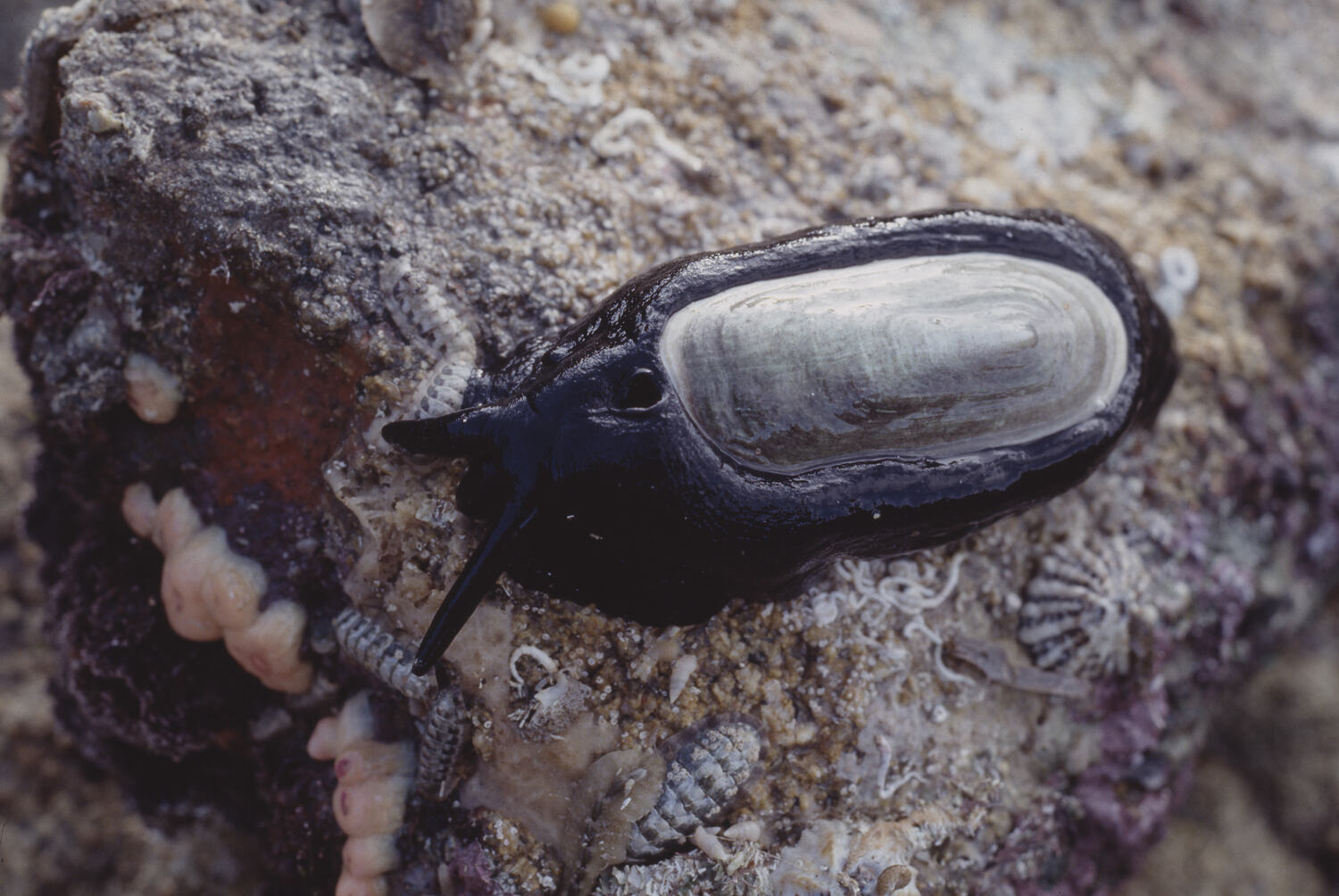
Thank you for reminding me about these guys.
The color looks wrong for a typical
Scutus antipodes, but I have seen at least one with this sort of coloration that is labeled
S. antipodes* (I'd guess it's a different species in the genus). So, I'm thinking something along those lines - either a
Scutus sp. or a different limpet with similar habits (there are quite a few members of the Fissurellidae family that do similar things, but only a couple I've seen have similarly shaped shells).
To make a long taxonomic explanation short, I would guess so, yes - and most likely an algae eater.
*The source of the image of the specimen with similar coloration that I've seen:
Elephant Snails emerge at night to graze on seaweeds. They were commonly eaten by Aboriginal people, who cut away the black flesh to eat the muscular foot. The black mantle usually partially covers the shell, but when disturbed the snail pulls the mantle back, exposing the shell.

collections.museumsvictoria.com.au