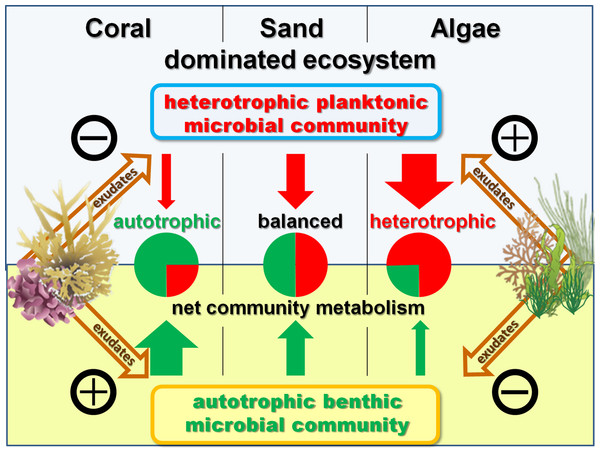
It is related both to water quality and to the ecosystem equilibrium. As to it's harmful effects on corals and fish it depends. The amounts shown in your pictures I wouldn't worry about. But, algae and cyano produce Dissolved Organic Carbon (DOC) compounds that research has shown can promote pathogenic shifts in coral microbiomes. Another variable at play is the extend cyrptic sponges in a reef ecosystem are recycling DOC and returning stuff back to the food webs in an ecosystem. This is a very complex subject and there's still tons of research to be done but here's some links and videos you might find informative. But first read this article here on R2R on establisihng a healthy microbiome:
Studying the effects of live rock in a newly established aquarium shows that high-quality live rock promotes the rapid establishment of an effective biological filter and a microbial community similar to those found in mature reef tanks.

www.reef2reef.com
Forest ROhwer's "Coral Reefs in the Microbial Seas" (kindle ~$10, paperback ~$17) is an excellent introduction to the conflicting roles the various types of DOC play in reef systems. His video produced by University of California is an excellent companion to the book and I'd encourage you to study both of them.
Indirect effects of algae on coral: algae‐mediated, microbe‐induced coral mortality

onlinelibrary.wiley.com
Influence of coral and algal exudates on microbially mediated reef metabolism.
Coral DOC improves oxygen (autotrophy), algae DOC reduces oxygen (heterotrophy).
Benthic primary producers in tropical reef ecosystems can alter biogeochemical cycling and microbial processes in the surrounding seawater. In order to quantify these influences, we measured rates of photosynthesis, respiration, and dissolved organic carbon (DOC) exudate release by the dominant...

peerj.com
Role of elevated organic carbon levels and microbial activity in coral mortality
Microbial ecology: Algae feed a shift on coral reefs
Human pressures on coral reefs are giving macroalgae a competitive advantage over reef-building corals. These algae support larger, and potentially pathogenic, microbial populations that are metabolically primed for less-efficient, yet faster, carbohydrate remineralization, perpetuating a...

www.nature.com
Coral and macroalgal exudates vary in neutral sugar composition and differentially enrich reef bacterioplankton lineages.
Increasing algal cover on tropical reefs worldwide may be maintained through feedbacks whereby algae outcompete coral by altering microbial activity. We hypothesized that algae and coral release compositionally distinct exudates that differentially alter bacterioplankton growth and community...

www.ncbi.nlm.nih.gov
Sugar enrichment provides evidence for a role of nitrogen fixation in coral bleaching
onlinelibrary.wiley.com
"Coral Reefs in the Microbial Seas"
Changing Seas - Mysterious Microbes
Nitrogen cycling in hte coral holobiont
BActeria and Sponges
Maintenance of Coral Reef Health (refferences at the end)
Optical Feedback Loop in Colorful Coral Bleaching
Richard Ross What's up with phosphate"