Mounting lights higher for better coverage?

Gobigorgohome_

Community Member
View Badges
Joined
Aug 11, 2019
Messages
30
Reaction score
6
Rating - 0%
0   0   0
Hi All,

Newbie here with little understanding of lighting.

On a bit of a budget so I am considering tanks with different dimensions and what could be lit on a single light. Also for aesthetics as I would like to hide the light in some kind of lamp type fixture.

My question is, what exactly are the downsides of mounting a light higher?

I am considering a tank with dimensions such as 32x24x18 or 36x20x18 and was thinking I could light this with a single AI hydra.

It seems in many cases people use 2 of these to light a tank of this size but only run them at say 50/60 percent. Could I get decent coverage and enough light for an lps tank by mounting it higher at turning the power up?

Any other drawbacks I haven’t thought about?

Thanks

 
You'll get better coverage but lower PAR, which may or may not make a difference depending on what types of animals you wish to keep.

If you're on a lighting budget, it may limit you to lower-light inhabitants.
 
You'll get better coverage but lower PAR, which may or may not make a difference depending on what types of animals you wish to keep.

If you're on a lighting budget, it may limit you to lower-light inhabitants.
Sure, I understand. Is there a rule of thumb for how much par is reduced as the height of the light rises. A reduction of 50PAR for every ft for example?
 
A lot of higher end LED manufacturers publish the PAR distribution as a function of a couple of different mounting heights. In general, the PAR should diminish as a function of the reciprocal of the squared distance (i.e., PAR is proportional to 1/r^2). As a result, a few extra inches mounting height could have a dramatic effect on PAR.
 
It all depends on your light. Different wattages, different chipsets, different lens angles and diffusion.
It all comes into play.
If you want to get really detailed youll need to get a par meter and test different areas of your tank.
Or you can look up if anyone has done par tests on the light you were interested in :)

Edit. As stated above theres published par #'s as well.

Aqua illumination has a good link here. It compares them to other populat fixtures.
 
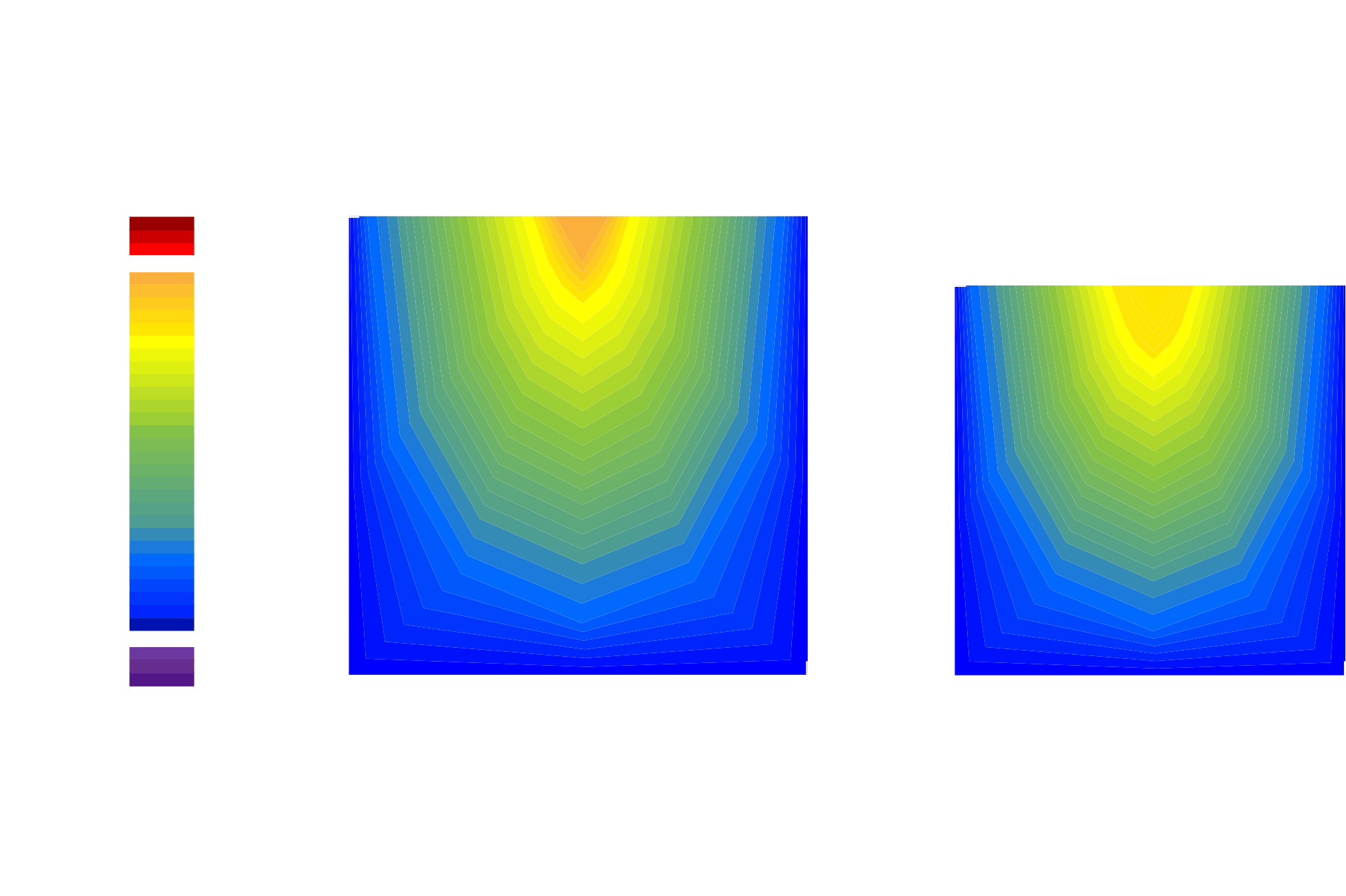
Here's an example from Red Sea:
1-2.png


Note these are from the same height with different wattages, but you can imagine what happens if you increase the height. The distribution becomes more uniform, but the yellow/green area diminishes.
 
You will most likely run into some shadowing later on. Especially if you plan to keep SPS. Also being higher will lower par. It will help with spread but that also means much more lighting on your glass or other areas while viewing the tank.
 
If you wanted, we could actually take the Red Sea data and regress a correlation that relates PAR to tank depth, but that's not a lot of help and I don't know what kind of lights you're intending to run (other than the Hydra).

Also, the higher output you demand from the LED light, the shorter the LED/driver lifetime. That can be a big negative.
 
It all depends on your light. Different wattages, different chipsets, different lens angles and diffusion.
It all comes into play.
If you want to get really detailed youll need to get a par meter and test different areas of your tank.
Or you can look up if anyone has done par tests on the light you were interested in :)

Edit. As stated above theres published par #'s as well.

Aqua illumination has a good link here. It compares them to other populat fixtures.
Thanks for this this is a lot of help,

If I am reading these correctly, this is 24inches high in open air? so these are not par readings in water?
 
Yes.
You're reading correctly lol.

Thats why I also recommended the par meter as these are just comparisons without variables.

Its a great start to see the differences in hotspots of certain fixtures as well.
 
Here's an example from Red Sea:
1-2.png


Note these are from the same height with different wattages, but you can imagine what happens if you increase the height. The distribution becomes more uniform, but the yellow/green area diminishes.
Right I am beginning to understand this, so this can give you a general idea really of what to expect.

Man lighting is super confusing lol
 
Yes.
You're reading correctly lol.

Thats why I also recommended the par meter as these are just comparisons without variables.

Its a great start to see the differences in hotspots of certain fixtures as well.
Right ok I see, I have been watch the BRS light reviews too which has been helpful, but seems that if you want to be certain its a par meter or nothing as you say.

Hmmmmm ok, seems like what I want to do may be doable but likely will limit coral types and/or placement
 
You'll get better coverage but lower PAR, which may or may not make a difference depending on what types of animals you wish to keep.

If you're on a lighting budget, it may limit you to lower-light inhabitants.
If you are on a serious budget and want the best lighting for Corals, you may want to look at an inexpensive T5 solution. I just bought a 2 bulbs T5 fixture for $65 and 2 ATI Blue Plus bulbs for $18 each. For $111 I have a great solution and can keep any type of Coral I want. Height is the determining factor of where my PAR will be in all areas of the tank, but I have great coverage and a light that Corals will thrive under. I bought a fixture that Than from Tidal Gardens recommended and has used for years for growing coral. I do have an AI Prime 16HD on my Nano, but this enables me to cover a larger area for much less $ on my new Coral Tank. The trade off is Power consumption will be a little higher and it will produce more heat, but My AC and fan near the fixture make this a non issue
 
If you are on a serious budget and want the best lighting for Corals, you may want to look at an inexpensive T5 solution. I just bought a 2 bulbs T5 fixture for $65 and 2 ATI Blue Plus bulbs for $18 each. For $111 I have a great solution and can keep any type of Coral I want. Height is the determining factor of where my PAR will be in all areas of the tank, but I have great coverage and a light that Corals will thrive under. I bought a fixture that Than from Tidal Gardens recommended and has used for years for growing coral. I do have an AI Prime 16HD on my Nano, but this enables me to cover a larger area for much less $ on my new Coral Tank. The trade off is Power consumption will be a little higher and it will produce more heat, but My AC and fan near the fixture make this a non issue
Thanks good idea, I may need to consider. Where I am placing the tank I am trying to keep the lighting as small as possible as it will kind of be peninsula style in the middle of the room. But I may just need to suck it up
 
Thanks good idea, I may need to consider. Where I am placing the tank I am trying to keep the lighting as small as possible as it will kind of be peninsula style in the middle of the room. But I may just need to suck it up
I got a 24 inch fixture that will basically give me a 30 inch coverage side to side, which is perfect for me.
 

IF YOU HAD TO TAKE A REEFING EXAM, WOULD YOU PASS?

  • Yes!

    Votes: 32 45.7%
  • Not yet, but I have one that I want to buy in mind!

    Votes: 9 12.9%
  • No.

    Votes: 26 37.1%
  • Other (please explain).

    Votes: 3 4.3%
Back
Top