


- Joined
- Oct 22, 2012
- Messages
- 666
- Reaction score
- 962
- Location
- Florence, KY
- What state or country do you live in
- Kentucky
Howdy, first post here.
This is a long dramatic story so let me get a question out of the way first.
I've been having a time with my 40 breeder which I think is unrelated to a cyanobacteria outbreak but I'm looking to make sure what I have is really cyano and not dinos.
Basically these appear in the morning, soon after my dim morning LED strips come on, are very red in color, then fade throughout the day until I only have snot like strings with bubbles, usually almost cleared up by the time the lights go off. Seems opposite everything.
* click for full size *
Morning

Evening

This tank will be 1 year old Feb 1st, current occupants are a false percula, sixline wrasse, flame hawkfish, and a blue reef chromis.
My current parameters:
SG 1.025
alk 8.2
Ca 410
Mg 1360
PH 8.2
Nitrates 0
Po4 .08 - 1.0 maybe
temp 79-81
I do a 10% water change every week using Reef Crystals and RO/DI water that tests 0 TDS with a temperature correcting TDS meter.
I believe I suffered a salinity incident or a bad alk swing which caused the death of most of my SPS but I'm not 100% positive. It might also have been a small current running through a recently installed grounding probe which I've since removed. Entire tank is on a GFI circuit so I don't really need a probe anyway.
Phosphates are obviously a problem, mainly due to the fact I removed GFO (all media) after the tank crash happened. I had originally filled this tank with tap water, then distilled before purchasing an RO/DI filter in June. I think I'll suffer from phosphates for a long long time.
Everything is very slowly looking better now but I want to make sure I'm not missing any other problems.
It's really overwhelming to talk about what happened because I think I compounded any real problem by basically pouring gasoline on a burning fire. Newbie mistake after newbie mistake. I'll just run through a hit list of how things happened.
Tank was running fine, tests coming back within normal ranges, though alk was running a tad low, once as low as 7.6.
I had recently added 2 acropora frags along with 2 montipora frags. This added to my small collection of unknown acro frags and one blue polyp stylophora frag from a LFS.
Here's how the tank looked a few weeks before it started.
Nov 15th, 2012

Just before thanksgiving I installed an autotopoff system and a grounding probe. I had issues with the ATO first adding too much topoff and then not adding enough. I believe I had a salinity swing from a normal of 1.025 to a low of 1.023 and a high of 1.027.
I noticed my pink anthelia, left side of the picture above, start to shrivel, then melt and die. It was the first sign anything was wrong.
A couple of days later all my sps started to show signs of serious stress. First casualty was the RTN of a green polyp stylophora followed by STN or RTN of my remaining SPS.
While I was stressing over the SPS I failed to notice that my polyps and LPS were slowly looking worse and worse. A small branched hammer shrunk and started receding, some zoa polyps shrank to half their size and some failed to open, one set of trumpet/candycanes started to recede, and my 3 sets of GSP (green star polyps) stopped opening.
At this point I started to pull anything recently added plus all filter media. I stopped using the ATO, I took out my carbon and GFO from my HOB filter, plus some purigen I had added the previous week. I cleaned my skimmer, which frankly was past due, and made sure it was skimming effectively.
Losses continued, things did not look better. 3 days ago I researched grounding probes and realized that while I may have a small current leak it's not strong enough to trip the GFI but adding a probe completes the circuit and now I might have current flowing in the tank. I removed it.
This takes us to yesterday, and the pictures I first posted above. Those Duncans look horrible but this is the first time they've even attempted to open in a week. My GSP is also peeking out for the first time in a week, but all the tips look burned. To add a little more uncertainty, now that everything else looks to be recovering my Pom Pom Xenia, which has done fine through the entire ordeal, is looking bad.
Was it the probe?
Was it just slow recovery from a salinity or Alk swing?
Is it something else?
Is it still going on?
Thanks for any help you can provide. I feel like I must have missed something obvious.
This is a long dramatic story so let me get a question out of the way first.
I've been having a time with my 40 breeder which I think is unrelated to a cyanobacteria outbreak but I'm looking to make sure what I have is really cyano and not dinos.
Basically these appear in the morning, soon after my dim morning LED strips come on, are very red in color, then fade throughout the day until I only have snot like strings with bubbles, usually almost cleared up by the time the lights go off. Seems opposite everything.
* click for full size *
Morning
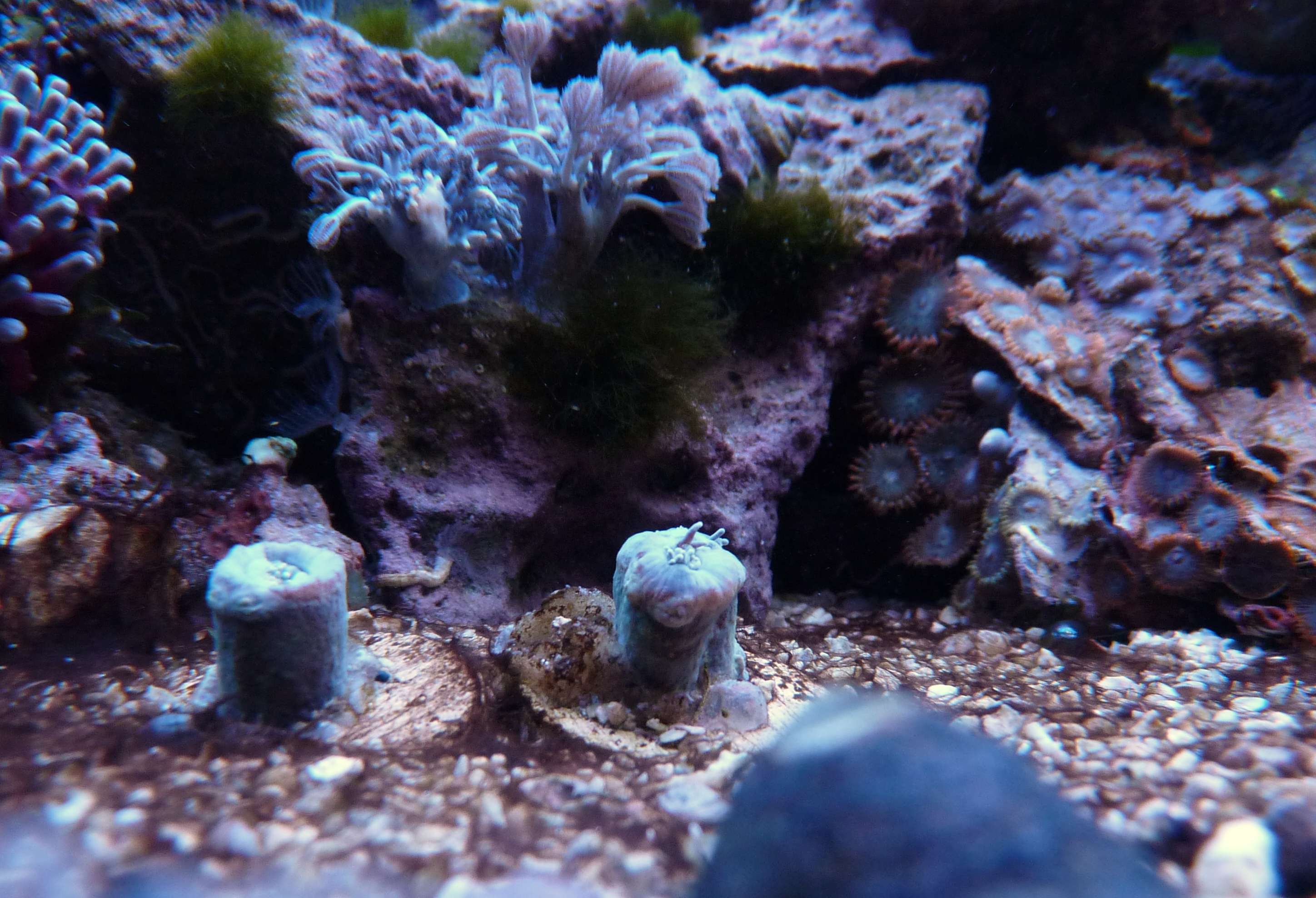
Evening
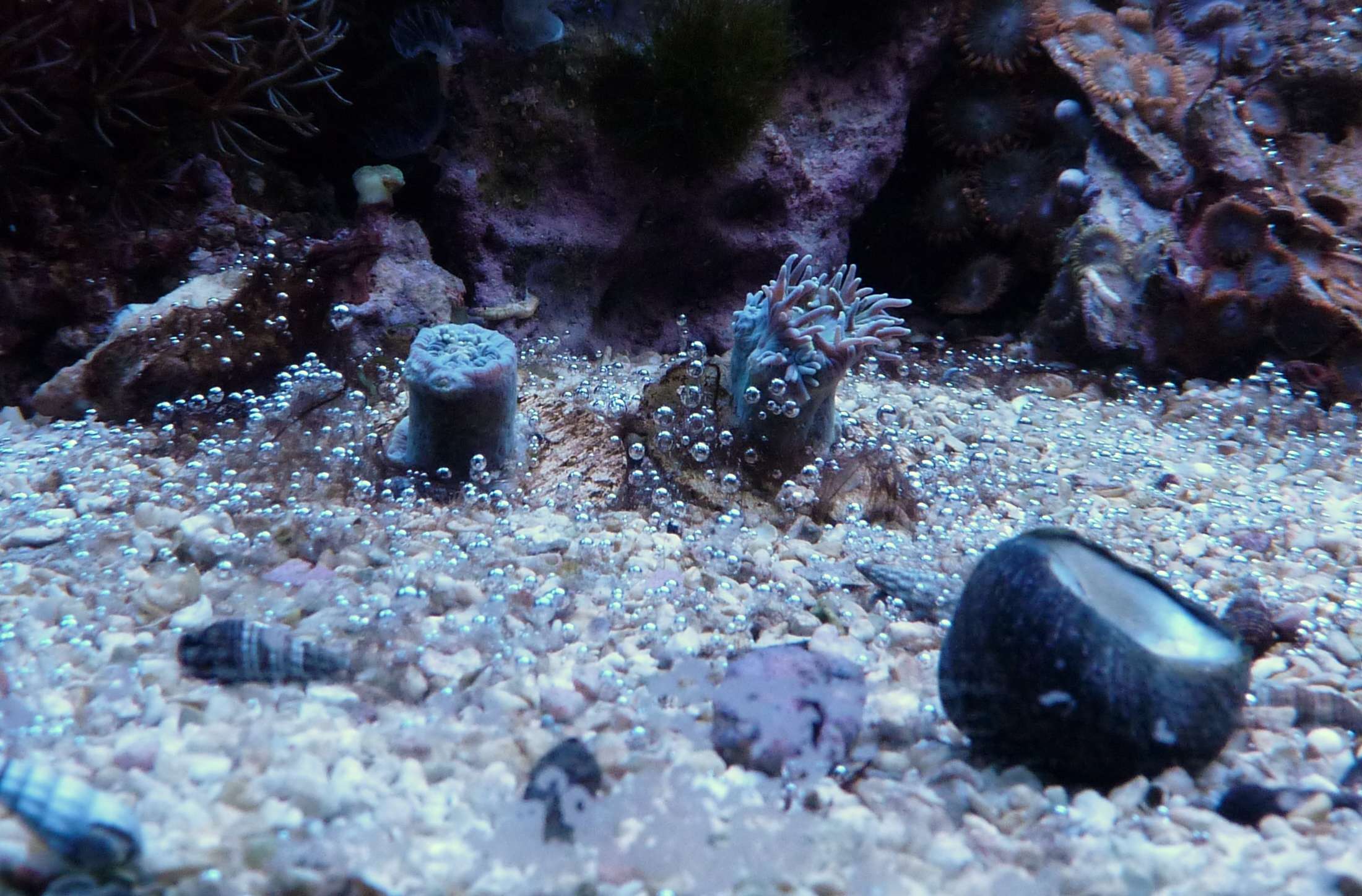
This tank will be 1 year old Feb 1st, current occupants are a false percula, sixline wrasse, flame hawkfish, and a blue reef chromis.
My current parameters:
SG 1.025
alk 8.2
Ca 410
Mg 1360
PH 8.2
Nitrates 0
Po4 .08 - 1.0 maybe
temp 79-81
I do a 10% water change every week using Reef Crystals and RO/DI water that tests 0 TDS with a temperature correcting TDS meter.
I believe I suffered a salinity incident or a bad alk swing which caused the death of most of my SPS but I'm not 100% positive. It might also have been a small current running through a recently installed grounding probe which I've since removed. Entire tank is on a GFI circuit so I don't really need a probe anyway.
Phosphates are obviously a problem, mainly due to the fact I removed GFO (all media) after the tank crash happened. I had originally filled this tank with tap water, then distilled before purchasing an RO/DI filter in June. I think I'll suffer from phosphates for a long long time.
Everything is very slowly looking better now but I want to make sure I'm not missing any other problems.
It's really overwhelming to talk about what happened because I think I compounded any real problem by basically pouring gasoline on a burning fire. Newbie mistake after newbie mistake. I'll just run through a hit list of how things happened.
Tank was running fine, tests coming back within normal ranges, though alk was running a tad low, once as low as 7.6.
I had recently added 2 acropora frags along with 2 montipora frags. This added to my small collection of unknown acro frags and one blue polyp stylophora frag from a LFS.
Here's how the tank looked a few weeks before it started.
Nov 15th, 2012
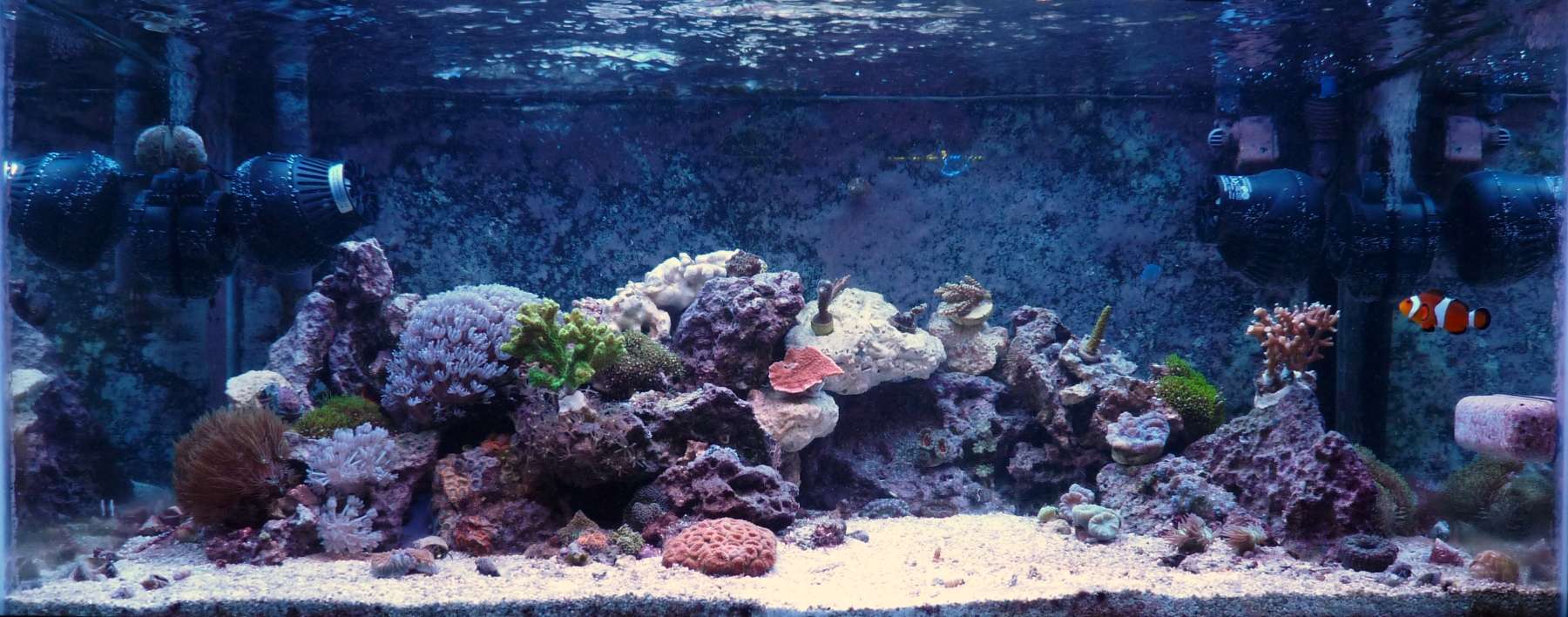
Just before thanksgiving I installed an autotopoff system and a grounding probe. I had issues with the ATO first adding too much topoff and then not adding enough. I believe I had a salinity swing from a normal of 1.025 to a low of 1.023 and a high of 1.027.
I noticed my pink anthelia, left side of the picture above, start to shrivel, then melt and die. It was the first sign anything was wrong.
A couple of days later all my sps started to show signs of serious stress. First casualty was the RTN of a green polyp stylophora followed by STN or RTN of my remaining SPS.
While I was stressing over the SPS I failed to notice that my polyps and LPS were slowly looking worse and worse. A small branched hammer shrunk and started receding, some zoa polyps shrank to half their size and some failed to open, one set of trumpet/candycanes started to recede, and my 3 sets of GSP (green star polyps) stopped opening.
At this point I started to pull anything recently added plus all filter media. I stopped using the ATO, I took out my carbon and GFO from my HOB filter, plus some purigen I had added the previous week. I cleaned my skimmer, which frankly was past due, and made sure it was skimming effectively.
Losses continued, things did not look better. 3 days ago I researched grounding probes and realized that while I may have a small current leak it's not strong enough to trip the GFI but adding a probe completes the circuit and now I might have current flowing in the tank. I removed it.
This takes us to yesterday, and the pictures I first posted above. Those Duncans look horrible but this is the first time they've even attempted to open in a week. My GSP is also peeking out for the first time in a week, but all the tips look burned. To add a little more uncertainty, now that everything else looks to be recovering my Pom Pom Xenia, which has done fine through the entire ordeal, is looking bad.
Was it the probe?
Was it just slow recovery from a salinity or Alk swing?
Is it something else?
Is it still going on?
Thanks for any help you can provide. I feel like I must have missed something obvious.













