Navigation
Install the app
How to install the app on iOS
Follow along with the video below to see how to install our site as a web app on your home screen.
Note: This feature may not be available in some browsers.
More options
You are using an out of date browser. It may not display this or other websites correctly.
You should upgrade or use an alternative browser.
You should upgrade or use an alternative browser.
Name the top way to healthy tanks
- Thread starter Coralguy777
- Start date
- Tagged users None




- Joined
- Mar 18, 2019
- Messages
- 5,861
- Reaction score
- 8,159
- Location
- Myrtle Beach
- What state or country do you live in
- South Carolina
-change your water, on schedule and religiously for the first few yrs anyway
- don’t slack on testing, esp Alkalinity 2-3x week minimum
- wipe the hell outta your equipment, esp. under the sump. Keep the salt spray off!
- cheap stuff on Amazon won’t last or will shock you
-don’t get too complex; drip kalkwasser, et
- get hanna Alk (DKH), ULR phosphate, and HR Nitrate …other kits opinions may vary
-pick your numbers and stick to em
- plan a exit strategy for fish that get large

- Joined
- Mar 18, 2019
- Messages
- 5,861
- Reaction score
- 8,159
- Location
- Myrtle Beach
- What state or country do you live in
- South Carolina
you might wanna keep bumping this as you will likely get some good advice….Awesome alot of your ideas i definitely do and lol yes the cheap its do shock you 100%
one more thing: NAIL down and I mean NAIL down your alkalinity consumption trends, I mean MASTER it for stability. Also get a good top off strategy, before ATO’s were invented, we manually topped off every other day, as changes in salinity means changes in all other params…
and again, keep all that junk underneath wiped down, if for no other reason than you are paying attention to under the tank as well



- Joined
- Mar 30, 2021
- Messages
- 448
- Reaction score
- 1,304
- Location
- MA
- What state or country do you live in
- Massachusetts
Budget for an AWC system or semi-AWC. Lugging buckets around becomes more and more of a hassle as time goes by and eventually people will start skipping or forgetting to do water changes.


I don’t entirely agree with this. I think it’s fine to supplement live or frozen foods with occasional dry pellet food, if only to get the fish used to something else.Only feed live or frozen foods, nothing dry.

- Joined
- Jul 8, 2021
- Messages
- 1,968
- Reaction score
- 2,631
- Location
- New Hampshire
- What state or country do you live in
- New Hampshire
Patience!

- Joined
- Aug 12, 2018
- Messages
- 5,808
- Reaction score
- 8,249
- What state or country do you live in
- Florida
Keep your tank empty. Water, sand, fish and corals are sooooo "overrated." 

“Dry reef” for the win!Keep your tank empty. Water, sand, fish and corals are sooooo "overrated."

- Joined
- Jul 11, 2021
- Messages
- 621
- Reaction score
- 800
- Location
- Palm Coast
- What state or country do you live in
- Florida
Lol. you'll have to deal with dust blooms this way.Keep your tank empty. Water, sand, fish and corals are sooooo "overrated."

- Joined
- Feb 23, 2014
- Messages
- 10,270
- Reaction score
- 18,007
- Location
- Cincinnati Ohio
- What state or country do you live in
- Ohio
IMO start with a single tank for 6mos until you develop husbandry skills.Im looking to setut up a few tanks
There is a TON of researching and reading for you to do in the Sticky Threads in the New To Saltwater discussion section


- Joined
- Aug 27, 2017
- Messages
- 367
- Reaction score
- 276
- What state or country do you live in
- Arizona
I would work at mastering consistent parameters one at a time.
need to pick targets (lots of options on this) for
Alk
Cal
Temp
Salinity
PH
your choices for these should align with your tank goals, I.e. Fowler, mixed, sps, softies, accelerated growth ect.
Then pick a plan for each one with the basis of the plan being to keep things the same from day to day hour to hour.
I say start with one and work on it and really test and think about things like what will happen to my perfect alk after a water change if I don’t test the new water before it goes in?
most people start with salinity and temperature then go to alk and cal and then start looking at PH and trace minerals and every other thing. Try to master each one then move on.
try not to fiddle to much which can be hard with everything in the trade now 100% adjustable like led lights and pumps it makes more sense to move one coral then change the flow or lighting for your whole tanks
Unfortunately not every coral/fish/invertebrate that you like will have a place in your tank. Try not to force something in that really doesn’t fit. Research things before you buy them and add them. Make sure they fit in your ecosystem.
- Joined
- Jun 27, 2021
- Messages
- 1,508
- Reaction score
- 2,353
- Location
- Dayton
- What state or country do you live in
- Florida
They are your tanks and your money. Do your own research and through trial and error find what works best for you. If you read these threads you will quickly realize there are 100 ways to get to the same end result and 100 people arguing you are wrong and they are right even though the end result is the same. That's how conspiracy theories get started... Go the BRS tv route and just come here for the banter and horror stories. Lots of solid information there.

- Joined
- Sep 10, 2018
- Messages
- 9,679
- Reaction score
- 16,824
- Location
- The Outer Limits
- What state or country do you live in
- California
My best advice is to have a plan and stick to it.
Master the big 3 + SG.
Pick your parameters and focus on keeping them in range.
Have all your equipment before you put water in your tank.
Try and visualize what you want your system to look like in 2 years.
Done right you can have a fully grown in reef in that amount of time.
Check my build thread for more info.

Just remember: opinions are like a**holes. Everyone has at least one, 
- Joined
- Jul 8, 2021
- Messages
- 1,968
- Reaction score
- 2,631
- Location
- New Hampshire
- What state or country do you live in
- New Hampshire
and most stink?Just remember: opinions are like a**holes. Everyone has at least one,
- Joined
- Sep 10, 2018
- Messages
- 9,679
- Reaction score
- 16,824
- Location
- The Outer Limits
- What state or country do you live in
- California
Great advice for ATO.you might wanna keep bumping this as you will likely get some good advice….
one more thing: NAIL down and I mean NAIL down your alkalinity consumption trends, I mean MASTER it for stability. Also get a good top off strategy, before ATO’s were invented, we manually topped off every other day, as changes in salinity means changes in all other params…
and again, keep all that junk underneath wiped down, if for no other reason than you are paying attention to under the tank as well
I have ran ATO systems since the 80's, before you could buy them, lol.
MASTERING alk as you put it, is the key, to having a long term stable system. Good advice!


Water changes (best way IMO to get rid of hydrophilic stuff detrimental to corals).
Testing.
Redundancy, if any one or two pieces of equipment fail the systme won't crash.
Consistancy (not static, reefs are dynamic and things are constantly changing).
Research.
My long term successes sarted coming back in the 90s when a brief conversation with the director of an infectious disease department of a local hospital started me thinking about bacteria and looking at processes in reef systems holisticly. Since then what I've seen and read has only enforced those ideas. Reef ecosystems are very complex.
Recent research has shown the various forms of Dissolved Organic Carbon (DOC) have conflicting roles and some forms will kill corals a lot faster than nitrates or phosphates. An excellent introduction to this subject is Forest Rohwer's book "Coral Reefs in the Microbial Seas" (kindle ~$10, paperback ~$17). Additionally, some sponges play a critical as recyclers in reef ecosystems and process DOC incredibly fast, 1000X faster than the bacterioplankton in the water. Here's some links to research and some videos you may find informative. SOme of the papers need to be purchased to read the entire papaer but just the abstracts will give the gist of the findings if you don't want to purchase them:

 www.reef2reef.com
Protein Skimmer Performance, Pt 1

 reefs.com
Protein Skimmer Performance, Pt 2
 reefs.com
Elemental Analysis of Skimmate
 reefs.com
Bacterial Counts in Reef Aquarium Water
 reefs.com
Ammonium Uptake by Symbiotic and Aposymbiotic Reef Corals
 www.ingentaconnect.com
Amino acids a source of nitrogen for corals

 journals.biologists.com
Urea a source of nitrogen for corals

 www.sciencedirect.com
Diazotrpophs a source of nitrogen for corals

 pubmed.ncbi.nlm.nih.gov
Context Dependant Effects of Nutrient Loading on the Coral-Algal Mutualism

 www.researchgate.net
 www.cambridge.org
An Experimental Mesocosm for Longterm Studies of Reef Corals
Phosphate Deficiency:
Nutrient enrichment can increase the susceptibility of reef corals to bleaching:

 www.nature.com
Ultrastructural Biomarkers in Symbiotic Algae Reflect the Availability of Dissolved Inorganic Nutrients and Particulate Food to the Reef Coral Holobiont:

 www.frontiersin.org
Phosphate deficiency promotes coral bleaching and is reflected by the ultrastructure of symbiotic dinoflagellates
 www.sciencedirect.com
Effects of phosphate on growth and skeletal density in the scleractinian coral Acropora muricata: A controlled experimental approach
 www.sciencedirect.com
High phosphate uptake requirements of the scleractinian coral Stylophora pistillata

 jeb.biologists.org
Phosphorus metabolism of reef organisms with algal symbionts

Sponge symbionts and the marine P cycle

 www.pnas.org
Phosphorus sequestration in the form of polyphosphate by microbial symbionts in marine sponges
 www.pnas.org
Indirect effects of algae on coral: algae‐mediated, microbe‐induced coral mortality
 onlinelibrary.wiley.com
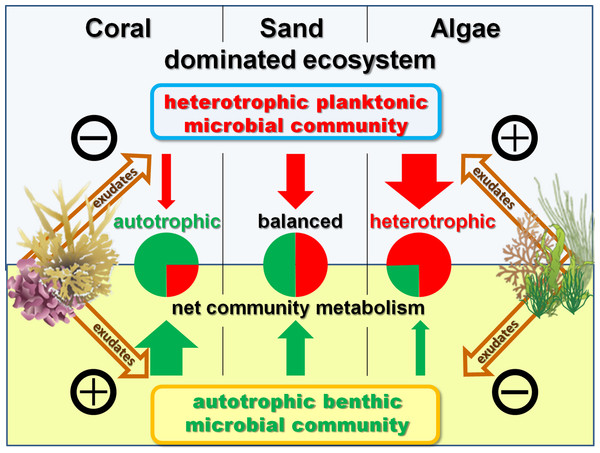
Influence of coral and algal exudates on microbially mediated reef metabolism.
Coral DOC improves oxygen (autotrophy), algae DOC reduces oxygen (heterotrophy).
 peerj.com
Role of elevated organic carbon levels and microbial activity in coral mortality
Effects of Coral Reef Benthic Primary Producers on Dissolved Organic Carbon and Microbial Activity
Algae releases significantly more DOC into the water than coral.

 journals.plos.org
Pathologies and mortality rates caused by organic carbon and nutrient stressors in three Caribbean coral species.
Starch and sugars (doc) caused coral death but not high nitrates, phosphates or ammonium.
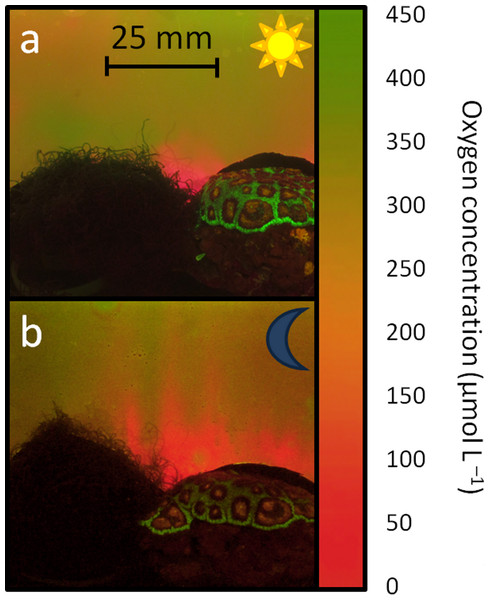
Visualization of oxygen distribution patterns caused by coral and algae
 peerj.com
Biological oxygen demand optode analysis of coral reef-associated microbial communities exposed to algal exudates
Exposure to exudates derived from turf algae stimulated higher oxygen drawdown by the coral-associated bacteria.
 www.ncbi.nlm.nih.gov
Microbial ecology: Algae feed a shift on coral reefs

 www.nature.com
Coral and macroalgal exudates vary in neutral sugar composition and differentially enrich reef bacterioplankton lineages.
www.ncbi.nlm.nih.gov
Sugar enrichment provides evidence for a role of nitrogen fixation in coral bleaching
onlinelibrary.wiley.com
Elevated ammonium delays the impairment of the coral-dinoflagellate symbiosis during labile carbon pollution
(here's an argument for maintaining heavy fish loads if you're carbon dosing)
 www.sciencedirect.com
Excess labile carbon promotes the expression of virulence factors in coral reef bacterioplankton
 www.nature.com
Unseen players shape benthic competition on coral reefs.
www.ncbi.nlm.nih.gov
Allelochemicals Produced by Brown Macroalgae of the Lobophora Genus Are Active against Coral Larvae and Associated Bacteria, Supporting Pathogenic Shifts to Vibrio Dominance.
www.ncbi.nlm.nih.gov
Macroalgae decrease growth and alter microbial community structure of the reef-building coral, Porites astreoides.
www.ncbi.nlm.nih.gov
Macroalgal extracts induce bacterial assemblage shifts and sublethal tissue stress in Caribbean corals.
www.ncbi.nlm.nih.gov
Biophysical and physiological processes causing oxygen loss from coral reefs.
Global microbialization of coral reefs
DDAM Proven
 www.nature.com
Coral Reef Microorganisms in a Changing Climate, Fig 3
Ecosystem Microbiology of Coral Reefs: Linking Genomic, Metabolomic, and Biogeochemical Dynamics from Animal Symbioses to Reefscape Processes
Element cycling on tropical coral reefs.
This is Jasper de Geoij's ground breaking research on reef sponges. (The introduction is in Dutch but the content is in English.)
Differential recycling of coral and algal dissolved organic matter via the sponge loop.
Sponges treat DOC from algae differently than DOC from corals
 besjournals.onlinelibrary.wiley.com
Surviving in a Marine Desert The Sponge Loop Retains Resources Within Coral Reefs
Dissolved organic carbon and nitrogen are quickly processed by sponges and released back into the reef food web in hours as carbon and nitrogen rich detritus.
 www.researchgate.net
Natural Diet of Coral-Excavating Sponges Consists Mainly of Dissolved Organic Carbon (DOC)
www.ncbi.nlm.nih.gov
The Role of Marine Sponges in Carbon and Nitrogen Cycles of COral Reefs and Nearshore Environments.
 search.proquest.com
And since we're discussing favorable and not so favorable bacteria here's a paper looking at how different corals and polyps are influencing the bacteria in the water column.
Aura-biomes are present in the water layer above coral reef benthic macro-organisms
www.ncbi.nlm.nih.gov
"Coral Reefs in the Microbial Seas"
Changing Seas - Mysterious Microbes
Nitrogen cycling in hte coral holobiont
BActeria and Sponges
Maintenance of Coral Reef Health (refferences at the end)
Optical Feedback Loop in Colorful Coral Bleaching
Richard Ross What's up with phosphate"
Testing.
Redundancy, if any one or two pieces of equipment fail the systme won't crash.
Consistancy (not static, reefs are dynamic and things are constantly changing).
Research.
My long term successes sarted coming back in the 90s when a brief conversation with the director of an infectious disease department of a local hospital started me thinking about bacteria and looking at processes in reef systems holisticly. Since then what I've seen and read has only enforced those ideas. Reef ecosystems are very complex.
Recent research has shown the various forms of Dissolved Organic Carbon (DOC) have conflicting roles and some forms will kill corals a lot faster than nitrates or phosphates. An excellent introduction to this subject is Forest Rohwer's book "Coral Reefs in the Microbial Seas" (kindle ~$10, paperback ~$17). Additionally, some sponges play a critical as recyclers in reef ecosystems and process DOC incredibly fast, 1000X faster than the bacterioplankton in the water. Here's some links to research and some videos you may find informative. SOme of the papers need to be purchased to read the entire papaer but just the abstracts will give the gist of the findings if you don't want to purchase them:
Establishing a Healthy Microbiome in a New Aquarium Using Live Rock
Studying the effects of live rock in a newly established aquarium shows that high-quality live rock promotes the rapid establishment of an effective biological filter and a microbial community similar to those found in mature reef tanks.
www.reef2reef.com
Protein Skimmer Performance, Pt 1
The Development of a Method for the Quantitative Evaluation of Protein Skimmer Performance
Department of Chemistry, The Pennsylvania State University, University Park, PA 16802. Protein skimmers have become indispensable for many aquarists who strive to maintain the high water quality necessary to keep stony corals.
reefs.com
Protein Skimmer Performance, Pt 2
Further Studies on Protein Skimmer Performance
Department of Chemistry, The Pennsylvania State University, University Park, PA 16802. Many factors contribute to the 'value' of a skimmer to an aquarist, including quality of construction, size, footprint, noise level, ease of cleaning, energy efficiency of the pump, and of course, the ability...
reefs.com
Elemental Analysis of Skimmate
Elemental Analysis of Skimmate: What Does a Protein Skimmer Actually Remove from Aquarium Water?
Department of Chemistry, The Pennsylvania State University, University Park, PA 16802. The chemical/elemental composition of skimmate generated by an H&S 200-1260 skimmer on a 175-gallon reef tank over the course of several days or a week had some surprises.
reefs.com
Bacterial Counts in Reef Aquarium Water
Bacterial Counts in Reef Aquarium Water: Baseline Values and Modulation by Carbon Dosing, Protein Skimming, and Granular Activated Carbon Filtration
Bacterial Counts in Reef Aquarium Water: Baseline Values and Modulation by Carbon Dosing, Protein Skimming, and Granular Activated Carbon Filtration - What are the bacteria populations in the water column of reef tanks, and how does that value compare with bacterial counts in authentic reef...
reefs.com
Ammonium Uptake by Symbiotic and Aposymbiotic Reef Corals
Ammonium Uptake by Symbiotic and Aposymbiotic Reef Corals: Ingenta Connect
Amino acids a source of nitrogen for corals
Uptake of dissolved free amino acids by the scleractinian coral Stylophora pistillata
SUMMARY. This study was designed to assess the importance of dissolved free amino acids (DFAA) as a nitrogen source for the scleractinian coral Stylophora pistillata. For this purpose, experiments were performed using 15N-enriched DFAAs, and %15N enrichment was measured both in animal tissue and...
journals.biologists.com
Urea a source of nitrogen for corals
Urea uptake by the scleractinian coral Stylophora pistillata
Urea can be one of the major sources of nitrogen for phytoplankton, but little is known about its importance for corals. Experiments were therefore de…
Diazotrpophs a source of nitrogen for corals
Diazotrophs: a non-negligible source of nitrogen for the tropical coral Stylophora pistillata - PubMed
Corals are mixotrophs: they are able to fix inorganic carbon through the activity of their symbiotic dinoflagellates and to gain nitrogen from predation on plankton and uptake of dissolved organic and inorganic nutrients. They also live in close association with diverse diazotrophic communities...
pubmed.ncbi.nlm.nih.gov
Context Dependant Effects of Nutrient Loading on the Coral-Algal Mutualism
Context-dependent effects of nutrient loading on the coral-algal mutualism | Request PDF
Request PDF | Context-dependent effects of nutrient loading on the coral-algal mutualism | Human-mediated increases in nutrient availability alter patterns of primary production, impact species diversity, and threaten ecosystem function.... | Find, read and cite all the research you need on...
www.researchgate.net
An experimental mesocosm for long-term studies of reef corals | Journal of the Marine Biological Association of the United Kingdom | Cambridge Core
An experimental mesocosm for long-term studies of reef corals - Volume 92 Issue 4
Phosphate Deficiency:
Nutrient enrichment can increase the susceptibility of reef corals to bleaching:
Nutrient enrichment can increase the susceptibility of reef corals to bleaching - Nature Climate Change
Increased dissolved inorganic nitrogen (DIN) concentrations in sea water have been linked to a reduction of the temperature threshold at which corals bleach, however, the mechanism underlying this change is not known. This phenomenon is now explained in terms of increased phosphatase activities...
www.nature.com
Ultrastructural Biomarkers in Symbiotic Algae Reflect the Availability of Dissolved Inorganic Nutrients and Particulate Food to the Reef Coral Holobiont:
Frontiers | Ultrastructural Biomarkers in Symbiotic Algae Reflect the Availability of Dissolved Inorganic Nutrients and Particulate Food to the Reef Coral Holobiont
Reef building corals associated with symbiotic algae (zooxanthellae) can access environmental nutrients from different sources, most significantly via the up...
www.frontiersin.org
Phosphate deficiency promotes coral bleaching and is reflected by the ultrastructure of symbiotic dinoflagellates
Phosphate deficiency promotes coral bleaching and is reflected by the ultrastructure of symbiotic dinoflagellates
Enrichment of reef environments with dissolved inorganic nutrients is considered a major threat to the survival of corals living in symbiosis with din…
Effects of phosphate on growth and skeletal density in the scleractinian coral Acropora muricata: A controlled experimental approach
Effects of phosphate on growth and skeletal density in the scleractinian coral Acropora muricata: A controlled experimental approach
Phosphate contamination can negatively affect corals, modifying growth rates, skeletal density, reproduction, mortality, and zooxanthellae. We determi…
High phosphate uptake requirements of the scleractinian coral Stylophora pistillata
High phosphate uptake requirements of the scleractinian coral Stylophora pistillata
SUMMARYSeveral untested aspects of the regulation of inorganic nutrient uptake were examined using nutrient depletion experiments with the symbiotic coral Stylophora pistillata. The total inhibition of phosphate uptake in artificial seawater lacking sodium indicates the involvement of a...
jeb.biologists.org
Phosphorus metabolism of reef organisms with algal symbionts
2657円まるいち 博多辛子明太子(無着色) 「博多の華」 (ギフト用) 180g Z6572海産物イクラ,タラコ,魚卵 Qoo10] 「博 まるいち 博多辛子明太子(無着色) | therichross.com
2657円まるいち 博多辛子明太子(無着色) 「博多の華」 (ギフト用) 180g Z6572海産物イクラ,タラコ,魚卵 Qoo10] 「博 まるいち 博多辛子明太子(無着色) | therichross.com
therichross.com
Sponge symbionts and the marine P cycle
Sponge symbionts and the marine P cycle
Marine sponges are ubiquitous colonizers of shallow, clear-water environments in the oceans (1, 2). Sponges have emerged as significant mediators of biogeochemical fluxes in coastal zones by virtue of respiring organic matter and facilitating both the consumption and release of nutrients (3, 4)...
Phosphorus sequestration in the form of polyphosphate by microbial symbionts in marine sponges
Phosphorus sequestration in the form of polyphosphate by microbial symbionts in marine sponges
Coral reefs are highly productive ecosystems that raise a conundrum called “Darwin’s paradox”: How can high production flourish in low-nutrient conditions? We show here that in three abundant Caribbean sponges, the granules that have been commonly observed in sponge tissue for decades are...
Indirect effects of algae on coral: algae‐mediated, microbe‐induced coral mortality
Error - Cookies Turned Off
Influence of coral and algal exudates on microbially mediated reef metabolism.
Coral DOC improves oxygen (autotrophy), algae DOC reduces oxygen (heterotrophy).
Influence of coral and algal exudates on microbially mediated reef metabolism
Benthic primary producers in tropical reef ecosystems can alter biogeochemical cycling and microbial processes in the surrounding seawater. In order to quantify these influences, we measured rates of photosynthesis, respiration, and dissolved organic carbon (DOC) exudate release by the dominant...
peerj.com
Role of elevated organic carbon levels and microbial activity in coral mortality
Effects of Coral Reef Benthic Primary Producers on Dissolved Organic Carbon and Microbial Activity
Algae releases significantly more DOC into the water than coral.
Effects of Coral Reef Benthic Primary Producers on Dissolved Organic Carbon and Microbial Activity
Benthic primary producers in marine ecosystems may significantly alter biogeochemical cycling and microbial processes in their surrounding environment. To examine these interactions, we studied dissolved organic matter release by dominant benthic taxa and subsequent microbial remineralization in...
Pathologies and mortality rates caused by organic carbon and nutrient stressors in three Caribbean coral species.
Starch and sugars (doc) caused coral death but not high nitrates, phosphates or ammonium.
Visualization of oxygen distribution patterns caused by coral and algae
Visualization of oxygen distribution patterns caused by coral and algae
Planar optodes were used to visualize oxygen distribution patterns associated with a coral reef associated green algae (Chaetomorpha sp.) and a hermatypic coral (Favia sp.) separately, as standalone organisms, and placed in close proximity mimicking coral-algal interactions. Oxygen patterns were...
peerj.com
Biological oxygen demand optode analysis of coral reef-associated microbial communities exposed to algal exudates
Exposure to exudates derived from turf algae stimulated higher oxygen drawdown by the coral-associated bacteria.
Biological oxygen demand optode analysis of coral reef-associated microbial communities exposed to algal exudates - PMC
Algae-derived dissolved organic matter has been hypothesized to induce mortality of reef building corals. One proposed killing mechanism is a zone of hypoxia created by rapidly growing microbes. To investigate this hypothesis, biological oxygen ...
www.ncbi.nlm.nih.gov
Microbial ecology: Algae feed a shift on coral reefs
Microbial ecology: Algae feed a shift on coral reefs - Nature Microbiology
Human pressures on coral reefs are giving macroalgae a competitive advantage over reef-building corals. These algae support larger, and potentially pathogenic, microbial populations that are metabolically primed for less-efficient, yet faster, carbohydrate remineralization, perpetuating a...
www.nature.com
Coral and macroalgal exudates vary in neutral sugar composition and differentially enrich reef bacterioplankton lineages.
Coral and macroalgal exudates vary in neutral sugar composition and differentially enrich reef bacterioplankton lineages - PubMed
Increasing algal cover on tropical reefs worldwide may be maintained through feedbacks whereby algae outcompete coral by altering microbial activity. We hypothesized that algae and coral release compositionally distinct exudates that differentially alter bacterioplankton growth and community...
www.ncbi.nlm.nih.gov
Sugar enrichment provides evidence for a role of nitrogen fixation in coral bleaching
Error - Cookies Turned Off
Elevated ammonium delays the impairment of the coral-dinoflagellate symbiosis during labile carbon pollution
(here's an argument for maintaining heavy fish loads if you're carbon dosing)
Elevated ammonium delays the impairment of the coral-dinoflagellate symbiosis during labile carbon pollution
Labile dissolved organic carbon (DOC) is a major pollutant in coastal marine environments affected by anthropogenic impacts, and may significantly con…
Excess labile carbon promotes the expression of virulence factors in coral reef bacterioplankton
Excess labile carbon promotes the expression of virulence factors in coral reef bacterioplankton - The ISME Journal
Coastal pollution and algal cover are increasing on many coral reefs, resulting in higher dissolved organic carbon (DOC) concentrations. High DOC concentrations strongly affect microbial activity in reef waters and select for copiotrophic, often potentially virulent microbial populations. High...
www.nature.com
Unseen players shape benthic competition on coral reefs.
Unseen players shape benthic competition on coral reefs - PubMed
Recent work has shown that hydrophilic and hydrophobic organic matter (OM) from algae disrupts the function of the coral holobiont and promotes the invasion of opportunistic pathogens, leading to coral morbidity and mortality. Here we refer to these dynamics as the (3)DAM [dissolved organic...
www.ncbi.nlm.nih.gov
Allelochemicals Produced by Brown Macroalgae of the Lobophora Genus Are Active against Coral Larvae and Associated Bacteria, Supporting Pathogenic Shifts to Vibrio Dominance.
Allelochemicals Produced by Brown Macroalgae of the Lobophora Genus Are Active against Coral Larvae and Associated Bacteria, Supporting Pathogenic Shifts to Vibrio Dominance - PubMed
Diverse microbial communities associate with coral tissues and mucus, providing important protective and nutritional services, but once disturbed, the microbial equilibrium may shift from a beneficial state to one that is detrimental or pathogenic. Macroalgae (e.g., seaweeds) can physically and...
www.ncbi.nlm.nih.gov
Macroalgae decrease growth and alter microbial community structure of the reef-building coral, Porites astreoides.
Macroalgae decrease growth and alter microbial community structure of the reef-building coral, Porites astreoides - PubMed
With the continued and unprecedented decline of coral reefs worldwide, evaluating the factors that contribute to coral demise is of critical importance. As coral cover declines, macroalgae are becoming more common on tropical reefs. Interactions between these macroalgae and corals may alter the...
www.ncbi.nlm.nih.gov
Macroalgal extracts induce bacterial assemblage shifts and sublethal tissue stress in Caribbean corals.
Macroalgal extracts induce bacterial assemblage shifts and sublethal tissue stress in Caribbean corals - PubMed
Benthic macroalgae can be abundant on present-day coral reefs, especially where rates of herbivory are low and/or dissolved nutrients are high. This study investigated the impact of macroalgal extracts on both coral-associated bacterial assemblages and sublethal stress response of corals. Crude...
www.ncbi.nlm.nih.gov
Biophysical and physiological processes causing oxygen loss from coral reefs.
Global microbialization of coral reefs
DDAM Proven
Global microbialization of coral reefs - Nature Microbiology
Analysis of 60 sites in three ocean basins suggests that overgrowth of fleshy algae on coral reefs supports higher microbial abundances dominated by copiotrophic, potentially pathogenic bacteria via the provision of dissolved inorganic carbon.
www.nature.com
Coral Reef Microorganisms in a Changing Climate, Fig 3
Ecosystem Microbiology of Coral Reefs: Linking Genomic, Metabolomic, and Biogeochemical Dynamics from Animal Symbioses to Reefscape Processes
Element cycling on tropical coral reefs.
This is Jasper de Geoij's ground breaking research on reef sponges. (The introduction is in Dutch but the content is in English.)
Differential recycling of coral and algal dissolved organic matter via the sponge loop.
Sponges treat DOC from algae differently than DOC from corals
Error - Cookies Turned Off
Surviving in a Marine Desert The Sponge Loop Retains Resources Within Coral Reefs
Dissolved organic carbon and nitrogen are quickly processed by sponges and released back into the reef food web in hours as carbon and nitrogen rich detritus.
(PDF) 2013 deGoeij Science Sponge loop
PDF | On Jun 23, 2015, Jasper M de Goeij and others published 2013 deGoeij Science Sponge loop | Find, read and cite all the research you need on ResearchGate
www.researchgate.net
Natural Diet of Coral-Excavating Sponges Consists Mainly of Dissolved Organic Carbon (DOC)
Natural Diet of Coral-Excavating Sponges Consists Mainly of Dissolved Organic Carbon (DOC) - PMC
Coral-excavating sponges are the most important bioeroders on Caribbean reefs and increase in abundance throughout the region. This increase is commonly attributed to a concomitant increase in food availability due to eutrophication and pollution. ...
www.ncbi.nlm.nih.gov
The Role of Marine Sponges in Carbon and Nitrogen Cycles of COral Reefs and Nearshore Environments.
The role of marine sponges in carbon and nitrogen cycles of coral reef and nearshore environments - ProQuest
Explore millions of resources from scholarly journals, books, newspapers, videos and more, on the ProQuest Platform.
search.proquest.com
And since we're discussing favorable and not so favorable bacteria here's a paper looking at how different corals and polyps are influencing the bacteria in the water column.
Aura-biomes are present in the water layer above coral reef benthic macro-organisms
Aura-biomes are present in the water layer above coral reef benthic macro-organisms - PubMed
As coral reef habitats decline worldwide, some reefs are transitioning from coral- to algal-dominated benthos with the exact cause for this shift remaining elusive. Increases in the abundance of microbes in the water column has been correlated with an increase in coral disease and reduction in...
www.ncbi.nlm.nih.gov
"Coral Reefs in the Microbial Seas"
Changing Seas - Mysterious Microbes
Nitrogen cycling in hte coral holobiont
BActeria and Sponges
Maintenance of Coral Reef Health (refferences at the end)
Optical Feedback Loop in Colorful Coral Bleaching
Richard Ross What's up with phosphate"
Last edited:
- Joined
- Sep 10, 2018
- Messages
- 9,679
- Reaction score
- 16,824
- Location
- The Outer Limits
- What state or country do you live in
- California
Interesting info on sponges.Water changes,
Testing
Redundancy, if any one or two pieces of equipment fail the systme won't crash.
Consistancy (not static, reefs are dynamic and things are constantly changing).
Research
My long term successes sarted coming back in the 90s when a brief conversation with the director of an infectious disease department of a local hospital started me thinking about bacteria and looking at processes in reef systems holisticly. Since then what I've seen and read has only enforced those ideas. Reef ecosystems are very complex.
Recent research has shown the various forms of Dissolved Organic Carbon (DOC) have conflicting roles and some forms will kill corals a lot faster than nitrates or phosphates. An excellent introduction to this subject is Forest Rohwer's book "Coral Reefs in the Microbial Seas" (kindle ~$10, paperback ~$17). Additionally, some sponges play a critical as recyclers in reef ecosystems and process DOC incredibly fast, 1000X faster than the bacterioplankton in the water. Here's some links to research and some videos you may find informative. SOme of the papers need to be purchased to read the entire papaer but just the abstracts will give the gist of the findings if you don't want to purchase them:
Establishing a Healthy Microbiome in a New Aquarium Using Live Rock
Studying the effects of live rock in a newly established aquarium shows that high-quality live rock promotes the rapid establishment of an effective biological filter and a microbial community similar to those found in mature reef tanks.
Protein Skimmer Performance, Pt 1
The Development of a Method for the Quantitative Evaluation of Protein Skimmer Performance
Department of Chemistry, The Pennsylvania State University, University Park, PA 16802. Protein skimmers have become indispensable for many aquarists who strive to maintain the high water quality necessary to keep stony corals.
Protein Skimmer Performance, Pt 2
Further Studies on Protein Skimmer Performance
Department of Chemistry, The Pennsylvania State University, University Park, PA 16802. Many factors contribute to the 'value' of a skimmer to an aquarist, including quality of construction, size, footprint, noise level, ease of cleaning, energy efficiency of the pump, and of course, the ability...
Elemental Analysis of Skimmate
Elemental Analysis of Skimmate: What Does a Protein Skimmer Actually Remove from Aquarium Water?
Department of Chemistry, The Pennsylvania State University, University Park, PA 16802. The chemical/elemental composition of skimmate generated by an H&S 200-1260 skimmer on a 175-gallon reef tank over the course of several days or a week had some surprises.
Bacterial Counts in Reef Aquarium Water
Bacterial Counts in Reef Aquarium Water: Baseline Values and Modulation by Carbon Dosing, Protein Skimming, and Granular Activated Carbon Filtration
Bacterial Counts in Reef Aquarium Water: Baseline Values and Modulation by Carbon Dosing, Protein Skimming, and Granular Activated Carbon Filtration - What are the bacteria populations in the water column of reef tanks, and how does that value compare with bacterial counts in authentic reef...
Ammonium Uptake by Symbiotic and Aposymbiotic Reef Corals
Ammonium Uptake by Symbiotic and Aposymbiotic Reef Corals: Ingenta Connect
Amino acids a source of nitrogen for corals
Uptake of dissolved free amino acids by the scleractinian coral Stylophora pistillata
SUMMARY. This study was designed to assess the importance of dissolved free amino acids (DFAA) as a nitrogen source for the scleractinian coral Stylophora pistillata. For this purpose, experiments were performed using 15N-enriched DFAAs, and %15N enrichment was measured both in animal tissue and...
Urea a source of nitrogen for corals
Urea uptake by the scleractinian coral Stylophora pistillata
Urea can be one of the major sources of nitrogen for phytoplankton, but little is known about its importance for corals. Experiments were therefore de…
Diazotrpophs a source of nitrogen for corals
Diazotrophs: a non-negligible source of nitrogen for the tropical coral Stylophora pistillata - PubMed
Corals are mixotrophs: they are able to fix inorganic carbon through the activity of their symbiotic dinoflagellates and to gain nitrogen from predation on plankton and uptake of dissolved organic and inorganic nutrients. They also live in close association with diverse diazotrophic communities...
Context Dependant Effects of Nutrient Loading on the Coral-Algal Mutualism
Context-dependent effects of nutrient loading on the coral-algal mutualism | Request PDF
Request PDF | Context-dependent effects of nutrient loading on the coral-algal mutualism | Human-mediated increases in nutrient availability alter patterns of primary production, impact species diversity, and threaten ecosystem function.... | Find, read and cite all the research you need on...
An Experimental Mesocosm for Longterm Studies of Reef CoralsAn experimental mesocosm for long-term studies of reef corals | Journal of the Marine Biological Association of the United Kingdom | Cambridge Core
An experimental mesocosm for long-term studies of reef corals - Volume 92 Issue 4
Phosphate Deficiency:
Nutrient enrichment can increase the susceptibility of reef corals to bleaching:
Nutrient enrichment can increase the susceptibility of reef corals to bleaching - Nature Climate Change
Increased dissolved inorganic nitrogen (DIN) concentrations in sea water have been linked to a reduction of the temperature threshold at which corals bleach, however, the mechanism underlying this change is not known. This phenomenon is now explained in terms of increased phosphatase activities...
Ultrastructural Biomarkers in Symbiotic Algae Reflect the Availability of Dissolved Inorganic Nutrients and Particulate Food to the Reef Coral Holobiont:
Frontiers | Ultrastructural Biomarkers in Symbiotic Algae Reflect the Availability of Dissolved Inorganic Nutrients and Particulate Food to the Reef Coral Holobiont
Reef building corals associated with symbiotic algae (zooxanthellae) can access environmental nutrients from different sources, most significantly via the up...
Phosphate deficiency promotes coral bleaching and is reflected by the ultrastructure of symbiotic dinoflagellates
Phosphate deficiency promotes coral bleaching and is reflected by the ultrastructure of symbiotic dinoflagellates
Enrichment of reef environments with dissolved inorganic nutrients is considered a major threat to the survival of corals living in symbiosis with din…
Effects of phosphate on growth and skeletal density in the scleractinian coral Acropora muricata: A controlled experimental approach
Effects of phosphate on growth and skeletal density in the scleractinian coral Acropora muricata: A controlled experimental approach
Phosphate contamination can negatively affect corals, modifying growth rates, skeletal density, reproduction, mortality, and zooxanthellae. We determi…
High phosphate uptake requirements of the scleractinian coral Stylophora pistillata
High phosphate uptake requirements of the scleractinian coral Stylophora pistillata
SUMMARYSeveral untested aspects of the regulation of inorganic nutrient uptake were examined using nutrient depletion experiments with the symbiotic coral Stylophora pistillata. The total inhibition of phosphate uptake in artificial seawater lacking sodium indicates the involvement of a...
Phosphorus metabolism of reef organisms with algal symbionts
2657円まるいち 博多辛子明太子(無着色) 「博多の華」 (ギフト用) 180g Z6572海産物イクラ,タラコ,魚卵 Qoo10] 「博 まるいち 博多辛子明太子(無着色) | therichross.com
2657円まるいち 博多辛子明太子(無着色) 「博多の華」 (ギフト用) 180g Z6572海産物イクラ,タラコ,魚卵 Qoo10] 「博 まるいち 博多辛子明太子(無着色) | therichross.comtherichross.com
Sponge symbionts and the marine P cycle
Sponge symbionts and the marine P cycle
Marine sponges are ubiquitous colonizers of shallow, clear-water environments in the oceans (1, 2). Sponges have emerged as significant mediators of biogeochemical fluxes in coastal zones by virtue of respiring organic matter and facilitating both the consumption and release of nutrients (3, 4)...
Phosphorus sequestration in the form of polyphosphate by microbial symbionts in marine sponges
Phosphorus sequestration in the form of polyphosphate by microbial symbionts in marine sponges
Coral reefs are highly productive ecosystems that raise a conundrum called “Darwin’s paradox”: How can high production flourish in low-nutrient conditions? We show here that in three abundant Caribbean sponges, the granules that have been commonly observed in sponge tissue for decades are...
Indirect effects of algae on coral: algae‐mediated, microbe‐induced coral mortality
Error - Cookies Turned Off
Influence of coral and algal exudates on microbially mediated reef metabolism.
Coral DOC improves oxygen (autotrophy), algae DOC reduces oxygen (heterotrophy).
Influence of coral and algal exudates on microbially mediated reef metabolism
Benthic primary producers in tropical reef ecosystems can alter biogeochemical cycling and microbial processes in the surrounding seawater. In order to quantify these influences, we measured rates of photosynthesis, respiration, and dissolved organic carbon (DOC) exudate release by the dominant...
Role of elevated organic carbon levels and microbial activity in coral mortality
Effects of Coral Reef Benthic Primary Producers on Dissolved Organic Carbon and Microbial Activity
Algae releases significantly more DOC into the water than coral.
Effects of Coral Reef Benthic Primary Producers on Dissolved Organic Carbon and Microbial Activity
Benthic primary producers in marine ecosystems may significantly alter biogeochemical cycling and microbial processes in their surrounding environment. To examine these interactions, we studied dissolved organic matter release by dominant benthic taxa and subsequent microbial remineralization in...
Pathologies and mortality rates caused by organic carbon and nutrient stressors in three Caribbean coral species.
Starch and sugars (doc) caused coral death but not high nitrates, phosphates or ammonium.
Visualization of oxygen distribution patterns caused by coral and algae
Visualization of oxygen distribution patterns caused by coral and algae
Planar optodes were used to visualize oxygen distribution patterns associated with a coral reef associated green algae (Chaetomorpha sp.) and a hermatypic coral (Favia sp.) separately, as standalone organisms, and placed in close proximity mimicking coral-algal interactions. Oxygen patterns were...
Biological oxygen demand optode analysis of coral reef-associated microbial communities exposed to algal exudates
Exposure to exudates derived from turf algae stimulated higher oxygen drawdown by the coral-associated bacteria.
Biological oxygen demand optode analysis of coral reef-associated microbial communities exposed to algal exudates - PMC
Algae-derived dissolved organic matter has been hypothesized to induce mortality of reef building corals. One proposed killing mechanism is a zone of hypoxia created by rapidly growing microbes. To investigate this hypothesis, biological oxygen ...
Microbial ecology: Algae feed a shift on coral reefs
Microbial ecology: Algae feed a shift on coral reefs - Nature Microbiology
Human pressures on coral reefs are giving macroalgae a competitive advantage over reef-building corals. These algae support larger, and potentially pathogenic, microbial populations that are metabolically primed for less-efficient, yet faster, carbohydrate remineralization, perpetuating a...
Coral and macroalgal exudates vary in neutral sugar composition and differentially enrich reef bacterioplankton lineages.
Coral and macroalgal exudates vary in neutral sugar composition and differentially enrich reef bacterioplankton lineages - PubMed
Increasing algal cover on tropical reefs worldwide may be maintained through feedbacks whereby algae outcompete coral by altering microbial activity. We hypothesized that algae and coral release compositionally distinct exudates that differentially alter bacterioplankton growth and community...
Sugar enrichment provides evidence for a role of nitrogen fixation in coral bleaching
Error - Cookies Turned Off
Elevated ammonium delays the impairment of the coral-dinoflagellate symbiosis during labile carbon pollution
(here's an argument for maintaining heavy fish loads if you're carbon dosing)
Elevated ammonium delays the impairment of the coral-dinoflagellate symbiosis during labile carbon pollution
Labile dissolved organic carbon (DOC) is a major pollutant in coastal marine environments affected by anthropogenic impacts, and may significantly con…
Excess labile carbon promotes the expression of virulence factors in coral reef bacterioplankton
Excess labile carbon promotes the expression of virulence factors in coral reef bacterioplankton - The ISME Journal
Coastal pollution and algal cover are increasing on many coral reefs, resulting in higher dissolved organic carbon (DOC) concentrations. High DOC concentrations strongly affect microbial activity in reef waters and select for copiotrophic, often potentially virulent microbial populations. High...
Unseen players shape benthic competition on coral reefs.
Unseen players shape benthic competition on coral reefs - PubMed
Recent work has shown that hydrophilic and hydrophobic organic matter (OM) from algae disrupts the function of the coral holobiont and promotes the invasion of opportunistic pathogens, leading to coral morbidity and mortality. Here we refer to these dynamics as the (3)DAM [dissolved organic...
Allelochemicals Produced by Brown Macroalgae of the Lobophora Genus Are Active against Coral Larvae and Associated Bacteria, Supporting Pathogenic Shifts to Vibrio Dominance.
Allelochemicals Produced by Brown Macroalgae of the Lobophora Genus Are Active against Coral Larvae and Associated Bacteria, Supporting Pathogenic Shifts to Vibrio Dominance - PubMed
Diverse microbial communities associate with coral tissues and mucus, providing important protective and nutritional services, but once disturbed, the microbial equilibrium may shift from a beneficial state to one that is detrimental or pathogenic. Macroalgae (e.g., seaweeds) can physically and...
Macroalgae decrease growth and alter microbial community structure of the reef-building coral, Porites astreoides.
Macroalgae decrease growth and alter microbial community structure of the reef-building coral, Porites astreoides - PubMed
With the continued and unprecedented decline of coral reefs worldwide, evaluating the factors that contribute to coral demise is of critical importance. As coral cover declines, macroalgae are becoming more common on tropical reefs. Interactions between these macroalgae and corals may alter the...
Macroalgal extracts induce bacterial assemblage shifts and sublethal tissue stress in Caribbean corals.
Macroalgal extracts induce bacterial assemblage shifts and sublethal tissue stress in Caribbean corals - PubMed
Benthic macroalgae can be abundant on present-day coral reefs, especially where rates of herbivory are low and/or dissolved nutrients are high. This study investigated the impact of macroalgal extracts on both coral-associated bacterial assemblages and sublethal stress response of corals. Crude...
Biophysical and physiological processes causing oxygen loss from coral reefs.
Global microbialization of coral reefs
DDAM Proven
Global microbialization of coral reefs - Nature Microbiology
Analysis of 60 sites in three ocean basins suggests that overgrowth of fleshy algae on coral reefs supports higher microbial abundances dominated by copiotrophic, potentially pathogenic bacteria via the provision of dissolved inorganic carbon.
Coral Reef Microorganisms in a Changing Climate, Fig 3
Ecosystem Microbiology of Coral Reefs: Linking Genomic, Metabolomic, and Biogeochemical Dynamics from Animal Symbioses to Reefscape Processes
Element cycling on tropical coral reefs.
This is Jasper de Geoij's ground breaking research on reef sponges. (The introduction is in Dutch but the content is in English.)
Differential recycling of coral and algal dissolved organic matter via the sponge loop.
Sponges treat DOC from algae differently than DOC from corals
Error - Cookies Turned Off
Surviving in a Marine Desert The Sponge Loop Retains Resources Within Coral Reefs
Dissolved organic carbon and nitrogen are quickly processed by sponges and released back into the reef food web in hours as carbon and nitrogen rich detritus.
(PDF) 2013 deGoeij Science Sponge loop
PDF | On Jun 23, 2015, Jasper M de Goeij and others published 2013 deGoeij Science Sponge loop | Find, read and cite all the research you need on ResearchGate
Natural Diet of Coral-Excavating Sponges Consists Mainly of Dissolved Organic Carbon (DOC)
Natural Diet of Coral-Excavating Sponges Consists Mainly of Dissolved Organic Carbon (DOC) - PMC
Coral-excavating sponges are the most important bioeroders on Caribbean reefs and increase in abundance throughout the region. This increase is commonly attributed to a concomitant increase in food availability due to eutrophication and pollution. ...
The Role of Marine Sponges in Carbon and Nitrogen Cycles of COral Reefs and Nearshore Environments.
The role of marine sponges in carbon and nitrogen cycles of coral reef and nearshore environments - ProQuest
Explore millions of resources from scholarly journals, books, newspapers, videos and more, on the ProQuest Platform.
And since we're discussing favorable and not so favorable bacteria here's a paper looking at how different corals and polyps are influencing the bacteria in the water column.
Aura-biomes are present in the water layer above coral reef benthic macro-organisms
Aura-biomes are present in the water layer above coral reef benthic macro-organisms - PubMed
As coral reef habitats decline worldwide, some reefs are transitioning from coral- to algal-dominated benthos with the exact cause for this shift remaining elusive. Increases in the abundance of microbes in the water column has been correlated with an increase in coral disease and reduction in...
"Coral Reefs in the Microbial Seas"
Changing Seas - Mysterious Microbes
Nitrogen cycling in hte coral holobiont
BActeria and Sponges
Maintenance of Coral Reef Health (refferences at the end)
Optical Feedback Loop in Colorful Coral Bleaching
Richard Ross What's up with phosphate"
My current sytem has 50% live rock and is covered in sponges under all the rocks.
I have always used live rock, since the 80's, and feel its why I have had great success over the years.