Nutrient Management by “Old School” Reefer

@Subsea thanks for this thread. Not sure how I have over looked it for so long.

Matter cycling is right up my alley. Countless pieces of equipment and processes to artificially manage the ecosystem are not, so it’s not easy to find people to talk to here .

Once I get a chance to read through it, I’ll add more thoughts, but I did want to respond to something I saw somebody post early on re: pH and how it moves all over the place in our tanks. There is this idea that persists that because of the size of the ocean, it is a completely stable system. But it is not even close to the homogenous environment that it’s made out to be. Local environments based on depth, structure, influx of fresh water, etc can vary tremendously. Then when you zoom in to micro-environments, there is even more variability.

I was once trout fishing with a friend. It had been pretty hot, and he was worried the water temps were going to get too warm for the trout. We were standing in about 18” of water, and he took a temp reading. He said ‘This water is 70 degrees’. He was wearing waders and I was standing bare-legged, so I could feel the spring water welling up through the bottom. I said ‘Check the temp on the bottom’, and he held this thermometer down on the bottom. Brought it up and said ‘Oh, wow…61’. So in 18” of water, there was a 9 degree difference in temp. So was the stream 70 degrees, or 61? Both, obviously, with probably even more variation if you measured temp in all of the other zones.

Reefs are no different.

 
Greg, this is very true. I have been SCUBA diving since Nixon was President (right after Lincoln) and a couple of hundred of those dives were right here in New York in near zero visibility. Every year the sea changes and sometimes so much you think you were in a different place.

Sometimes the sea floor is covered in red algae, sometimes sea lettuce, and sometimes nothing.
I used to dive for lobsters every weekend and normally the lobsters are in holes during the day so we dove a lot at night.

One year the sea bottom was covered in a "mat" of some type of "algae" or other organic "stuff" about a foot thick and it went on as far as I could swim. I could only lift it at the edges but it was very heavy.

The lobsters were all on top of the stuff "staggering" as they tried to remain upright..

I called the EPA to tell them something was wrong with the lobsters and explained what I saw. They told me that maybe the lobsters were eating mussels on top of the seaweed and there was nothing wrong.

Then all the lobsters in the Long Island Sound disappeared for a few years. I never heard a word about it but the lobster industry crashed.

Also the Sound used to be covered in starfish. All at once, they disappeared and are now extinct here. I haven't seen a starfish in years but they used to cover the rocks at low tide.

I am here every day and never find one starfish. No one knows why.


I used to have an urchin collection business where I would collect them for hobbyist tanks for algae control. They were all over everything. Now extinct.

When I used to fish here I would catch 10 blowfish for every flounder. The blowfish disappeared and we had all the flounders we could spear. Sometimes I could spear 3 at a time because they were so thick on the bottom.

Then all at once the flounders left and we were left with bergills which are trash fish and mostly bones. They are now extinct and we have almost nothing but sea robins.

The sea like our tanks change greatly but most people don't keep a tank long enough to notice these changes.
Paul,
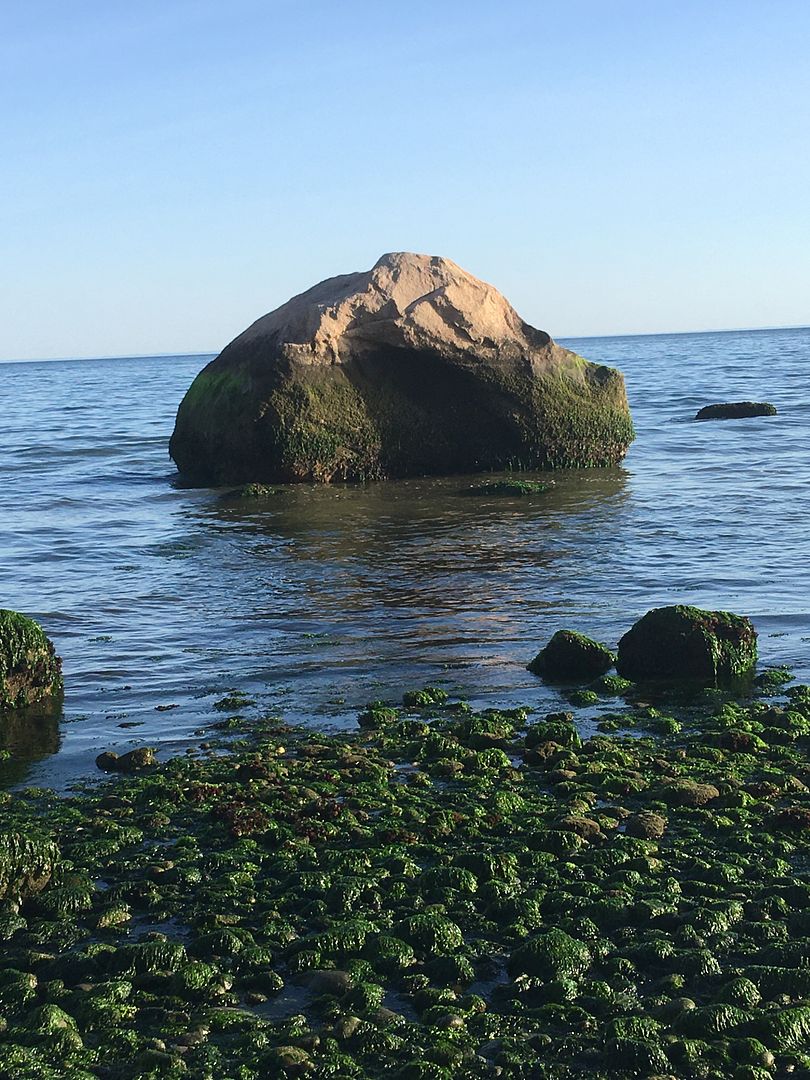
I recognize that rock.
 
Here is where my thinking comes from ... carbon dosing. Notice how people say that you have to have a skimmer to carbon dose? Why? I asked on another more contentious board how carbon dosing works. After a lot of fights and a bunch of how to answers someone finally linked an article on how it works. Long and short, carbon dosing feeds bugs (for lack of a better word). These bugs are what would cause a bacterial bloom. I have seen these blooms before. The make the water look cloudy with a white color. The skimmer then removes these. The point is that the bloom "bugs" consume phosphate and nitrate and by skimming them out you effectively export phosphates and nitrates. The bugs go into the cup and they die, this is why the skimmate stinks. The cup is effectively anaerobic and these bugs need oxygen to live.

Perhaps you are doing it so that bugs don't die, but I think not.

A quick thought if you are looking for a skimmer without the death why not try a venturi on a pump in your sump. You may get micro bubbles but your won't be killing everything in the water column.

P.S. I am essentially doing this on my 20 breeder.
I haven't read all the way thru this thread yet, but what you say caught my attention. Why does "everyone" freak out about microbubbles in their DT? When diving, waves crashing always produce bubbles, they seem like they would be natural in a tank. I build all my freshwater tanks now with venturi so I have micro bubbles injected into the water column.

I don't have a tank set up yet, but I had purchased a skimmer initially. Then when I found about cryptic zones i was just going to run the skimmer for aeration in the first sump chamber. The concept of killing what the skimmer runs thru has me thinking I should just get a cheap pump and build a venturi for it. Is there really any reason to avoid bubbles in the DT?

And on a similar note, is it preferable to have the water well aerated before a refugium? How about cryptic?

Thanks!
In my experiences, gas exchange is essential in marine ecosystems. I like bubbles confined to specific areas. The biggest complaint with bubbles is marine tanks is salt creep caused by salt mist evaporation.

I thing it is important to have excess oxygen saturation everywhere. On healthy wild IndoPacific reefs pH fluctuates between 8.2 tp 7.8. The real issue with lights out is that instead of photosynthesis producing oxygen as a waste product, the opposite happens; photosynthetic organisms produce carbon dioxide and consume oxygen.
Thanks, I always thought it was an anesthetics thing, but salt creep can definitely be a thing. But then, that's a way to reduce salinity over time, particularly if your NaCl is sneaking up with 2 part Dosing.

As for oxygenation everywhere, as I design my sump, I kind of wonder where is the best place to introduce aeration. As the water cascades down the drain pipe, there will be turbulence. I have circulation pumps for the DT to ripple surface and cause turbulence on the surface. The return pump outlet into the DT will be also directed at surface from below. I was planning on running a skimmer for aeration, but I can also just use a venturi on a small water pump located somewhere advantageous in the sump.

Where might be ideal? Before the traditional refugium with macro and filter media? Or before the cryptic zone? Or maybe just before the return pump? I may be getting too deep into the weeds. Perhaps I should just go with what fits best and that'd likely be right before the refugiums split.
Go with what fits best in your setup. Each scenario you mentioned works. I use surface agitation in display and water tumbling from display to refugium. When I toured intensive shrimp Maraculture at Texas A&M Flour Bluff facility, they used educators placed near the surface to mix air & water.
 
From the thread 'Where do nutrients go in cryptic zones?'
https://www.reef2reef.com/threads/where-do-nutrients-go-in-cryptic-zones.771727/post-8970477


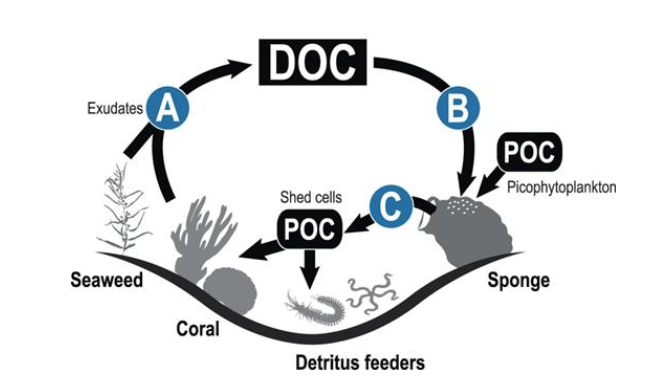
“Sponges are major biogeochemical agents by virtue of their abundance coupled with the large volumes of water they process (Fig. 1), many species in excess of 10,000 body volumes of seawater per day (11, 12). Sponges metabolize a significant fraction of reef primary production (4) and also return organic carbon to the reef environment through shedding of cellular materials, which are rapidly consumed by detritivores (13).”
 
Last edited:
If our systems are functioning correctly, nutrients in the water grow desirable biomass.

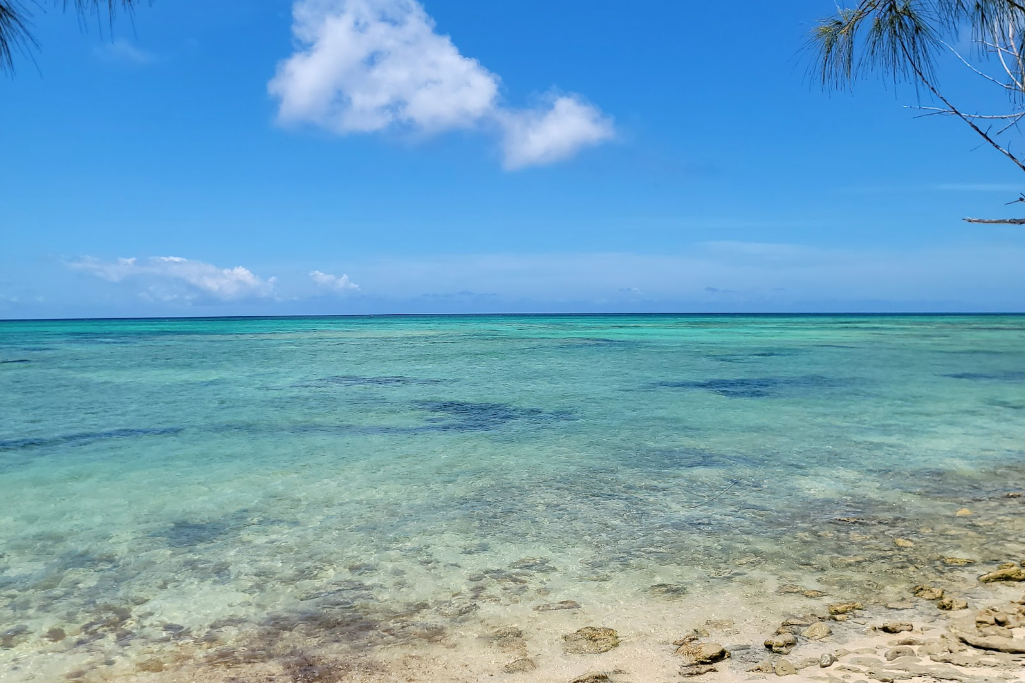
In the thread, “Take a Walk on the Wild Side”, nps corals along with filter feeding flame scallops & sponges are exchanging DOC & POC

Both tanks are operated in low 70’s.

image.jpg image.jpg image.jpg


Sponge-loop.png
Visual scheme of sponge looping (Pawlik et al 2016)
Another critical aspect of sponges is their ability to house many beneficial bacterial partners. Some partners are excellent at sequestering phosphate. A recent study illustrated that nearly 40% of the phosphate found in sponges was contained in granules composed of polyphosphate. This mineralization allows waterborne phosphate to be locked away and removed from a system. This could theoretically help decrease PO4 in a system.

Additionally, many species of nitrifying bacteria call sponges home, including anaerobic bacteria capable of anammox. Annamox is a chemical process of ammonia oxidation where bacteria can convert ammonia to nitrite and then nitrite to nitrogen gas. This skips the typical nitrate conversion step and allows nitrogen to leave the aqueous system (this could effectively decrease the NO3 levels of our systems). [10]

How Do We Grow Them?​

 
Starting to appreciate sponges and actually thought about placing small bio balls inside a canister thinking the void spaces within would proliferate sponges. Just not sure what sponges or max flow tolerated. Plus much lighter than rubble and easily cleaned, if needed.

Also considering photosynthetic sponges as some rival corals in color and texture and would possibly add to performing filtration.
I use cannister filters as portable cryptic refugiums and to help inoculate new systems.

This is the third paragraph in section, How to Grow Them:

“If you have an existing system, an easy way to add a cryptic sump would be to add a canister filter. One could easily remove all of the media slots and instead add rubble or even whole sponges that could be purchased. If one had a cryptic space then you could theoretically dose silicates to upregulate the growth of sponges and reduce labile DOC at a more rapid rate (a fun experiment for someone to try). “

Not sure which sponges are photosynthetic, however the ornamental sponges in display eat POC, which means microbial life like larvae of ich and other viruses that are in the water column.

And cryptic sponges consume DOC & POC and convert it into carbon rich detritus which is consumed by the microbial loop which feeds filter feeding corals and inverts.
I read that and why I commented on my having considered a canister. Wasn't aware it was actually in practice but still wouldn't the flow be an issue. That was my initial concern and hadn't considered using whole sponges. Thought they need structure to attach to and why I considered bio balls serving the same function as rubble.
 
I got some "rigid filter mat" for years in my baffle.
I can see some white sponge grown in it.

 
I got some "rigid filter mat" for years in my baffle.
I can see some white sponge grown in it.

More options getting the original as they can be stacked coarse to dense. Plan on using this as part of my overflow to act as a pre-filter I can access and clean as needed. Didn’t consider they’d also act as a structure for sponges.

Do you clean your pads and does exposing those sponges to air not cause issues?

 
At first, I use them to make sure no piece of caulerpa or other macro can pass trough the dt.
I never wash or remove it in 10 years!
Can't tell for the air.

I got the green, but maybe that the black one (low density) could be use in canister or stack in big block in sump with some flow.
 
Not sure which sponges are photosynthetic, however the ornamental sponges in display eat POC, which means microbial life like larvae of ich and other viruses that are in the water column.
That is fantastic conceptually
 
we are talking about the possibility of using a canister...
ok, in a perfect world it is possible...
but what happens during a power outage...(because it happens one day or another)
will the lack of O² / circulation be harmful?
how will sponges and other organisms react?
Etc...
personally I would opt for a "cryptic refuge" in a 2.5-5 gallon tank or a simple bucket with a powerhead that blasts through a pile of "rigid mat"
a bit like Abe's "bucket refugium"...

Power outrages best handled with battery backup of essential equipment such as wave makers and return pumps. No different for canisters. Otherwise, might need to change the water in the canister if hydrogen sulfide suspected and this would occur in a sump as well if it holds biological media along with rock within the display previously dependent on biological. Best keep flow going regardless where biological media held.
 

IF YOU HAD TO TAKE A REEFING EXAM, WOULD YOU PASS?

  • Yes!

    Votes: 32 45.7%
  • Not yet, but I have one that I want to buy in mind!

    Votes: 9 12.9%
  • No.

    Votes: 26 37.1%
  • Other (please explain).

    Votes: 3 4.3%
Back
Top