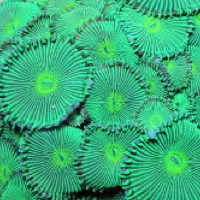
Have these in my tank, looking at pics online they appear to be green implosion paly? Could be wrong. I am aware all zoas/plays contain toxins, but just wondering are these the really dangerous ones?



Navigation
Install the app
How to install the app on iOS
Follow along with the video below to see how to install our site as a web app on your home screen.
Note: This feature may not be available in some browsers.
More options
You are using an out of date browser. It may not display this or other websites correctly.
You should upgrade or use an alternative browser.
You should upgrade or use an alternative browser.
Paly Expert needed!
- Thread starter Reaf
- Start date
- Tagged users None


- Joined
- Feb 22, 2022
- Messages
- 319
- Reaction score
- 181
- Location
- Michigan
- What state or country do you live in
- Michigan
Not all paly's or zoa's contain enough harmful toxins (palytoxin) to hurt humans, although it's safer to assume they do.
Those may be the green implosion, but since they are growing on stalks, not on a mat, they are definitely palythoa not the zoanthid gigantea (similar sizes). I would absolutely treat those as if they have a higher than average palytoxin. Meaning don't touch without gloves, dont frag in your DT if you decide to and if so, make sure you wear gloves to your elbows, glasses, mask also do it entirely submerged so nothing gets airborn. Likelihood of a severe issue is small, but there is no cure for palytoxin poisoning only symptom mitigation. So best to be safe. I have kept Z's and P's 15+ yrs, some the nasty paly's as well, no issues. However for the last 10ish years I just don't bother with the ones I believe may be more toxic. The larger paly's, browns, greens, etc. The super colorful ones are far less likely to be toxic too, so I just stick with those
Those may be the green implosion, but since they are growing on stalks, not on a mat, they are definitely palythoa not the zoanthid gigantea (similar sizes). I would absolutely treat those as if they have a higher than average palytoxin. Meaning don't touch without gloves, dont frag in your DT if you decide to and if so, make sure you wear gloves to your elbows, glasses, mask also do it entirely submerged so nothing gets airborn. Likelihood of a severe issue is small, but there is no cure for palytoxin poisoning only symptom mitigation. So best to be safe. I have kept Z's and P's 15+ yrs, some the nasty paly's as well, no issues. However for the last 10ish years I just don't bother with the ones I believe may be more toxic. The larger paly's, browns, greens, etc. The super colorful ones are far less likely to be toxic too, so I just stick with those
- Joined
- Jun 5, 2020
- Messages
- 644
- Reaction score
- 713
- What state or country do you live in
- California
Yup….you should treat them all as if their the bad ones, seems like different people have reactions at different levels to various zoas/palys

Perhaps they could be Nuclear green palys, any knowledge on whether they are okay?Not all paly's or zoa's contain enough harmful toxins (palytoxin) to hurt humans, although it's safer to assume they do.
Those may be the green implosion, but since they are growing on stalks, not on a mat, they are definitely palythoa not the zoanthid gigantea (similar sizes). I would absolutely treat those as if they have a higher than average palytoxin. Meaning don't touch without gloves, dont frag in your DT if you decide to and if so, make sure you wear gloves to your elbows, glasses, mask also do it entirely submerged so nothing gets airborn. Likelihood of a severe issue is small, but there is no cure for palytoxin poisoning only symptom mitigation. So best to be safe. I have kept Z's and P's 15+ yrs, some the nasty paly's as well, no issues. However for the last 10ish years I just don't bother with the ones I believe may be more toxic. The larger paly's, browns, greens, etc. The super colorful ones are far less likely to be toxic too, so I just stick with those

vetteguy53081
Well known Member and monster tank lover
View Badges
Partner Member 2024
Excellence Award
Reef Tank 365
RGB
Article Contributor
Tampa Bay Reef Keepers
West Palm Beach Reefer
Hospitality Award
Ocala Reef Club Member
305 Reef Club
Wisco Reefers
Midwest Reefer
Fish Medic
MAC of SW Florida
Rock Pool Reef Keepers
R2R Secret Santa 2023
My Tank Thread
My Aquarium Showcase
I have two colonies of green implosion and for at least 4-5 years with NO issue. The toxin issue is associated with poor handling and not so much the coral itself as many zoa if touched or mishandled will deliver an eye infection or rash as you never dreamed of. I have moved these with bare hands several times and washed hands well thereafter without any repercussions.


- Joined
- Feb 22, 2022
- Messages
- 319
- Reaction score
- 181
- Location
- Michigan
- What state or country do you live in
- Michigan
Those would also be a high palytoxin strain too. Essentially due to the build of those palys (On stalks, you can clearly see the striations in the polyp, long tendrils, and green coloration) regardless of the "name" of these paly's they are going to very likely contain a high concentration of toxin.Perhaps they could be Nuclear green palys, any knowledge on whether they are okay?
If you can remove the rock, I would, and then scrape treat with something that would kill them off completely, without making anything airborne. Avoid bleach and such, that'll put it in the air. Drying it out in the sun is always a decent option, but then you still have to remove them.
My recommendation is remove them if you are able. Not worth it for the color, you can get much safer and more colorful ones.
- Joined
- Feb 22, 2022
- Messages
- 319
- Reaction score
- 181
- Location
- Michigan
- What state or country do you live in
- Michigan
Agree as I have kept many over many years, however being new to the hobby and still learning the ropes, I wouldn't recommend them to someone new. The risk is too high if they accidently drop a rock on the colony while hand is in the tank, rub their eyes by mistake, etc.I have two colonies of green implosion and for at least 4-5 years with NO issue. The toxin issue is associated with poor handling and not so much the coral itself as many zoa if touched or mishandled will deliver an eye infection or rash as you never dreamed of. I have moved these with bare hands several times and washed hands well thereafter without any repercussions.
Absolutely possible to keep, but you need to be very aware of the risks. Likely none if you never touch them, but most of us like to tinker with our tanks
vetteguy53081
Well known Member and monster tank lover
View Badges
Partner Member 2024
Excellence Award
Reef Tank 365
RGB
Article Contributor
Tampa Bay Reef Keepers
West Palm Beach Reefer
Hospitality Award
Ocala Reef Club Member
305 Reef Club
Wisco Reefers
Midwest Reefer
Fish Medic
MAC of SW Florida
Rock Pool Reef Keepers
R2R Secret Santa 2023
My Tank Thread
My Aquarium Showcase
We Tinker?? well youre right, sometimes I used to think I had my hands in the tank more than I did in my Pocket . . LOLAgree as I have kept many over many years, however being new to the hobby and still learning the ropes, I wouldn't recommend them to someone new. The risk is too high if they accidently drop a rock on the colony while hand is in the tank, rub their eyes by mistake, etc.
Absolutely possible to keep, but you need to be very aware of the risks. Likely none if you never touch them, but most of us like to tinker with our tanks

- Joined
- Feb 22, 2022
- Messages
- 319
- Reaction score
- 181
- Location
- Michigan
- What state or country do you live in
- Michigan
It's a daily struggle for me to not want to change something hahaWe Tinker?? well youre right, sometimes I used to think I had my hands in the tank more than I did in my Pocket . . LOL
Like @vetteguy53081 says, it's totally possible to have these in your tank and never have an issue. They are only going to give you a problem if you unknowingly do something stupid.
But make no mistake, these ARE potentially lethal. Not just a little toxic. Honestly my biggest concern comes when they end up all over your rockwork and you have to find a way to scrape them off. It's just an added complication I'd personally rather not deal with. People own king cobras. Many people. It's about knowing and managing risks. Just know that palytoxin IS more toxic than cobra venom.
But make no mistake, these ARE potentially lethal. Not just a little toxic. Honestly my biggest concern comes when they end up all over your rockwork and you have to find a way to scrape them off. It's just an added complication I'd personally rather not deal with. People own king cobras. Many people. It's about knowing and managing risks. Just know that palytoxin IS more toxic than cobra venom.
- Joined
- Feb 22, 2022
- Messages
- 319
- Reaction score
- 181
- Location
- Michigan
- What state or country do you live in
- Michigan
And there is no anti-venomLike @vetteguy53081 says, it's totally possible to have these in your tank and never have an issue. They are only going to give you a problem if you unknowingly do something stupid.
But make no mistake, these ARE potentially lethal. Not just a little toxic. Honestly my biggest concern comes when they end up all over your rockwork and you have to find a way to scrape them off. It's just an added complication I'd personally rather not deal with. People own king cobras. Many people. It's about knowing and managing risks. Just know that palytoxin IS more toxic than cobra venom.

To be fair, I have probably 30 species/strains of zoas in my zoa tank, if not more. I'm 100% sure at least several if not most are toxic. But the zoa tank in a room where my kid doesn't go, and I only work on that tank with windows open, when my family is away from the house for the day. I'm plenty paranoid, but it doesn't stop me from enjoying zoas.And there is no anti-venom
Thanks for all the info guys. Just been reading this article:
 reefs.com
Which says that those that have a ridged underside and show feeding response may not be toxic?
This is a pic of mine closed

The Dangers (and Myths) of Zoa Toxicity – Part 1
The oceans are full of creatures capable of killing us; one of the more surprising marine menaces is a group of popular aquarium corals known variably as “but
reefs.com
Which says that those that have a ridged underside and show feeding response may not be toxic?
This is a pic of mine closed
Honest question: did you come here looking for any shred of evidence to support the idea that your palythoa are non toxic, or did you come to ask of we think that they are?Thanks for all the info guys. Just been reading this article:
The Dangers (and Myths) of Zoa Toxicity – Part 1
The oceans are full of creatures capable of killing us; one of the more surprising marine menaces is a group of popular aquarium corals known variably as “but
Which says that those that have a ridged underside and show feeding response may not be toxic?
This is a pic of mine closed
If hearing it from a bunch of seasoned z/p keepers isn't enough, there are certainly empirical ways to find out.

Guess I was just hoping they weren't toxic... Would it be safe to remove the rock and soak it in a bleach solution outside before allowing it to dry and reintroducing the dry rock to the tank, using gloves, mask and goggles etc Or is there an easier way to kill them in the tank?Honest question: did you come here looking for any shred of evidence to support the idea that your palythoa are non toxic, or did you come to ask of we think that they are?
If hearing it from a bunch of seasoned z/p keepers isn't enough, there are certainly empirical ways to find out.
I hate to be a pessimist, but I really believe that these are quite toxic. That doesn't mean you can't keep them. That's a choice that's up to you. If you don't want to risk it, there may be reefers in your area who are interested in them. Maybe you can trade the whole rock to your lfs for livestock credit.Guess I was just hoping they weren't toxic... Would it be safe to remove the rock and soak it in a bleach solution outside before allowing it to dry and reintroducing the dry rock to the tank, using gloves, mask and goggles etc Or is there an easier way to kill them in the tank?
If it comes down to it, I believe bleach should do the trick. A word of caution though: a member here recently put a bunch of frag plugs with this strain in his yard and let them dry out and shrivel to nothing and sit in the sun for like a month or something. He thought they were toast and brought the frag plugs inside and put them in a bucket of aerated water for a few hours. His whole family ended up in the ER and his cat got sick. Might be better to trade the rock with your lfs. The member made several posts about the experience under the username snoopdog. You can search for his posts on here. Worth a read.
- Joined
- Feb 22, 2022
- Messages
- 319
- Reaction score
- 181
- Location
- Michigan
- What state or country do you live in
- Michigan
I wouldn't try to do this in the tank, the toxin can affect other corals etc too.Guess I was just hoping they weren't toxic... Would it be safe to remove the rock and soak it in a bleach solution outside before allowing it to dry and reintroducing the dry rock to the tank, using gloves, mask and goggles etc Or is there an easier way to kill them in the tank?
Maybe injecting each polyp with a kalk paste but I've never tried it and I have no idea if it would result in the toxin being expelled.
The times I had them and wanted them removed I simply stuck the rock outside for a few weeks in the sun, pulled it in if it was going to rain so it didn't get wet again. Once I was satisfied it was dried and dead enough I broke off the pieces of rock with them on it, then put the remaining piece (after much rinsing and soaking in RO/DI water) in my sump to see if any started popping back up again. If you can just remove the rock, break off the pieces you could probably not bother with the drying out portion. Just make sure to glove, mask and goggle up first. They WILL squirt if you cut or squeeze them. Safer to let them dry some first, but you don't have to if you wear PPE and take precautions. Also try to do this in a bucket submerged in water (use a flathead screwdriver with a long enough handle to stick out of the water) so nothing gets squirted or airborne.
IMO it's not worth the risk keeping them if you aren't confident in avoiding handling them or accidently hurting them. I keep 20+ Z's and P's in my tank right now, I treat them all as they have some degree of toxin even though I am confident that none are any levels of concern. I glove up when fragging, etc. Weird crap happens in my family all the time. Just my luck I'd get taken out by Palytoxin from a tiny little polyp lol

- Joined
- Feb 22, 2022
- Messages
- 319
- Reaction score
- 181
- Location
- Michigan
- What state or country do you live in
- Michigan
Just make sure whoever you trade it to is aware of the Paly's on itI mean if ur just gonna nuke the rock, give it away and throw a new piece of rock in there….maybe you can even trade for something new?
I mean I would think they would be, but best to call that out












