Plumbing guide

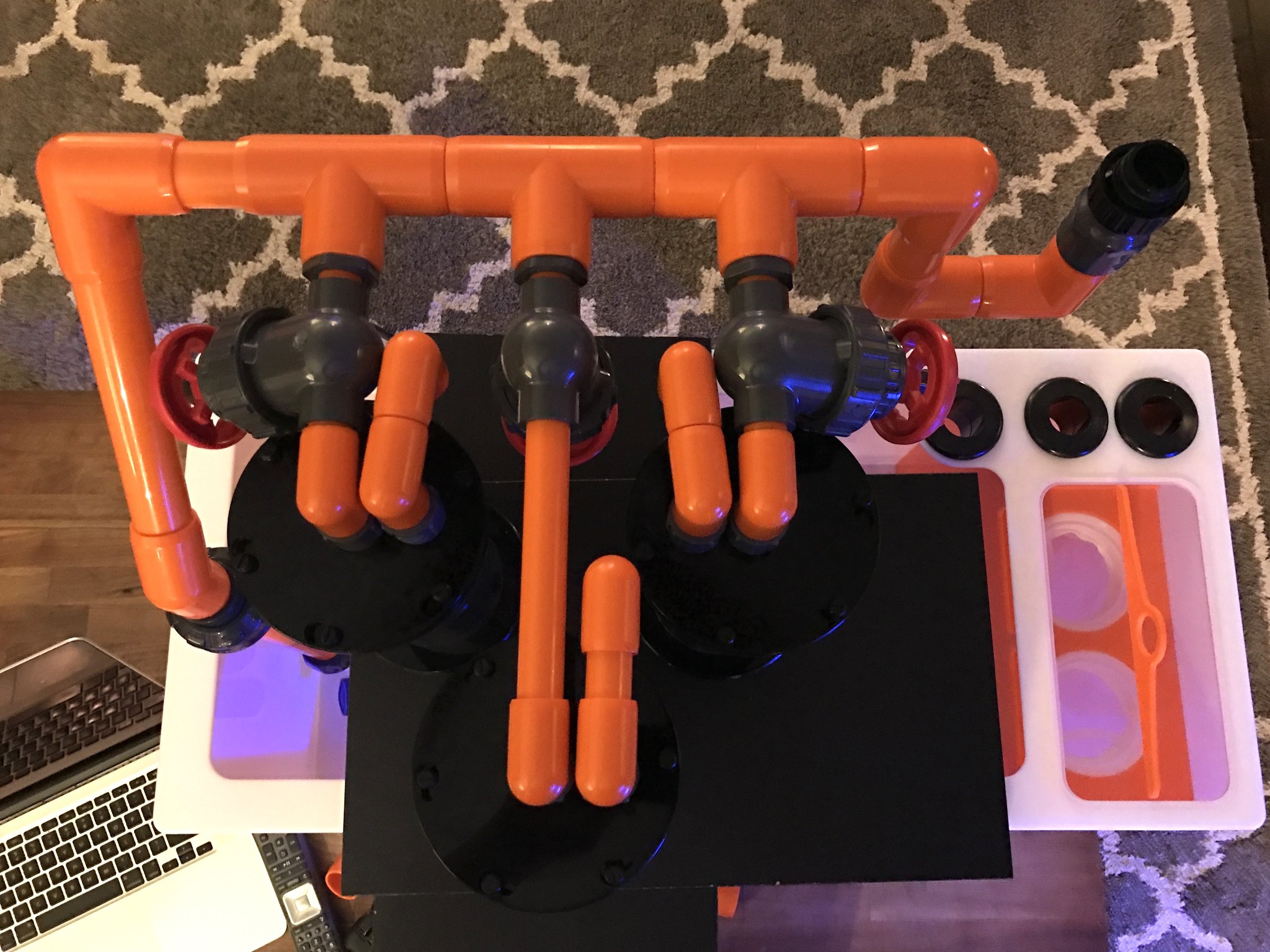
I'm pro ably too late, but....Unions! Make sure to use lots of unions! That way if something leaks or breaks you don't have to cut the whole thing out! Or if you're like me, you'll see a new sump that you have to have and realize the return chamber doesn't line up with your old placement.
20160813_153048.jpg

The old setup, obvious home depot rig, fairly cheap.
20161126_144643.jpg

And the new. For some reason, Eshopps decided to put their return chamber in the back/middle of the sump.
20161126_144714.jpg
 
And make sure your power strip is as close to the plumbing as possible....[emoji97][emoji298][emoji51]
It's amazing there aren't more horror stories in this hobby.
 
Kind of piggybackin off this thread but how far down into the water should the drain line be? Also if i paint my plumbing should it be in the water at all?
I don't know about the paint, but I used flex pvc for my drain and the trimmed it to fit after everything was in place. I've heard the outlet should be just below the water more than any other answer.
 
Dry fitting is easy..I am having a difficult time removing PVC from fitting and reducers after testing dry fitting. Whats the best way other reefers do it? Mallet?
 
I like to use the Oatey brand of primer and cement... it can be found just about everywhere that sells any sort of PVC supplies. I use a clear primer and cement.

http://www.homedepot.com/p/Oatey-8-...-SearchPLPHorizontal1_rr-_-NA-_-202985691-_-N

http://www.homedepot.com/p/16-oz-PV...-SearchPLPHorizontal1_rr-_-NA-_-100072353-_-N

As for tips, using a miter/chop saw will make your cuts super easy and perfectly square every time. No need to prep the pipe besides blowing them off/out. If you want ultra clean pipe work, then don't totally glob the glue on. I like to scrape the applicator, a few times, on the inside lip of the can opening. This will get the excess off the applicator.

Here's a fairly crazy manifold I just did and you hardly tell it's even glued:

IMG_7661 by Toby Broadfield, on Flickr

IMG_7618 by Toby Broadfield, on Flickr

IMG_7613 by Toby Broadfield, on Flickr
 
I like to use the Oatey brand of primer and cement... it can be found just about everywhere that sells any sort of PVC supplies. I use a clear primer and cement.

http://www.homedepot.com/p/Oatey-8-...-SearchPLPHorizontal1_rr-_-NA-_-202985691-_-N

http://www.homedepot.com/p/16-oz-PV...-SearchPLPHorizontal1_rr-_-NA-_-100072353-_-N

As for tips, using a miter/chop saw will make your cuts super easy and perfectly square every time. No need to prep the pipe besides blowing them off/out. If you want ultra clean pipe work, then don't totally glob the glue on. I like to scrape the applicator, a few times, on the inside lip of the can opening. This will get the excess off the applicator.

Here's a fairly crazy manifold I just did and you hardly tell it's even glued:

IMG_7661 by Toby Broadfield, on Flickr

IMG_7618 by Toby Broadfield, on Flickr

IMG_7613 by Toby Broadfield, on Flickr
Miter box better than the pipe cutter? & did you debur/chamfer after cutting?
 
Miter box better than the pipe cutter? & did you debur/chamfer after cutting?
If you are referring to a handheld PVC cutter, then there's no comparison. A chop saw, radial arm saw etc will make a perfect cut every single time. The handheld cutter is cheap, easily portable and doesn't make a mess... but that's where the benefits quickly end. If you are doing very precise PVC work, then you must use a saw. When using the saw, there's typically no need to deburr, chamfer, sand etc. This is assuming the saw is set up correctly to cut all of the way through. I never used a miter box for PVC work, but it's probably slightly more accurate of a cut than the PVC cutters. But definitely more of a pain than the other options.
 

IF YOU HAD TO TAKE A REEFING EXAM, WOULD YOU PASS?

  • Yes!

    Votes: 32 45.7%
  • Not yet, but I have one that I want to buy in mind!

    Votes: 9 12.9%
  • No.

    Votes: 26 37.1%
  • Other (please explain).

    Votes: 3 4.3%

New Posts

Back
Top