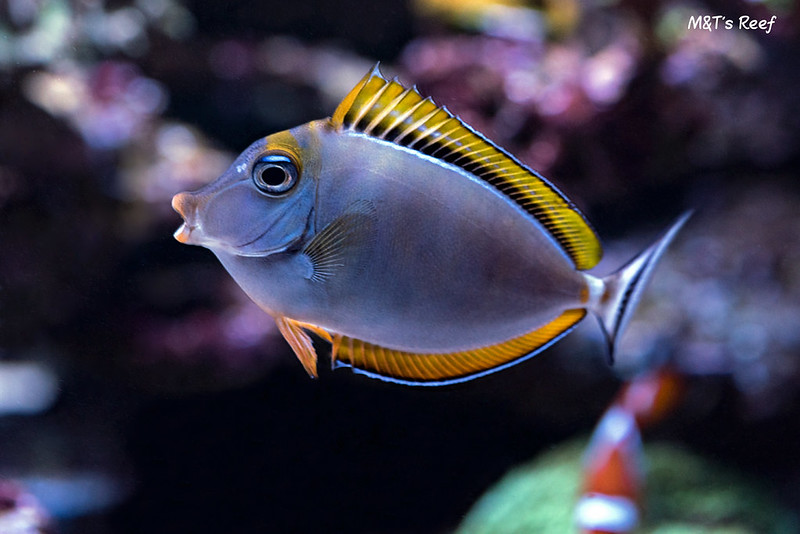
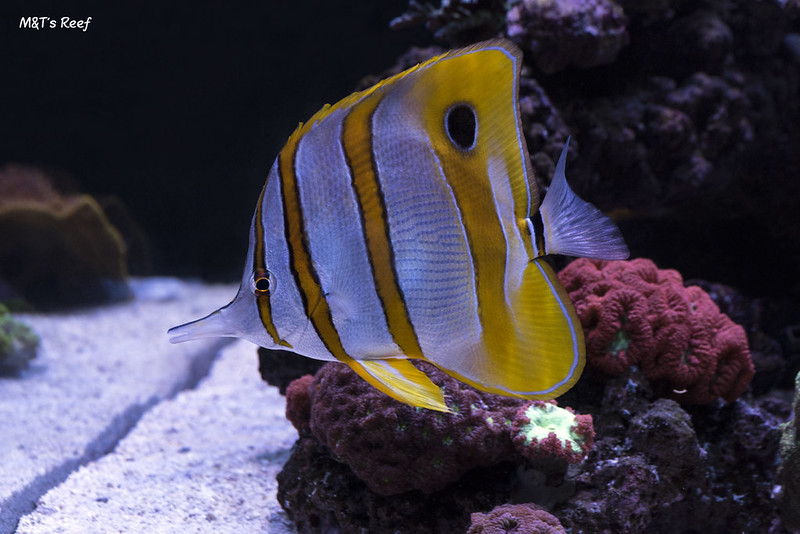
I have used this approach with more sensitive fish a few times over the years, most recently with a Blonde Naso ("Barbie") from Petco (1st and only fish I've acquired from them) and with our Copperband butterfly ("Sunny").
I had no plans to purchase a fish when I walked into Petco - was there for cat food, but I usually end up taking a peek at the tanks on my way out. "Barbie" had just arrived less than an hour before, was about the size of a half dollar, very alert, grazing algae off a rock and clean. She stayed in my 30g nano (40g total volume w/sump, refugium and skimmer - no corals) for 5 or so months before she moved to our big reef. I did dose prazi as a preventative, but nothing else. She was moved to our big reef in August of last year and has never shown any signs of parasites whatsoever.

"Sunny" the CBB was a wysiwyg online purchase and I made a HUGE mistake in not checking his size first - had I paid attention, I would have passed on him. Needless to say, I was shocked when I opened the bag he was in and saw a Gi-Normous, adult Copperband staring back at me. I know it can be difficult to transition CBB's to aquarium life and even more so for adults. I felt his best chance at making the transition would be to place him in the same 30g nano system I used for the Blonde naso. It has live rock, sand, a well-stocked pod population and a plethora of fan worms. He stayed in that 24"Lx24"Wx12"H tank for 6 weeks. He would only eat small mysis for the first week... after that, he started eating PE Mysis and by the end of the 3rd week, he was eating clams as well. It's funny, he completely ignored the fan worms (part of their natural diet) until week 5, when he completely demolished them. Although "Sunny" never showed any signs of parasites, I did mix General Cure (bound w/focus) in his food and also dosed Prazipro as a precaution only. He was moved over to the big reef at the beginning of May and so far is doing quite well. ;Happy
We keep quite a few fish that have been with us for several years (14 for our Desjardini, 11 for our clowns, 9 for our Bristletooth and 6 for our Cleaner Wrasse to name a few) so they are family. As Meredith and Humblefish have pointed out, diligent observation of fish (physical signs of disease as well as behavior) is critical to ensure nothing slips by unnoticed, as well as a standby "treatment tank" if needed.

































