
;Jawdrop
Stony paradise!
Thank you for the realistic photo – it's absolutely stunning!!!!!
And here is the same area from above. You can see the reflection from the LED and all the red diods

/ David


Follow along with the video below to see how to install our site as a web app on your home screen.
Note: This feature may not be available in some browsers.

;Jawdrop
Stony paradise!
Thank you for the realistic photo – it's absolutely stunning!!!!!



Thank you! I've got to take some notes when reading this paper. Apparently, the deep water clade 'C' zoox transfer light energy from PSII to PSI via the process called 'spill-over' - this could explain how electron traffic jams are avoided when no far red light is available.Novel Adaptive Photosynthetic Characteristics of Mesophotic Symbiotic Microalgae within the Reef-Building Coral, Stylophora pistillata
does show some features of red light's effect on coral.
I think I may have lost the link in a recent computer crash (RIP: 2007 iMac) so this is taking some digging.....may have posted it in an earlier thread too though. Still digging.

Very nice - wonderful reef! This photo asks so many questions - do we have any PAR numbers available, or better yet, spectral analyses? How long are the red lamps on? Any DLI numbers generated? As previously mentioned, red light, at least in the corals and their zoox clade I tested (Porites lobata; C15) responded (photosynthesized) well to red light but the xanthophyll cycle kicked in at a much later time than with other spectra tested. In the tests, with others (stony corals, zoanthids) strong red light bleached the animals. Details about this photo would likely answer many questions - thanks for sharing!And here is the same area from above. You can see the reflection from the LED and all the red diods
/ David
Very nice - wonderful reef! This photo asks so many questions - do we have any PAR numbers available, or better yet, spectral analyses? How long are the red lamps on? Any DLI numbers generated? As previously mentioned, red light, at least in the corals and their zoox clade I tested (Porites lobata; C15) responded (photosynthesized) well to red light but the xanthophyll cycle kicked in at a much later time than with other spectra tested. In the tests, with others (stony corals, zoanthids) strong red light bleached the animals. Details about this photo would likely answer many questions - thanks for sharing!


Thank you! I've got to take some notes when reading this paper. Apparently, the deep water clade 'C' zoox transfer light energy from PSII to PSI via the process called 'spill-over' - this could explain how electron traffic jams are avoided when no far red light is available.

 ....here's the reference for the surface sensing:

Please Present It?
In general, corals live at depth and have adapted not to need red light. Not sure about your request. I merely commented that your posting about the different chlorophylls and corals' lack of "B" also suggested the same.
Chlorophyll
Technically the dinoflagellates use chlorophyll for photosynthesis - not the corals - and that's important because there's some sophisticated symbiosis in between the two that shouldn't be glossed over. Good link.
And while chlorophyll absorbs red light, corals have made lots of adaptations to deal with red light because it can be bad and harmful. I don't think you can really say that corals use red light for themselves in any way - and they seem to be able to make-do without it.
But we've long known that corals are adaptable to nearly whatever light we put over them....as long as there's sufficient intensity and time allowed for adaptation. If someone thinks that redder or greener or purpler corals look better than naturalistic colorations, then the corals can probably deal with that. I just don't want to confuse things by saying such an environment is "better" or "preferred" so far as the corals are concerned.
The Report
Though it wasn't the point of the report someone mentioned earlier, the report does indicate one thing corals "use" red light for: An indicator of high-irradiance - a signal for the coral to throw up the light-shields. I know you've suggested this as a theoretical pathway to getting some pigments expressed, but has this panned out in practice yet as far as anyone has documented? Any links specific to this?
-Matt
P.S. I updated my post #24 in this thread since the R2R blog is gone....taking my pics along with it. Pics are now posted here.


S;Jawdrop
Stony paradise!
Thank you for the realistic photo – it's absolutely stunning!!!!!


So this is a horticultural grow lamp for green plants?And here is the same area from above. You can see the reflection from the LED and all the red diods
/ David
So this is a horticultural grow lamp for green plants?


@Dana Riddle
Right under the LED 5 cm under the surface PAR is between 680-720. This is during 10:00 to 16:00 everyday. The LED is on 50% two hours before and after that.
We meassure with a Apogee MQ-200.

Lasse is looking for some more spectrum measurements, we have done some test for the Heliospectra LED only.
/ David
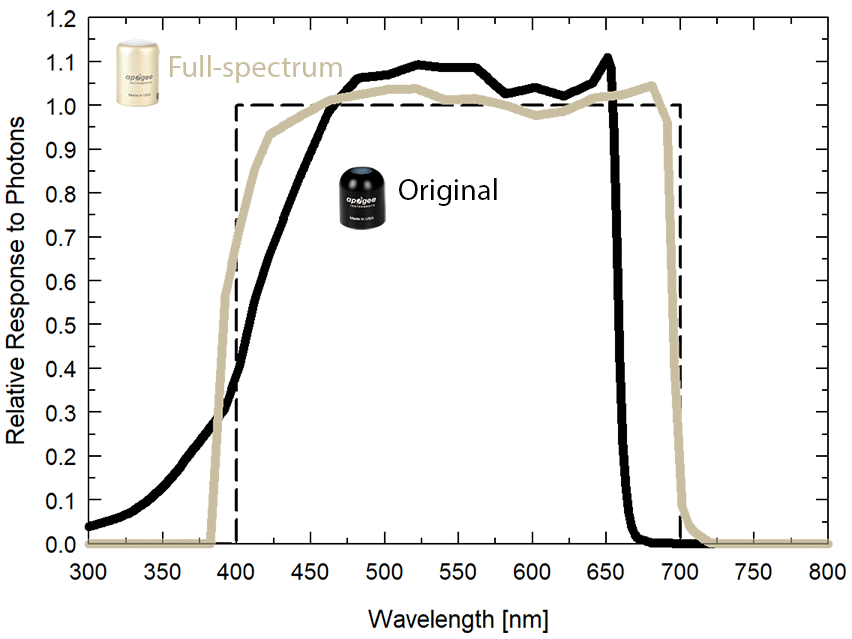
Thank you David.Yes, this Heliospectra lamp is for greenhouses. But just to be clear, it's a lot of other lights sources over this tank as well.
/ David
It's important to stress that the flow around these corals below this fixture is very high.
Sincerely Lasse











