I'm not trying to bring you down but It looks like you're working on a fairly large project, if you're planning to run 18 I2C devices you might need to rethink things. A few years ago I wanted my controller to expand to large levels and went down the road you are heading on and for me it didn't end well. I attempted to make it work for months, even went to the expense of getting lots of PCB's made. I tried a few buffers, the pca9507 was the best. Running multiple pca9507 like you are I was able to successfully run 22-24 devices with about 100 feet USB cable total but it wasn't reliable. Even with only a few devices connected it wasn't perfect. I hate to say it and I hated to read it when I was doing this, it's just not possible if you need reliability. For any chance of it working you would have to code a strong CRC check and figure out how to handle the bus locking up.
Bottom line is you need to look at other protocols such as RS-485 or CAN bus. If you really want to keep going look at the PCA9615 to split the I2C signals into differential signals, personally I haven't used this as I finally came to accept this isn't the route a person should be taking but this does sound like the best bet.
Here's a good article explaining how differential signals works.
A few weeks back, we talked about the no-nos of running I²C over long wires. For prototyping? Yes! But for a bulletproof production environment, this practice just won’t make the cut. This mo…

hackaday.com
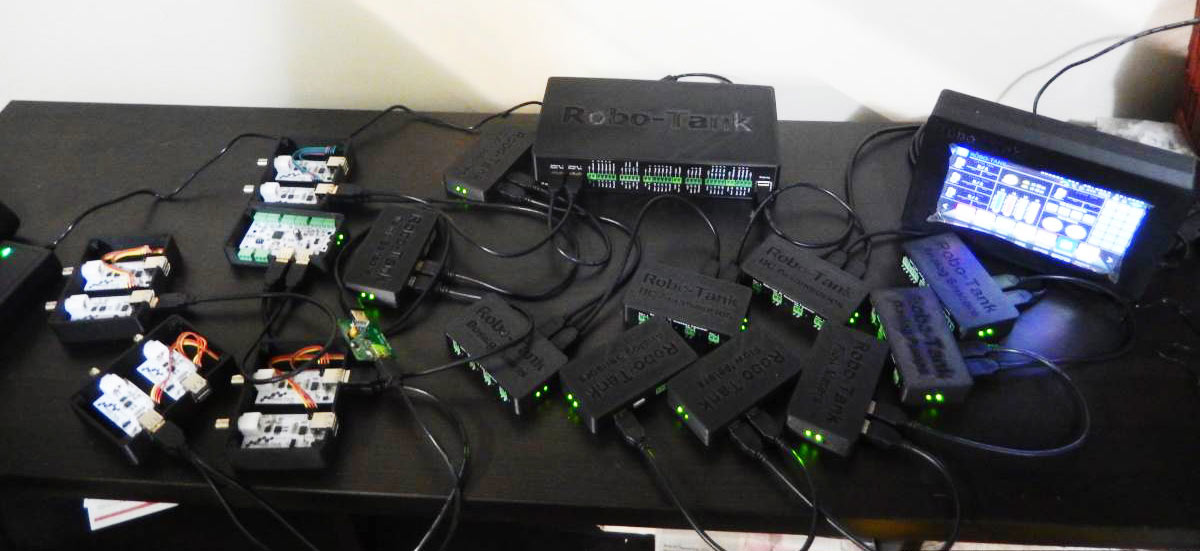
Here's a pic with most of the stuff connected, I had 8 AC power bars connected as well at one point. All that and more went in the trash.






 I've seen others complain about them being so low as well so still thinking they are 1.8k but can't be certain now, thanks. I searched that page you linked which is official and no mention of 1.8k or any other values.