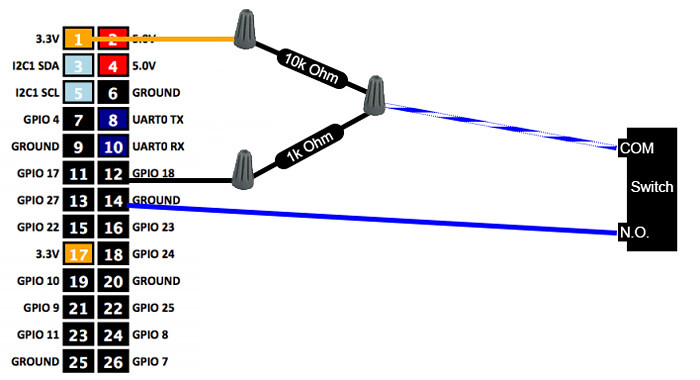
What levels are the two float switches at? Is there enough space between their levels?
Low (ATO trigger) should be far enough below High (Over full Trigger) so that no water ripples or disturbance can cause confusion between the two. I used to run a similar setup with two float switches controlling two pumps and in the beginning, One to top up when low and one to pump to waste if over full. I had them too close together and they "fought" each other and one or the other was constantly running. I gave them more space (50mm) and then it settled down.
I then changed them to run in series as ScottBrew suggested with a space of about 30mm between them. Under normal running, the top switch is constantky closed and the bottom one opens and closes on water level to control the ATO. If the bottom switch fails in the closed position, when the water gets to the top switch the ATO pump should switch off. This is not technically proper over-full protection, but merely a safeguard in case the lower limit switch fails in on mode.
I now run a single ATO sensor in the return chamber of my sumpa nd have a (relatively) small RO top-up reservoir. I have a float switch in the RO reservoir to cut off at low level to protect the top-up pump from running dry. I use this method now because I run Kalkwasser (stirrer? reactor? Nilsen reactor?) on all my top-up water and would rather this limit the amount of kalk that can be dumped into the tank.
BTW, I now believe that all pumps that run in a variable level situation (Return, RO Top-Up etc) should have a low-level cut-off switch. I know a few reefers that would have saved a good amount of money if something like that was in place. In the most extreme case I saw, a return pump ran dry and caught fire!
Des