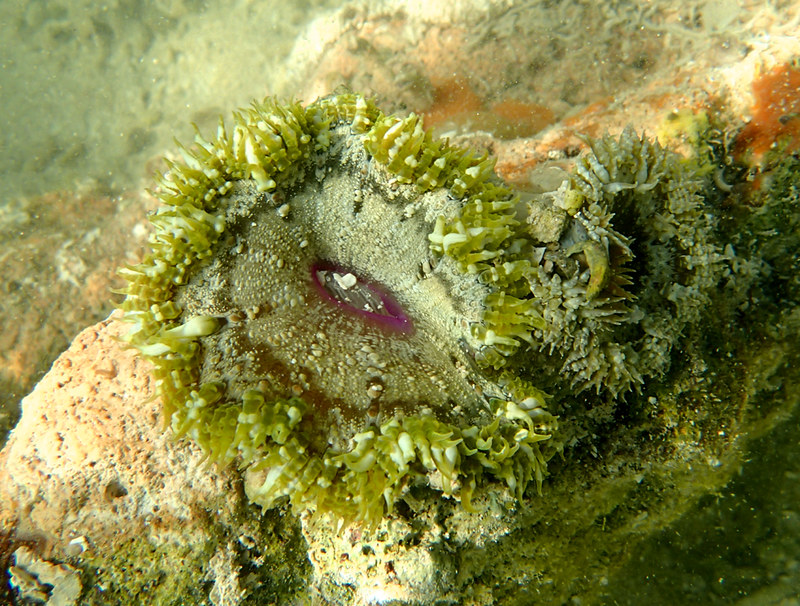
Rock anemone vs long tentacle plate

BestMomEver

2500 Club Member
View Badges
Joined
May 8, 2018
Messages
2,998
Reaction score
5,823
Location
Lower Alabama
What state or country do you live in
Alabama
Rating - 0%
0   0   0
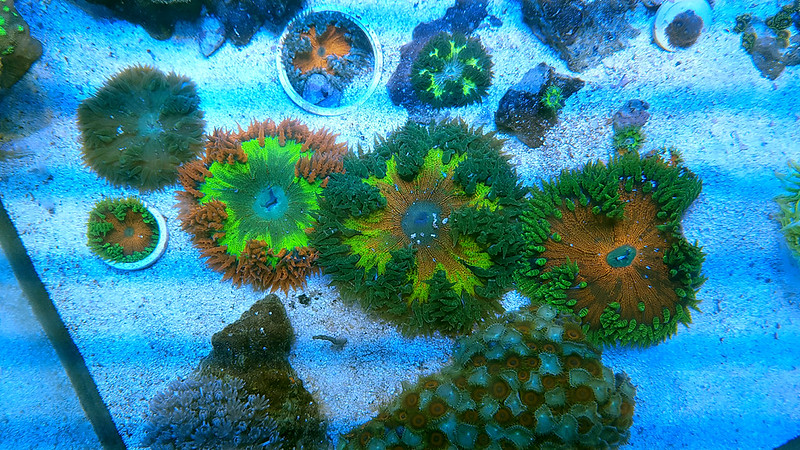
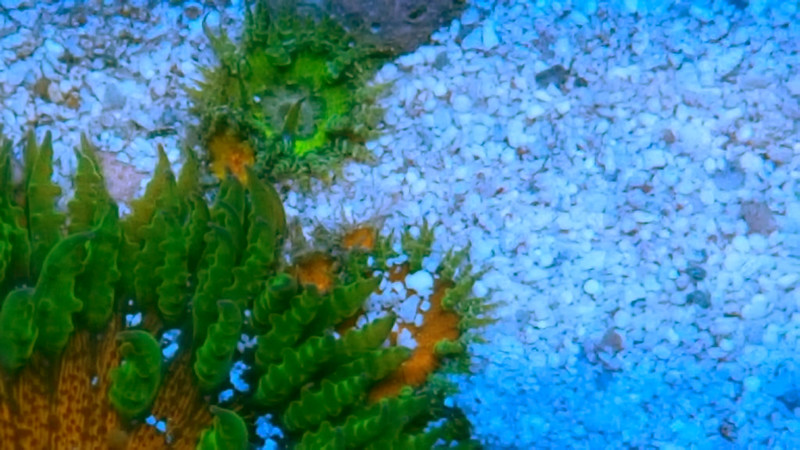
so.... got a rock anemone today and placed in a safe area, scooted some sand around it and watched. It seemed to attach itself, as it stayed in one place and the foot started getting deeper in the sand bed. I got up a few minutes ago because I noticed my long tentacle plate curled up on one side. Turns out the anemone went on a stroll and found itself on top of the plate coral. From appearances it looked like the plate was trying to consume the anemone because it was folded in on the anemone and the anemone was contracted inside itself so much so that it looked like a marble.

So... are either of these guys gonna come out of this unscathed? I moved the anemone and the plate seems happier. I put the anemone in a place with little water movement and put it inside a small section of pvc for protection until it gets settled.

Thoughts? Experiences?

 
Sorry too read about your issue. I don't know how it will turn out. I don't have any plate corals, but I do know that RFA's are quite hearty. I suspect it will be OK.

Here's what I do with my RFA's. BTW, I have 30+, 7 are full size adults and about 25 that are babies my adults have created. The first spawned kids are 1 year old and the size of a quarter or a bit bigger. The second spawn kids are VERY tiny dots to about 1/4".

I use PVC end caps that come in a variety of sizes. I take an end cap and place the RFA foot first into the end cap. Then I take a 16oz cup of water from the tank and put the end cap and the RFA in the cup of water. Every morning and every evening I dump the water from the cup down the sink and refill it with water from the tank. After 2 to 4 days the anemone is firmly attached to the PVC end cap. So I take the cap and press it into the sand anywhere in the tank that I like. I just barely leave the rim exposed. After a few more days and the RFA not moving, I press the end cap below the sand surface and sand fills in around the RFA's foot. After that, I've never had a RFA move and I've been doing this for over 3 years now.

There is a lot more info about RFA's in this thread:
https://www.reef2reef.com/threads/ron-reefmans-rock-flower-experience.409436/
 
Last edited:
I pretty much do what Ron does except I use a piece of rubble and my acclimation box instead of a cup. I have five and believe it or not I think all 5 are males. I've seen 4 of them spawn and they are definitely males. The 5th one is newer and smaller and is the only chance for a female.
 
Sorry too read about your issue. I don't know how it will turn out. I don't have any plate corals, but I do know that RFA's are quite hearty. I suspect it will be OK.

Here's what I do with my RFA's. BTW, I have 30+, 7 are full size adults and about 25 that are babies my adults have created. The first spawned kids are 1 year old and the size of a quarter or a bit bigger. The second spawn kids are VERY tiny dots to about 1/4".

I use PVC end caps that come in a variety of sizes. I take an end cap and place the RFA foot first into the end cap. Then I take a 16oz cup of water from the tank and put the end cap and the RFA in the cup of water. Every morning and every evening I dump the water from the cup down the sink and refill it with water from the tank. After 2 to 4 days the anemone is firmly attached to the PVC end cap. So I take the cap and press it into the sand anywhere in the tank that I like. I just barely leave the rim exposed. After a few more days and the RFA not moving, I press the end cap below the sand surface and sand fills in around the RFA's foot. After that, I've never had a RFA move and I've been doing this for over 3 years now.

There is a lot more info about RFA's in this thread:
https://www.reef2reef.com/threads/ron-reefmans-rock-flower-experience.409436/
So you leave the pvc cap in the tank indefinitely? Can you post a picture of the cap? And I would love to see your rock garden!
 
Yes, and after the end cap is pushed down into the sand you don't even know it's there. And as the RFA gets a bit bigger and is opened up, they cover over the edge of the end cap anyway. In fact I had 3 babys attached to the rim of the end cap and under the parent and didn't even know they were there until one day I was working in the tank and the parent retracted more than normal and exposed the kids!

Six of these RFA are in end caps. The ones you can see are recently added to end caps and haven't been pushed down below the surface of the sand. Once I do push it down, the RFA stretches a bit to keep above the sand and looks like the big ones (that are also in end caps). To the nems it's just a rock under the sand with a good hole to attach its foot.
20180622_144452 R1 by Ron Lindensmith, on Flickr

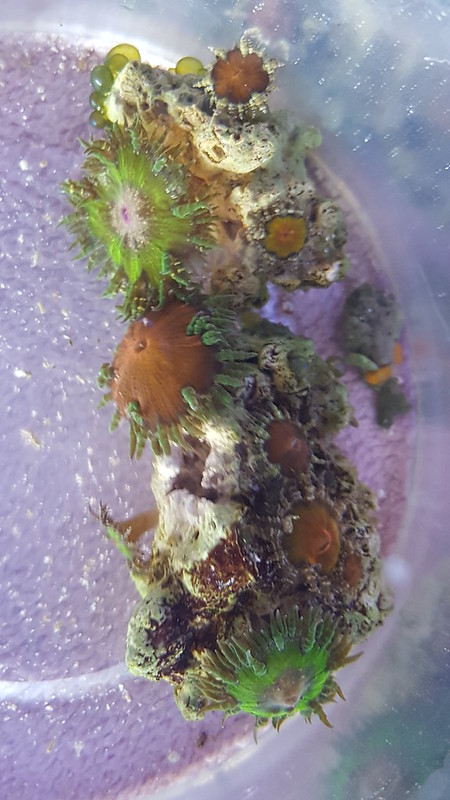
Here you can see 5 babies, 4 with orange faces and one that is 2 shades of green.
20180622_144429 R1 by Ron Lindensmith, on Flickr

Here is a tiny rock with 10 babies on it, some are open and a few are closed up almost like zoas do.
20180622_144303 by Ron Lindensmith, on Flickr

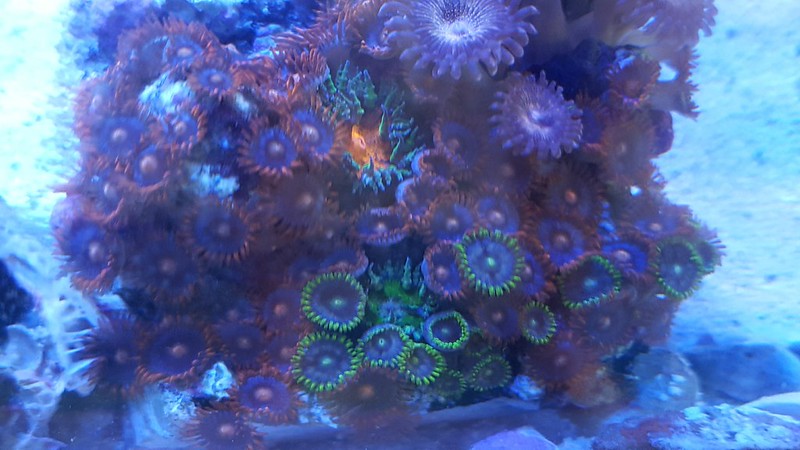
Here are 2 babies hiding out on a rock full of Eagle Eye zoas.
20180622_143853_resized by Ron Lindensmith, on Flickr

This is one I got for free. I collected it while snorkeling in the Florida Keys. This is one of the nicer looking RFA's that come from shallow water. As I understand it, all the really colorful ones come from 40 feet down or more.
Rons rock flower anemone by Ron Lindensmith, on Flickr

Tomorrow I'll see if I can get a good full tank shot. But as you can see from above, most of my 30+ RFA's are smaller than a dime, many are not much bigger than the period at the end of this sentence!
 
Sorry to break in on the thread, but the rock nem does not hurt the zoas? They can co exist next to eachother? Do you know any more corals they can touch without issues?
 
I wouldn't say they don't hurt the zoas. In fact they may very well kill a few to make room for themselves, but then they might just co-exist. I suspect it just like having 2 different zoas meeting on a rock. Sometimes they get along just fine and may even spread into each others territory and co-exist. But sometimes one zoa will just over run the other zoa and completely take over, squeezing out the weaker zoa. I just sold a 6" x 4" rock that was originally covered with green palys. Then an eagle eye zoa moved onto the rock and the zoas took up residence in all the spaces between the palys! It was a pure checkerboard of red and green.

I don't think rock flower anemones pack much of a punch in terms of killing other corals. But mine are almost all down at the bottom edge of rocks at the sand or in PVC end caps and surrounded by sand. I've never had a rock flower get close to other corals. Sorry I can't help more.
 
Thank you. I just put one of mine in a pvc cap. It was moving around lately so I hope he will like it and stay put now
 
Edit; 2 hours later it looks like he wants out of the cap? You can just see a small part of the foot leaning over the edge.
15317427365406019268402374439323.jpg
 
You may want to try this to get it to settle into the PVC cap. Take a 16oz glass (I use a big plastic deli cup the pineapple rings come in) and fill it 2/3rds with tank water. Then set the PVC cap and anemone in the cup. Every morning and every evening for a couple of days I dump the old water out in the sink and then dip the cup back in the tank to stir things up and fill it again. After a couple of days mine always settle in and stay put.

If you return them to the tank right away they feel the water movement and have the option of climbing out. But even then, it's usually just to attach on the outer rim of the cap.

Good luck and let us know how it goes.
 
Just to be clear. You keep the cup OUTSIDE of the tank? Or do I get it wrong? This is very possible since English is not my native language. I live in Holland.

If it is outside the tank, how do you keep the water warm enough? And is it no problem not to have lights for this period of time?
 
Nikita, I appreciate the language issue. Please ask questions if my words or meaning are unclear.

For a day or two I keep the cup with the end cap and anemone outside the tank. I didn't think about the temperature as I live in SW Florida and we keep our house at 80F (26.7C) the same as our aquarium. And RFA's should be fine in cooler water. We go snorkeling in the Florida Keys in the winter and the water temp is down near 70F (20.1C) and the RFA's are perfectly OK at that temp for several months (Dec thru April). But if you use a lightweight container like a plastic cup to put the RFA and end cap in, then you could use a plastic clip or small clamp and hang the cup inside the tank but up at the rim. That would keep it at the same temperature as the tank water and still keep it isolated from the rest of the tank.

Like most corals, the RFA can live for days without strong light. If the anemone settles down into the end cap, I might feed it a tiny amount of food. But I'd be very careful to place it directly on the anemone. Having food in the cup but away from the anemone could encourage it to climb out of the end cap which defeats the entire point of having it the cup. Adult RFA's (1 inch or 25cm or bigger) should be able go days and probably even 2 or 3 weeks without strong light or being fed. I'd be more careful with little ones. But the small rock I showed that has 8-10 baby RFA's on it was in a plastic cup for a week or more before I separated them and put them back in the tank. For the babies I just broke up the rock (old sps coral skeleton) and glued the smaller bits onto frag plugs. About 80% of them stay on the frag plug and 20% of them waner off. Usually they just settle in a square of the egg crate frag rack, so I really haven't lost track of them. But you won't be dealing with the tiny baby RFA's when you are buying them from a store. At least not for 6 to 18 months and if you happen to have a male and a female.
 

IF YOU HAD TO TAKE A REEFING EXAM, WOULD YOU PASS?

  • Yes!

    Votes: 32 45.7%
  • Not yet, but I have one that I want to buy in mind!

    Votes: 9 12.9%
  • No.

    Votes: 26 37.1%
  • Other (please explain).

    Votes: 3 4.3%

New Posts

Back
Top