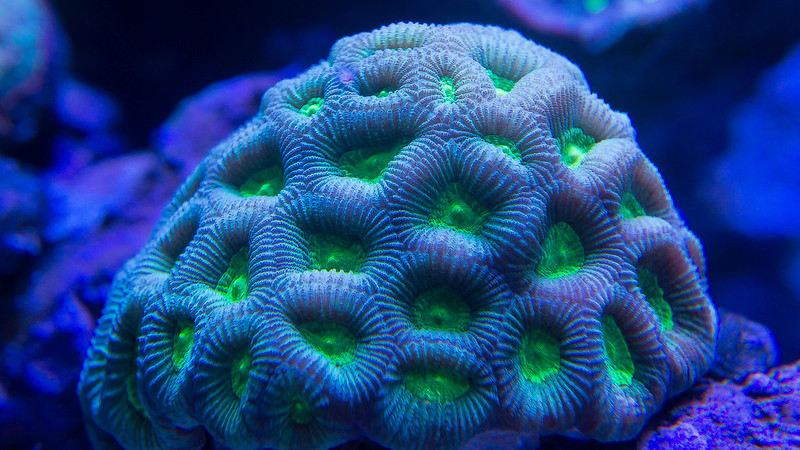
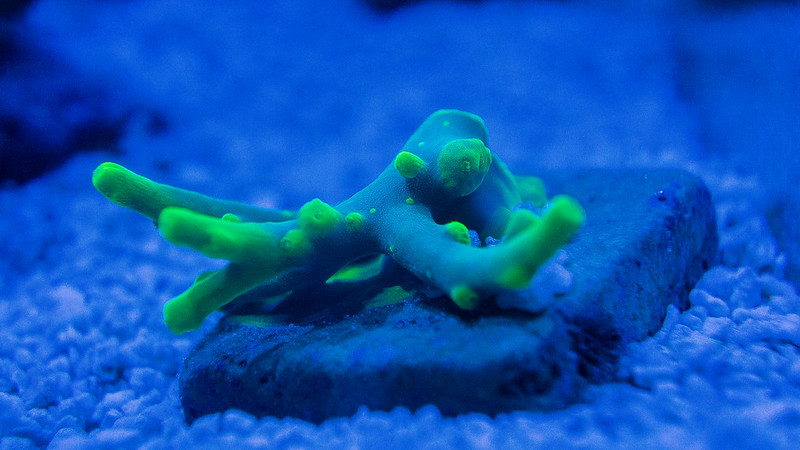
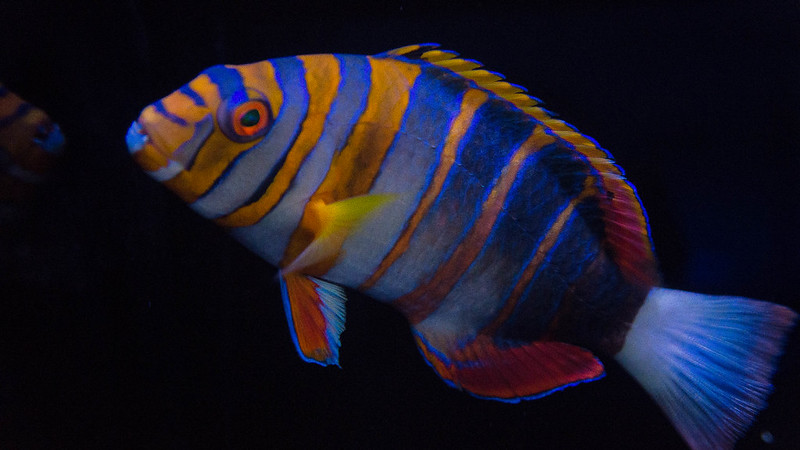
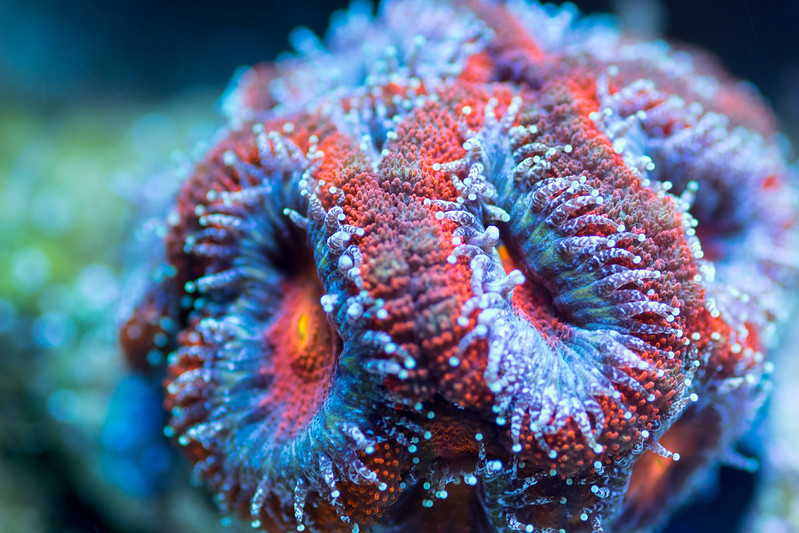
There is a misconception about post-processing amongst hobbyist. Everyone whom doesn't know or has very little knowledge about it, automatically only associates over-saturation with it. Post-processing is much more than saturation and overly doing it. The blue issue everyone has is a color temperature issue created by LEDs in which post processing can correct.
Gel filters do NOT give you the best representation of your tank. I don't know how people think the photos posted using these are acceptable. Oranges and greens are radioactively amplified plus there is an orange overlay.
My advice is to learn how to use a camera just as you learned how to reef. Everyone wants s shortcut but there isn't one. Watch some YouTube videos on aperture, ISO, exposure, shutter speed, and focusing. Next, watch videos on post processing, particularly color temperature.
I started with a Sony Nex 5n, then Nikon D3300, and now Canon 70D.
Actually professionals use filters quite often. In photography and cinematography and we see it everyday.
Reef lighting lacks the red green yellow and orange when balancing to 4800 and above. Around 3200 it changes to a more spikes orange red but blue is sill I there.
Cameras and reef lights are not all equal. And led's are are not the only difficult light to shoot under. T5 mh t12 t8 for the old guys have similar challenges but are more forgiving as they contain a smoother spectral arch arc.
Cameras are also designed to use a smoother full spectrum curve. So they are easily fooled. Higher end cameras have more processors and some use a sampling algorithm to simulate the colors that are not there. Similar to MPEG compression uses info from one frame to the next to save bandwidth and computing time. Or shot stabilization. Same thing.
Play with gel filters. The roscoe and lee swatches are generally free and quite often correspond to a glass filter for dSlr. This is particularly helpful for full actinic photography when the the spectrum is fully limited to a hundred or so NM. A good filter will pull the blue out and leave more red orang green and yellow as limited as is there is some in there.
For the old guys we know this because we didn't used to white balance. Film light balance was and is still often done with filters. Depending on what film stock is chosen.
Day light balance film (56k) was changed to tungsten 3200k with an 85 filter. With daylight 56k standard film in deep underwater you use an 85 as well because the color is 14 to 20k kelvin. Indirect sunlight i.e. Sky in a valley is the same. But I digress.
Here's 2 shots on I phone.
http://images.tapatalk-cdn.com/16/01/02/
[IMG]http://images.tapatalk-cdn.com/16/01/02/b3ba825e18813062972a2c10484a192d.jpg
Last is under 16k
But That's a scrap of gel that was in my pocket after work one night.
Yea not pro yet but pretty good for after a beer and a gel that I that went in the trash a minute later When I got my new night led a while ago.
Just how you reef use what you have. Don't spend a lot till you get to know the basics. You can get pretty good stuff and learn a lot.
And honestly some of the best reef shooters I know are manipulating the lights first by eye. Get the whites bright enough to to expose then bring up the actinic to pop. It fills in the spectrum the sensor needs a little better and makes post processing easier esp in raw. Unless you in Nikon as it has broader color latitude than canon when using jpeg. But I guess that's IMo or IME.