Species names for zoas

dedragon

5000 Club Member
View Badges
Joined
Feb 23, 2019
Messages
6,109
Reaction score
4,535
What state or country do you live in
New York
Rating - 0%
0   0   0
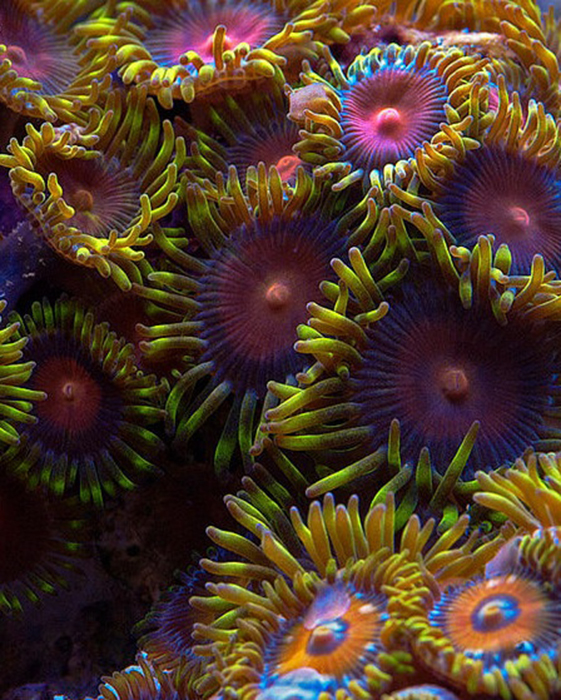
I'm a bit confused about if people actually know the species names of the zoas in the aquarium trade, like what species exactly is a gmk or La Lakers zoa? Just a bit curious

 
Grand Master Krakatoa, pretty rare
LA Lakers are purple and yellow, not so rare

Seems like some zoas have many names, and very often there are morphs of zoas. Some look different in other tanks based off nutrients or lighting. There are a few people on here who are very knowledgable on a variety of zoanthids. Some, like myself are just keen to the ones we own, or desire. In most cases, the cooler the colors and name, the more dough you’re gonna have to hand over for a polyp.
 
I'm a bit confused about if people actually know the species names of the zoas in the aquarium trade, like what species exactly is a gmk or La Lakers zoa? Just a bit curious
Do you mean like species as like with acros (milli, grandulosa, stag,...) or do you mean color variations?
 
Do you mean like species as like with acros (milli, grandulosa, stag,...) or do you mean color variations?
I mean true genus and species names, they seem to have too much variation to just be like 2-3 species.
 
Grand Master Krakatoa, pretty rare
LA Lakers are purple and yellow, not so rare

Seems like some zoas have many names, and very often there are morphs of zoas. Some look different in other tanks based off nutrients or lighting. There are a few people on here who are very knowledgable on a variety of zoanthids. Some, like myself are just keen to the ones we own, or desire. In most cases, the cooler the colors and name, the more dough you’re gonna have to hand over for a polyp.
I know, I have La Lakers and others and am actually going to be buying either GMK or something similar soon, maybe wait for reefapalooza nj. Just really interested why we have all acro names but none surrounding our zoas, maybe it is just 1 and i am ill informed
 
I know, I have La Lakers and others and am actually going to be buying either GMK or something similar soon, maybe wait for reefapalooza nj. Just really interested why we have all acro names but none surrounding our zoas, maybe it is just 1 and i am ill informed
I see, I misunderstood your question.
 
I mean true genus and species names, they seem to have too much variation to just be like 2-3 species.
Zoas typically come from one collector and then are spread from there. Hope this helps. Still kinda don’t get your question.
 
Zoas typically come from one collector and then are spread from there. Hope this helps. Still kinda don’t get your question.
I mean like Zoanthus sociatus, or zoanthus pulchellus. Does anyone know the species to match some of these morphs, i get the difference between a morph and a species as well
 
Leaning towards gigantis maybe for GMK but idk im no taxonomist
 
I mean like Zoanthus sociatus, or zoanthus pulchellus. Does anyone know the species to match some of these morphs, i get the difference between a morph and a species as well
No, I don’t think anyone delves that deep into zoas. I doubt most even know origin.
 
No, I don’t think anyone delves that deep into zoas. I doubt most even know origin.
Lol so im all alone here?
Animated GIF
 
Its more curiosity for me as i can name most corals with species and whatever colloquial name we give them but cant say anything for zoas
 
Its more curiosity for me as i can name most corals with species and whatever colloquial name we give them but cant say anything for zoas
I don’t think there has been enough research
 
also i thought maybe it would help with the fear of paly toxins as well if we at least somewhat knew better
 
Organisms of the same species can vary tremendously. See dogs, for examples.
this is very true, it makes it even harder to make identification
 
I don’t think there has been enough research
Never underestimate the time and money burned up in academia on nearly pointless pursuits relative to the true issues of humanity...

 
1. Sand incorporated into outer column of polyps, polyps feel rough—-10.
2. Polyps feel smooth to the touch, lack sand —3.
3. Polyps embedded into coenenchyme forming a dense mat-like colony Zoanthus kuroshio (Indo-Pacific) Zoanthus aff. pulchellus (Caribbean)
4. Polyps are not embedded into coenenchyme—5.
5. Closed polyps have large white striped pattern and mouth is green in color —Zoanthus gigantus (Indo-Pacific) Zoanthus solanderi (Caribbean)
6. Closed polyps display only minor markings or no obvious markings at all — 7.
7. Open polyps display a radial pattern, often a variation of red, pink or purple with a white mouth — Zoanthus pulchellus (Caribbean) Zoanthus vietnamensis (Indo-Pacific)
8. Coloration of oral disk does not display a radial pattern— 9.
9. Oral disk may be a variety of colors displaying sometimes elaborate color patterns— Zoanthus sansibaricus (Indo-Pacific) Zoanthus sociatus (Caribbean)
10. Polyps may be unitary or interconnected but are not embedded into the coenechyme, tentacles appear straight, alternating up and down — Palythoa mutuki (Indo-Pacific) Palythoa grandiflora (Caribbean)
11. Polyps generally connected to several other polyps at base, tentacles appear curled—12.
12. Polyps are large and are brown or green in color but lack florescence—Palythoa grandis (Caribbean)
13. Polyps contain green florescent protein or display some other florescent coloration— Palythoa sp. “singapura” (Indo-Pacific).

Here’s a cool key!
 

IF YOU HAD TO TAKE A REEFING EXAM, WOULD YOU PASS?

  • Yes!

    Votes: 32 45.7%
  • Not yet, but I have one that I want to buy in mind!

    Votes: 9 12.9%
  • No.

    Votes: 26 37.1%
  • Other (please explain).

    Votes: 3 4.3%
Back
Top