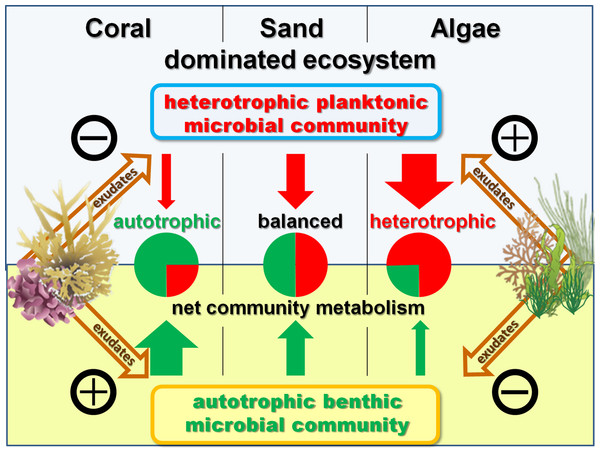
SPonges can be beneficial but they can also be a problem. They are essential recyclers of DOC (carbon dosing) but with too much DOC they can potentially cause a feedback loop with algae shifting an ecosystem to an algae dominate system. It sounds like these are possibly grwoing well as a result of the disruption caused by the upgrade and are just one of the cycles that can occur as a result. Since they do appear to be interfering with your corals at least eastheticly, for now I'd just use manual removal. Using a steel straw with a siphon and carefully controlling the flow by pinching the hose you should be able to remove the sponge with minimal damage to corals.
Are you saying my algae is a result of the nopox? Not sure I understand the "feedback loop with algae shifting an ecosystem to an algae dominate system. "
Are you saying my algae is a result of the nopox? Not sure I understand the "feedback loop with algae shifting an ecosystem to an algae dominate system. "
Sponges process the DOC released by algae differently than they process the DOC released by corals. Researchers have documented a feedback loop where sponges feed off the algal DOC and release nutrients into the water that promote algae growth which releases more DOC to feed sponges . . . The algal DOC also promotes heterotrophic microbial processes which can cause anoxic conditions around corals negatively affecting them as well as potentially promoting pathogenic shifts in coral microbiomes. So algae is getting a boost from the sponges and reduced competition from corals promoting a phase shift to a sponge and algae dominate system.
If PO4 drops below .03 mg/l corals can be negatively affected. Research done at SOuthampton Unicversity in England with corals maintained in a reef ssytem for over a decade showed a nitrogen/phosphorus imbalance causes phosphorus deficiency and can have very serious consiquences for corals potentially killing them. Depending on the nitrate levels the minimum PO4 needed to prevent a phosphate deficiency can be much higher. The .03 mg/l was the minimum level the researchers identified.
I get critisized for posting research but here's a data bomb anyway:
"Coral Reefs in the Microbial Seas" This video compliments Rohwer's book of the same title (Paper back is ~$20, Kindle is ~$10), both deal with the conflicting roles of the different types of DOC in reef ecosystems. While there is overlap bewteen his book and the video both have information not covered by the other and together give a broader view of the complex relationships found in reef ecosystems
Changing Seas - Mysterious Microbes
Nitrogen cycling in hte coral holobiont
BActeria and Sponges
Maintenance of Coral Reef Health (refferences at the end)
Optical Feedback Loop in Colorful Coral Bleaching
Richard Ross What's up with phosphate"
DOC and microbial links:
Indirect effects of algae on coral: algae‐mediated, microbe‐induced coral mortality
Benthic primary producers in tropical reef ecosystems can alter biogeochemical cycling and microbial processes in the surrounding seawater. In order to quantify these influences, we measured rates of photosynthesis, respiration, and dissolved organic carbon (DOC) exudate release by the dominant...
peerj.com
Role of elevated organic carbon levels and microbial activity in coral mortality
Effects of Coral Reef Benthic Primary Producers on Dissolved Organic Carbon and Microbial Activity
Algae releases significantly more DOC into the water than coral.
Benthic primary producers in marine ecosystems may significantly alter biogeochemical cycling and microbial processes in their surrounding environment. To examine these interactions, we studied dissolved organic matter release by dominant benthic taxa and subsequent microbial remineralization in...
journals.plos.org
Pathologies and mortality rates caused by organic carbon and nutrient stressors in three Caribbean coral species.
DOC caused coral death but not high nitrates, phosphates or ammonium.
Planar optodes were used to visualize oxygen distribution patterns associated with a coral reef associated green algae (Chaetomorpha sp.) and a hermatypic coral (Favia sp.) separately, as standalone organisms, and placed in close proximity mimicking coral-algal interactions. Oxygen patterns were...
peerj.com
Biological oxygen demand optode analysis of coral reef-associated microbial communities exposed to algal exudates
Exposure to exudates derived from turf algae stimulated higher oxygen drawdown by the coral-associated bacteria.
Algae-derived dissolved organic matter has been hypothesized to induce mortality of reef building corals. One proposed killing mechanism is a zone of hypoxia created by rapidly growing microbes. To investigate this hypothesis, biological oxygen ...
www.ncbi.nlm.nih.gov
Microbial ecology: Algae feed a shift on coral reefs
Human pressures on coral reefs are giving macroalgae a competitive advantage over reef-building corals. These algae support larger, and potentially pathogenic, microbial populations that are metabolically primed for less-efficient, yet faster, carbohydrate remineralization, perpetuating a...
www.nature.com
Coral and macroalgal exudates vary in neutral sugar composition and differentially enrich reef bacterioplankton lineages.
Increasing algal cover on tropical reefs worldwide may be maintained through feedbacks whereby algae outcompete coral by altering microbial activity. We hypothesized that algae and coral release compositionally distinct exudates that differentially alter bacterioplankton growth and community...
www.ncbi.nlm.nih.gov
Sugar enrichment provides evidence for a role of nitrogen fixation in coral bleaching
Elevated ammonium delays the impairment of the coral-dinoflagellate symbiosis during labile carbon pollution
(here's an argument for maintaining heavy fish loads if you're carbon dosing)
Labile dissolved organic carbon (DOC) is a major pollutant in coastal marine environments affected by anthropogenic impacts, and may significantly con…
www.sciencedirect.com
Excess labile carbon promotes the expression of virulence factors in coral reef bacterioplankton
Coastal pollution and algal cover are increasing on many coral reefs, resulting in higher dissolved organic carbon (DOC) concentrations. High DOC concentrations strongly affect microbial activity in reef waters and select for copiotrophic, often potentially virulent microbial populations. High...
www.nature.com
Unseen players shape benthic competition on coral reefs.
Recent work has shown that hydrophilic and hydrophobic organic matter (OM) from algae disrupts the function of the coral holobiont and promotes the invasion of opportunistic pathogens, leading to coral morbidity and mortality. Here we refer to these dynamics as the (3)DAM [dissolved organic...
www.ncbi.nlm.nih.gov
Allelochemicals Produced by Brown Macroalgae of the Lobophora Genus Are Active against Coral Larvae and Associated Bacteria, Supporting Pathogenic Shifts to Vibrio Dominance.
Diverse microbial communities associate with coral tissues and mucus, providing important protective and nutritional services, but once disturbed, the microbial equilibrium may shift from a beneficial state to one that is detrimental or pathogenic. Macroalgae (e.g., seaweeds) can physically and...
www.ncbi.nlm.nih.gov
Macroalgae decrease growth and alter microbial community structure of the reef-building coral, Porites astreoides.
With the continued and unprecedented decline of coral reefs worldwide, evaluating the factors that contribute to coral demise is of critical importance. As coral cover declines, macroalgae are becoming more common on tropical reefs. Interactions between these macroalgae and corals may alter the...
www.ncbi.nlm.nih.gov
Macroalgal extracts induce bacterial assemblage shifts and sublethal tissue stress in Caribbean corals.
Benthic macroalgae can be abundant on present-day coral reefs, especially where rates of herbivory are low and/or dissolved nutrients are high. This study investigated the impact of macroalgal extracts on both coral-associated bacterial assemblages and sublethal stress response of corals. Crude...
www.ncbi.nlm.nih.gov
Biophysical and physiological processes causing oxygen loss from coral reefs.
Analysis of 60 sites in three ocean basins suggests that overgrowth of fleshy algae on coral reefs supports higher microbial abundances dominated by copiotrophic, potentially pathogenic bacteria via the provision of dissolved inorganic carbon.
www.nature.com
Coral Reef Microorganisms in a Changing Climate, Fig 3
Element cycling on tropical coral reefs.
This is Jasper de Geoij's ground breaking research on reef sponge finding some species process labile DOC 1000X faster than bacterioplankton. (The introduction is in Dutch but the content is in English.)
Marine sponges are ubiquitous colonizers of shallow, clear-water environments in the oceans (1, 2). Sponges have emerged as significant mediators of biogeochemical fluxes in coastal zones by virtue of respiring organic matter and facilitating both the consumption and release of nutrients (3, 4)...
www.pnas.org
Phosphorus sequestration in the form of polyphosphate by microbial symbionts in marine sponges
Coral reefs are highly productive ecosystems that raise a conundrum called “Darwin’s paradox”: How can high production flourish in low-nutrient conditions? We show here that in three abundant Caribbean sponges, the granules that have been commonly observed in sponge tissue for decades are...
www.pnas.org
Differential recycling of coral and algal dissolved organic matter via the sponge loop.
Sponges treat DOC from algae differently than DOC from corals
Coral reefs are economically important ecosystems that have suffered unprecedented losses of corals in the recent past. Why have Caribbean reefs in particu
academic.oup.com
Surviving in a Marine Desert The Sponge Loop Retains Resources Within Coral Reefs
Dissolved organic carbon and nitrogen are quickly processed by sponges and released back into the reef food web in hours as carbon and nitrogen rich detritus.
PDF | On Jun 23, 2015, Jasper M de Goeij and others published 2013 deGoeij Science Sponge loop | Find, read and cite all the research you need on ResearchGate
www.researchgate.net
Natural Diet of Coral-Excavating Sponges Consists Mainly of Dissolved Organic Carbon (DOC)
Marine sponges are ubiquitous colonizers of shallow, clear-water environments in the oceans (1, 2). Sponges have emerged as significant mediators of biogeochemical fluxes in coastal zones by virtue of respiring organic matter and facilitating both the consumption and release of nutrients (3, 4)...
www.pnas.org
Phosphorus sequestration in the form of polyphosphate by microbial symbionts in marine sponges
Coral reefs are highly productive ecosystems that raise a conundrum called “Darwin’s paradox”: How can high production flourish in low-nutrient conditions? We show here that in three abundant Caribbean sponges, the granules that have been commonly observed in sponge tissue for decades are...
www.pnas.org
And since we're discussing favorable and not so favorable bacteria here's a paper looking at how different corals and polyps are influencing the bacteria in the water column.
Aura-biomes are present in the water layer above coral reef benthic macro-organisms
As coral reef habitats decline worldwide, some reefs are transitioning from coral- to algal-dominated benthos with the exact cause for this shift remaining elusive. Increases in the abundance of microbes in the water column has been correlated with an increase in coral disease and reduction in...
www.ncbi.nlm.nih.gov
de Angelo and Wiedenmann's research at Southampton University
Increased dissolved inorganic nitrogen (DIN) concentrations in sea water have been linked to a reduction of the temperature threshold at which corals bleach, however, the mechanism underlying this change is not known. This phenomenon is now explained in terms of increased phosphatase activities...
www.nature.com
Ultrastructural Biomarkers in Symbiotic Algae Reflect the Availability of Dissolved Inorganic Nutrients and Particulate Food to the Reef Coral Holobiont:
Reef building corals associated with symbiotic algae (zooxanthellae) can access environmental nutrients from different sources, most significantly via the up...
www.frontiersin.org
Phosphate deficiency promotes coral bleaching and is reflected by the ultrastructure of symbiotic dinoflagellates
Enrichment of reef environments with dissolved inorganic nutrients is considered a major threat to the survival of corals living in symbiosis with din…
www.sciencedirect.com
Nitrogen and phosphorus stuff
Effects of phosphate on growth and skeletal density in the scleractinian coral Acropora muricata: A controlled experimental approach
SUMMARYSeveral untested aspects of the regulation of inorganic nutrient uptake were examined using nutrient depletion experiments with the symbiotic coral Stylophora pistillata. The total inhibition of phosphate uptake in artificial seawater lacking sodium indicates the involvement of a...
jeb.biologists.org
Phosphorus metabolism of reef organisms with algal symbionts
SUMMARY. This study was designed to assess the importance of dissolved free amino acids (DFAA) as a nitrogen source for the scleractinian coral Stylophora pistillata. For this purpose, experiments were performed using 15N-enriched DFAAs, and %15N enrichment was measured both in animal tissue and...
Urea can be one of the major sources of nitrogen for phytoplankton, but little is known about its importance for corals. Experiments were therefore de…
Corals are mixotrophs: they are able to fix inorganic carbon through the activity of their symbiotic dinoflagellates and to gain nitrogen from predation on plankton and uptake of dissolved organic and inorganic nutrients. They also live in close association with diverse diazotrophic communities...
pubmed.ncbi.nlm.nih.gov
Context Dependant Effects of Nutrient Loading on the Coral-Algal Mutualism
Request PDF | Context-dependent effects of nutrient loading on the coral-algal mutualism | Human-mediated increases in nutrient availability alter patterns of primary production, impact species diversity, and threaten ecosystem function.... | Find, read and cite all the research you need on...
www.researchgate.net
And a couple of jpg's
Fig 4 from "Phosphorus Metabolism of Reef Organisms with Algal Symbionts"
Fig. 3 from "Context Dependant Nutrient Loading on the Coral-Algal Mutualism"
Sponges process the DOC released by algae differently than they process the DOC released by corals. Researchers have documented a feedback loop where sponges feed off the algal DOC and release nutrients into the water that promote algae growth which releases more DOC to feed sponges . . . The algal DOC also promotes heterotrophic microbial processes which can cause anoxic conditions around corals negatively affecting them as well as potentially promoting pathogenic shifts in coral microbiomes. So algae is getting a boost from the sponges and reduced competition from corals promoting a phase shift to a sponge and algae dominate system.
If PO4 drops below .03 mg/l corals can be negatively affected. Research done at SOuthampton Unicversity in England with corals maintained in a reef ssytem for over a decade showed a nitrogen/phosphorus imbalance causes phosphorus deficiency and can have very serious consiquences for corals potentially killing them. Depending on the nitrate levels the minimum PO4 needed to prevent a phosphate deficiency can be much higher. The .03 mg/l was the minimum level the researchers identified.
I get critisized for posting research but here's a data bomb anyway:
"Coral Reefs in the Microbial Seas" This video compliments Rohwer's book of the same title (Paper back is ~$20, Kindle is ~$10), both deal with the conflicting roles of the different types of DOC in reef ecosystems. While there is overlap bewteen his book and the video both have information not covered by the other and together give a broader view of the complex relationships found in reef ecosystems
Changing Seas - Mysterious Microbes
Nitrogen cycling in hte coral holobiont
BActeria and Sponges
Maintenance of Coral Reef Health (refferences at the end)
Optical Feedback Loop in Colorful Coral Bleaching
Richard Ross What's up with phosphate"
DOC and microbial links:
Indirect effects of algae on coral: algae‐mediated, microbe‐induced coral mortality
Benthic primary producers in tropical reef ecosystems can alter biogeochemical cycling and microbial processes in the surrounding seawater. In order to quantify these influences, we measured rates of photosynthesis, respiration, and dissolved organic carbon (DOC) exudate release by the dominant...
peerj.com
Role of elevated organic carbon levels and microbial activity in coral mortality
Effects of Coral Reef Benthic Primary Producers on Dissolved Organic Carbon and Microbial Activity
Algae releases significantly more DOC into the water than coral.
Benthic primary producers in marine ecosystems may significantly alter biogeochemical cycling and microbial processes in their surrounding environment. To examine these interactions, we studied dissolved organic matter release by dominant benthic taxa and subsequent microbial remineralization in...
journals.plos.org
Pathologies and mortality rates caused by organic carbon and nutrient stressors in three Caribbean coral species.
DOC caused coral death but not high nitrates, phosphates or ammonium.
Planar optodes were used to visualize oxygen distribution patterns associated with a coral reef associated green algae (Chaetomorpha sp.) and a hermatypic coral (Favia sp.) separately, as standalone organisms, and placed in close proximity mimicking coral-algal interactions. Oxygen patterns were...
peerj.com
Biological oxygen demand optode analysis of coral reef-associated microbial communities exposed to algal exudates
Exposure to exudates derived from turf algae stimulated higher oxygen drawdown by the coral-associated bacteria.
Algae-derived dissolved organic matter has been hypothesized to induce mortality of reef building corals. One proposed killing mechanism is a zone of hypoxia created by rapidly growing microbes. To investigate this hypothesis, biological oxygen ...
www.ncbi.nlm.nih.gov
Microbial ecology: Algae feed a shift on coral reefs
Human pressures on coral reefs are giving macroalgae a competitive advantage over reef-building corals. These algae support larger, and potentially pathogenic, microbial populations that are metabolically primed for less-efficient, yet faster, carbohydrate remineralization, perpetuating a...
www.nature.com
Coral and macroalgal exudates vary in neutral sugar composition and differentially enrich reef bacterioplankton lineages.
Increasing algal cover on tropical reefs worldwide may be maintained through feedbacks whereby algae outcompete coral by altering microbial activity. We hypothesized that algae and coral release compositionally distinct exudates that differentially alter bacterioplankton growth and community...
www.ncbi.nlm.nih.gov
Sugar enrichment provides evidence for a role of nitrogen fixation in coral bleaching
Elevated ammonium delays the impairment of the coral-dinoflagellate symbiosis during labile carbon pollution
(here's an argument for maintaining heavy fish loads if you're carbon dosing)
Labile dissolved organic carbon (DOC) is a major pollutant in coastal marine environments affected by anthropogenic impacts, and may significantly con…
www.sciencedirect.com
Excess labile carbon promotes the expression of virulence factors in coral reef bacterioplankton
Coastal pollution and algal cover are increasing on many coral reefs, resulting in higher dissolved organic carbon (DOC) concentrations. High DOC concentrations strongly affect microbial activity in reef waters and select for copiotrophic, often potentially virulent microbial populations. High...
www.nature.com
Unseen players shape benthic competition on coral reefs.
Recent work has shown that hydrophilic and hydrophobic organic matter (OM) from algae disrupts the function of the coral holobiont and promotes the invasion of opportunistic pathogens, leading to coral morbidity and mortality. Here we refer to these dynamics as the (3)DAM [dissolved organic...
www.ncbi.nlm.nih.gov
Allelochemicals Produced by Brown Macroalgae of the Lobophora Genus Are Active against Coral Larvae and Associated Bacteria, Supporting Pathogenic Shifts to Vibrio Dominance.
Diverse microbial communities associate with coral tissues and mucus, providing important protective and nutritional services, but once disturbed, the microbial equilibrium may shift from a beneficial state to one that is detrimental or pathogenic. Macroalgae (e.g., seaweeds) can physically and...
www.ncbi.nlm.nih.gov
Macroalgae decrease growth and alter microbial community structure of the reef-building coral, Porites astreoides.
With the continued and unprecedented decline of coral reefs worldwide, evaluating the factors that contribute to coral demise is of critical importance. As coral cover declines, macroalgae are becoming more common on tropical reefs. Interactions between these macroalgae and corals may alter the...
www.ncbi.nlm.nih.gov
Macroalgal extracts induce bacterial assemblage shifts and sublethal tissue stress in Caribbean corals.
Benthic macroalgae can be abundant on present-day coral reefs, especially where rates of herbivory are low and/or dissolved nutrients are high. This study investigated the impact of macroalgal extracts on both coral-associated bacterial assemblages and sublethal stress response of corals. Crude...
www.ncbi.nlm.nih.gov
Biophysical and physiological processes causing oxygen loss from coral reefs.
Analysis of 60 sites in three ocean basins suggests that overgrowth of fleshy algae on coral reefs supports higher microbial abundances dominated by copiotrophic, potentially pathogenic bacteria via the provision of dissolved inorganic carbon.
www.nature.com
Coral Reef Microorganisms in a Changing Climate, Fig 3
Element cycling on tropical coral reefs.
This is Jasper de Geoij's ground breaking research on reef sponge finding some species process labile DOC 1000X faster than bacterioplankton. (The introduction is in Dutch but the content is in English.)
Marine sponges are ubiquitous colonizers of shallow, clear-water environments in the oceans (1, 2). Sponges have emerged as significant mediators of biogeochemical fluxes in coastal zones by virtue of respiring organic matter and facilitating both the consumption and release of nutrients (3, 4)...
www.pnas.org
Phosphorus sequestration in the form of polyphosphate by microbial symbionts in marine sponges
Coral reefs are highly productive ecosystems that raise a conundrum called “Darwin’s paradox”: How can high production flourish in low-nutrient conditions? We show here that in three abundant Caribbean sponges, the granules that have been commonly observed in sponge tissue for decades are...
www.pnas.org
Differential recycling of coral and algal dissolved organic matter via the sponge loop.
Sponges treat DOC from algae differently than DOC from corals
Coral reefs are economically important ecosystems that have suffered unprecedented losses of corals in the recent past. Why have Caribbean reefs in particu
academic.oup.com
Surviving in a Marine Desert The Sponge Loop Retains Resources Within Coral Reefs
Dissolved organic carbon and nitrogen are quickly processed by sponges and released back into the reef food web in hours as carbon and nitrogen rich detritus.
PDF | On Jun 23, 2015, Jasper M de Goeij and others published 2013 deGoeij Science Sponge loop | Find, read and cite all the research you need on ResearchGate
www.researchgate.net
Natural Diet of Coral-Excavating Sponges Consists Mainly of Dissolved Organic Carbon (DOC)
Marine sponges are ubiquitous colonizers of shallow, clear-water environments in the oceans (1, 2). Sponges have emerged as significant mediators of biogeochemical fluxes in coastal zones by virtue of respiring organic matter and facilitating both the consumption and release of nutrients (3, 4)...
www.pnas.org
Phosphorus sequestration in the form of polyphosphate by microbial symbionts in marine sponges
Coral reefs are highly productive ecosystems that raise a conundrum called “Darwin’s paradox”: How can high production flourish in low-nutrient conditions? We show here that in three abundant Caribbean sponges, the granules that have been commonly observed in sponge tissue for decades are...
www.pnas.org
And since we're discussing favorable and not so favorable bacteria here's a paper looking at how different corals and polyps are influencing the bacteria in the water column.
Aura-biomes are present in the water layer above coral reef benthic macro-organisms
As coral reef habitats decline worldwide, some reefs are transitioning from coral- to algal-dominated benthos with the exact cause for this shift remaining elusive. Increases in the abundance of microbes in the water column has been correlated with an increase in coral disease and reduction in...
www.ncbi.nlm.nih.gov
de Angelo and Wiedenmann's research at Southampton University
Increased dissolved inorganic nitrogen (DIN) concentrations in sea water have been linked to a reduction of the temperature threshold at which corals bleach, however, the mechanism underlying this change is not known. This phenomenon is now explained in terms of increased phosphatase activities...
www.nature.com
Ultrastructural Biomarkers in Symbiotic Algae Reflect the Availability of Dissolved Inorganic Nutrients and Particulate Food to the Reef Coral Holobiont:
Reef building corals associated with symbiotic algae (zooxanthellae) can access environmental nutrients from different sources, most significantly via the up...
www.frontiersin.org
Phosphate deficiency promotes coral bleaching and is reflected by the ultrastructure of symbiotic dinoflagellates
Enrichment of reef environments with dissolved inorganic nutrients is considered a major threat to the survival of corals living in symbiosis with din…
www.sciencedirect.com
Nitrogen and phosphorus stuff
Effects of phosphate on growth and skeletal density in the scleractinian coral Acropora muricata: A controlled experimental approach
SUMMARYSeveral untested aspects of the regulation of inorganic nutrient uptake were examined using nutrient depletion experiments with the symbiotic coral Stylophora pistillata. The total inhibition of phosphate uptake in artificial seawater lacking sodium indicates the involvement of a...
jeb.biologists.org
Phosphorus metabolism of reef organisms with algal symbionts
SUMMARY. This study was designed to assess the importance of dissolved free amino acids (DFAA) as a nitrogen source for the scleractinian coral Stylophora pistillata. For this purpose, experiments were performed using 15N-enriched DFAAs, and %15N enrichment was measured both in animal tissue and...
Urea can be one of the major sources of nitrogen for phytoplankton, but little is known about its importance for corals. Experiments were therefore de…
Corals are mixotrophs: they are able to fix inorganic carbon through the activity of their symbiotic dinoflagellates and to gain nitrogen from predation on plankton and uptake of dissolved organic and inorganic nutrients. They also live in close association with diverse diazotrophic communities...
pubmed.ncbi.nlm.nih.gov
Context Dependant Effects of Nutrient Loading on the Coral-Algal Mutualism
Request PDF | Context-dependent effects of nutrient loading on the coral-algal mutualism | Human-mediated increases in nutrient availability alter patterns of primary production, impact species diversity, and threaten ecosystem function.... | Find, read and cite all the research you need on...
www.researchgate.net
And a couple of jpg's
Fig 4 from "Phosphorus Metabolism of Reef Organisms with Algal Symbionts"
Fig. 3 from "Context Dependant Nutrient Loading on the Coral-Algal Mutualism"
FWIW, some sponges can directly use the components of NOPOX. That isn't necessarily good or bad, but if the goal is to reduce sponges, it may not be the best bet.
OTOH, one of the reasons I dosed vinegar was specifically because it is known to be directly used by many organisms, including sponges that I wanted to grow.
In my old system, doing vodka, or vinegar, or my own diy never took no3 down. Toward the end of that tank, I was using nopox and had finally gotten the no3 into a more normal range. So i stick with nopox as it has worked for me. I do have some algae still in new tank even dosing and even with no3 around 13-15 and dosing po4 to keep .05
In my old system, doing vodka, or vinegar, or my own diy never took no3 down. Toward the end of that tank, I was using nopox and had finally gotten the no3 into a more normal range. So i stick with nopox as it has worked for me. I do have some algae still in new tank even dosing and even with no3 around 13-15 and dosing po4 to keep .05
For starters it seems pretty obvious from the research posted corals and algae are competing with each other for nutrients. NoPox is adds carbon to a system to promote bacterial growth. Kline's paper above, "Role of elevated organic carbon levels and microbial activity in coral mortality", shows increasing the microbial load on a coral, even if it's with beneficial microbes, can cause bleaching and even be lethal. Beside affecting having a potentially lethal effect with beneficial microbes it seems pretty clear from the research adding labile carbon to a reef system to promote bacterial growth runs the risk of reducing oxygen levels in the coral microbiome by causing anoxic conditions as well as potentially promoting pathogens in the coral microbiome. It seems pretty straight forward to me once a phosphate deficiency is caused in a coral and disrupts its mutualistic relashionsips by lowering phosphates algae is going to be able to take over.
it is entirely possible that I didn't dose high enough. I don't recall what I was dosing but I think it was more than what I dose nopox. I think it was prob. close to at least double the nopox but it is a different system so apples to oranges.
what would the advantage be of either changing to vinegar or vodka or mixing my own diy nopox. Aside from money...
If nopox is contributing to algae than it is something I may consider