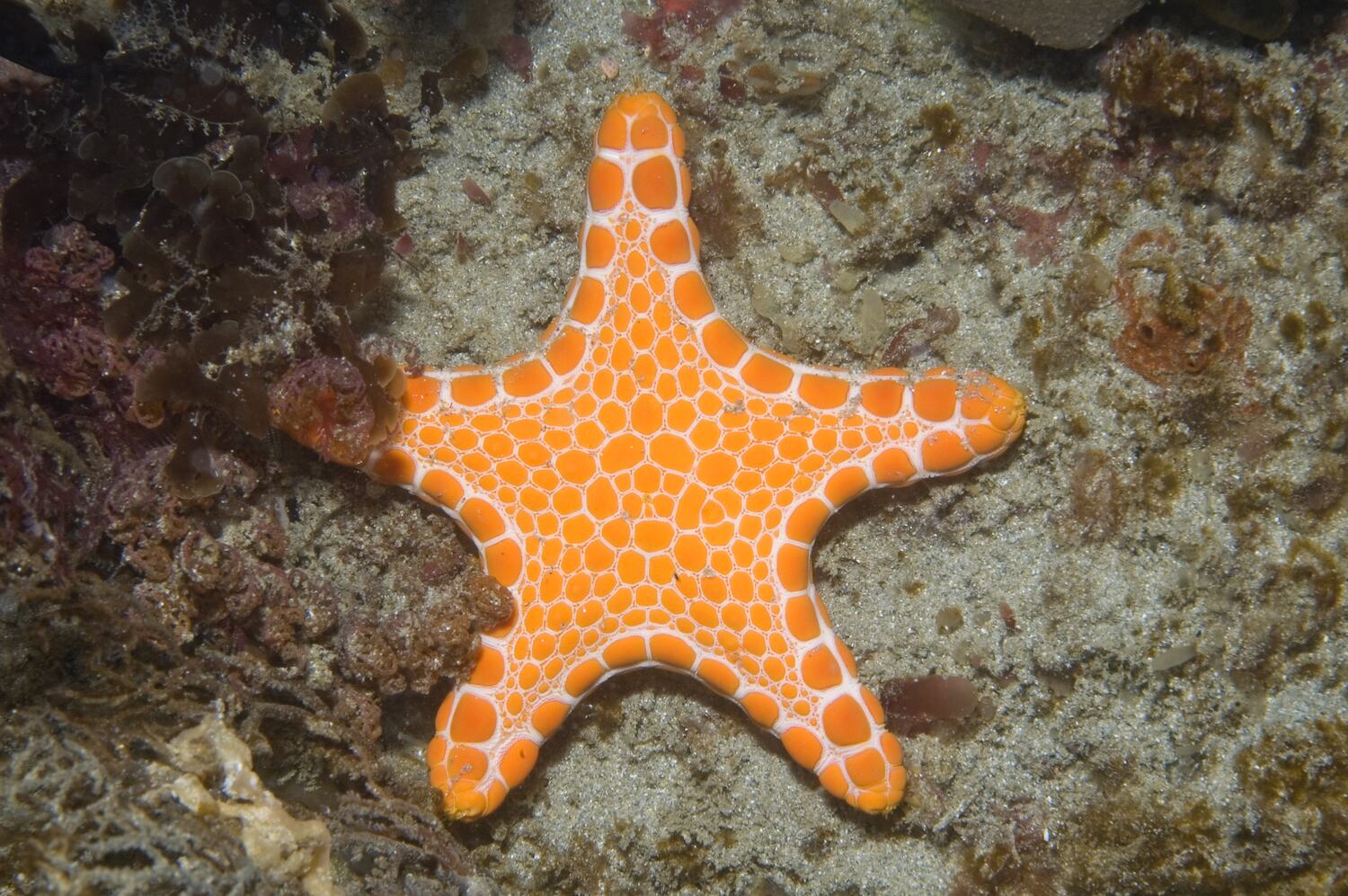
I know it’s the common name. I added the scientific name. Also it’s because it’s how they are grouped. And it is also a species not often studied. Unlike sand sifting starfish or chocolate chip starfish.
I can also tell you info about them and a lot of these stars in captivity is ancetodal because I’ve heard of them eating different things in captivity like sponges this goes for this species and others. Even in large public aquariums starfish are all fed carnivorous diets even if they aren’t carnivores naturally. They are fed krill, fresh fish, and clams. This goes for all stars no matter the species.
For clarification here, the species in this link is Tosia australis, and it eats the same things as Pentagonaster duebeni (sponges, ascidians, and bryozoans), plus algae, but they seem to be mainly carnivorous.
For clarification here, the species in this link is Tosia australis, and it eats the same things as Pentagonaster duebeni (sponges, ascidians, and bryozoans), plus algae, but they seem to be mainly carnivorous.
Yes that’s true it’s a different variation and coloring but very similar they do seem to be more omnivores though and not carnivores. The reason I say this is because they do eat plant material and mainly algae/detritus. At least according to the multiple websites I’ve found and talking with various people.
For clarification here, the species in this link is Tosia australis, and it eats the same things as Pentagonaster duebeni (sponges, ascidians, and bryozoans), plus algae, but they seem to be mainly carnivorous.
But again most of it is anecdotal. It’s not like when we say lions are in fact carnivores because we know they are for a fact. These guys not enough is know 100% about them and many other starfish species.
But again most of it is anecdotal. It’s not like when we say lions are in fact carnivores because we know they are for a fact. These guys not enough is know 100% about them and many other starfish species.
It's true that a lot of this information is anecdotal, but with sea stars that eat things which aren't microscopically small (like the biofilms preferred by Fromia and Linckia stars), what they eat is frequently reported by divers in the area (in my experience, these reports from the wild are more likely to be helpful with figuring out the natural diet of the stars than reports from the aquarium hobby/industry, because - as you mentioned - many stars will stray from their natural diet in aquarium settings), and may be readily apparent (sea stars tend to leave a bit of a trail of destruction in their grazing area).
Yes that’s true it’s a different variation and coloring but very similar they do seem to be more omnivores though and not carnivores. The reason I say this is because they do eat plant material and mainly algae/detritus. At least according to the multiple websites I’ve found and talking with various people.
To clarify here, they are completely different species from separate genera - they do look somewhat similar, but they are quite different (though Tosia australis has sometimes been considered a Pentagonaster sp. in the past, it is considered a Tosia sp. today). As was mentioned, the term "Biscuit Star" refers to a wide number of species, some of which may be herbivorous, some of which may be carnivorous, and some of which may be omnivorous. For Pentagonaster duebeni, by all accounts that I can find, they are obligatorily carnivorous. For T. australis, however, they do seem to be omnivores.
It's true that a lot of this information is anecdotal, but with sea stars that eat things which aren't microscopically small (like the biofilms preferred by Fromia and Linckia stars), what they eat is frequently reported by divers in the area (in my experience, these reports from the wild are more likely to be helpful with figuring out the natural diet of the stars than reports from the aquarium hobby/industry, because - as you mentioned - many stars will stray from their natural diet in aquarium settings), and may be readily apparent (sea stars tend to leave a bit of a trail of destruction in their grazing area).
To clarify here, they are completely different species from separate genera - they do look somewhat similar, but they are quite different (though Tosia australis has sometimes been considered a Pentagonaster sp. in the past, it is considered a Tosia sp. today). As was mentioned, the term "Biscuit Star" refers to a wide number of species, some of which may be herbivorous, some of which may be carnivorous, and some of which may be omnivorous. For Pentagonaster duebeni, by all accounts that I can find, they are obligatorily carnivorous. For T. australis, however, they do seem to be omnivores.
Imo not a lot eats detritus and marine snow.
Maybe the small organisms in the detritus and marine snow but I don't think anything actually eats detritus. Makes me cringe when I see ppl say pods are detritvores. Lol.
D
I can also tell you info about them and a lot of these stars in captivity is ancetodal because I’ve heard of them eating different things in captivity like sponges this goes for this species and others. Even in large public aquariums starfish are all fed carnivorous diets even if they aren’t carnivores naturally. They are fed krill, fresh fish, and clams. This goes for all stars no matter the species.
I don't mean to get too technical here but you do know when you say "they are all fed carnivorous diets even if they aren't carnivores naturally", that doesn't necessarily mean they don't eat those same foods in the wild. If an animal is an omnivore, then it eats carnivorous foods naturally as well as herbivorous foods. I'm not saying that they're the same carnivorous foods (although they may be in some cases) but the way you worded it makes it sound like an omnivore doesn't naturally eat carnivorous foods. If they are being fed carnivorous diets in captivity and it's accepted that they are naturally omnivores, then they are being fed half their accepted diet. Do you know the point I'm trying to make?
. Because biscuits are species that not a lot is known about but I can tell you that like chocolate chips they eat algae and are just herbivores in the wild or do have specific diets.
This is the post I was talking about earlier when I pointed out that "biscuits" isn't even an official classification. I said this because you specifically said "biscuit species". While I know what you meant, in the scientific community it's very important to use correct terms and scientific nomenclature. Calling a starfish a biscuit star simply because of how it looks is not much more scientific than grouping stars together based on color. It tells us very little about anything regarding the actual species. This is why the field of taxonomy exists. I'm not sure what you meant by the remaining part of your post exactly...you said that they are either herbivores or have specific diets (isn't that a bit like just saying an animal is either a generalist OR a specialist?)
The only thing I can find on the feeding of these guys is that they eat encrusting invertebrates: sponges, ascidians (tunicates), and bryozoans are specifically mentioned.
Vermillion Sea Stars feed on encrusting invertebrates and sponges. Though it is quite commonly seen, and often photographed, almost nothing else is known about this species.
Pentagonaster duebeni is commonly referred to as Fire-brick Star. Difficulty in the aquarium: There are no reports available yet that this animal has already been kept in captivity successfully. Toxicity: Toxic hazard unknown.
These are very helpful links, especially the first one which explicitly states that they are commonly seen in their natural environment consuming those specific foods.
I don't mean to get too technical here but you do know when you say "they are all fed carnivorous diets even if they aren't carnivores naturally", that doesn't necessarily mean they don't eat those same foods in the wild. If an animal is an omnivore, then it eats carnivorous foods naturally as well as herbivorous foods. I'm not saying that they're the same carnivorous foods (although they may be in some cases) but the way you worded it makes it sound like an omnivore doesn't naturally eat carnivorous foods. If they are being fed carnivorous diets in captivity and it's accepted that they are naturally omnivores, then they are being fed half their accepted diet. Do you know the point I'm trying to make?
This is the post I was talking about earlier when I pointed out that "biscuits" isn't even an official classification. I said this because you specifically said "biscuit species". While I know what you meant, in the scientific community it's very important to use correct terms and scientific nomenclature. Calling a starfish a biscuit star simply because of how it looks is not much more scientific than grouping stars together based on color. It tells us very little about anything regarding the actual species. This is why the field of taxonomy exists. I'm not sure what you meant by the remaining part of your post exactly...you said that they are either herbivores or have specific diets (isn't that a bit like just saying an animal is either a generalist OR a specialist?)
Herbivorous starfish are often fed carnivorous diets in captivity…is that better/does that make more sense? My point is not all starfish eat clams/fish in the wild but a lot are fed it regardless. I think about chocolate chip starfish which are herbivores in the wild but many are fed meaty foods and eat it. Because it varies in aquariums but in the wild many do have specific diets. Many things including behavior and diet especially vary with starfish in captivity vs the same ones in the wild. And as for the name…almost all animals have a common name/accepted one and scientific name which may or may not be similar to the scientific one.
I can also tell you info about them and a lot of these stars in captivity is ancetodal because I’ve heard of them eating different things in captivity like sponges this goes for this species and others. Even in large public aquariums starfish are all fed carnivorous diets even if they aren’t carnivores naturally. They are fed krill, fresh fish, and clams. This goes for all stars no matter the species.
Yes, it makes more sense now that you specified you were referring to obligate herbivores being fed carnivorous diets. The discussion was previously about a species believed to be omnivorous.
Herbivorous starfish are often fed carnivorous diets in captivity…is that better/does that make more sense? My point is not all starfish eat clams/fish in the wild but a lot are fed it regardless. I think about chocolate chip starfish which are herbivores in the wild but many are fed meaty foods and eat it. Because it varies in aquariums but in the wild many do have specific diets. Many things including behavior and diet especially vary with starfish in captivity vs the same ones in the wild. And as for the name…almost all animals have a common name/accepted one and scientific name which may or may not be similar to the scientific one.
Valid point on the diet here. Small correction on the Chocolate Chip Starfish diet, though (sorry, I’m not trying to pick on you or pester you here with my corrections, I hope it doesn’t seem like I am): Chocolate Chip Starfish (Protoreasternodosus) are actually omnivores in nature, consuming algal films, biofilms, and meiobenthos (benthic organisms like worms and pods and such that are small enough not to be considered macrofauna, but not small enough to be considered microfauna).
Valid point on the diet here. Small correction on the Chocolate Chip Starfish diet, though (sorry, I’m not trying to pick on you or pester you here with my corrections, I hope it doesn’t seem like I am): Chocolate Chip Starfish (Protoreasternodosus) are actually omnivores in nature, consuming algal films, biofilms, and meiobenthos (benthic organisms like worms and pods and such that are small enough not to be considered macrofauna, but not small enough to be considered microfauna).
It’s typically microscopic or very small animals on things like algae or sea grass which could be seen as just a part of it being eaten but they aren’t going out and seeking it just happens to be on what they are eating. I relate this to eating yogurt and the bacteria of it being alive. But we don’t say we eat bacteria we eat yogurt the bacteria just happens to in it/a part of it.
It says that they "benefit from ingesting small organisms". Cows eat insects accidentally while grazing, but if I feed a cow only grass, no insects, the cow is fine. So, the cow is an herbivore. If I were to feed one of these starfish only algae, no small organisms, would its health suffer as a result? If so, it's an omnivore. If not, it's either an adaptable omnivore or a herbivore.
It’s typically microscopic or very small animals on things like algae or sea grass which could be seen as just a part of it being eaten but they aren’t going out and seeking it just happens to be on what they are eating. I relate this to eating yogurt and the bacteria of it being alive. But we don’t say we eat bacteria we eat yogurt the bacteria just happens to in it/a part of it.
How do you know they aren't seeking them out? How do you know the microorganisms consumed aren't extremely important to a biological function such as digestion or the immune system?
Regarding your analogy, I would actually say that yes, many people do say they eat the bacteria. Yogurt in particular contains probiotic bacteria and is the primary reason some people consume it.