Struggling

I am respectfully confused why we are debating the height of the light fixture above the water. The light does not attenuate in the air, so height little direct effect on the intensity in the water. However, the height will cause the light to diffuse over a larger area (lowering intensity) when raised high and focus on a smaller area (intensify) when lowered. All of this is interesting to debate until you go back to the data provided: Biznizface has measured the light with a Seneye. Provided this measurement was done correctly, we can debate the ideal PAR numbers, but arguing fixture height and %power is missing the point. PAR is PAR. It's either appropriate or not. A PAR value of 300 that is mostly uniform at the depth of the corals seems almost ideal for SPS, right??
I wanted to let you know that the height of the fixture has a HUGE effect on par levels at the surface of the corals. Light intensity absolutely attenuates in the air, to much greater extent than you think.

It is the inverse square law. Which basically means that given a distance of x, the intensity is reduced by the square of x.

so. if you had a light at 6" and you went to 12" above the water, you will now have 1/4 of the light intensity at the source.

this may help understand..
57043e64c68f3f2e853b496a12b4dcad.gif
 
I wanted to let you know that the height of the fixture has a HUGE effect on par levels at the surface of the corals. Light intensity absolutely attenuates in the air, to much greater extent than you think.

It is the inverse square law. Which basically means that given a distance of x, the intensity is reduced by the square of x.

so. if you had a light at 6" and you went to 12" above the water, you will now have 1/4 of the light intensity at the source.

this may help understand..

57043e64c68f3f2e853b496a12b4dcad.gif

Hello,

This is true but your missing other key components to this equation being true at what your claiming to be. First one must know the lens degree, 30, 60, 90, 120 etc but then one must find the sin and cosine of such Angeles lens. Then after this is done one must find the criticsl angel which will determine the correct placement of said lights, which will determine height and where on the tank. This should be done when the tank is dry; then checked again once filled with water due to refraction and resistance based on the light waves being impeded by the water and flow of the water.

To simplify use your basic sin/cosine to see where the angle is, then use those number to find your criticsl angel. An example is the equations used to determine where lights should be actually placed on a tank.

3A9D714B-1A53-4C43-A522-1428D3F84A41.png


D9D8A35E-EC5D-405F-A68A-1B23645052EA.png
 
I only read the first and last page, but I see struggling SPS and low phosphate, and I can relate. Since I started dosing phosphate I have seen a pretty huge difference in my acropora. I would most definitely start with nutrient levels and work from there.
 
I only read the first and last page, but I see struggling SPS and low phosphate, and I can relate. Since I started dosing phosphate I have seen a pretty huge difference in my acropora. I would most definitely start with nutrient levels and work from there.

What do you dose to add Phosphate ?

I’ve upped my feeding considerably now which I hope sorts it out
 
What do you dose to add Phosphate ?

I’ve upped my feeding considerably now which I hope sorts it out

I use trisodium phosphate. Mix 1.88 grams with 1 litre of water. 1 ml of that solution will raise 100L .01 ppm.

If you also have low nitrate I would feed more, but if you have some nitrate and really low phosphate, I would dose phosphate alone.
 
I use trisodium phosphate. Mix 1.88 grams with 1 litre of water. 1 ml of that solution will raise 100L .01 ppm.

If you also have low nitrate I would feed more, but if you have some nitrate and really low phosphate, I would dose phosphate alone.

My nitrate always been good siporax keeps it steady.
Will have to look into that thanks.
 
I use trisodium phosphate. Mix 1.88 grams with 1 litre of water. 1 ml of that solution will raise 100L .01 ppm.

If you also have low nitrate I would feed more, but if you have some nitrate and really low phosphate, I would dose phosphate alone.

Hi mate do you think this is the same ?

21E7D182-BD93-4F38-A521-93CE106B2CEE.png
 
I wanted to let you know that the height of the fixture has a HUGE effect on par levels at the surface of the corals. Light intensity absolutely attenuates in the air, to much greater extent than you think.

It is the inverse square law. Which basically means that given a distance of x, the intensity is reduced by the square of x.

so. if you had a light at 6" and you went to 12" above the water, you will now have 1/4 of the light intensity at the source.

this may help understand..
57043e64c68f3f2e853b496a12b4dcad.gif
This is correct. But you can also decrease I by decreasing S. The lights I assume have been tested at the heights they are designed to be used. I can see playing with that a little depending on aesthetics but unless these are the most poorly designed Led lights on earth they should not ‘need’ to be hung at heights higher than designed ie their standard mounting system for coral to not bleach. Of course an individual tank may require something different but I don’t see why people are thinking light is the issue. Ps maybe they are the most poorly designed lights on the planet. Lastly. I know some have pointed out that these lights can focus more in one area. But all of the coral in the tank is supposedly doing poorly. Doesn’t this suggest a more global issue
 
That's the right stuff, but I can't speak to how pure that brand is. However you use such a small amount I doubt it matters very much. That would be like 50 lifetime supplies lol

I’ve heard of stump remover but not this.

I assume it’s a generic chemical and should be fine.
Maybe I will dilute it more and take it slow.

Do you find this raises it in the water column which reflects on your po4 testing ?
 
Hi,

I am sorry to hear you are having trouble with your light! Based on the photo it looks like the factory direct version which is only available for non-US customers, so your LED layout will be slightly different from our own.

As far as power output, 300PAR is fairly high for a mixed reef tank. The Photon 32-V2 is one of the most powerful lights we offer in terms of watts per inch, so having one on a 3 foot tank calls for less power or raising your light up higher. I would suggest running your blue channels around 40% power on your tank, as it looks to be relatively shallow as well.

According to Dana Riddle photosynthesis in high light SPS is most efficient at 225PAR, after that any more light typically goes to heat energy and a biological process called the Xanthophyll Cycle.

I would suggest raising your light up higher over the water if possible, or simply adjusting your program to run at a lower intensity. I think that will help the overall health of your corals.
 
Hi,

I am sorry to hear you are having trouble with your light! Based on the photo it looks like the factory direct version which is only available for non-US customers, so your LED layout will be slightly different from our own.

As far as power output, 300PAR is fairly high for a mixed reef tank. The Photon 32-V2 is one of the most powerful lights we offer in terms of watts per inch, so having one on a 3 foot tank calls for less power or raising your light up higher. I would suggest running your blue channels around 40% power on your tank, as it looks to be relatively shallow as well.

According to Dana Riddle photosynthesis in high light SPS is most efficient at 225PAR, after that any more light typically goes to heat energy and a biological process called the Xanthophyll Cycle.

I would suggest raising your light up higher over the water if possible, or simply adjusting your program to run at a lower intensity. I think that will help the overall health of your corals.

Hi thanks a lot for your reply.

My tank is about 17 inches deep and I had the light 8 inches from water surface.

I now have the light 11 inches from the water surface which is the highest I can go with the bracket and have turned down blues and uv to 55% and whites 16%, red and green 11%.

Is this ok or turn blues down more ?

Bare in mind the light has been raised 3 and bit inches from where it was for quite a while.
 
Hi thanks a lot for your reply.

My tank is about 17 inches deep and I had the light 8 inches from water surface.

I now have the light 11 inches from the water surface which is the highest I can go with the bracket and have turned down blues and uv to 55% and whites 16%, red and green 11%.

Is this ok or turn blues down more ?

Bare in mind the light has been raised 3 and bit inches from where it was for quite a while.

I think you are okay with the combination of raising your light and lowering your output at the same time. Any way you can take updated PAR readings and see where you are at?
 
I’ve heard of stump remover but not this.

I assume it’s a generic chemical and should be fine.
Maybe I will dilute it more and take it slow.

Do you find this raises it in the water column which reflects on your po4 testing ?

It really depends. My last ICP test I had 53 nitrate and phosphate was undetectable. I already knew that really, but it was confirmed with that test. So I started with this solution dosing 8ml per day, this was about two months ago. The tank will soak some up and take some time for it to stay in the water. Now I am dosing 20ml and my phosphate stays around .02-.03. I suspect over time things will balance back out and I can dose less phosphate.
 
Hi,

I am sorry to hear you are having trouble with your light! Based on the photo it looks like the factory direct version which is only available for non-US customers, so your LED layout will be slightly different from our own.

As far as power output, 300PAR is fairly high for a mixed reef tank. The Photon 32-V2 is one of the most powerful lights we offer in terms of watts per inch, so having one on a 3 foot tank calls for less power or raising your light up higher. I would suggest running your blue channels around 40% power on your tank, as it looks to be relatively shallow as well.

According to Dana Riddle photosynthesis in high light SPS is most efficient at 225PAR, after that any more light typically goes to heat energy and a biological process called the Xanthophyll Cycle.

I would suggest raising your light up higher over the water if possible, or simply adjusting your program to run at a lower intensity. I think that will help the overall health of your corals.
Question though the photoayntheaia is most effieicnt at x par does that mean that this is causing the problems the
Op is talking about in a 2 year old tank? I mean a highe par doesn’t stop coral growth it just doesn’t increase it or am I confused?
 
I want to point out that there are daily weather changes that effect light on real reefs, there are seasonal changes and luner changes on top of that. So corals are naturally used to decreases in intensity. What burns thembis too much light, photo saturation.
 
Corals can handle more quality light than we can give them. With bad quality, corals can get burnt and die. ...this is why 1000 PAR of MH or 2200 PAR of sunlight can make some acropora thrive whereas 300 PAR of some LEDs can kill them.

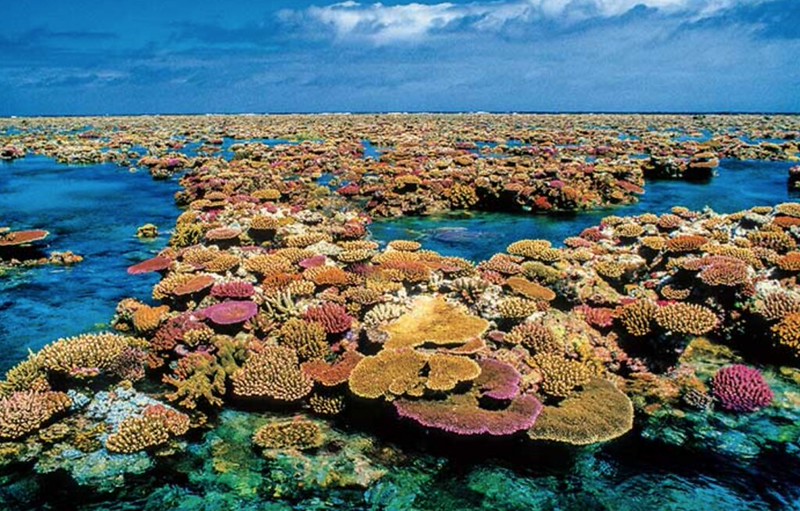
These are under about 2200-2300, or so, PAR where they overcome being out of the water to thrive. If this cannot convince people that they can handle a lot of light, I do not know what can... this is high quality light, though:
 
I think you are okay with the combination of raising your light and lowering your output at the same time. Any way you can take updated PAR readings and see where you are at?

I loaned a seneye to take my last test.

I found my last test actually on my tank thread.
This post was this April just gone.

I think I shouldn’t have ramped it back then from these percentages.

EAB6EC40-8617-4C7E-B43D-6108A7BB09AE.png
 
Corals can handle more quality light than we can give them. With bad quality, corals can get burnt and die. ...this is why 1000 PAR of MH or 2200 PAR of sunlight can make some acropora thrive whereas 300 PAR of some LEDs can kill them.

These are under about 2200-2300, or so, PAR where they overcome being out of the water to thrive. If this cannot convince people that they can handle a lot of light, I do not know what can... this is high quality light, though:
Notice the color though? They are in mostly browm spectrums because they are used to it. Basically tanned so they dont get burned. Take a colorful coral from your display and set it out there . It will be ghost white by nightfall.
 

IF YOU HAD TO TAKE A REEFING EXAM, WOULD YOU PASS?

  • Yes!

    Votes: 32 45.7%
  • Not yet, but I have one that I want to buy in mind!

    Votes: 9 12.9%
  • No.

    Votes: 26 37.1%
  • Other (please explain).

    Votes: 3 4.3%
Back
Top