The Optimal Light Spectrum in a Reef Aquarium

Regardless of what you "think" you see the color is NOT the same...
Again reef 3 meters..

skincolor3m.JPG
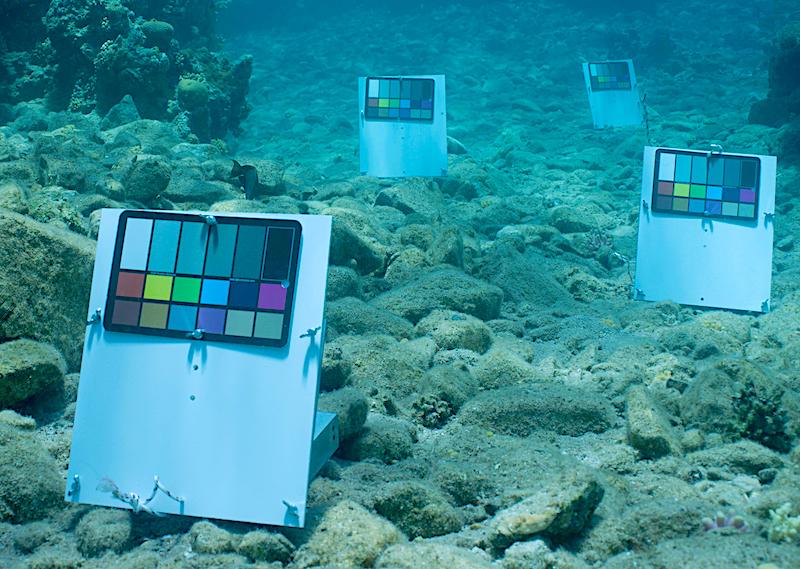
You are relying on graphs made by others to make a point. How about you stick your camera under water at 3 meters, and a white board and take a picture. Or even better get down there with the white board and open your eyes and see what that board looks like!
 
You are relying on graphs made by others to make a point. How about you stick your camera under water at 3 meters, and a white board and take a picture. Or even better get down there with the white board and open your eyes and see what that board looks like!
Sorry, I'm sticking with science..
Human eye/brain is full of color tricks and cameras white balance is easily manipulated..

Go ask a physicist..

You may argue the difference is err "not visual" but the difference is DEFINITELY there.
 
Sorry, I'm sticking with science..
Human eye/brain is full of color tricks and cameras white ballance is easily manipulated..
Haha think about how many times science has been proven wrong! And graphs, you know graphs are made to sell points not facts....
 
Haha think about how many times science has been proven wrong! And graphs, you know graphs are made to sell points not facts....
Believe what you like.. free world..
 
Believe what you like.. free world..
Here is 30 meters under the ocean. His hands are green blue but the rubix is still red, yellow ect , why because white light is still reaching down 30 meters, carrying the red and yellow spectrums with it. That is over 3× your 9 meters!
 
Here is 30 meters under the ocean. His hands are green blue but the rubix is still red, yellow ect , why because white light is still reaching down 30 meters, carrying the red and yellow spectrums with it. That is over 3× your 9 meters!
Could be fluorescence from the cube dyes. SURE looks like it.

NONE of the whites are white..

color-chips-chart.jpg
 
Here is another example .... fresh water but that's not much less absorbing then sw.
 
Here is another example .... fresh water but that's not much less absorbing then sw.
what the heck a manipulated vid and animation?
AND a giant LIght to boot..

ALSO a corrected camera?

You should have stopped earlier...
 
Could be fluorescence from the cube dyes. SURE looks like it.

NONE of the whites are white..

color-chips-chart.jpg
What is the distance between the white board and the camera? That space between is going to make the white more or less blue . The light reflecting off the object is going to be absorbed the further away from the object you move. THis Is where people's confusion lays.
 
You don't know what you dont know lol! Oh and that light is metal halides over the pool btw
 
Only looks blue until you get close to it.
As you increase the depth of water between you and the object being viewed then it appears bluer.
And if you look at the plaster along the water line most pools have a blue paint, some very light blue, some very dark, as a sealer on that plaster.
My last house had a 38,000 gal plaster pool that I had to get resurfaced. I got to choose the paint. Color that went down. The raw plaster isn't waterproof and will lead to the rebar in it rusting and causing cracks.
I had a 32,000 gal pool years ago. Went with a tanish gray and it mad the pool look green. Kinda weird.
 
What is the distance between the white board and the camera? That space between is going to make the white more or less blue . The light reflecting off the object is going to be absorbed the further away from the object you move. THis Is where people's confusion lays.
Yes as you remove the "volume" (density) of the "blue filter" the color will look err better but the blue still exists.
The absorption and scattering of selective wave lengths will always "color" it away from sunlight..regardless of degree..
Damage is done so to speak..
Only by manipulation, adding intensity of select wavelengths based on depth and nm will you get true daylight color back.
It is not just "there"
 
Yes as you remove the "volume" (density) of the "blue filter" the color will look err better but the blue still exists.
The absorption and scattering of selective wave lengths will always "color" it away from sunlight..regardless of degree..
Damage is done so to speak..
Only by manipulation, adding intensity of select wavelengths based on depth and nm will you get true daylight color back.
It is not just "there"
We agree, I agree that there is less white light the deeper you go,, but the coral does not only get blue light unless it's deep water corals! To many people see pics of the water, looking sideways, and get the impression that the corals are only seeing blue light. That is far from the case, that is why a white board next to the corals and viewed from normal aquarium distance will result in the board looking white.

Even easier test. Go to an 8ft tank put a white light on 1 side then look at that light from the other. Thats 8ft of water between your eyes and light source. If you can find a 12 ft tank even better
 
We agree, I agree that there is less white light the deeper you go,, but the coral does not only get blue light unless it's deep water corals! To many people see pics of the water, looking sideways, and get the impression that the corals are only seeing blue light. That is far from the case, that is why a white board next to the corals and viewed from normal aquarium distance will result in the board looking white.

Even easier test. Go to an 8ft tank put a white light on 1 side then look at that light from the other. Thats 8ft of water between your eyes and light source. If you can find a 12 ft tank even better
Sure but it's First there is less IR, than less red, then less orange, then less UV (or somewhere in that) then less yellow, then less blue then black.. ;)

It's not less white light per se..it's just less balanced light as compared to daylight at the surface.
Any amount of RGB "looks" white.. with tonal changes of course.Blue-white, green-white ect..

And no Corals do not see just blue light till a VERY DEEP tank ..;)
Funny thing is they see a lot of cyan/green for a loonnng time too..yet nobody cares..;)

Windex tanks are closer to nature than most other blue centric tanks.. and "aqua" even more so at most
"common" coral in nature depths..

Generally people don't want natural.. human nature seems predisposed to "augmenting" natural.

Oh and just for fun, the spectrum of MH's are not very "natural" either..
The sunlight bulb and the reflector "sky" may hold but the spectrum is not err natural..
Yea yea yea IR and UV .. Needs better documentation. Plenty of tanks seem to do just fine without them.

Greens too narrow, yellow is low or non-existant blue doesn't push the teal range far enough, low 480-500nm.
assuming high K MH's though, well.. above 10,000k
ushio10000k.JPG

Only looks white due to mercury green spike and a bit of amber to go with the blue.
Nature it is not.
Most LEd's aren't either but oddly.... closer. ;)
Same with ATI tubes..

 
Sure but it's First there is less IR, than less red, then less orange, then less UV (or somewhere in that) then less yellow, then less blue then black.. ;)

It's not less white light per se..it's just less balanced light as compared to daylight at the surface.
Any amount of RGB "looks" white.. with tonal changes of course.Blue-white, green-white ect..

And no Corals do not see just blue light till a VERY DEEP tank ..;)
Funny thing is they see a lot of cyan/green for a loonnng time too..yet nobody cares..;)

Windex tanks are closer to nature than most other blue centric tanks.. and "aqua" even more so at most
"common" coral in nature depths..

Generally people don't want natural.. human nature seems predisposed to "augmenting" natural.

Oh and just for fun, the spectrum of MH's are not very "natural" either..
The sunlight bulb and the reflector "sky" may hold but the spectrum is not err natural..
Yea yea yea IR and UV .. Needs better documentation. Plenty of tanks seem to do just fine without them.

Greens too narrow, yellow is low or non-existant blue doesn't push the teal range far enough, low 480-500nm.
assuming high K MH's though, well.. above 10,000k
ushio10000k.JPG

Only looks white due to mercury green spike and a bit of amber to go with the blue.
Nature it is not.
Most LEd's aren't either but oddly.... closer. ;)
Same with ATI tubes..

Mh still looks way whiter then 85% of the led lit reefs in the hobby these days. Much closer to normal reef depths then the blue heavy displays.
 
Mh still looks way whiter then 85% of the led lit reefs in the hobby these days. Much closer to normal reef depths then the blue heavy displays.
Yea show me one running green (lime) at 100% and healthy amounts of red (amber).
You and I have gone down the white led road already.

Anyways it's mostly a choice. Not your or my call to be honest.
 
Yea show me one running green (lime) at 100% and healthy amounts of red (amber).
You and I have gone down the white led road already.

Anyways it's mostly a choice. Not your or my call to be honest.
You know what it would look like with a lot of cyan and amber, around 65k.....
 

IF YOU HAD TO TAKE A REEFING EXAM, WOULD YOU PASS?

  • Yes!

    Votes: 32 45.7%
  • Not yet, but I have one that I want to buy in mind!

    Votes: 9 12.9%
  • No.

    Votes: 26 37.1%
  • Other (please explain).

    Votes: 3 4.3%
Back
Top