

Navigation
Install the app
How to install the app on iOS
Follow along with the video below to see how to install our site as a web app on your home screen.
Note: This feature may not be available in some browsers.
More options
You are using an out of date browser. It may not display this or other websites correctly.
You should upgrade or use an alternative browser.
You should upgrade or use an alternative browser.
The Optimal Light Spectrum in a Reef Aquarium
- Thread starter Beuchat
- Start date
- Tagged users None


- Joined
- Mar 18, 2019
- Messages
- 1,667
- Reaction score
- 691
- Location
- Kalamazoo
- What state or country do you live in
- Michigan
Blue light in the ocean in six threads? I only know of just this one.To be honest this discussion has spread over at least 6 other threads now and it's the same on all of them.

So let it rest.To be honest this discussion has spread over at least 6 other threads now and it's the same on all of them.
there is no right or wrong. I see everything different then others. It’s all about lighting. Same as someone once told me. “Even if you could read others minds, you would never be able to figure out what their mind was telling YOU”Well, after reading Dana Riddle's old article today, I'm not sure if there are good answers.

- Joined
- Sep 18, 2017
- Messages
- 5,970
- Reaction score
- 3,673
- What state or country do you live in
- Wisconsin
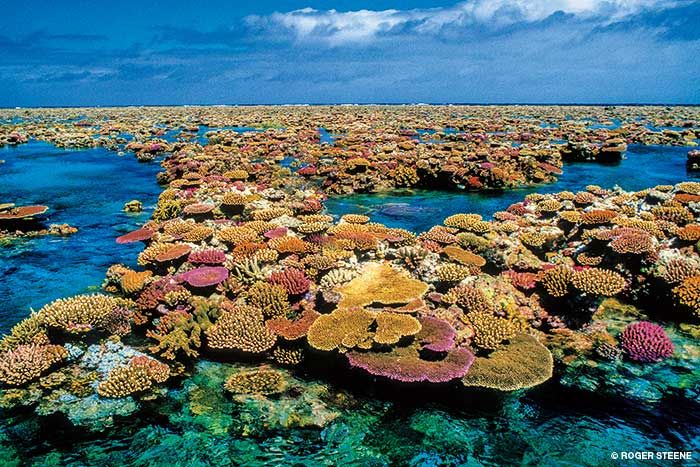
Reminds me of one of the most misused photos..The white light is the reason the corals are mostly yellows and browns. It's not until they are placed in our reefs, under artificial light spectrums that they change to the crazy colors that people see in captive reefs.
Last edited:
- Joined
- Mar 18, 2019
- Messages
- 1,667
- Reaction score
- 691
- Location
- Kalamazoo
- What state or country do you live in
- Michigan
SPLOOSH!Reminds me if one of the most misused photos..

- Joined
- May 23, 2021
- Messages
- 1,306
- Reaction score
- 1,052
- Location
- Croatia
- What state or country do you live in
- Other International
It makes me think that corals really dont care about all of ours guessing, scientific mumbo jumbo, and light manufacturers claims....
Give them light and they will grow.
We can talk about growth rate, pattern, colors, extensions, but that leads us only in new "mumbo jumbo".....
Corals in tank dont need sunrise, sunset, clouds, thunders, moonlights and god knows what other gizmos manufacturers puts in lights.....
They need light and stability, wrong constant spectrum is better than ideal which user change five times per day....
So the best spectrum is probably - stable spectrum
Give them light and they will grow.
We can talk about growth rate, pattern, colors, extensions, but that leads us only in new "mumbo jumbo".....
Corals in tank dont need sunrise, sunset, clouds, thunders, moonlights and god knows what other gizmos manufacturers puts in lights.....
They need light and stability, wrong constant spectrum is better than ideal which user change five times per day....
So the best spectrum is probably - stable spectrum
- Joined
- May 13, 2017
- Messages
- 2,681
- Reaction score
- 1,450
Very true.It makes me think that corals really dont care about all of ours guessing, scientific mumbo jumbo, and light manufacturers claims....
Give them light and they will grow.
We can talk about growth rate, pattern, colors, extensions, but that leads us only in new "mumbo jumbo".....
Corals in tank dont need sunrise, sunset, clouds, thunders, moonlights and god knows what other gizmos manufacturers puts in lights.....
They need light and stability, wrong constant spectrum is better than ideal which user change five times per day....
So the best spectrum is probably - stable spectrum
Down on the great barrier reef we did see monti caps and acro fingers poking out of the ocean in places with wave action. No those must have been getting par in the thousands but they were still growing.
- Joined
- Sep 18, 2017
- Messages
- 5,970
- Reaction score
- 3,673
- What state or country do you live in
- Wisconsin
Well for starters there is NO DOUBT in my mind that 1400 PAR can saturate photosynthesis for most corals if not all.Very true.
Down on the great barrier reef we did see monti caps and acro fingers poking out of the ocean in places with wave action. No those must have been getting par in the thousands but they were still growing.
Fortunately the sun is sooo inconsistent that the high par is only for a brief while.

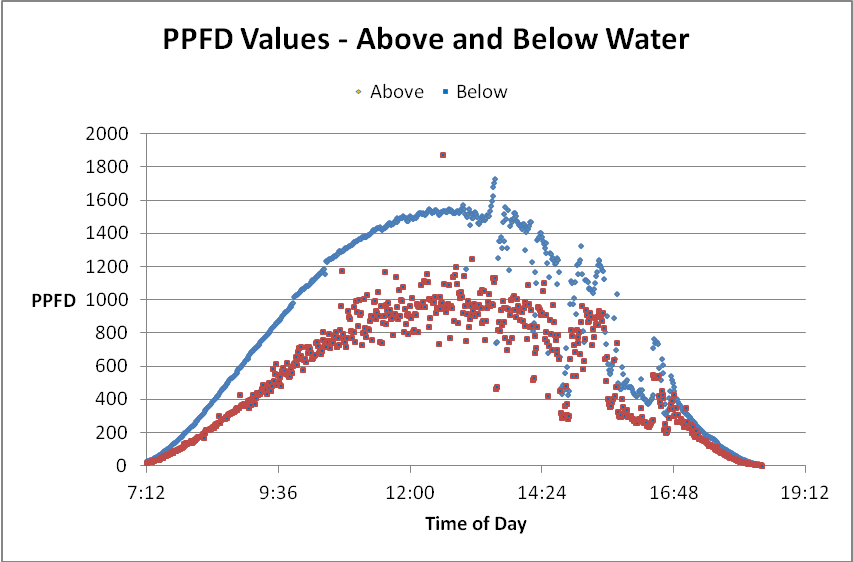
It would seem that our concerns about lighting are finally over; that it is just a matter of time before these 400 or 1000-watt lamps find their way to our tanks, and our corals will respond in a positive manner, literally growing out of the water to bask under an unblinking artificial sun. We have not only mimicked nature – we have improved upon it!
We take this information and combine it with anecdotal evidence from hobbyists and make sweeping statements, such as:
It appears as if we have it all figured out. We forgot to ask the corals.
- Small-polyp corals require intense lighting!
- Soft corals require less light than stony corals!
- Lighting systems utilizing metal halide lamps are necessary to maintain SPS corals!
This article will examine the optimal amounts of light required for 5 Hawaiian stony corals, 1 soft coral and 1 Tridacna clam, and is intended to complement a previous article “Too Much Light!” (Riddle, 2004a). Those proponents of unlimited photoacclimation by symbiotic zooxanthellae, and hence extreme lighting, will likely be surprised by these findings. And, as a reference, a quick listing of photosynthetic data for other coral/zooxanthellae symbioses from various references is offered at the conclusion of this article.
As with ALL science, subject to revision with new data...
Just another reason nature is err "wrong"?
- Joined
- Sep 18, 2017
- Messages
- 5,970
- Reaction score
- 3,673
- What state or country do you live in
- Wisconsin

How Much Light?! Analyses of Selected Shallow Water Invertebrates’ Light Requirements
Dana examines the optimal amounts of light required for select stony corals, soft coral and a Tridacna clam, and is intended to complement his previous article 'Too Much Light!' (July 2004).
 reefs.com
Forgot link..

(PDF) Light intensity, photoperiod duration, daily light flux and coral growth of Galaxea fascicularis in an aquarium setting: A matter of photons?
PDF | Light is one of the most important abiotic factors influencing the (skeletal) growth of scleractinian corals. Light stimulates coral growth by the... | Find, read and cite all the research you need on ResearchGate
 www.researchgate.net
Last edited:

- Joined
- Nov 8, 2021
- Messages
- 89
- Reaction score
- 96
- Location
- Massachusetts
- What state or country do you live in
- Massachusetts
That's the point of the scientific process. Graphs, aren't just made to sell points. They can also plot facts.Haha think about how many times science has been proven wrong! And graphs, you know graphs are made to sell points not facts....
- Joined
- May 13, 2017
- Messages
- 2,681
- Reaction score
- 1,450
If you look up what I said, it's common knowledge graphs are made to highlight selling points.That's the point of the scientific process. Graphs, aren't just made to sell points. They can also plot facts.
- Joined
- Mar 18, 2019
- Messages
- 1,667
- Reaction score
- 691
- Location
- Kalamazoo
- What state or country do you live in
- Michigan
If you look up what I said, it's common knowledge graphs are made to highlight selling points
If it's common knowledge, why would he have to look it up?If you look up what I said, it's common knowledge graphs are made to highlight selling points.
- Joined
- May 13, 2017
- Messages
- 2,681
- Reaction score
- 1,450
Self answering question.If it's common knowledge, why would he have to look it up?
- Joined
- Mar 18, 2019
- Messages
- 1,667
- Reaction score
- 691
- Location
- Kalamazoo
- What state or country do you live in
- Michigan
That's not an answer. I've made graphs and charts for myself to be able to understand data. Charts and graphs can serve multiple purposes. I've seen someone in this forum troll charts and graphs as something akin to fake news because they didn't agree with what the graphs were saying.
Last edited:
- Joined
- Mar 18, 2019
- Messages
- 1,667
- Reaction score
- 691
- Location
- Kalamazoo
- What state or country do you live in
- Michigan
So you think that par in the thousands doesn't cause photo inhibition?Very true.
Down on the great barrier reef we did see monti caps and acro fingers poking out of the ocean in places with wave action. No those must have been getting par in the thousands but they were still growing.
- Joined
- Mar 18, 2019
- Messages
- 1,667
- Reaction score
- 691
- Location
- Kalamazoo
- What state or country do you live in
- Michigan
No white. I do you see a lot of yellows oranges reds and purples. Funny, look how blue everything looks in the water. Like, really really blue just an inch below the surface.Reminds me of one of the most misused photos..
- Joined
- Mar 18, 2019
- Messages
- 1,667
- Reaction score
- 691
- Location
- Kalamazoo
- What state or country do you live in
- Michigan
Seen or actually dove them? To what depth? How many hrs have you logged? I have over 5000 hrs civilian logged and countless military. Both open and closed circuit. Even mixed gas.
You're not being honest. You're exaggerating and trolling.To be honest this discussion has spread over at least 6 other threads now and it's the same on all of them.
- Joined
- Mar 18, 2019
- Messages
- 1,667
- Reaction score
- 691
- Location
- Kalamazoo
- What state or country do you live in
- Michigan
From Scuba.com:You don't go diving with stupid orange lenses on a dive mask to color correct the coral for a reason by the way. That reason is they are not needed, as they are in full spectrum to near full spectrum daylight
"One of the most important things to consider when planning a recreational scuba trip is the dive spot’s visibility. There’s nothing like the awe-inspiring feeling of seeing marine life and corals in their most accurate colors. To truly appreciate these marvels, divers should wear high-quality color corrected scuba masks."
"If clear dive masks can give you decent visibility underwater, why should any diver bother to invest in one with color-correcting filters? The reason we need color corrected scuba masks is simple: The effect of water on light is similar to a giant red filter absorbing red light the deeper you go, leaving visible only the blues and greens of the spectrum. By three meters or 10 feet in depth, there will be no red light left from the sunlight underwater."
- Joined
- Mar 18, 2019
- Messages
- 1,667
- Reaction score
- 691
- Location
- Kalamazoo
- What state or country do you live in
- Michigan
Interesting data in the article by Dana Riddle. Photoinhibition begins between ~350 to 750 µmol·m²·second, depending on which coral was tested. So much for the "never too much intensity" argument. Since most reef tanks are a mix of corals, it appears that a PAR of just under 350 for the light-loving corals would be the upper goal for all lights, and higher PAR could actually cause some corals to effectively starve due to the shutdown of the photosynthetic process via photoinhibition.How Much Light?! Analyses of Selected Shallow Water Invertebrates’ Light Requirements
Dana examines the optimal amounts of light required for select stony corals, soft coral and a Tridacna clam, and is intended to complement his previous article 'Too Much Light!' (July 2004).
Forgot link..












