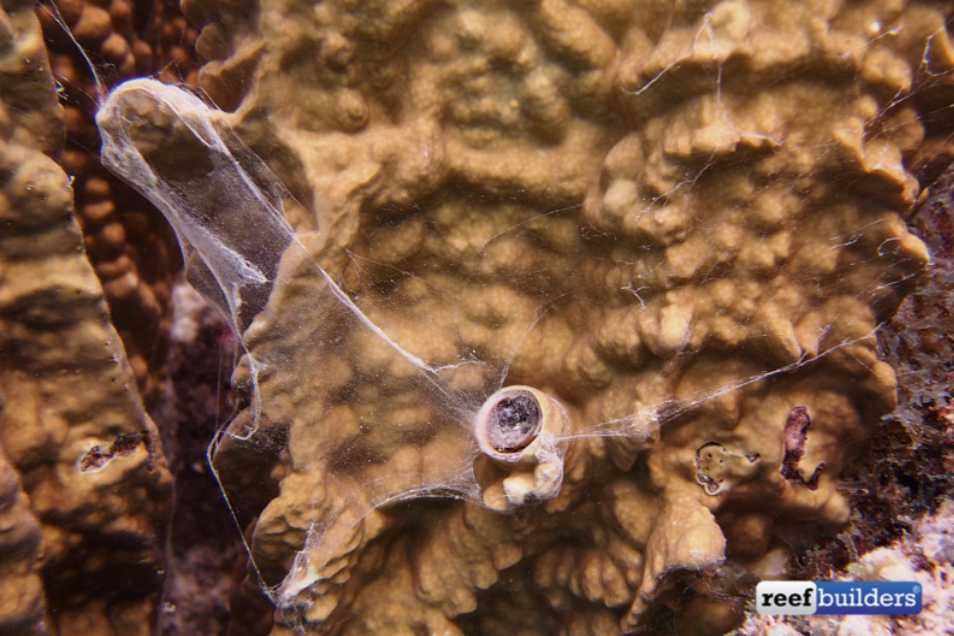
Once these nets are out pure calcium carbonate is basted onto their nets. Vermetid worms cannot pick what attaches to their nets, so they have to bring everything into their mouths. By filling them with inert calcium carbonate their guts become filled with undigestible matter and they starve.
Twice a day for the first week the live rock and corals need to be either basted with a bulb baster or washed with a small powerhead to get the detritus off the rock. Getting this detritus off the rock and into the water column stimulates the worms to start casting out their feeding nets. Once these nets are out pure calcium carbonate is basted onto their nets. Vermetid worms cannot pick what attaches to their nets, so they have to bring everything into their mouths. By filling them with inert calcium carbonate their guts become filled with undigestible matter and they starve. The formula for calcium carbonate that I use for this treatment is 2 tbsp to 1 liter of tank water and then dose half of that twice a day. Calcium carbonate has been used for a number of years as a tank clarifier and it will not affect the water chemistry in tanks where it is used. Treating the tank twice a day for the first week is just a start. Then once a day for the next 3-4 weeks, I have even had to go a total of eight weeks, this seems treatment is done. I usually do this right before the lights go out as the worms are usually more active at night.
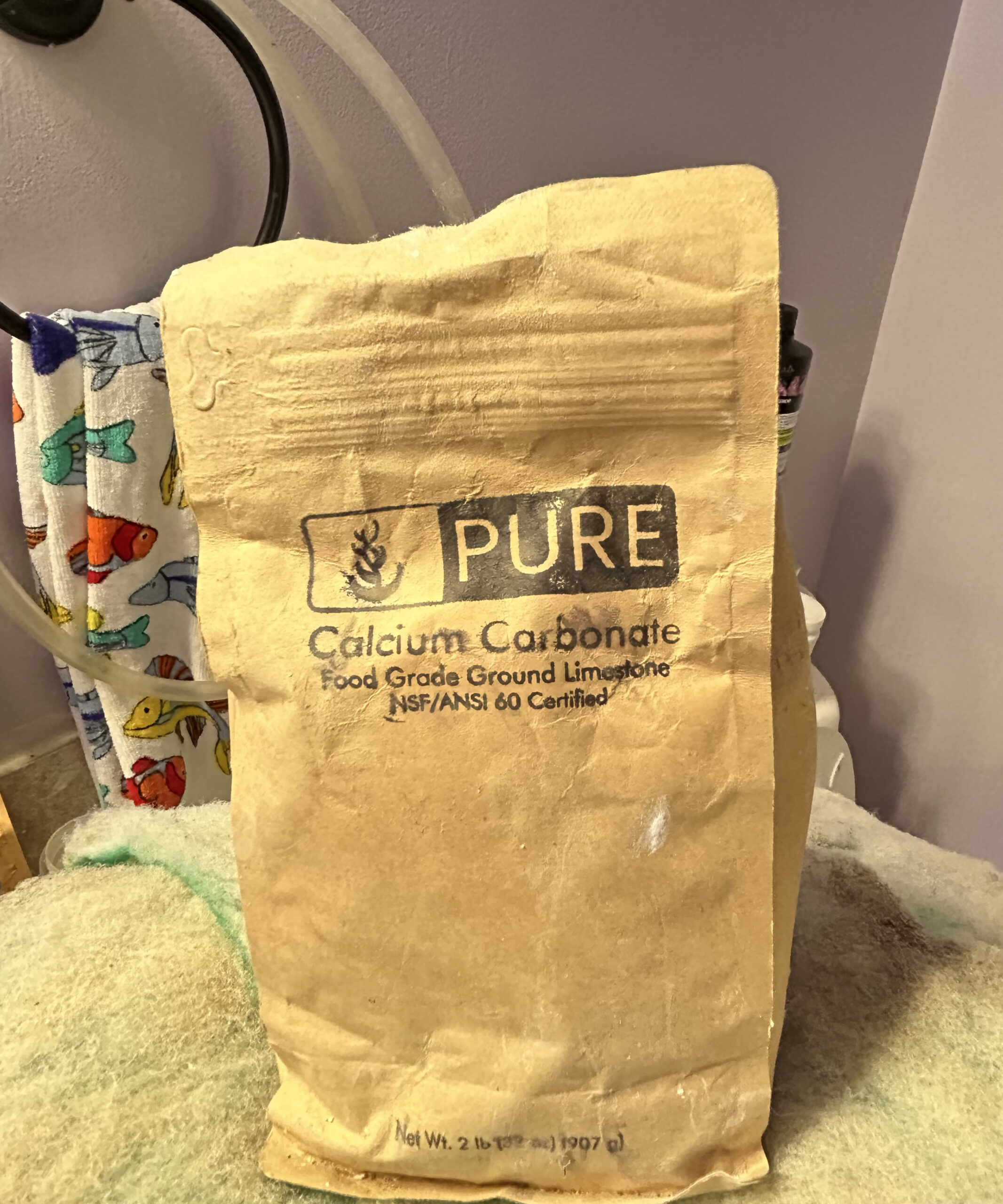
Try lacing Vermetid feeding nets with Calcium Carbonate.
Usually after two weeks a diminution in the number of worms is readily seen, but these are just the larger worms and the worms out in the open. So it is not time to stop, I have made this mistake, as there are still small worms and worms in the cracks and crevices in the tank that you can’t see. For this reason, it is necessary to continue this treatment for at least two weeks. If you look carefully you will often find worms in the overflows or sump. As long as these worms are alive, they will have the capacity to repopulate the tank. For this reason, the treatment should continue until these isolated worms are gone. Evidence that the treatment has been effective is when these tubes are broken off and they are completely empty.
Even after treatment is successful these need to be watched for and even more importantly if any new additions are made, they need to be worm free as well, otherwise, the problem just starts all over again. Every year we find more and new pests entering our tanks, causing problems. Over time we usually find solutions for combatting them. While not as problematic as some pests, Vermetid worms can still cause issues so they need to be eradicated.