Navigation
Install the app
How to install the app on iOS
Follow along with the video below to see how to install our site as a web app on your home screen.
Note: This feature may not be available in some browsers.
More options
You are using an out of date browser. It may not display this or other websites correctly.
You should upgrade or use an alternative browser.
You should upgrade or use an alternative browser.
3d printing and it's future effect on this hobby.
- Thread starter Justiful
- Start date
- Tagged users None


- Joined
- Nov 7, 2014
- Messages
- 313
- Reaction score
- 337
- Location
- Gold Coast, Australia
- What state or country do you live in
- Australia
I have been using 3D printers for Aquarium stuff for a couple of years and it is the ultimate toy if you are a DIY person.
Just don't be fooled, I have seen a lot of people buying 3D printer thinking they are press and play, only to realise there is a steep leaning curve, specially if you want to design the 3D models yourself.
Here are some of the lessons I learned:
- I use PLA for most things, because its fumes aren't toxic like ABS and some of these parts are submerged for years, without any visible effect. For that reason, I would say PLA is fine for hobbyist, but you want to use ABS if planning to sell the parts.
- Fusion 360 is the tool with the best value, (I tested every tool available) and it is worth its price. This is by far the most difficult skill to learn and you won't find pleasant to change tools, after you master one.
- Print with 100% infill, otherwise parts will absorb water.
- Research well before you buy the printer. There are plenty of low rip-offs available. Target a model with a all-metal extruder and that doesn't lock you to single & proprietary source of plastic spools.
- Keep the spool in a dry place or it will make the plastic unusable in a few months.
- Be patient and have fun.
There is also a nice guide in this thread:
http://thereefuge.com/threads/the-guide-to-3d-printing-for-aquarium-use.9437/
Here is some of the stuff I printed:
https://www.flickr.com/photos/frankllin/albums/72157645178320746
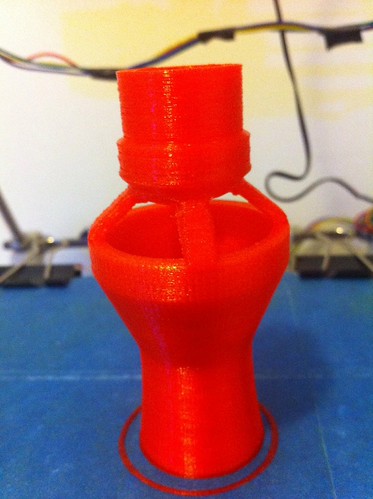
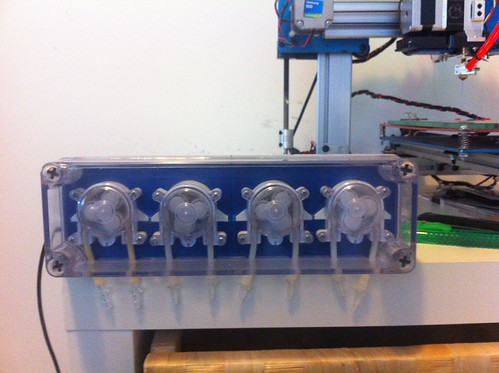

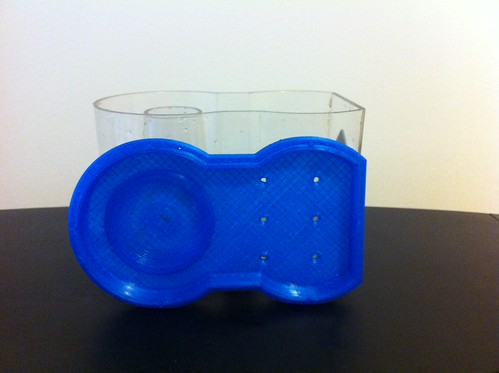
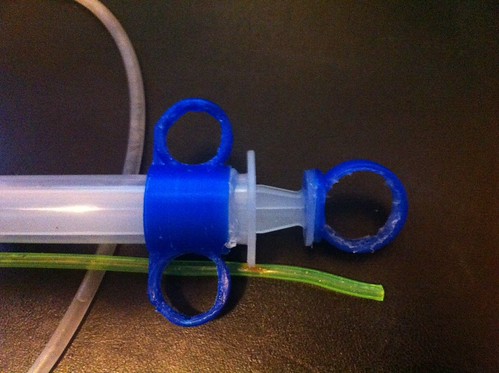
Just don't be fooled, I have seen a lot of people buying 3D printer thinking they are press and play, only to realise there is a steep leaning curve, specially if you want to design the 3D models yourself.
Here are some of the lessons I learned:
- I use PLA for most things, because its fumes aren't toxic like ABS and some of these parts are submerged for years, without any visible effect. For that reason, I would say PLA is fine for hobbyist, but you want to use ABS if planning to sell the parts.
- Fusion 360 is the tool with the best value, (I tested every tool available) and it is worth its price. This is by far the most difficult skill to learn and you won't find pleasant to change tools, after you master one.
- Print with 100% infill, otherwise parts will absorb water.
- Research well before you buy the printer. There are plenty of low rip-offs available. Target a model with a all-metal extruder and that doesn't lock you to single & proprietary source of plastic spools.
- Keep the spool in a dry place or it will make the plastic unusable in a few months.
- Be patient and have fun.
There is also a nice guide in this thread:
http://thereefuge.com/threads/the-guide-to-3d-printing-for-aquarium-use.9437/
Here is some of the stuff I printed:
https://www.flickr.com/photos/frankllin/albums/72157645178320746
- Joined
- Jun 26, 2015
- Messages
- 47
- Reaction score
- 11
I've been learning printing and 3D design, in part for my tank. I've been getting close to getting some peristaltic pumps working, and those don't contact the water, so there's no leaching to worry about. Add a stepper and controller, you have a very nice dosing pump.
PLA might be good for bio media...
The top water contact plastics I'm looking towards using are ABS and PET. PET is used in water and soda bottles, so we know it's food safe. It's almost as strong as ABS and much easier to print. There's also Nylon, but it's much harder to work with. I have some on order to get used to.
One trick if you're worried about leaching is to soak in RODI for a while.
I could really use a multi-turn valve for drain control. Been considering ideas for a setup designed for my eshopps overflow box...
It's true that the technology is new and can be tricky to use. We also need people with both reefing and 3D design skills to help make the models. That's coming along though. Once we have models, getting them made is pretty easy. I wouldn't recommend someone go buy a printer to make an algae clip, but if you are interested in the technology and willing to learn, it can be very interesting.
My printer is a Lulzbot Mini. It's a bit pricey, but it's about as simple as it gets to get started. And it can print almost any material.
PLA might be good for bio media...
The top water contact plastics I'm looking towards using are ABS and PET. PET is used in water and soda bottles, so we know it's food safe. It's almost as strong as ABS and much easier to print. There's also Nylon, but it's much harder to work with. I have some on order to get used to.
One trick if you're worried about leaching is to soak in RODI for a while.
I could really use a multi-turn valve for drain control. Been considering ideas for a setup designed for my eshopps overflow box...
It's true that the technology is new and can be tricky to use. We also need people with both reefing and 3D design skills to help make the models. That's coming along though. Once we have models, getting them made is pretty easy. I wouldn't recommend someone go buy a printer to make an algae clip, but if you are interested in the technology and willing to learn, it can be very interesting.
My printer is a Lulzbot Mini. It's a bit pricey, but it's about as simple as it gets to get started. And it can print almost any material.
Last edited:

This is a inch or so smaller than a volley ball and is supposed to house a candle but it looks much better covered with a few different coralines/gsp. Nice safe house for smaller fish as well.
Thingiverse.com and use the sugar based plastic-PLA. Print something weird and cover it with coral...

Thingiverse.com and use the sugar based plastic-PLA. Print something weird and cover it with coral...

A member of our local club started messing around the one he had at work, started out by making a nifty little stand for all the vials, etc for water testing. Now has a website with a handful of items available.

I still have concerns about the safety of 3D-printed objects in aquaria, so I don't think I will ever use them in my actual aquarium, but for other things, like a stand to hold vials, it definitely has potential.


Hello everyone. I'm new here but not new to the hobby.
I am a product designer although I don't design products for the aquarium industry.
One thing you must remember when looking at all of the equipment made for this hobby is that even though most of the items are made of plastic, that doesn't mean the costs to design and develop those items isn't high. The items we buy have been tested extensively and redesigned over and over until the design functions correctly, is safe, and will function correctly for its intended lifespan.
When dealing with 3D printing there are a number of things to consider; how the pieces fit together, how will the surface finish affect the performance, will the material you choose work properly for the length of time needed. There is sooooooo much that goes into producing a product. Just because it's made of plastic (and the word "plastic" is only a general term as there are thousands of types of plastic) doesn't mean it was cheap to produce. Just my $.02.
franksreefs
I am a product designer although I don't design products for the aquarium industry.
One thing you must remember when looking at all of the equipment made for this hobby is that even though most of the items are made of plastic, that doesn't mean the costs to design and develop those items isn't high. The items we buy have been tested extensively and redesigned over and over until the design functions correctly, is safe, and will function correctly for its intended lifespan.
When dealing with 3D printing there are a number of things to consider; how the pieces fit together, how will the surface finish affect the performance, will the material you choose work properly for the length of time needed. There is sooooooo much that goes into producing a product. Just because it's made of plastic (and the word "plastic" is only a general term as there are thousands of types of plastic) doesn't mean it was cheap to produce. Just my $.02.
franksreefs
- Joined
- Nov 14, 2015
- Messages
- 13
- Reaction score
- 5
I think that finding the right materials and testing them over time is going to be the biggest hurtle to long term adoption.Yes. You just need to make sure that the filament is FDA approved. PLA, the most common filament used, will dissolve in water over time and is ply able after a day.
As far as what I'd print, just about anything... I can't wait to see how skimmer designs will improve when printed. You could do totally crazy things that just might work....


I work in a company that makes nylon. Most of it is food grade. We even make material that makes the thread that surgeons and doctors use to stitch people up. Iv seen some 3D printers that are capable of using nylon as a printing medium. 3D printing will come along way in the next 5 years. As they say technology doubles every 6 months. Iv been wanting to get my hands on one but spend to much on my tank to afford one lol. A 3D printer and a CNC milling machine would be a great thing to have for a DIY guy but $$$$$$$ comes into play there

What is his website...would love to see his stuff!A member of our local club started messing around the one he had at work, started out by making a nifty little stand for all the vials, etc for water testing. Now has a website with a handful of items available.

I think it might be.. http://printedreefingsolutions.com/What is his website...would love to see his stuff!
I've ordered a couple things and they're really nice!


At our frag swap last year there was a vendor selling 3D printed parts. Probe holders, dosing line holders and I think frag racks. I can't remember everything. Even had the printer there with him - and the prices were very good. So it's happening already.
I think it was the above link! Haha.
I think it was the above link! Haha.

Just got a 3D printer for Christmas and I'm excited to see how I can use it to make things for my tank. I'm also new to reefing so I get to learn two things at once!
I will admit the idea of designing my own parts is a little intimidating but Tinkercad looks like a good start. Thanks for sharing!
I will admit the idea of designing my own parts is a little intimidating but Tinkercad looks like a good start. Thanks for sharing!
- Joined
- Nov 7, 2014
- Messages
- 313
- Reaction score
- 337
- Location
- Gold Coast, Australia
- What state or country do you live in
- Australia
This thread gives me the impression a lot of people relates 3D printing to low cost. This was my impression, as well, and that is certainly true for companies.
However, for hobbyists the cost is much higher when you 3D print. You have to account your hourly rate, failed designs and the initial cost of equipment.
With this in mind, you might end up with the most expensive frag rack in the world...
IMO, there are other points they are more important than cost:
Community building, quick experimentation, development of accessories they have no commercial appeal to the industry, custom structures design for your specific needs, sharing and so on.
When mixed with the equally impressive world of rapid electronics prototyping, possibilities are endless.
Cost is likely to remain lower when mass produced.
However, for hobbyists the cost is much higher when you 3D print. You have to account your hourly rate, failed designs and the initial cost of equipment.
With this in mind, you might end up with the most expensive frag rack in the world...
IMO, there are other points they are more important than cost:
Community building, quick experimentation, development of accessories they have no commercial appeal to the industry, custom structures design for your specific needs, sharing and so on.
When mixed with the equally impressive world of rapid electronics prototyping, possibilities are endless.
Cost is likely to remain lower when mass produced.

OP
OP

- Joined
- Sep 10, 2015
- Messages
- 381
- Reaction score
- 136
This thread gives me the impression a lot of people relates 3D printing to low cost. This was my impression, as well, and that is certainly true for companies.
However, for hobbyists the cost is much higher when you 3D print. You have to account your hourly rate, failed designs and the initial cost of equipment.
With this in mind, you might end up with the most expensive frag rack in the world...
IMO, there are other points they are more important than cost:
Community building, quick experimentation, development of accessories they have no commercial appeal to the industry, custom structures design for your specific needs, sharing and so on.
When mixed with the equally impressive world of rapid electronics prototyping, possibilities are endless.
Cost is likely to remain lower when mass produced.
Cost is relative now to the cost of the machines. If the 3d printers where the cost of laser printers, It would be cheaper to produce these items then buy. I foresee a more rapid decline in 3d printer costs than conventional printers had. In 1985 HP introduced their first desktop laser jet printer. It cost $3500 dollars ($7804 in today's dollars). Today you can buy a laser jet printer for $30 that is better than that 1985 model.
If 3d printers have a price drop off and technology increase equal to laser jet printers, we can expect Sub $500 models within the next 10 years better than 3k models today. We can expect $250 models in 15 years, significantly better. In 20 years it it will be a household staple, just as a computing device is today. It will also be integrated into every industry. Mechanics will 3d print parts more often then order them, Industrial 3d printers will be in every major home improvement store, printing out all kinds of things. Desks, chairs, sinks, showers, flooring, wall treatments, ext.
Imagine a world where home depot ordered in MDF printing material, had a few displays, but when someone ordered a desk all the component parts where printed in store. The cost savings in logistics would be incredible. Companies will start putting 3d printers into stores, that print their products for the consumer. From glassware, to tableware, to clothing, and even chocolates.
Most of the cost of a MDF furniture today is logistics. Transportation, storage, and staff to manage it all. Major companies like Fedex, UPS, and international freight shipping companies are in for a major disruption to their industry. The same can be said of several other industries.
Look at a store like Bed Bath and Beyond. Their biggest limiting factor is inventory management. They sell thousands of sku's and need shelf space to store and display every single one of them. If they only needed display models of every item, it would be a major change to their store. Imagine a competitor opened, who sold similar goods, but a much greater variety because the items where printable into any color. That alone would cause a major disruption, even if it was just 1 segment like glassware or as seen on TV chotskie items.
Lets look at online shopping. People do it for convenience and or better prices. Online shopping has gained huge market share, destroying stores that could not adapt to the new market. 3d printing will have a similar disruption to businesses that do not adapt quickly enough. Remember at first online shopping was more expensive but sometimes the only way to get niche items, today it is competitive or cheaper on top of being more convenient. It destroyed the video store industry, crushed 99% of the mail order industry, all but eliminated record stores, and completely disrupted retail stores, destroying major brands who didn't adapt fast enough.
So while I agree as of today, there is no "practical" cost savings. It is an important technology to keep abreast of, and adopt early. You may be 20,30, 40, 50 now. But you don't want to be the equivalent of a 50 year old man in the business world who can't use windows properly, or finish your TPS reports because the printer eats them (officespace). This is a major industry disruption just like the internet, radio, television, telephone, and assembly line. Likely the biggest distruption in consumer products since the assembly line.
I do agree with you on cost to develop products however. As consumer manufacturing of products grows, the illegal downloading and printing of patented schematics will be the piracy of the future.
Last edited:
- Joined
- Jun 26, 2015
- Messages
- 47
- Reaction score
- 11
I think that, long term, there is a good chance distributed manufacturing will win out. However, I think that's still a way off. Right now, even with a pre built and calibrated printer, 3D printing is more art than science. As the software for slicing improves, that will change along with the hardware getting cheaper and easier to use. I think that's still 5 years out at least.
There are also various issues to resolve. Things like part strength, finish, materials, etc.. It has come a long way in a short time though.
As for applications in our tanks, there are already a large number of designs freely available online that are applicable. I expect there will be more as time goes on and we get people who either know how to design parts or know someone willing to help them. The tools are getting more available and easier to use.
One thing I don't count in the cost is my time. It's a hobby, my time working with it is fun for me. Same with working with my tank, most of the time. Things like trying to remove bubble algae are not so fun, but nessesary to add to the enjoyment of the tank.
There are also various issues to resolve. Things like part strength, finish, materials, etc.. It has come a long way in a short time though.
As for applications in our tanks, there are already a large number of designs freely available online that are applicable. I expect there will be more as time goes on and we get people who either know how to design parts or know someone willing to help them. The tools are getting more available and easier to use.
One thing I don't count in the cost is my time. It's a hobby, my time working with it is fun for me. Same with working with my tank, most of the time. Things like trying to remove bubble algae are not so fun, but nessesary to add to the enjoyment of the tank.
Yes, that's him. I wasn't sure if I could post a link to his site or not. He also got a write up in Reefbuilders.I think it might be.. http://printedreefingsolutions.com/
I've ordered a couple things and they're really nice!
http://www.reefcentral.com/forums/showthread.php?t=2545545
https://reefbuilders.com/2015/12/15/printed-reefing-solutions-building-nifty-3d-printed-accessories/
(if those links are allowed. If not, mods please delete.)
Yep, that was him. He said he really enjoyed your swap.At our frag swap last year there was a vendor selling 3D printed parts. Probe holders, dosing line holders and I think frag racks. I can't remember everything. Even had the printer there with him - and the prices were very good. So it's happening already.
I think it was the above link! Haha.