Algae conspiracy theory
Ok i have an algae conspiracy theory please give me some insight if any of this is even possible. Ok so algae has never been a huge problem for me in both of my tanks. I guess i was lucky. But in the past months i have had such a huge GHA and turf algae in my display problem and some cyano. Thick mats of what seemed to be a blanket of algae overtaking everything. My phosphate stayed around .03-.09 and my nitrates were steady under 10. The changes made most recent to the outbreak was i cleaned my new SM algae scrubber, and i added 2 aqua mags rock mag jrs. IS IT AT ALL POSSIBLE FOR A: during the cleaning of my scrubber some of the algae went into the display and spread (because the algae in the scrubber was very similar to the outbreak of algae in my display) and or B: the rock mag jrs are leaching into the water. Is this crazy or does this seem legit?
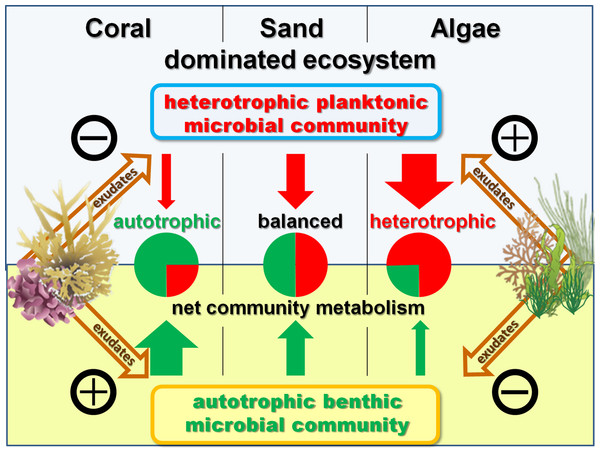
Read Forest Rohwer's "Coral Reefs in the Microbial Seas" (kindle ~$10, paperback ~$20). It's an excellent introduction to the roles of DOC and microbial processes on reefs. Among the various aspects he give a good description of how small pertubations to the equilibrium of a ecosystem can cause dramatic shifts. Some of the research refferenced shows how algae is antagonistic to corals and the positive fedback loops that can shift a from corals to algae. Besides the 100+ papers he refrences here's ome more recent ones further showing the antagonistc roles of algae, corals and the various types of DOC.
Indirect effects of algae on coral: algae‐mediated, microbe‐induced coral mortality
Coral seperated from algae with a .02 µm filter die. Treatment with aampicillan prevents death.
Benthic primary producers in tropical reef ecosystems can alter biogeochemical cycling and microbial processes in the surrounding seawater. In order to quantify these influences, we measured rates of photosynthesis, respiration, and dissolved organic carbon (DOC) exudate release by the dominant...
peerj.com
Effects of Coral Reef Benthic Primary Producers on Dissolved Organic Carbon and Microbial Activity
Algae releases significantly more DOC into the water than coral.
Benthic primary producers in marine ecosystems may significantly alter biogeochemical cycling and microbial processes in their surrounding environment. To examine these interactions, we studied dissolved organic matter release by dominant benthic taxa and subsequent microbial remineralization in...
journals.plos.org
Pathologies and mortality rates caused by organic carbon and nutrient stressors in three Caribbean coral species.
Starch and sugars (doc) caused coral death but not high nitrates, phosphates or ammonium.
Planar optodes were used to visualize oxygen distribution patterns associated with a coral reef associated green algae (Chaetomorpha sp.) and a hermatypic coral (Favia sp.) separately, as standalone organisms, and placed in close proximity mimicking coral-algal interactions. Oxygen patterns were...
peerj.com
Biological oxygen demand optode analysis of coral reef-associated microbial communities exposed to algal exudates
Exposure to exudates derived from turf algae stimulated higher oxygen drawdown by the coral-associated bacteria.
Algae-derived dissolved organic matter has been hypothesized to induce mortality of reef building corals. One proposed killing mechanism is a zone of hypoxia created by rapidly growing microbes. To investigate this hypothesis, biological oxygen ...
www.ncbi.nlm.nih.gov
Microbial ecology: Algae feed a shift on coral reefs
Human pressures on coral reefs are giving macroalgae a competitive advantage over reef-building corals. These algae support larger, and potentially pathogenic, microbial populations that are metabolically primed for less-efficient, yet faster, carbohydrate remineralization, perpetuating a...
www.nature.com
Coral and macroalgal exudates vary in neutral sugar composition and differentially enrich reef bacterioplankton lineages.
Increasing algal cover on tropical reefs worldwide may be maintained through feedbacks whereby algae outcompete coral by altering microbial activity. We hypothesized that algae and coral release compositionally distinct exudates that differentially alter bacterioplankton growth and community...
www.ncbi.nlm.nih.gov
Sugar enrichment provides evidence for a role of nitrogen fixation in coral bleaching
Elevated ammonium delays the impairment of the coral-dinoflagellate symbiosis during labile carbon pollution
(here's an argument for maintaining heavy fish loads if you're carbon dosing)
Labile dissolved organic carbon (DOC) is a major pollutant in coastal marine environments affected by anthropogenic impacts, and may significantly con…
www.sciencedirect.com
Excess labile carbon promotes the expression of virulence factors in coral reef bacterioplankton
Coastal pollution and algal cover are increasing on many coral reefs, resulting in higher dissolved organic carbon (DOC) concentrations. High DOC concentrations strongly affect microbial activity in reef waters and select for copiotrophic, often potentially virulent microbial populations. High...
www.nature.com
Unseen players shape benthic competition on coral reefs.
Recent work has shown that hydrophilic and hydrophobic organic matter (OM) from algae disrupts the function of the coral holobiont and promotes the invasion of opportunistic pathogens, leading to coral morbidity and mortality. Here we refer to these dynamics as the (3)DAM [dissolved organic...
www.ncbi.nlm.nih.gov
Allelochemicals Produced by Brown Macroalgae of the Lobophora Genus Are Active against Coral Larvae and Associated Bacteria, Supporting Pathogenic Shifts to Vibrio Dominance.
Diverse microbial communities associate with coral tissues and mucus, providing important protective and nutritional services, but once disturbed, the microbial equilibrium may shift from a beneficial state to one that is detrimental or pathogenic. Macroalgae (e.g., seaweeds) can physically and...
www.ncbi.nlm.nih.gov
Macroalgae decrease growth and alter microbial community structure of the reef-building coral, Porites astreoides.
With the continued and unprecedented decline of coral reefs worldwide, evaluating the factors that contribute to coral demise is of critical importance. As coral cover declines, macroalgae are becoming more common on tropical reefs. Interactions between these macroalgae and corals may alter the...
www.ncbi.nlm.nih.gov
Macroalgal extracts induce bacterial assemblage shifts and sublethal tissue stress in Caribbean corals.
Benthic macroalgae can be abundant on present-day coral reefs, especially where rates of herbivory are low and/or dissolved nutrients are high. This study investigated the impact of macroalgal extracts on both coral-associated bacterial assemblages and sublethal stress response of corals. Crude...
www.ncbi.nlm.nih.gov
Biophysical and physiological processes causing oxygen loss from coral reefs.
Analysis of 60 sites in three ocean basins suggests that overgrowth of fleshy algae on coral reefs supports higher microbial abundances dominated by copiotrophic, potentially pathogenic bacteria via the provision of dissolved inorganic carbon.
www.nature.com
Because sponges are essential players in the carbon, nitrogen and phosphorus cycle(s) on reefs here's some links to research done with them.
Element cycling on tropical coral reefs.
This is Jasper de Geoij's ground breaking research on reef sponges. (The introduction is in Dutch but the content is in English.)
Marine sponges are ubiquitous colonizers of shallow, clear-water environments in the oceans (1, 2). Sponges have emerged as significant mediators of biogeochemical fluxes in coastal zones by virtue of respiring organic matter and facilitating both the consumption and release of nutrients (3, 4)...
www.pnas.org
Phosphorus sequestration in the form of polyphosphate by microbial symbionts in marine sponges
(Chris Kenndall had a problem with low PO4 and had problems raising it with Neophos. Samples sent off showed phosphorus crystals developing in some of the sponges in his system accounting for at least some of his systems consumption.)
Coral reefs are highly productive ecosystems that raise a conundrum called “Darwin’s paradox”: How can high production flourish in low-nutrient conditions? We show here that in three abundant Caribbean sponges, the granules that have been commonly observed in sponge tissue for decades are...
www.pnas.org
Differential recycling of coral and algal dissolved organic matter via the sponge loop.
Sponges treat DOC from algae differently than DOC from corals
Surviving in a Marine Desert The Sponge Loop Retains Resources Within Coral Reefs
Dissolved organic carbon and nitrogen are quickly processed by sponges and released back into the reef food web in hours as carbon and nitrogen rich detritus.
PDF | On Jun 23, 2015, Jasper M de Goeij and others published 2013 deGoeij Science Sponge loop | Find, read and cite all the research you need on ResearchGate
www.researchgate.net
Natural Diet of Coral-Excavating Sponges Consists Mainly of Dissolved Organic Carbon (DOC)
Explore millions of resources from scholarly journals, books, newspapers, videos and more, on the ProQuest Platform.
search.proquest.com
And since we're discussing favorable and not so favorable bacteria here's a paper looking at how different corals and polyps are influencing the bacteria in the water column.
Aura-biomes are present in the water layer above coral reef benthic macro-organisms
As coral reef habitats decline worldwide, some reefs are transitioning from coral- to algal-dominated benthos with the exact cause for this shift remaining elusive. Increases in the abundance of microbes in the water column has been correlated with an increase in coral disease and reduction in...
I have read Forest Rohwer's "Coral Reefs in the Microbial Seas" and a number of the other studies provided by Tim. Experiments have shown that coral subjected to algae DOC can die as their own holobiont (bacteria, archaea, etc.) multiplies to such an extent that it uses up all the local oxygen. So basically the coral suffocates.
On the flip side, people have been using ATS's and Macro Algae in refugiums for ages and have been successful, so there's that.
IMO, it is likely that the negative outcome associated with algae DOCs in the studies is one of a significant quantity of DOC supplied within a relatively short time frame. When a system is slowly acclimated to increasing DOC levels (up to a point), I suspect that the coral holobiont has time to adjust and this is what makes the difference.
You mention a lot of algae similar to what is growing in your ATS. That would imply that there is a surplus of available nutrients in the system. Did you completely clean the ATS, or just scrape the top layers off? Did you have coral or other larger organisms die off either right before or after you cleaned the ATS?
Read Forest Rohwer's "Coral Reefs in the Microbial Seas" (kindle ~$10, paperback ~$20). It's an excellent introduction to the roles of DOC and microbial processes on reefs. Among the various aspects he give a good description of how small pertubations to the equilibrium of a ecosystem can cause dramatic shifts. Some of the research refferenced shows how algae is antagonistic to corals and the positive fedback loops that can shift a from corals to algae. Besides the 100+ papers he refrences here's ome more recent ones further showing the antagonistc roles of algae, corals and the various types of DOC.
Indirect effects of algae on coral: algae‐mediated, microbe‐induced coral mortality
Coral seperated from algae with a .02 µm filter die. Treatment with aampicillan prevents death.
Benthic primary producers in tropical reef ecosystems can alter biogeochemical cycling and microbial processes in the surrounding seawater. In order to quantify these influences, we measured rates of photosynthesis, respiration, and dissolved organic carbon (DOC) exudate release by the dominant...
peerj.com
Effects of Coral Reef Benthic Primary Producers on Dissolved Organic Carbon and Microbial Activity
Algae releases significantly more DOC into the water than coral.
Benthic primary producers in marine ecosystems may significantly alter biogeochemical cycling and microbial processes in their surrounding environment. To examine these interactions, we studied dissolved organic matter release by dominant benthic taxa and subsequent microbial remineralization in...
journals.plos.org
Pathologies and mortality rates caused by organic carbon and nutrient stressors in three Caribbean coral species.
Starch and sugars (doc) caused coral death but not high nitrates, phosphates or ammonium.
Planar optodes were used to visualize oxygen distribution patterns associated with a coral reef associated green algae (Chaetomorpha sp.) and a hermatypic coral (Favia sp.) separately, as standalone organisms, and placed in close proximity mimicking coral-algal interactions. Oxygen patterns were...
peerj.com
Biological oxygen demand optode analysis of coral reef-associated microbial communities exposed to algal exudates
Exposure to exudates derived from turf algae stimulated higher oxygen drawdown by the coral-associated bacteria.
Algae-derived dissolved organic matter has been hypothesized to induce mortality of reef building corals. One proposed killing mechanism is a zone of hypoxia created by rapidly growing microbes. To investigate this hypothesis, biological oxygen ...
www.ncbi.nlm.nih.gov
Microbial ecology: Algae feed a shift on coral reefs
Human pressures on coral reefs are giving macroalgae a competitive advantage over reef-building corals. These algae support larger, and potentially pathogenic, microbial populations that are metabolically primed for less-efficient, yet faster, carbohydrate remineralization, perpetuating a...
www.nature.com
Coral and macroalgal exudates vary in neutral sugar composition and differentially enrich reef bacterioplankton lineages.
Increasing algal cover on tropical reefs worldwide may be maintained through feedbacks whereby algae outcompete coral by altering microbial activity. We hypothesized that algae and coral release compositionally distinct exudates that differentially alter bacterioplankton growth and community...
www.ncbi.nlm.nih.gov
Sugar enrichment provides evidence for a role of nitrogen fixation in coral bleaching
Elevated ammonium delays the impairment of the coral-dinoflagellate symbiosis during labile carbon pollution
(here's an argument for maintaining heavy fish loads if you're carbon dosing)
Labile dissolved organic carbon (DOC) is a major pollutant in coastal marine environments affected by anthropogenic impacts, and may significantly con…
www.sciencedirect.com
Excess labile carbon promotes the expression of virulence factors in coral reef bacterioplankton
Coastal pollution and algal cover are increasing on many coral reefs, resulting in higher dissolved organic carbon (DOC) concentrations. High DOC concentrations strongly affect microbial activity in reef waters and select for copiotrophic, often potentially virulent microbial populations. High...
www.nature.com
Unseen players shape benthic competition on coral reefs.
Recent work has shown that hydrophilic and hydrophobic organic matter (OM) from algae disrupts the function of the coral holobiont and promotes the invasion of opportunistic pathogens, leading to coral morbidity and mortality. Here we refer to these dynamics as the (3)DAM [dissolved organic...
www.ncbi.nlm.nih.gov
Allelochemicals Produced by Brown Macroalgae of the Lobophora Genus Are Active against Coral Larvae and Associated Bacteria, Supporting Pathogenic Shifts to Vibrio Dominance.
Diverse microbial communities associate with coral tissues and mucus, providing important protective and nutritional services, but once disturbed, the microbial equilibrium may shift from a beneficial state to one that is detrimental or pathogenic. Macroalgae (e.g., seaweeds) can physically and...
www.ncbi.nlm.nih.gov
Macroalgae decrease growth and alter microbial community structure of the reef-building coral, Porites astreoides.
With the continued and unprecedented decline of coral reefs worldwide, evaluating the factors that contribute to coral demise is of critical importance. As coral cover declines, macroalgae are becoming more common on tropical reefs. Interactions between these macroalgae and corals may alter the...
www.ncbi.nlm.nih.gov
Macroalgal extracts induce bacterial assemblage shifts and sublethal tissue stress in Caribbean corals.
Benthic macroalgae can be abundant on present-day coral reefs, especially where rates of herbivory are low and/or dissolved nutrients are high. This study investigated the impact of macroalgal extracts on both coral-associated bacterial assemblages and sublethal stress response of corals. Crude...
www.ncbi.nlm.nih.gov
Biophysical and physiological processes causing oxygen loss from coral reefs.
Analysis of 60 sites in three ocean basins suggests that overgrowth of fleshy algae on coral reefs supports higher microbial abundances dominated by copiotrophic, potentially pathogenic bacteria via the provision of dissolved inorganic carbon.
www.nature.com
Because sponges are essential players in the carbon, nitrogen and phosphorus cycle(s) on reefs here's some links to research done with them.
Element cycling on tropical coral reefs.
This is Jasper de Geoij's ground breaking research on reef sponges. (The introduction is in Dutch but the content is in English.)
Marine sponges are ubiquitous colonizers of shallow, clear-water environments in the oceans (1, 2). Sponges have emerged as significant mediators of biogeochemical fluxes in coastal zones by virtue of respiring organic matter and facilitating both the consumption and release of nutrients (3, 4)...
www.pnas.org
Phosphorus sequestration in the form of polyphosphate by microbial symbionts in marine sponges
(Chris Kenndall had a problem with low PO4 and had problems raising it with Neophos. Samples sent off showed phosphorus crystals developing in some of the sponges in his system accounting for at least some of his systems consumption.)
Coral reefs are highly productive ecosystems that raise a conundrum called “Darwin’s paradox”: How can high production flourish in low-nutrient conditions? We show here that in three abundant Caribbean sponges, the granules that have been commonly observed in sponge tissue for decades are...
www.pnas.org
Differential recycling of coral and algal dissolved organic matter via the sponge loop.
Sponges treat DOC from algae differently than DOC from corals
Surviving in a Marine Desert The Sponge Loop Retains Resources Within Coral Reefs
Dissolved organic carbon and nitrogen are quickly processed by sponges and released back into the reef food web in hours as carbon and nitrogen rich detritus.
PDF | On Jun 23, 2015, Jasper M de Goeij and others published 2013 deGoeij Science Sponge loop | Find, read and cite all the research you need on ResearchGate
www.researchgate.net
Natural Diet of Coral-Excavating Sponges Consists Mainly of Dissolved Organic Carbon (DOC)
Explore millions of resources from scholarly journals, books, newspapers, videos and more, on the ProQuest Platform.
search.proquest.com
And since we're discussing favorable and not so favorable bacteria here's a paper looking at how different corals and polyps are influencing the bacteria in the water column.
Aura-biomes are present in the water layer above coral reef benthic macro-organisms
As coral reef habitats decline worldwide, some reefs are transitioning from coral- to algal-dominated benthos with the exact cause for this shift remaining elusive. Increases in the abundance of microbes in the water column has been correlated with an increase in coral disease and reduction in...
de Goeij's thesis (link is in my first post) shows cryptic sponges are a major mediator of labile DOC. With some sponges removing the labile DOC (carbon dosing) at 1000X faster than the bactrioplankton they play a critical role in the success of a reef. The maturing process we see in reef systems (as suggested by Nano Sapiens post) is certainly in part the cryptic sponges developing and growing and recycling more of the labile DOC. But the reasearch also shows cryptic sponges process labile DOC from corals and algae differently and can create feedback loops that favor algae over corals.
The drop in oxygen caused by an increase in heterotrophic bacteria in the coral holobiont certainly is a major factor in coral death. However, some of the research clearly shows increases in pathogens and "virulance factors" in the coral holobiont. When this research is considered with the research showing huge differences in the immune systems of corals at the genotype level it's not surprising some coral species genotypes are able to tolerate heavy pathogen loads in their holobiont. But it also shouldn't be surprising some coral species genotypes either do not thrive or die quickly when added to a system because they either do not have the immune system to deal with bacteria load of a new system or changes in a system. And age is factor too as contrary to common wisdom corals age (and to complicate this individual polyps in a colony can have different ages) Here's some links on coral genotype variations in immune ssytems and coral and polyp senescence:
Intraspecific differences in molecular stress responses and coral pathobiome contribute to mortality under bacterial challenge in Acropora millepora (genotype specific responses to pathogens)
In this study, two factorial experiments were used to investigate the role of tissue age in affecting the phenotypic expression of calcification in scleractinian corals. Both experiments tested whether calcification was altered by tissue age and whether corals of different ages exploit...
www.journals.uchicago.edu
Age-related deterioration of a physiological function in the branching coral Acropora palmata
Decreases in two physiological processes (reproduction and growth) have been shown to precede the advent of colony death in the branching coralStylophora pistillata. These diminutions were sometimes detectable even 6 months and more before any first visible sign of tissue mortality was observed.
Another factor we need to take into account is corals have environmental memory. So just because speciman of a coral species/genotype does well in a system or location doesn't mean a second speciman of the same species/genotype will if it adapted to different conditions.
West sides of the coral Coelastrea aspera, which had achieved thermo-tolerance after previous experience of high solar irradiance in the field, were rotated through 180o on a reef flat in Phuket, Thailand (7o50´N, 98o25.5´E), in 2000 in a
www.academia.edu
So, an overwhelming list of variables (and there's more but this seemed enough for now ). It's pretty obvious to me corals, algae and sponges (and fungii) are all actively manipulating their environment and we CAN NOT test or monitor what they are doing. It's also obvious we CAN NOT determine if a coral is healthy by any external factors. It seems to me then, if our intent is to keep systems and corals healthy for thier normal life expectancy (as we do for our pets) we should embrace the research showing what is beneficial and what is unhealthy both short term and long term.















 ). It's pretty obvious to me corals, algae and sponges (and fungii) are all actively manipulating their environment and we CAN NOT test or monitor what they are doing. It's also obvious we CAN NOT determine if a coral is healthy by any external factors. It seems to me then, if our intent is to keep systems and corals healthy for thier normal life expectancy (as we do for our pets) we should embrace the research showing what is beneficial and what is unhealthy both short term and long term.












