Hi Tony, thanks for your comments.
In case you missed it above, we are the last people to encourage taking a step back in progress of aquacultured fish:
I suppose it could since you are making broad assertations yourself here

Professionally breeding marine fishes was my career for about three years. I successfully bred twelve species of fishes, and loved every minute of it.
We're proud to say that since Aqua Box's inception, we have offered
sixteen species of captive-bred fishes, not including another
four species of clownfish, and numerous breeds of clowns within those species. We currently have some of the
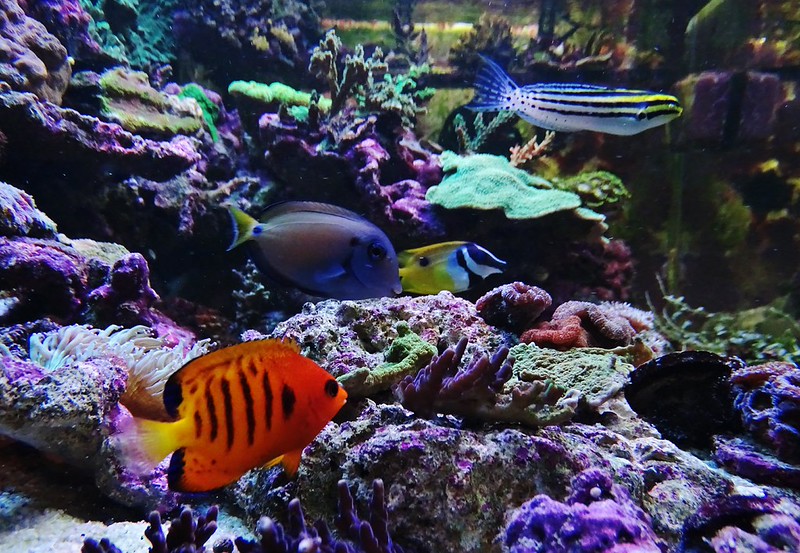
world's first captive-bred flame angels available.
Furthermore, offering animals to the trade is a minute part of our business (<10% overall sales). We are first and foremost system designers and installers, as you can see in our
Portfolio here.
Cairns Marine is the pinnacle of marine animal collection around the world, and their role in
Provision Reef shows us how deep they are willing to go to protect wild reefs. I cannot think of a better representative to hear out from that side of the trade then them.
However, this is also why I included the unbiased views of Luiz Rocha, an Associate Curator and Follett Chair of Ichthyology at the California Academy of Sciences. I highly recommend watching his presentation.
Absolutely!
Now, how about aquarists that want to have an impact on reef conservation without donating directly to a non-profit? For this I direct you
here and
here, which discusses the threats natural reefs would face if wild collectors are forced into alternate careers should theirs end. People protect their livelihood. If it is no longer their livelihood, who's going to protect those local reefs?
Project Piaba has shown this in the freshwater world, and while our salty side would need significantly more research for data collection, it's not difficult to connect the dots.
If captive bred fishes are hitting wholesalers, they suffer the same ailments that wild fishes do unless kept separate (rarely). Unfortunately, we have found we must run captive bred fishes through the same treatment that we do for wild caught fishes to ensure our clients are receiving healthy animals.
Overall I could not agree more

Conditioning captive bred fishes is a dream, most of the time. Although we are currently faced with many breeders pumping out animals (excluding clownfish) at tiny sizes, which end up in our hands for months at a time as we don't want to be offering animals that are destined for a powerhead's prop nor an overflow weir's mouth. This will be overcome, but hobbyists must continue to support these amazing efforts in the meantime.
Excellent! We make great efforts and commitments stateside, and worldwide, as well.
I agree wholeheartedly that presenting sound data would make either side much easier to grasp. But that currently does not exist. So yes, I am stretching at times, but again, when looking at the larger picture it is not difficult to connect the dots. For now, I intend to keep people thinking outside the tribalistic views so commonly regurgitated, and support breeders and wild collectors.
I understand this can be a tough idea to grasp, and I was once dead set that aquaculture is the only way. But once you look at the larger picture, it becomes clear that we should be supporting the
best in
both worlds.
Will that happen? Unlikely. I do believe 100% aquaculture is the future. But is that the right path? Is that what will protect the reef's long-term?
- Austin













 DSC03748