Bailed on Bare Bottom

Ocean Lotion

Well-Known Member
View Badges
Joined
Aug 24, 2016
Messages
583
Reaction score
411
Location
Central Wisconsin
Rating - 0%
0   0   0
After 7 months of bare bottom I had to add sand back in. Even with weekly 25% h2o changes my nit rate stays between 25 and 50. My beautiful monti caps are slowly dieing. I do not have a sump at this time and if I was running chaeto it probably would be fine. I may try again when I am running a sump.
 
Such high nitrate have nothing to do with sand availibity or not my advice to look for your nitrate source.
Is it feeding?
Is it lack of biological filtration?
Is it rocks leaching?

Unless you find the source I do not think sand will fix much other then increase the medium for biological filter for a while then whatever your source of these nitrate will creep in the sand and start creating bigger issues.
 
It will take months for the sand to get anoxic bacteria areas to lower the nitrates, but once established they will crush them pretty quickly. Be patient.

Nitrate does not creep into sand. It does the opposite by turning no3 into nitrogen gas.
 
Going to research vinegar dosing. Need a recipe though. In 25 years of reefing I never had detectable nitrates till I went bare bottom. I am only running a 30 long now. I have what should be a reasonable amount of rock, but a high biology of coral. I will work back to bare bottom after I set up my 90 with sump but for now this is not working.
 
It will take months for the sand to get anoxic bacteria areas to lower the nitrates, but once established they will crush them pretty quickly. Be patient.

Nitrate does not creep into sand. It does the opposite by turning no3 into nitrogen gas.
Not accurate but I get what you trying to say.
With a system that have such high nitrate, it indicste there is something adding nitrate at high rate. If the root cause is not fixed sand will not fix it.
Example: if the issue is bad husbandry, over feeding. You add sand, over feeding will fill the sand with detritus, since there is bad husbandry we can assume user will not clean sand often..boom, nitrate factory
 
"Nitrate Factory" is a simple and inaccurate assessment of what is happening. Detritus is benign once it hits the sand - it has been scavenged for any possible useful thing, mostly by other fish, bacteria and micro fuana. Sand beds do not release nitrate since the produce no appreciable ammonia beyond the tiny bit that the microfauna might produce (and most of this is immediately processed in the sand bed). This is just a miscategorization about what is happening based on innuendo and misrepresented facts - this has been happening for years.

Anoxic bacteria are the final step of the nitrogen cycle - no3 => n gas. This happens mostly in the sand, but also in the deeper places of live rock to some degree.

Even the smallest amount of fish and livestock can cause a nitrate buildup if there is no consumption on the back end. There is no way to know if this tank is over stocked or over fed without MANY more details. Even the most responsibly stocked and fed tanks will struggle without balance. I think that with years of nitrate free tanks when having a backend consumer probably leads me to believe that this is a well-run tank since the OP would have struggled in the past if he/she was a over-stocker and over-feeder.

The more accurate simple and inaccurate assessment of a sand bed is "phosphate factory." This is more true and more related to bad maintenance where the sand bed was "picking up the slack" for the reefer being lazy. Somebody along the lines probably misspoke or mistyped and replaced phosphate with nitrate because there is no argument to be made that a sand bed adds nitrates. Lack of any kind of basic maintenance over many year (like 5+) can cause a sand bed to stop processing nitrates into nitrogen gas, but the sand will still not release nitrates.

As for vodka, Dr. Holmes-Farley has some great articles. If you decide to do this, go slow and be careful... too much and the bacteria that you are growing will outcompete the corals and they will suffer. With this method, you are in charge now. With the sand, the ecosystem is in charge.
 
Amazingly different results from different tanks. I put a large hob filter on my tempears tank. Took my skimmer off because it no longer skimmed anything for months. I used to manage lfs and had an aquarium maintenance business so I do understand the hobby. This 30 long and it's custom stand were built to be my frag tank connected to the sump of the o0 I have yet to set up. The stand will not fit any of my sumps so I am sumpless. This is as much an experiment for me as anything. If in 4 weeks my nitrates have dropped I will have verified my suspicions. Should be interesting.
 
The tank in question.
20190301_121426.jpg
 
Organic Carbon dosing will not work without a good skimmer. It allows waterborne bacteria to grow faster. When they grow, they use some of the building blocks (lots of nitrogen and a bit of phosphorous). The bacteria then get skimmed out. If you are skimmerless, or have a so-so skimmer, then organic carbon dosing might not be for you.
 
The HOB is most likely issue. I would lose it and replace it with a HOB refugium with some cheato.
 
"Nitrate Factory" is a simple and inaccurate assessment of what is happening. Detritus is benign once it hits the sand - it has been scavenged for any possible useful thing, mostly by other fish, bacteria and micro fuana. Sand beds do not release nitrate since the produce no appreciable ammonia beyond the tiny bit that the microfauna might produce (and most of this is immediately processed in the sand bed). This is just a miscategorization about what is happening based on innuendo and misrepresented facts - this has been happening for years.

Anoxic bacteria are the final step of the nitrogen cycle - no3 => n gas. This happens mostly in the sand, but also in the deeper places of live rock to some degree.

Even the smallest amount of fish and livestock can cause a nitrate buildup if there is no consumption on the back end. There is no way to know if this tank is over stocked or over fed without MANY more details. Even the most responsibly stocked and fed tanks will struggle without balance. I think that with years of nitrate free tanks when having a backend consumer probably leads me to believe that this is a well-run tank since the OP would have struggled in the past if he/she was a over-stocker and over-feeder.

The more accurate simple and inaccurate assessment of a sand bed is "phosphate factory." This is more true and more related to bad maintenance where the sand bed was "picking up the slack" for the reefer being lazy. Somebody along the lines probably misspoke or mistyped and replaced phosphate with nitrate because there is no argument to be made that a sand bed adds nitrates. Lack of any kind of basic maintenance over many year (like 5+) can cause a sand bed to stop processing nitrates into nitrogen gas, but the sand will still not release nitrates.

As for vodka, Dr. Holmes-Farley has some great articles. If you decide to do this, go slow and be careful... too much and the bacteria that you are growing will outcompete the corals and they will suffer. With this method, you are in charge now. With the sand, the ecosystem is in charge.

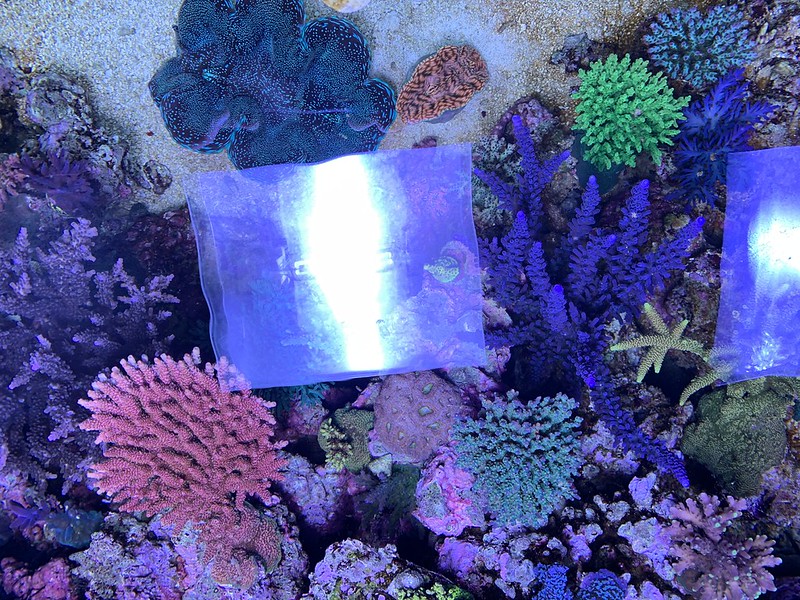
Can you show us your system so we judge how experienced you are..
Here is mine
75a3436567c63efcf2a044cc4fdf9e3d.jpg
 
If we are measuring Johnsons, here is 1/4 of mine. Acropora and clams only. You should not need this... there are decades of sand studies and articles out there that say the same thing. Only message board posters and people wanting to sell you a product think that a sand bed is a "nitrate factory."
 
Organic Carbon dosing will not work without a good skimmer. It allows waterborne bacteria to grow faster. When they grow, they use some of the building blocks (lots of nitrogen and a bit of phosphorous). The bacteria then get skimmed out. If you are skimmerless, or have a so-so skimmer, then organic carbon dosing might not be for you.
Thanks. I had forgotten that. I will put skimmer back on if I decide to dose.
 
If we are measuring Johnsons, here is 1/4 of mine. Acropora and clams only. You should not need this... there are decades of sand studies and articles out there that say the same thing. Only message board posters and people wanting to sell you a product think that a sand bed is a "nitrate factory."
Not measuring. I do that all the time to understand who I am debating with. Lots of users will give a feedback that look confidence yet they cannot keep zoas. So I need to know who am talking to.
 
If we are measuring Johnsons, here is 1/4 of mine. Acropora and clams only. You should not need this... there are decades of sand studies and articles out there that say the same thing. Only message board posters and people wanting to sell you a product think that a sand bed is a "nitrate factory."
What's this brown algae on your sand?
This is what ppl want to avoid eith bare bottom...
You can have success with and without sand.
 

IF YOU HAD TO TAKE A REEFING EXAM, WOULD YOU PASS?

  • Yes!

    Votes: 32 45.7%
  • Not yet, but I have one that I want to buy in mind!

    Votes: 9 12.9%
  • No.

    Votes: 26 37.1%
  • Other (please explain).

    Votes: 3 4.3%

New Posts

Back
Top