calcium reactor cant keep up with alk

CoralWealth

2500 Club Member
View Badges
Joined
Nov 13, 2016
Messages
4,038
Reaction score
2,077
Location
Allentown PA
Rating - 100%
13   0   0
I have a korallin calcium reactor that is working great but it cant keep up with my demand. I have the effluent all the way open and ph set at 6.4 inside.

Would adding a second chamber help a lot or not really? I really do not want to buy another whole calcium reactor right now. If a second chamber will help, I will go that route.
 
So its Alk demand thats the issue? Cal and Mag are ok?.
 
I have a korallin calcium reactor that is working great but it cant keep up with my demand. I have the effluent all the way open and ph set at 6.4 inside.

Would adding a second chamber help a lot or not really? I really do not want to buy another whole calcium reactor right now. If a second chamber will help, I will go that route.
It may help a little but not like you are wanting it to. My main chamber will use up all the media and my second chamber will use maybe 10% of what the first one does.
 
I must be doing something wrong, I am going to have to check my ph probe and also the dkh coming out of the effulent. my reactor is suppose to be good up to 400g and my DT is only 180g with a 40g frag tank.

What should the dkh be coming out of the effulent or is there a way to calculate what it should be depending on the ph level?
 
This calculator helped me a bunch. My effluent is at about 27 dkh. I run at a pH of 6.2, though my probe isn't calibrated, and an effluent rate of 14 liters/day.
 
Which one do you have? I run Korallin too and the 3001 can handle my high stocked 240 where I melt a 50 pound bag of ARM or Reborn every 6 months - you can literally watch the media go down every few days and you can make a new mark with a crayon. It is probably not the reactor.

First, what is the dKh of the effluent? It needs to be in the mid-high 20s. If you are less than this, then you need more bubbles or to turn the effluent down... I would turn the effluent down. Use the dKh of the effluent to tell you if the ratio is correct, not the pH.

Second chamber only does anything if there is excess co2 leaving the first reactor. The Korallin will trap co2 in the top if you leave that port plugged... this is a great way to make sure that you do not have excess co2. Some people put that port back into the inlet - this can result in a too-much co2 issue.

This is my standard PSA, so ignore it if you want: pH probe calculations can be wrought with failure since the are prone to failure themselves. I do not run a pH probe on mine... just set it by hand. I struggled with a pH monitor when Milwaukee first came out with them probably 20-25 years ago and found that they really do not add much - when they are working, they don't do anything but let CO2 flow... and when they are not working, they cause you all kinds of trouble.
 
Which one do you have? I run Korallin too and the 3001 can handle my high stocked 240 where I melt a 50 pound bag of ARM or Reborn every 6 months - you can literally watch the media go down every few days and you can make a new mark with a crayon. It is probably not the reactor.

First, what is the dKh of the effluent? It needs to be in the mid-high 20s. If you are less than this, then you need more bubbles or to turn the effluent down... I would turn the effluent down. Use the dKh of the effluent to tell you if the ratio is correct, not the pH.

Second chamber only does anything if there is excess co2 leaving the first reactor. The Korallin will trap co2 in the top if you leave that port plugged... this is a great way to make sure that you do not have excess co2. Some people put that port back into the inlet - this can result in a too-much co2 issue.

This is my standard PSA, so ignore it if you want: pH probe calculations can be wrought with failure since the are prone to failure themselves. I do not run a pH probe on mine... just set it by hand. I struggled with a pH monitor when Milwaukee first came out with them probably 20-25 years ago and found that they really do not add much - when they are working, they don't do anything but let CO2 flow... and when they are not working, they cause you all kinds of trouble.

Thank you for the response. I will be measuring the DKH when i get home for lunch in a couple hours. I have the outlet at the top open and the side one closed, when I tried to do it the other way the reactor always stopped working after a couple days.
 
If the top of the Korallin is filling up with air, then you have too much co2 or a leak in the input lines - I have had both before (the inlet line leak nearly killed me and took me a while to find... like months since it never dawned on me to check). If properly tuned, then it should run with the top outlet plugged and no accumulation of gas - this means that the all of the co2 is dissolving. This is what the trapping feature is for. If you have the top outlet as the effluent outlet, then you could be having co2 enter the tank unused - this is a waste in the reactor and can affect your tank pH. If this is the way that you are doing it, then I would consider making that outlet go back into the inlet where the co2 can be recycled (or turning it off again) and using the correct outlet from the top/side tube.

I have a both Korallin 10001 and a 3001 and I like the Korallins not only because the ehiem pumps last forever top mounted where it is harder for small, melted debris to get into them, but also because of the co2 trapping feature. All that I look for ever day is bubbles to be bubbling and to make sure that the top has no trapped air... if it does, then I have something that I need to sort out.

Some people HATE these reactors because they shut down with the co2 build up, but I love that... it taught me how to tune the thing and with no extra co2 entering the tank, my tank pH is the same as if I did not have a reactor (or within .05).

One of the big issues with using a co2 regulator is that they can dump a bunch of co2 in at once. When the pH rises, they turn on and you have the co2 set higher than you would if it ran all of the time. This can accumulate a bunch of co2 in the reactor. When the pH lowers, the co2 will shut off and the co2 will end up dissolving in time if you keep on recycling it. This is not as efficient as having a constant supply of correct co2 and will be slightly less efficient with the ups and down, but it can work if you do not have a co2 trap and do not allow that extra co2 out of the reactor.

FWIW, a 1501 would satisfy the demands of my tank in daily operation. I would just have to change the media every week instead of every few months, or so. The only real difference is reactor size is how long the media lasts.

If you want to plug the top, drop the pH probe and use the side outlet again, I can tell you exactly how to tune this particular reactor for optimum co2 bottle longevity and tons of output.

sorry for the tldr
 
well I dont know what is going on but my effluent coming out was the exact same as my tank even though it says the ph in the calcium reactor is 6.4 and it is definitely using C02 as I just watched it add it.

I will try the side outlet and see if I can help this. however last time I always end up with it not working within a couple hours or a couple days.

Running around 120ml a min
Alk in my tank is 6.4 and I want it to be 7

Somehow it is definitely keeping up as my corals are growing good and I am very SPS dominant but I dont know how the effulent is the exact same as my tank. I just changed my output to the side so I will see what it is in a hour
 
Last edited:
I just tested again and got 13. this is around 120-150ml/min at 6.4 ph. I still think that is really low

I am using reborn media
 
Your pH is probably not really at 6.4. If so, you would have higher dKh number since reborn EASILY melts at this pH. This is no big deal, but you can see why lots of people don't use a pH monitor or controller on their CaRx after a while even though they are popular at first.

120-150mls of effluent seems like a lot to me. I melt about 50lbs every six months and mine is about half of that. I don't really measure anymore, so I am not really sure. After a while, you get to where you can tune one of these by just looking at it.

I would recommend this:
  • Stop using the pH probe
  • Close off the top port so that co2 can get trapped again
  • Put the effluent out the discharge side of the pump
  • Slow your effluent rate down to just where it is a broken stream and just a tad more than a constant fast drip where you can see the individual drips
  • Set the bubbles to 10 per minute
  • Go to bed
  • In the AM, check and see if any co2 has built up in the top
  • Check the alk in the effluent
  • If the alk in the effluent is over 20, then this is good - over 25 would be better. If not, then up the bubbles to 12 or 14 and then wait a day to test again. Adjust the bubbles more if you need to, but wait a day to test after you adjust anything. When you get over 25, then count the bubbles and measure the effluent in mls - this is your ratio that you will need to maintain. Anything from 25-30 is going to be OK without melting the media. You can go higher if you NEED to, but you can risk melting the media - you will not need to go this high unless your tank is filled with colonies as big as the ones in Copps tank.
  • See if this current ratio will keep up with your tank. If it does, then good. If not, then you have to raise both the effluent rate and bubbles in the same proportion until it does.
Basically, tune the reactor to be over 25 dKh, and then raise or lower it from there to meet the demands of your tank. Learn to do this with the drips and bubbles and you will be set for life.

If you are filling the top of the reactor up with gas in a few hours, then make sure that the feed pump is not pumping in air... or that the intake lines are secure. 10 bubbles per minute on a broken stream should not have any excess co2.

If you want your tank at 7 dKh, then use some baking soda to raise it up there... the CaRx is not good at raising levels and should only be used to maintain them.

While you are messing with all of this, keep your tank stable with baking soda and dowflake (calcium chloride).
 
Your pH is probably not really at 6.4. If so, you would have higher dKh number since reborn EASILY melts at this pH. This is no big deal, but you can see why lots of people don't use a pH monitor or controller on their CaRx after a while even though they are popular at first.

120-150mls of effluent seems like a lot to me. I melt about 50lbs every six months and mine is about half of that. I don't really measure anymore, so I am not really sure. After a while, you get to where you can tune one of these by just looking at it.

I would recommend this:
  • Stop using the pH probe
  • Close off the top port so that co2 can get trapped again
  • Put the effluent out the discharge side of the pump
  • Slow your effluent rate down to just where it is a broken stream and just a tad more than a constant fast drip where you can see the individual drips
  • Set the bubbles to 10 per minute
  • Go to bed
  • In the AM, check and see if any co2 has built up in the top
  • Check the alk in the effluent
  • If the alk in the effluent is over 20, then this is good - over 25 would be better. If not, then up the bubbles to 12 or 14 and then wait a day to test again. Adjust the bubbles more if you need to, but wait a day to test after you adjust anything. When you get over 25, then count the bubbles and measure the effluent in mls - this is your ratio that you will need to maintain. Anything from 25-30 is going to be OK without melting the media. You can go higher if you NEED to, but you can risk melting the media - you will not need to go this high unless your tank is filled with colonies as big as the ones in Copps tank.
  • See if this current ratio will keep up with your tank. If it does, then good. If not, then you have to raise both the effluent rate and bubbles in the same proportion until it does.
Basically, tune the reactor to be over 25 dKh, and then raise or lower it from there to meet the demands of your tank. Learn to do this with the drips and bubbles and you will be set for life.

If you are filling the top of the reactor up with gas in a few hours, then make sure that the feed pump is not pumping in air... or that the intake lines are secure. 10 bubbles per minute on a broken stream should not have any excess co2.

If you want your tank at 7 dKh, then use some baking soda to raise it up there... the CaRx is not good at raising levels and should only be used to maintain them.

While you are messing with all of this, keep your tank stable with baking soda and dowflake (calcium chloride).


I greatly appreciate all of that and I will try that.

At lunch around 1pm, I closed the top and opened the side where there is a pretty good stream and it is breaking a little but also faster then I can see the individual drips. Right now I have the bubbles at 1 per second with a carbon doser, so I am doing a lot more then what you are saying to do. My LFS ran out of PH calibration so I ordered it online and saltwateraquarium is in PA too so there is a good chance that I may actually get it tomorrow and I will check my PH probe again.

I am going to check the alk effluent again when I get home to see if it happened to go any higher with using the side outlet. Why do you suggest having the bubbles so low?

I wanted to do the strategy of always having the same stream but the only thing that I need to change when demand changed is lowering the PH in the chamber and using more bubbles per minute. It has been working for a long time but recently I have found my alk to be around 6 when I want it to be closer to 7. I do raise my alk by using BRS 2 part to get it to 7 and then I see how fast it drops or if the calcium reactor keeps it there or if it raises it, etc. Recently it just hasnt been able to keep up and I thought it was because this calcium reactor really doesnt hold that much media compared to other ones.


Edit: oh okay I see what you are saying. You are saying to use a constant 10 bubbles per minute and dont use the PH monitor at all. so to just plug the carbon doser into a regular outlet and let it run 24/7 at 10 bubbles per minute.

Why would that be any different then having the ph inside the chamber at 6.4 using the ph monitor and having it shut off obviously when it goes lower and turn on when it goes higher(assuming it is at that, I will confirm tomorrow)
 
A broken stream and 10-15 bubbles will probably produce about all that you need. If you can count the drops, then 60 per minute and 15 bubbles (40 bubbles/10 drips for a new tank (I know that your tank is not new)... in that 4 to 1 ratio is nearly perfect)... it can get hard to count drips, though. I have not see your tank, so I have no idea how much coralline you have or the coral size, but you do not need that fast of a stream or that many bubbles in most cases. Faster or slower does not matter... what matters in the dKh of the effluent. Less bubbles usually means a better pH in your tank, if you care (I do not, but some people do).

60 bubbles per minute is way too much unless your tank is packed side to side and front to back with growing acropora and coralline capable of covering the front glass in a few weeks if you left it unchecked. This is a lot of calcification. You are probably letting a lot of co2 escape. If the top fills up again, then that is a dead giveaway that you are not dissolving the co2 and you are adding way too much.

Some people NEED to use a fast stream and waste co2 if they use a pH regulator since they "dump" in co2 in large doses at a time when the regulator kicks on.

You do not want to keep the stream steady and adjust the pH. This is prone to failure. Once you get away from the correct ratio, the output will not move in a linear fashion and you can melt media if you go too low or just stop production if you are just a tad too high. Learn to set the thing using the right ratio. You will only have to adjust it a few times a year once you get good at it. Right now, mine is a bit low since the coral grew, so I will have to turn both up soon. Once I turn it up, the reactor will raise the dKh from 6.1 to 7.0 over the next few months. Then, the corals will grow more, the demand will stabilize for a while and then start to go again on the downswing. About 6 months from now, I will have to turn it back up again. All of this is driven on growth and consumption. With a growing tank, your CaRx will not stay perfect all of the time since it cannot slowly and methodically raise the output level, but you can do it in steps.

Later, I will go and count my bubbles, measure the mls of effluent and get a dKh reading for you. I have 2 tanks running... one that is new with some frags and stuff up to 2" and another with wall to wall colonies... both grow coralline like crazy which chews up a lot of carbonate and calcium. If you let me know which tank is more like yours, I can do that one.
 
A broken stream and 10-15 bubbles will probably produce about all that you need. If you can count the drops, then 60 per minute and 15 bubbles (40 bubbles/10 drips for a new tank (I know that your tank is not new)... in that 4 to 1 ratio is nearly perfect)... it can get hard to count drips, though. I have not see your tank, so I have no idea how much coralline you have or the coral size, but you do not need that fast of a stream or that many bubbles in most cases. Faster or slower does not matter... what matters in the dKh of the effluent. Less bubbles usually means a better pH in your tank, if you care (I do not, but some people do).

60 bubbles per minute is way too much unless your tank is packed side to side and front to back with growing acropora and coralline capable of covering the front glass in a few weeks if you left it unchecked. This is a lot of calcification. You are probably letting a lot of co2 escape. If the top fills up again, then that is a dead giveaway that you are not dissolving the co2 and you are adding way too much.

Some people NEED to use a fast stream and waste co2 if they use a pH regulator since they "dump" in co2 in large doses at a time when the regulator kicks on.

You do not want to keep the stream steady and adjust the pH. This is prone to failure. Once you get away from the correct ratio, the output will not move in a linear fashion and you can melt media if you go too low or just stop production if you are just a tad too high. Learn to set the thing using the right ratio. You will only have to adjust it a few times a year once you get good at it. Right now, mine is a bit low since the coral grew, so I will have to turn both up soon. Once I turn it up, the reactor will raise the dKh from 6.1 to 7.0 over the next few months. Then, the corals will grow more, the demand will stabilize for a while and then start to go again on the downswing. About 6 months from now, I will have to turn it back up again. All of this is driven on growth and consumption. With a growing tank, your CaRx will not stay perfect all of the time since it cannot slowly and methodically raise the output level, but you can do it in steps.

Later, I will go and count my bubbles, measure the mls of effluent and get a dKh reading for you. I have 2 tanks running... one that is new with some frags and stuff up to 2" and another with wall to wall colonies... both grow coralline like crazy which chews up a lot of carbonate and calcium. If you let me know which tank is more like yours, I can do that one.


Makes sense, thanks again for all of that.

I do not have all colonies but I definitely have a lot bigger corals then frags that cover my tank and I grow coralline like crazy that it is insanely annoying and I am actually about to start using Copps idea of kydex for the back wall so I can just remove it and rinse it in muriac acid and replace it with another till that is ugly, switch and so on. (as I love the all black back look) I will try this calcium reactor method and make sure I measure my alk a lot. I would say almost all my corals are at least 3-4 inches and I have probably around 10-15 that are over 6 inches or around that. This is a 180 gallon tank with a 40 gallon frag tank attached. Coralline does fill my entire back glass in a month
 
Last edited:
I am glad that you know how to test dKh above what the test kit can read with the first syringe. I have tried to explain this to people before and sometimes it just goes nowhere and they never get it - probably because I am a bad explainer.

Once you get the output dKh over 25, then you are home free. The carbon doser box will make your life easy... fine tuning with a needle valve is a real pain for most.

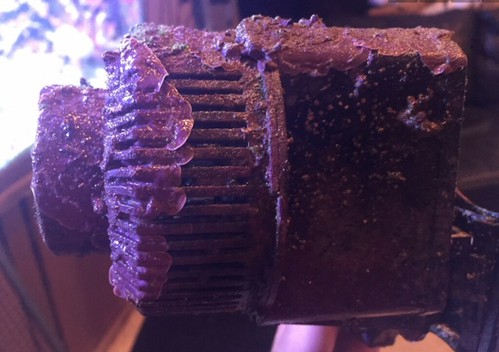
It is nearly always good to learn from Copps. I love the purple back glass... hate it everywhere else. The coralline will plug up my Tunze pumps in no time... like actually seal them closed.
 
I am glad that you know how to test dKh above what the test kit can read with the first syringe. I have tried to explain this to people before and sometimes it just goes nowhere and they never get it - probably because I am a bad explainer.

Once you get the output dKh over 25, then you are home free. The carbon doser box will make your life easy... fine tuning with a needle valve is a real pain for most.

It is nearly always good to learn from Copps. I love the purple back glass... hate it everywhere else. The coralline will plug up my Tunze pumps in no time... like actually seal them closed.


Thanks a lot for the help
 
Jda is this method applicable for other brands? I use a GEO with a ph probe and a cheap regular regulator

Corey
 

IF YOU HAD TO TAKE A REEFING EXAM, WOULD YOU PASS?

  • Yes!

    Votes: 32 45.7%
  • Not yet, but I have one that I want to buy in mind!

    Votes: 9 12.9%
  • No.

    Votes: 26 37.1%
  • Other (please explain).

    Votes: 3 4.3%
Back
Top