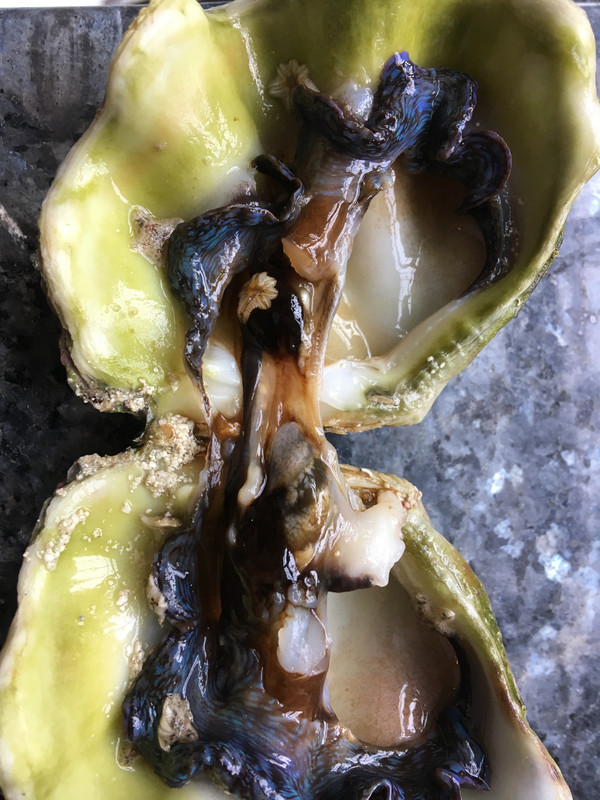
Clams are eaten by starfishes ???

Gringo87

New Member
View Badges
Joined
Jul 29, 2017
Messages
8
Reaction score
6
What state or country do you live in
Rating - 0%
0   0   0
Hello in here... i have big trouble.... my clams looked a litle sad, and i took them up for checking for pyramid snails... but it was starfishes tiny starfish in the flesh of the clams :O have you ever tryed that ?

sorry my bad english, im from denmark
 
Never heard of starfish doing that. Can you upload a picture?
 
yes i will take one tomorrow... now i have put all the starfishes in the toilet :P but i think tomorrow there will be lots off them again :(
 
why is the clam happy and look very healthy again after i removed the starfish ?
 
Most starfish eat clams...That's what I have fed the one I used to keep
 
Lets see some pics. It's possible that only parts of the clam have started to die.
 
Most starfish eat clams...That's what I have fed the one I used to keep
Most starfish do not eat clams. Some do and are predatory, others do not and are scavengers or detritivores. The starfish in question are small, probably micro brittle stars or asterina stars which are scavengers and are not clam predators.
 
they look like asterina but they are almost black.... theyu are very dark.... i will take pictures tomorrow
 
Most starfish do not eat clams. Some do and are predatory, others do not and are scavengers or detritivores. The starfish in question are small, probably micro brittle stars or asterina stars which are scavengers and are not clam predators.

Agreed.

I have kept all kinds of starfish with clams without issue.

Sometimes it's impossible to tell that a clam is compromised and on the way out. One clue is when shrimp, crabs and other inverts begin to hang around the clam.

Looking forward to an image.
 
Maybe it's just me then but every starfish I've had I've feed live clams
 
Maybe it's just me then but every starfish I've had I've feed live clams
So either the clams died or were dying and the starfish scavenged them, or the species of starfish you had were predatory. Just because the ones you had ate or appeared to eat live clams, does not mean they ate the clams alive as predators, nor does it mean that most starfish eat live clams.
 
Most starfish are opportunistic feeders that monopolize on the free availability of food. Due to many clams being unable to close their shell completely, most starfish will use this advantage to release their stomach into the clam's gap and consume their insides. That being said, some of the most common stars in the pet trade are those which don't eat clams. However, if the sea star in question is a hitchhiker, then it could be a consumer
 
Most starfish are opportunistic feeders that monopolize on the free availability of food.

This is way over generalized, again some are predatory, some are not and we have both types readily available in the trade.

Due to many clams being unable to close their shell completely, most starfish will use this advantage to release their stomach into the clam's gap and consume their insides.

I'm not sure where your info is coming from, but many bivalves are able to tightly seal their shells together preventing anything from slipping inside. In fact, some starfish have the ability to pry open a tightly sealed bivalve shell to get inside.
 
sorry the late picture but i drop my phone and it drowned in the tank :P but here is the devils.... and now my biggest clam is game over...

2017-08-19 21.57.31.jpg
 
Asterina stars, most are harmless algae eaters. Some are coral eaters, I have never heard of Asterina preying on inverts such as clams. The coloration to yours is interesting, not often you see the pink/red colored ones. There are hundreds of different types and little documentation for specific identification. They can become opportunistic feeders when the normal food source is absent, but again I have never heard or seen any reports of Asterina preying on Tridacna.
 
Asterina stars, most are harmless algae eaters. Some are coral eaters, I have never heard of Asterina preying on inverts such as clams. The coloration to yours is interesting, not often you see the pink/red colored ones. There are hundreds of different types and little documentation for specific identification. They can become opportunistic feeders when the normal food source is absent, but again I have never heard or seen any reports of Asterina preying on Tridacna.

This. They are almost certainly eating dead or dying flesh.
 
This. They are almost certainly eating dead or dying flesh.

20 years in the hobby, and reefers have as many opinions on asterinas today as they did when I started. ( http://reefkeeping.com/joomla/index.php/current-issue/article/45-reefkeeping-101- ) I've kept clams for a long time, but noticed this guy retracting and it's the second one so I sacrificed him and look what I found . . . it looks like some species of asterina stars are opportunistic feeders . . . on clams.

IMG-0236.jpg


IMG_0236.JPG
 
20 years in the hobby, and reefers have as many opinions on asterinas today as they did when I started. ( http://reefkeeping.com/joomla/index.php/current-issue/article/45-reefkeeping-101- ) I've kept clams for a long time, but noticed this guy retracting and it's the second one so I sacrificed him and look what I found . . . it looks like some species of asterina stars are opportunistic feeders . . . on clams.

IMG-0236.jpg


IMG_0236.JPG

How do you know they were killing the clam vs. just eating the already dying or dead tissue? They are well known to be scavengers.
 

IF YOU HAD TO TAKE A REEFING EXAM, WOULD YOU PASS?

  • Yes!

    Votes: 32 45.7%
  • Not yet, but I have one that I want to buy in mind!

    Votes: 9 12.9%
  • No.

    Votes: 26 37.1%
  • Other (please explain).

    Votes: 3 4.3%
Back
Top