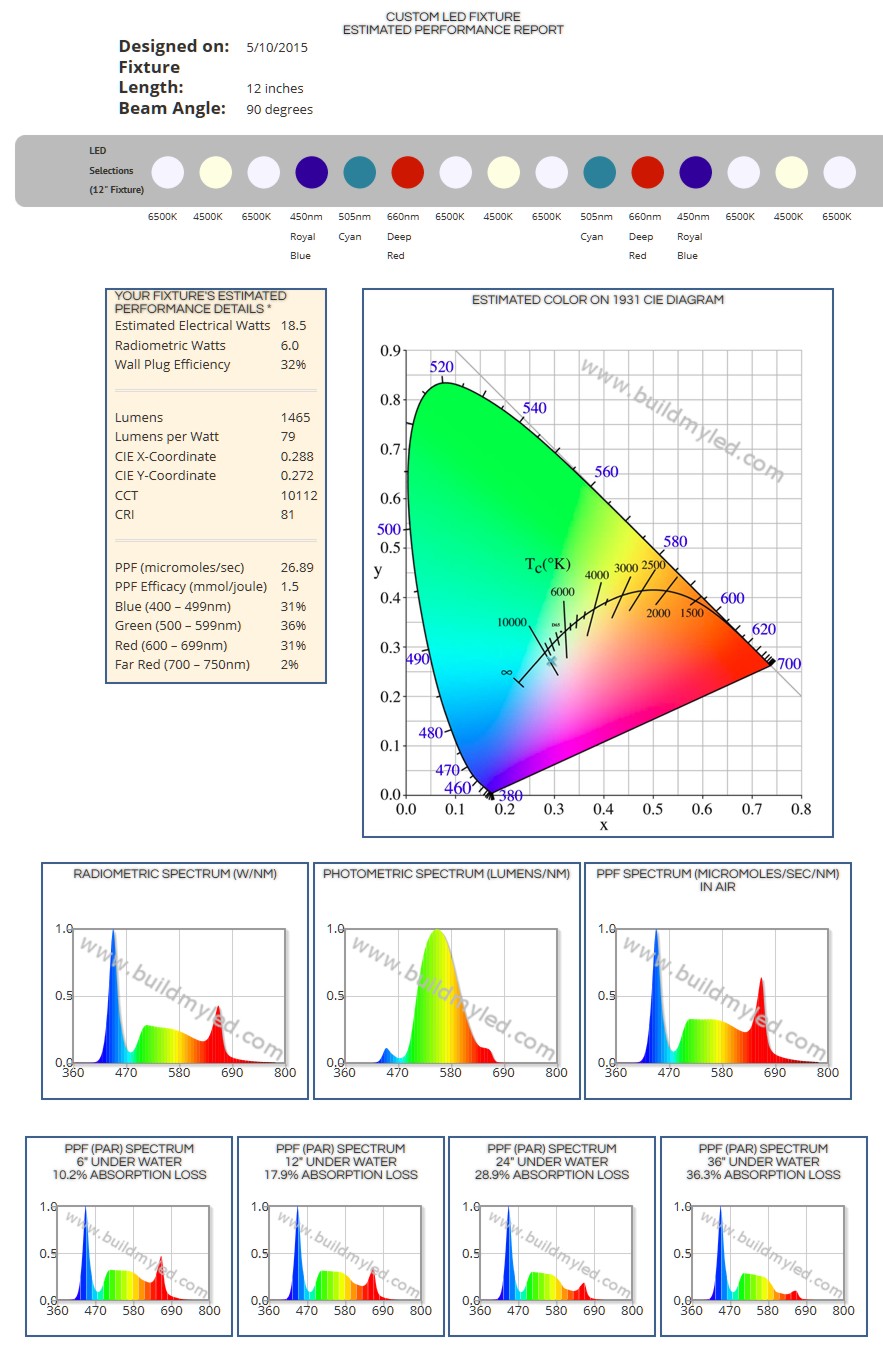
Dunno. There are lots of people with nutrients like this that don't have nuisance algae. I'm assuming my cleanup crew is just really good.Then it should be ideal for algae growth


Follow along with the video below to see how to install our site as a web app on your home screen.
Note: This feature may not be available in some browsers.

Dunno. There are lots of people with nutrients like this that don't have nuisance algae. I'm assuming my cleanup crew is just really good.Then it should be ideal for algae growth


its mostly a myth. Yes red spectrum might grow algae 5% faster than blue or white light but algae will grow extremely well under any spectrum from 420-700 if there is enough phosphate and nitrate in the water.

What about cleanup crew and fish being in the display but not the refugium?Not sure about the 5% (I understand you’re shooting off the hip here). In my system, I have next to zero algae in my DT (no algae eater until I recently bought a tang and a rabbit), but in my fuge where I use a red grow light, I grow a ton of bryopsis and hair algae along with dragons breath and chaeto. All conditions are the same except the light.
I read somewhere that vaccines cause autism ;BookwormI have my red at 10% on my XR15W Pro Gen 4. I read somewhere that red promotes algae growth

Not sure about the 5% (I understand you’re shooting off the hip here). In my system, I have next to zero algae in my DT (no algae eater until I recently bought a tang and a rabbit), but in my fuge where I use a red grow light, I grow a ton of bryopsis and hair algae along with dragons breath and chaeto. All conditions are the same except the light.


No. not the same..no competition except between algae types..
I'm assuming you have corals in the DT?Huh? Not sure I follow. The environments are the same except light spectrum. I didn’t put hair algae or bryopsis in my sump. It grew there because of the conditions are right. The only condition that’s different from the DT is the light. So that makes me conclude that the light is the one condition causing algae to grow in my sump and not my DT.
I could be wrong?


I'm assuming you have corals in the DT?
Phytochromes from land plants, Lagarias said, respond to red light — plants absorb red and reflect green light, which is why they look green. Red light does not penetrate far into water, and some marine and shore-dwelling algae lack phytochrome genes. But others do not, so Lagarias and colleagues looked at the properties of phytochromes from a variety of algae. They found that phytochromes from algae, unlike those of land plants, are able to perceive light across the visible spectrum — blue, green, yellow, orange, red and far-red.
Cyanophora paradoxa, one of the algae with newly discovered phytochromes.
This broad spectral coverage likely helps algae make use of whatever light they can in the ocean, Lagarias said — whether adjusting their light-harvesting chemistry for changing conditions, or rising and sinking in the water column as light levels at the surface change. Because different colors of light penetrate to different depths in water, algae face challenges in light harvesting that land plants do not. This work from the Lagarias lab shows one way that algae can rise to the occasion.

https://juniperpublishers.com/aibm/pdf/AIBM.MS.ID.555682.pdfExperiments conducted in the current research showed
that, the growth rate of
Chlorella vulgaris
increased by 5.31%,
3.72%, and 6.31% respectively in presence of LED’s (Red, Blue
and White). Also the study proved that the productivity of algae
increased especially in red, blue and white LED light when
compared with normal tube lights.
Lighting. The type of lighting you are using can greatly affect the growth of nuisance algae in a system. Lighting that has a high amount of green and yellow can increase nuisance algae growth. Orphek LED systems do not use LEDs that promote nuisance algae growth.
Well, seeing your last tank (more than just frags) and the success you achieved through using the T247's without their red and green diodes was enough for me to sign up.Yes, but mostly just frags and there’s plenty of room for algae to grow....if the conditions were right....you know, more red light. I honestly don’t know what you’re getting at?

not sure about what I can say about this:
https://orphek.com/10-tips-stop-nuisance-algae-growth/

There are slightly differing measurements on this, but red from sunlight will penetrate 3-10 meters in the ocean, depending on the study/post. This is not far compared to blue, but still plenty deep for all of us with fake oceans in our homes.