

Got a Dinos problem, could this be the answer.

  • Thread starter Thread starter atoll
  • Start date Start date
  • Tagged users None

atoll

2500 Club Member
View Badges
Joined
Dec 20, 2012
Messages
4,754
Reaction score
8,155
Location
Wales UK
Rating - 0%
0   0   0
I am.often asked will an oxydator cure my Dino or cyno problems. While I can never say yes I have long thought Oxydators are a great help in helping to eliminate or at least keep them at bay. I have not had a Dino problem on over 30 years or cyno since using Oxydator's in my tanks so I can hand on heart say an Oxydator will elimate these unwanted guests.
However, check out the link below from a guy suffering with Dinos and struggling to eradicate them. He turned to an Oxydator and....well read his review.
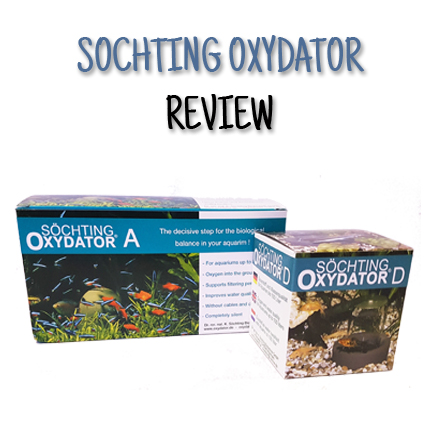
 
I use Peroxide as an oxidator. While not the total answer helps. Dino is photosynthetic and requires light for cell regeneration. Take away the light and youve won half the battle as you take away their food source.
 
I am sefinitely considering trying one now.

But... one thing

Mentioned in the article, is that the dinos use carbon even in blackput, and that was the logic behind working due to lack of oxygen.

However, I am pretty sure carbon or CO2 precense does not very directly in any way with available oxygen. IF I am not mistaken.

Still definitely going to try this and report the results.
 
From that article:

"I had learnt that dino have the potential to take up carbon dioxide and use it, even in the absence of light (such as a total blackout). I realised that the reason I may still have dino was due to a potential oxygen deficiency."

Where did he learn this, I wonder? I just read a lengthy article on dinos and it wasn't mentioned. I definitely want to learn more though

Edit: ^^ lol didn't see you already mentioned this ;)
 
However, I am pretty sure carbon or CO2 presence does not vary directly in any way with available oxygen. IF I am not mistaken.
yeah. That's correct.

There are a number of reasons that I may agree that a sochting oxydator could work vs nuisance like cyano or dinos.
maybe....
1) small amount of h2o2 escapes the container - not just O2 bubbles.
2) other reactive oxygen species may be present or produced.
3) either the h2o2 or the other reactive oxygen species might damage the nuisance directly.
4) the oxidizers may react with organics that are present and available as food.
5) the oxidizers may reshape the bacterial community in a way unfriendly to the dinos/cyano
6) the peroxide etc on a constant-add basis may dramatically affect the form of Fe/other trace metals, and possibly deprive dinos of that.
Randy has talked about this a good bit, in the context of trying to explain that h2o2 does a lot of things in a tank that may not be direct killing - but could be important: "Hydrogen peroxide will alter the speciation of several trace metals, including iron, by driving them to a higher oxidation state." -Randy

All those things might happen - but I strongly doubt that the way oxidizers chase away dinos or cyano is that dinos don't like O2.

....also the linked account said that the hobbyist added DinoX - algaecide meant to kill dinos - at the same time.
"I used Dino X and the Oxydator in my saltwater tank and I watched the dino dying away on a daily basis (alongside the cyanobacteria)."

Long way of saying, it may (or may not) work. But it's not because dinos were thriving in a system that was deprived of O2 and now with O2, the dinos go away.
 
I'm willing to try the product. Is there a reseller in the US where I can get the model A for my 100gallon tank? All I can find is a seller from France on eBay for $120.
 
I'm willing to try the product. Is there a reseller in the US where I can get the model A for my 100gallon tank? All I can find is a seller from France on eBay for $120.
Most in the US buy Oxydators from the shrimp tank in Canada or import from Europe.
 
Day 1 of the battle. Hoping for the best result.
PXL_20230114_192417551.jpg

PXL_20230114_192425882.jpg

PXL_20230114_192438624.jpg
PXL_20230114_192452550.jpg
 
I am.often asked will an oxydator cure my Dino or cyno problems. While I can never say yes I have long thought Oxydators are a great help in helping to eliminate or at least keep them at bay. I have not had a Dino problem on over 30 years or cyno since using Oxydator's in my tanks so I can hand on heart say an Oxydator will elimate these unwanted guests.
However, check out the link below from a guy suffering with Dinos and struggling to eradicate them. He turned to an Oxydator and....well read his review.

I was thinking of getting one for my sump, but the only good space is in a chamber with a media brick that supposedly should have anarobic bacteria in it. Will this increase the O2 too much? Should I find another space for it?
 
I was dosing straight peroxide in my system for combating velvet which worked, 70ml a day of 12% peroxide. Before and after the direct dosing I was running 2 oxidators.

I did notice when direct dosing peroxide the Dino’s died out. I had uv as well but previously to dosing did have uv and oxidators running. So I had Dino’s until dosing peroxide.

even while dosing peroxide I had cyano so I doubt either are a great option for cyano.

system is im150 with a 150g Rubbermaid sump. So around 200 gal total volume give or take for reference. Direct peroxide dosing did not kill the chaeto in sump, pep shrimp and snails in sump, CSB nem in DT or have any impact or other life that I could notice in the tank but was effective with Dino’s and velvet.

Using test strips peroxide concentration was 1-3ppm steady. Held that a couple months.

I still run 2 oxidators because I have them now that I stopped dosing peroxide. I wanted to add my exp since have run them and straight dosed peroxide for a long time.
 
I was dosing straight peroxide in my system for combating velvet which worked, 70ml a day of 12% peroxide. Before and after the direct dosing I was running 2 oxidators.

I did notice when direct dosing peroxide the Dino’s died out. I had uv as well but previously to dosing did have uv and oxidators running. So I had Dino’s until dosing peroxide.

even while dosing peroxide I had cyano so I doubt either are a great option for cyano.

system is im150 with a 150g Rubbermaid sump. So around 200 gal total volume give or take for reference. Direct peroxide dosing did not kill the chaeto in sump, pep shrimp and snails in sump, CSB nem in DT or have any impact or other life that I could notice in the tank but was effective with Dino’s and velvet.

Using test strips peroxide concentration was 1-3ppm steady. Held that a couple months.

I still run 2 oxidators because I have them now that I stopped dosing peroxide. I wanted to add my exp since have run them and straight dosed peroxide for a long time.
Thanks for sharing your experience. I will try direct H2O2 dosing if my Dino problem does not go away after using the Oxydator.
 
I had this oxydator for a year or so. Zero effect on anything, including the dinos. Ill buy a true ozone reactor.

What helped to beat dinos, is rising nitrates and add all kind of bacteria including the piece of live rock.
 
I was dosing straight peroxide in my system for combating velvet which worked, 70ml a day of 12% peroxide. Before and after the direct dosing I was running 2 oxidators.

I did notice when direct dosing peroxide the Dino’s died out. I had uv as well but previously to dosing did have uv and oxidators running. So I had Dino’s until dosing peroxide.

even while dosing peroxide I had cyano so I doubt either are a great option for cyano.

system is im150 with a 150g Rubbermaid sump. So around 200 gal total volume give or take for reference. Direct peroxide dosing did not kill the chaeto in sump, pep shrimp and snails in sump, CSB nem in DT or have any impact or other life that I could notice in the tank but was effective with Dino’s and velvet.

Using test strips peroxide concentration was 1-3ppm steady. Held that a couple months.

I still run 2 oxidators because I have them now that I stopped dosing peroxide. I wanted to add my exp since have run them and straight dosed peroxide for a long time.
Of you go by the Oxydator instructions then it is unlikely to help much with dinos anyway. The instructions with oxydatare aimed at FW not SW. You have to run far higher % of peroxide and number of catalysts even if you have no Dino problems.
There is a balancing act here and an oxydator is a simple piece of peroxide dosing equipment. You may have been running a higher % of peroxide but probably not high enough.
 
I had this oxydator for a year or so. Zero effect on anything, including the dinos. Ill buy a true ozone reactor.

What helped to beat dinos, is rising nitrates and add all kind of bacteria including the piece of live rock.
Sounds like every tank is different and unique.
 
Of you go by the Oxydator instructions then it is unlikely to help much with dinos anyway. The instructions with oxydatare aimed at FW not SW. You have to run far higher % of peroxide and number of catalysts even if you have no Dino problems.
There is a balancing act here and an oxydator is a simple piece of peroxide dosing equipment. You may have been running a higher % of peroxide but probably not high enough.
Maybe. 12% peroxide kept in fridge was used on each A model with 2 catalysts in each. I don’t really notice any impact on tank with or without them or when empty but I use them anyway because already have them and no reason not to. But after direct dosing so much peroxide and seeing what changed and what didn’t in my system my personal experience is they don’t do much. But that’s just my exp in my system. I’m sure it varies. Been using them for years in systems.

of course they don’t output anything like direct dosing 70ml/day
 

IF YOU HAD TO TAKE A REEFING EXAM, WOULD YOU PASS?

  • Yes!

    Votes: 32 45.7%
  • Not yet, but I have one that I want to buy in mind!

    Votes: 9 12.9%
  • No.

    Votes: 26 37.1%
  • Other (please explain).

    Votes: 3 4.3%
Back
Top













