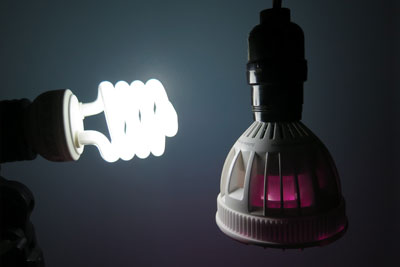
Growth led vs aquarium led

Idk about dissection but alot has been done already in this field/topic


A led 'bulb' at Home Depot costs x. A smart led bulb with an app and support structure costs x more... Where's the mystery? Not getting into the weeds on how much more is appropriate...
I think this conversation/discussion is about the "weeds" , how much extra are the weeds?
 
Idk about dissection but alot has been done already in this field/topic


A led 'bulb' at Home Depot costs x. A smart led bulb with an app and support structure costs x more... Where's the mystery? Not getting into the weeds on how much more is appropriate...

With all due respect for Telegraham its very low level.
Look here if you want to know more:

 
Correct spectrum aside.....

Theres a huge difference between what terrestrial plants needs are, and what aquatic plants need are.

True. Its not the same sun. The sun for marine life is completely different.
 
No it's the same sun.

The difference is the sunlight through air particles where nothing refracts it, or sunlight through the depths of the ocean where light is filtered by the water, and refracted.
 
No it's the same sun.

The difference is the sunlight through air particles where nothing refracts it, or sunlight through the depths of the ocean where light is filtered by the water, and refracted.
Really? No magic sun?

How many ppl have aquariums large enough to deflect the light for it to make any difference for led light?

Did you try to search on Google for light spectrum water?
 
Again, full-spectrum is best for photosynthesis, yes, but not necessarily for coral growth. It has been shown many times that corals which are harvested from deep water (where they are really only naturally exposed to blue light) do better (grow faster and healthier) under blue light. Corals from shallow water, however, do better under full-spectrum light.

If you want peer-reviewed scientific articles to sort through, I have a bunch you can look over (including the handful I listed in my post on page one). Most of them don't account for the environment (depth) the corals were taken from though, so most of them say that white/red light is straight-up harmful to corals. The ones that do account for the environment (depth) the corals are from show deep water corals prefer blue light, and shallow water corals prefer white light.

Now, whether reef company LED's are worth the extra cost is another debate entirely.
 
Again, full-spectrum is best for photosynthesis, yes, but not necessarily for coral growth. It has been shown many times that corals which are harvested from deep water (where they are really only naturally exposed to blue light) do better (grow faster and healthier) under blue light. Corals from shallow water, however, do better under full-spectrum light.

If you want peer-reviewed scientific articles to sort through, I have a bunch you can look over (including the handful I listed in my post on page one). Most of them don't account for the environment (depth) the corals were taken from though, so most of them say that white/red light is straight-up harmful to corals. The ones that do account for the environment (depth) the corals are from show deep water corals prefer blue light, and shallow water corals prefer white light.

Now, whether reef company LED's are worth the extra cost is another debate entirely.
I agree.

But if you take corals from the deep sea other questions arise:

1. What about the temperature as they are used to colder water than an aquarium?
2. How will they react to a highly competetive biosphere with a lot of other corals, fish, invertibras etc
3. Will they get too much food as metabolisme is slower in the deep sea

There will probably be other questions and most people shouldnt keep those fish or coral that grow or live in those depths.

My original question was more simple through.. Are the led from the aquarium industry worth it?
I think thats a clear no.
 
I agree.

But if you take corals from the deep sea other questions arise:

1. What about the temperature as they are used to colder water than an aquarium?
2. How will they react to a highly competetive biosphere with a lot of other corals, fish, invertibras etc
3. Will they get too much food as metabolisme is slower in the deep sea

There will probably be other questions and most people shouldnt keep those fish or coral that grow or live in those depths.

My original question was more simple through.. Are the led from the aquarium industry worth it?
I think thats a clear no.
For clarification here, the "deep sea"/"deep water" in question (in the articles I've listed) is 40-50m, so while it is relatively deep, many commonly kept fish and corals are regularly found in those depths (including Emperor Angelfish, Pacific Blue Tangs, Kuda Seahorses, Dwarf Lionfish, Marine Bettas, etc.).

To address the other points here:
1. The temperature typically isn't too drastically different at the above depths vs. surface depths (the Gulf of Mexico, for example drops from an average of 77F to 71F at 200 feet deep [~61m]),* and warm deep water (50m or deeper)** is so common with tropical cyclones that many places consider it a requirement;*** so the majority of species found at these depths would likely be fine at reef tank temps even without special acclimation care.

2. Since these depths still have many fish and corals in them, they'd probably do fine.

3. Since many species found at these depths are found in shallow waters too, they'd likely be able to adapt without issue.


As mentioned, there are some valid reasons for the price differences between aquarium LED's and grow light LED's (controllability, manufacturer bulk discounts from their wholesalers, etc.); whether the extra price is worth it due to the extra features provided, though, is a personal decision. (Personally, I agree with you that they're probably not worth it, but most here will likely disagree.)

*Source:
**Source:
***Sources:
 
For clarification here, the "deep sea"/"deep water" in question (in the articles I've listed) is 40-50m, so while it is relatively deep, many commonly kept fish and corals are regularly found in those depths (including Emperor Angelfish, Pacific Blue Tangs, Kuda Seahorses, Dwarf Lionfish, Marine Bettas, etc.).

To address the other points here:
1. The temperature typically isn't too drastically different at the above depths vs. surface depths (the Gulf of Mexico, for example drops from an average of 77F to 71F at 200 feet deep [~61m]),* and warm deep water (50m or deeper)** is so common with tropical cyclones that many places consider it a requirement;*** so the majority of species found at these depths would likely be fine at reef tank temps even without special acclimation care.

2. Since these depths still have many fish and corals in them, they'd probably do fine.

3. Since many species found at these depths are found in shallow waters too, they'd likely be able to adapt without issue.


As mentioned, there are some valid reasons for the price differences between aquarium LED's and grow light LED's (controllability, manufacturer bulk discounts from their wholesalers, etc.); whether the extra price is worth it due to the extra features provided, though, is a personal decision. (Personally, I agree with you that they're probably not worth it, but most here will likely disagree.)

*Source:
**Source:
***Sources:

Now it becomes complicated :)

Water temperatures depends on how close to equator it is, how large and deep the sea is, how close land is, weather conditions, vulcanic activity and other factors:


As a general rule the deeper it is the colder it is, the slower the metabolism, the less competition and when we go deeper the structure of living organism also change.

When we talk about aquarium I think its the easiest to narrow our talk to less than 10 meters depth. When diving I also find this the most interesting from a life and colour perspective.

I believe we agree full spectrum is the best for that depht.
But its also very much about spread and in an aquarium that has to do with width and lenght of the light. In order to get a decent light with the marine LED brands you need a lot of units compared to growth LED light.
 
IF I test a light what grow light is people thinking?
I would say pick the size of the growth LED close to the dimensions of the aquarium (a bit smaller).

Go with one of the brands in my first post.
If possible go for a combination of LM301H/B and Osram diodes.
 
It wont have any sunlight. Most of the DT will be in the technical room without windows.
Heating will through the sump with floor heating and a zone to control it. Sunlight will make it hard to control the temperature.
Why spend probably thousands of extra dollars, having an in wall DT and "fish room"...when a tank stand, will serve the same purpose and costs FAR LESS. It is your same argument as why spend 2-3x on a light?

Also, it seems odd that you are going to do a big tank, spend a LOT of money on getting everything built for it and then complain about an extra $1k in lights vs the cheaper ones? Feels a bit like splitting hairs.

Also what does spread penetration look like? Sure maybe directly below the "grow lights" the par is fine, but where does it fade off? Do you need 3 of the grow lights, where you only need 1 of the reef light? at that point, you might as well spend a little more and just get the reef light.

Being able to control multiple channels of light in intensity and cycle is worth the cost of entry. That way, I can have full spectrum, while I am at work and have the tank be less "pretty" and when I home have more pleasing blue on the corals. I also get the ramp down and up of a night cycle and I can even match it to somewhere in the world. Sure, I might be able to accomplish this with blue t5's or some other supplemental but that is just more cost, looks uglier and does not have the gradual ramp up and down. Not just the on and off of different lights, that all have to be managed on different mechanical timers.

This hobby is crazy expensive, worrying about an extra g note in lighting that is good for at least 10 years or seems like a silly rock to die on. The Ecotech xr30 g6 covers 48" of tank. So at most people really only need 2 lights, as most people don't have 84" worth of tank a 48x84x24" tank is 418 gallons. That is a LOT OF TANK and technically only 2 XR30 g6's are required.

Unless you actually study this...to say that because something can grown plants, so it must be able to grow coral because it emulates the same sun, isn't scientific at all. The water variable is the biggest issue with that logic and until you study the effects of that single variable, it's all "hearsay" as well.
 
IF I test a light what grow light is people thinking?
I would say pick the size of the growth LED close to the dimensions of the aquarium (a bit smaller).

Go with one of the brands in my first post. If possible go for a combination of LM301H/B and Osram diodes.
 
apart from the growth and survival of the coral, there is also the aspect of how the tank looks. I personally dont like the way my tank looks under just natural light, a lot of the colours dont show under those lights... So i would never switch to growth leds (which is a very vague term btw, just saying). Also the points that others make with the controllability and effects you can create with reef lights.

but from a growth standpoint, arent you wasting a whole bunch of electricity lighting with a spectrum that the corals dont use? if you look at the photosynthetic profile of corals by looking at the types of chlorophyll they contain (chlorophyll A, chlorophyll B and carotenoids) most if not all of those have their main peak in the blue/violet spectrum
1680106274030.png


The argument that they use the same source (the sun) in the wild goes out of the window if you look at it from an efficiency standpoint if u ask me, apart from how much better reef tanks look with a little more blue leaning spectrum
 
apart from the growth and survival of the coral, there is also the aspect of how the tank looks. I personally dont like the way my tank looks under just natural light, a lot of the colours dont show under those lights... So i would never switch to growth leds (which is a very vague term btw, just saying). Also the points that others make with the controllability and effects you can create with reef lights.

but from a growth standpoint, arent you wasting a whole bunch of electricity lighting with a spectrum that the corals dont use? if you look at the photosynthetic profile of corals by looking at the types of chlorophyll they contain (chlorophyll A, chlorophyll B and carotenoids) most if not all of those have their main peak in the blue/violet spectrum
1680106274030.png


The argument that they use the same source (the sun) in the wild goes out of the window if you look at it from an efficiency standpoint if u ask me, apart from how much better reef tanks look with a little more blue leaning spectrum
I would agree, in my opinion, corals/reef tanks do look better with heavy blue lighting (not Windex style but heavy blue). I will also agree that wattage spent on spectrums the corals don't use is likely wasted. Though, it would be interesting to see a cost analysis that took into account the upfront cost of lighting, running cost, life expectancy of the fixture, and coral growth rate. Anyone have lots of money coral and time to waste??? Hahaha
 
Wow a lot of people defending companies that are robbing them blind.

I dint know about grow lights, but I use led shop lights in all my freshwater and those grow my plants like crazy.

for my reefs, I either buy used LED’s or but Agriculture T5 fixtures and switch the bulbs to ATI.

if any has ever build and led fixture it costs under 200 bucks for every 2x2 feet that is covered PROPERLY. Not talking like an AI prime. But leds end to end. Tack on acrylic for fancy looks and a name brand and somehow that’s Andes up to 1200. And R&D is almost nonexistent or these papers would be published. Eco tech did some research back before G4 and that’s about all I can think of off the top of my head. Pumps are also overpriced. I can’t wait for the MP40 patent to run out so jebao can copy it.

and before I hear about reliability I purchased a used jebao, ran it for 2 years without cleaning it and lost it in a move. Never died with over 4 years of heavy use.

The point being is that these companies are robbing us blind with 5-10x profit margins and we are doing nothing about it. Good thread

P.S. Didint want to derail the thread but coral suppliers do the same thing. You would never guess the wholesale price in some of these corals that go for 100’s of dollars.
 

IF YOU HAD TO TAKE A REEFING EXAM, WOULD YOU PASS?

  • Yes!

    Votes: 32 45.7%
  • Not yet, but I have one that I want to buy in mind!

    Votes: 9 12.9%
  • No.

    Votes: 26 37.1%
  • Other (please explain).

    Votes: 3 4.3%

New Posts

Back
Top