I agree that it’s just their usual slime and poop. I’ll be the first to admit I fragged mine with no PPE and they produced the same brown slime and I’m all good

Follow along with the video below to see how to install our site as a web app on your home screen.
Note: This feature may not be available in some browsers.



There are reports of poisoning mentioned in every forum. Maybe not common, but they are out there. Here's the thing. We know about it, we know its dangerous. Whats worse, approaching things with an abundance of caution which results in no real harm done even if it was overly cautious, or definitively stating something that may be harmful is not with no real proof?how toxic are they in the last 4 years of posts in the zoanthid forum
all reef forums not just ours

Zoanthids (which is apparently refers to all corals of the Zoanthraria order) include the genus Palythoa, which is toxic as mentioned above, but no other Zoanthid genus has been shown to contain palytoxin.Zoanthids are also toxic
 reefs.com
 reefs.com

I’m not concerned with the corals mentioned above. .I don't think your tank is infected. I've had the same stuff enter my system, and nothing happened. Run fresh carbon if you're so concerned.
There was a study and video I was watching with Julian sprung a few nights ago .Zoanthids (which is apparently refers to all corals of the Zoanthraria order) include the genus Palythoa, which is toxic as mentioned above, but no other Zoanthid genus has been shown to contain palytoxin.
Here's an excellent 2-part series by an esteemed zoologist discussing Zoa toxicity:
The Dangers (and Myths) of Zoa Toxicity – Part 1
The oceans are full of creatures capable of killing us; one of the more surprising marine menaces is a group of popular aquarium corals known variably as “butThe Dangers (and Myths) of Zoa Toxicity – Part 2
(Continued from Part 1) When it comes to toxic palys, it is the drab brown specimens that we see most often, but there may be at least some colorful phenotyp
Palytoxin has only been found in Palytho spp. (spp is the abbreviation for plural species), some dinoflaggelates (Ostreopsis spp.) and some cyanobacteria (Trichodesmium spp.)
If you have more literature or examples, then please share and correct me.


Zoanthids (which is apparently refers to all corals of the Zoanthraria order) include the genus Palythoa, which is toxic as mentioned above, but no other Zoanthid genus has been shown to contain palytoxin.
Here's an excellent 2-part series by an esteemed zoologist discussing Zoa toxicity:
The Dangers (and Myths) of Zoa Toxicity – Part 1
The oceans are full of creatures capable of killing us; one of the more surprising marine menaces is a group of popular aquarium corals known variably as “butThe Dangers (and Myths) of Zoa Toxicity – Part 2
(Continued from Part 1) When it comes to toxic palys, it is the drab brown specimens that we see most often, but there may be at least some colorful phenotyp
Palytoxin has only been found in Palytho spp. (spp is the abbreviation for plural species), some dinoflaggelates (Ostreopsis spp.) and some cyanobacteria (Trichodesmium spp.)
If you have more literature or examples, then please share and correct me.

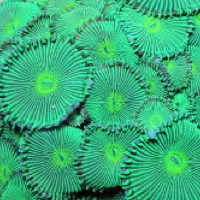
Some zoas can also be toxicThese are not palythoa


Thanks for finding. Here's the article you found (attached). It mentions other species besides Palythoa contain palytoxin including Protopalythoa, Zoanthus and Parazoanthus.There are reports of Parazoanthus spp having it as well as well. Unfortunately I don't have full access to the article so I don't know the details : https://pubmed.ncbi.nlm.nih.gov/18433818/
Thanks for finding. Here's the article you found (attached). It mentions other species besides Palythoa contain palytoxin including Protopalythoa, Zoanthus and Parazoanthus.